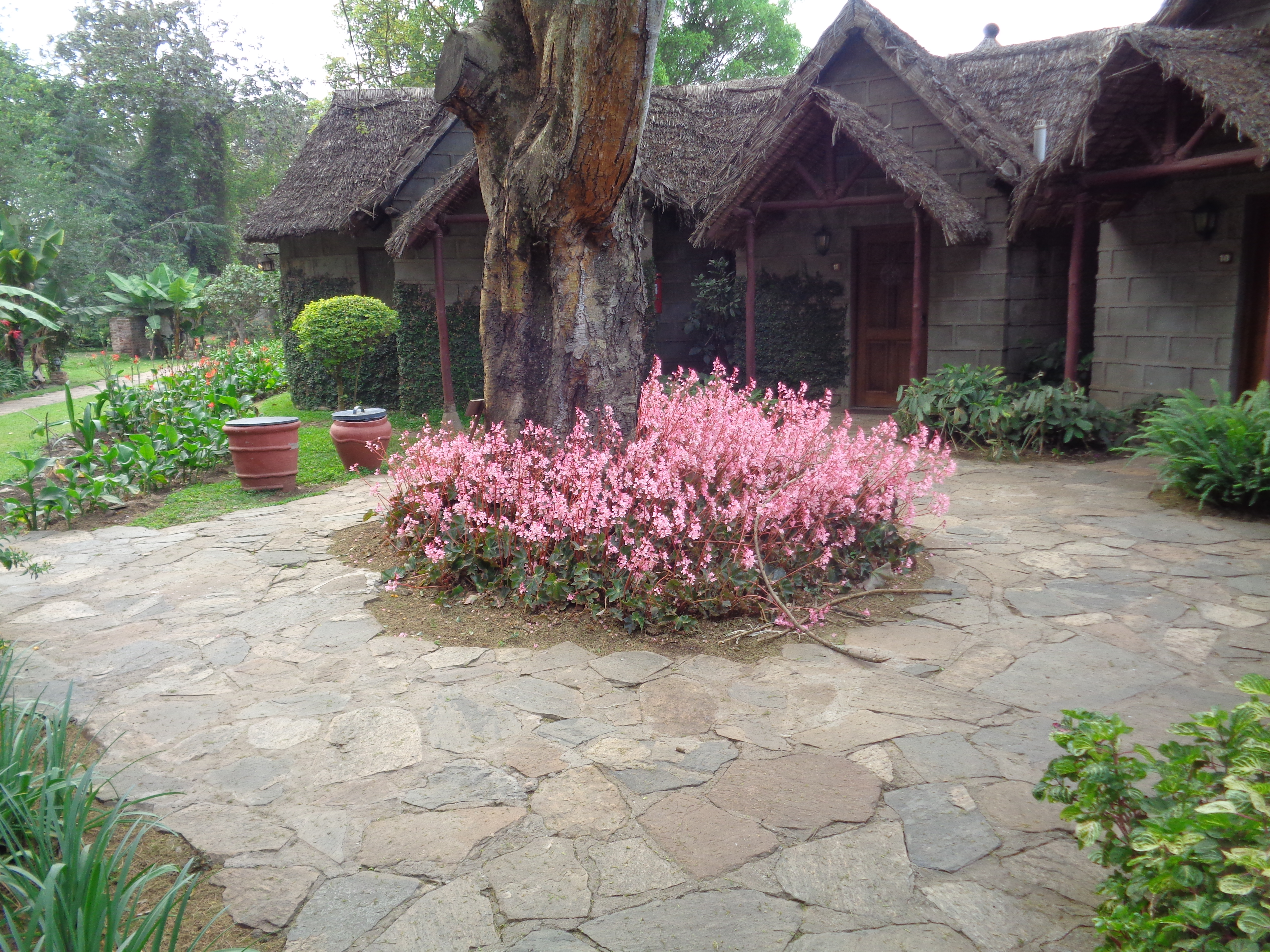
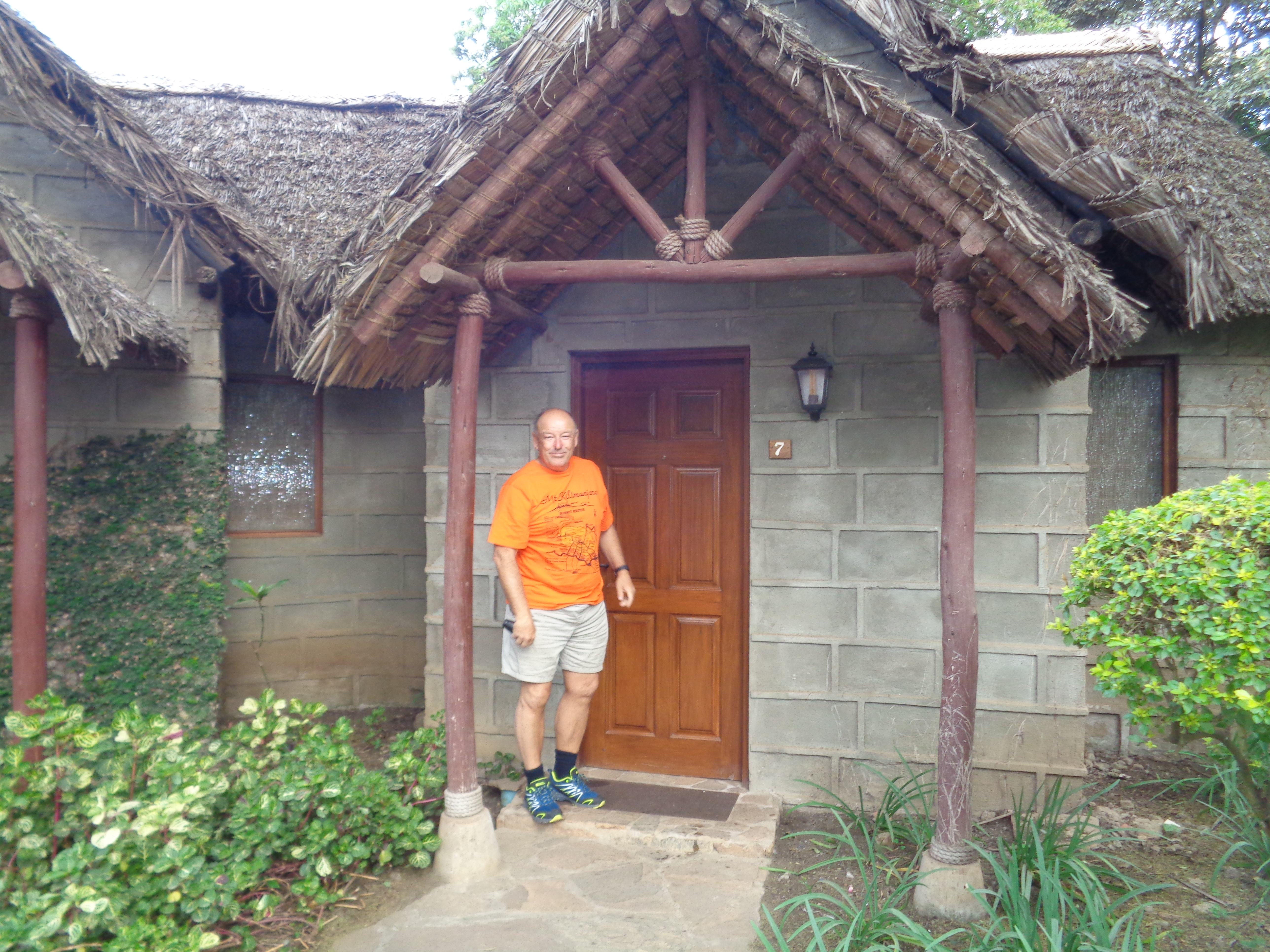
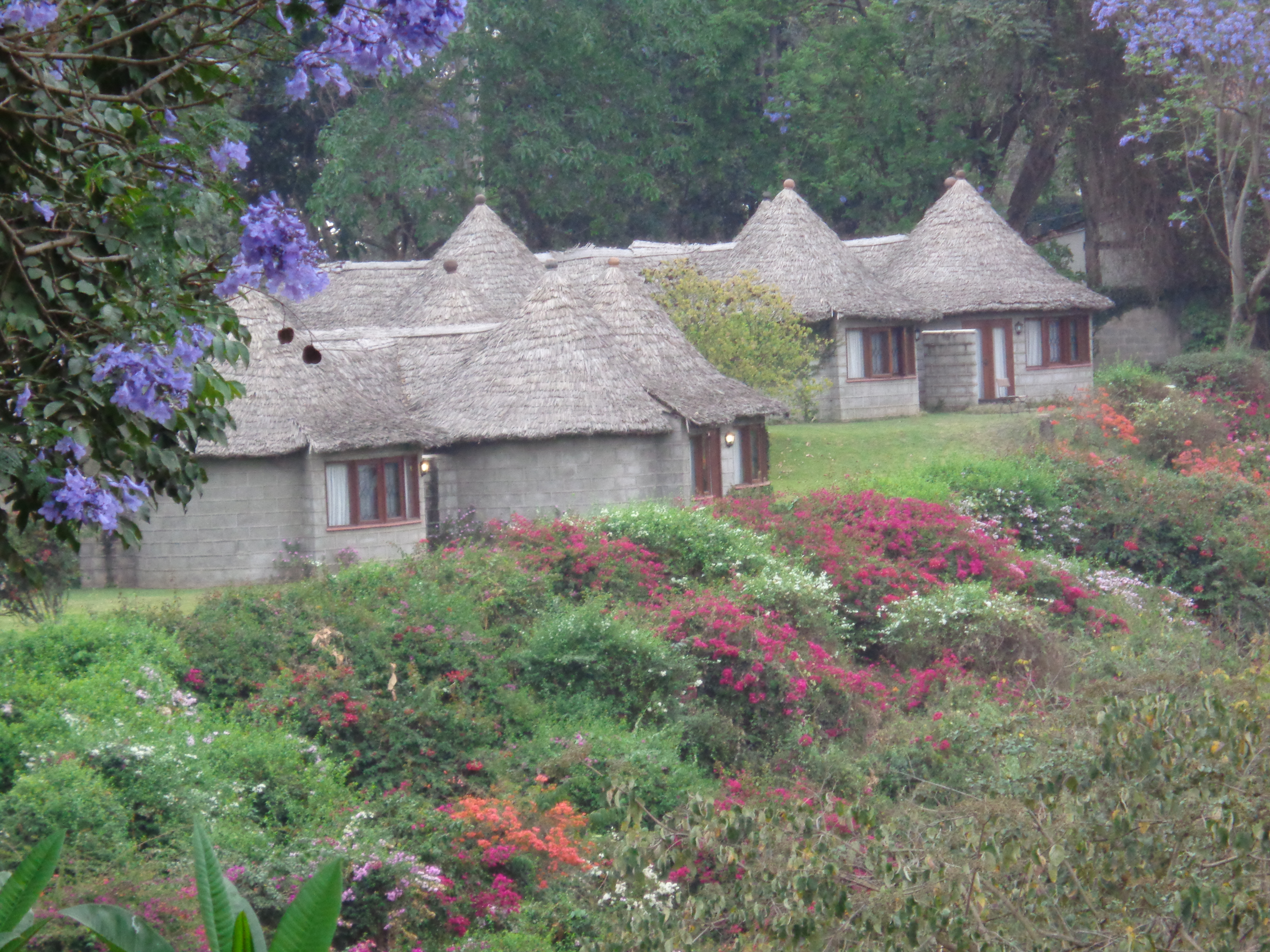
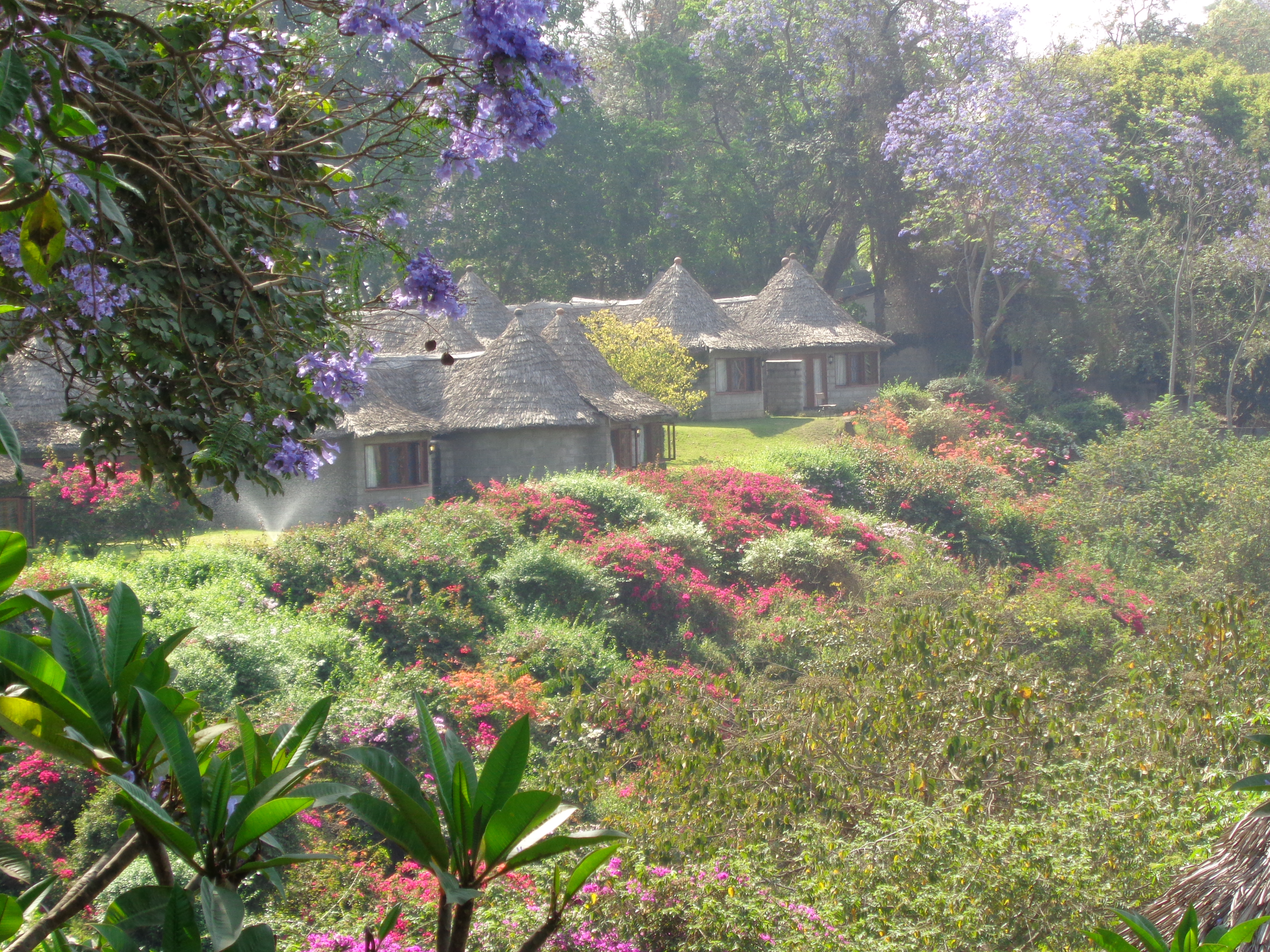
The day after I finished Kilimanjaro I was taken to this great hotel, the Serena Lake Duluti Lodge, with some lush gardens and great scenery, where I repacked and relaxed. Teresa arrived at around 10:00 pm. Here are some pictures of the hotel.
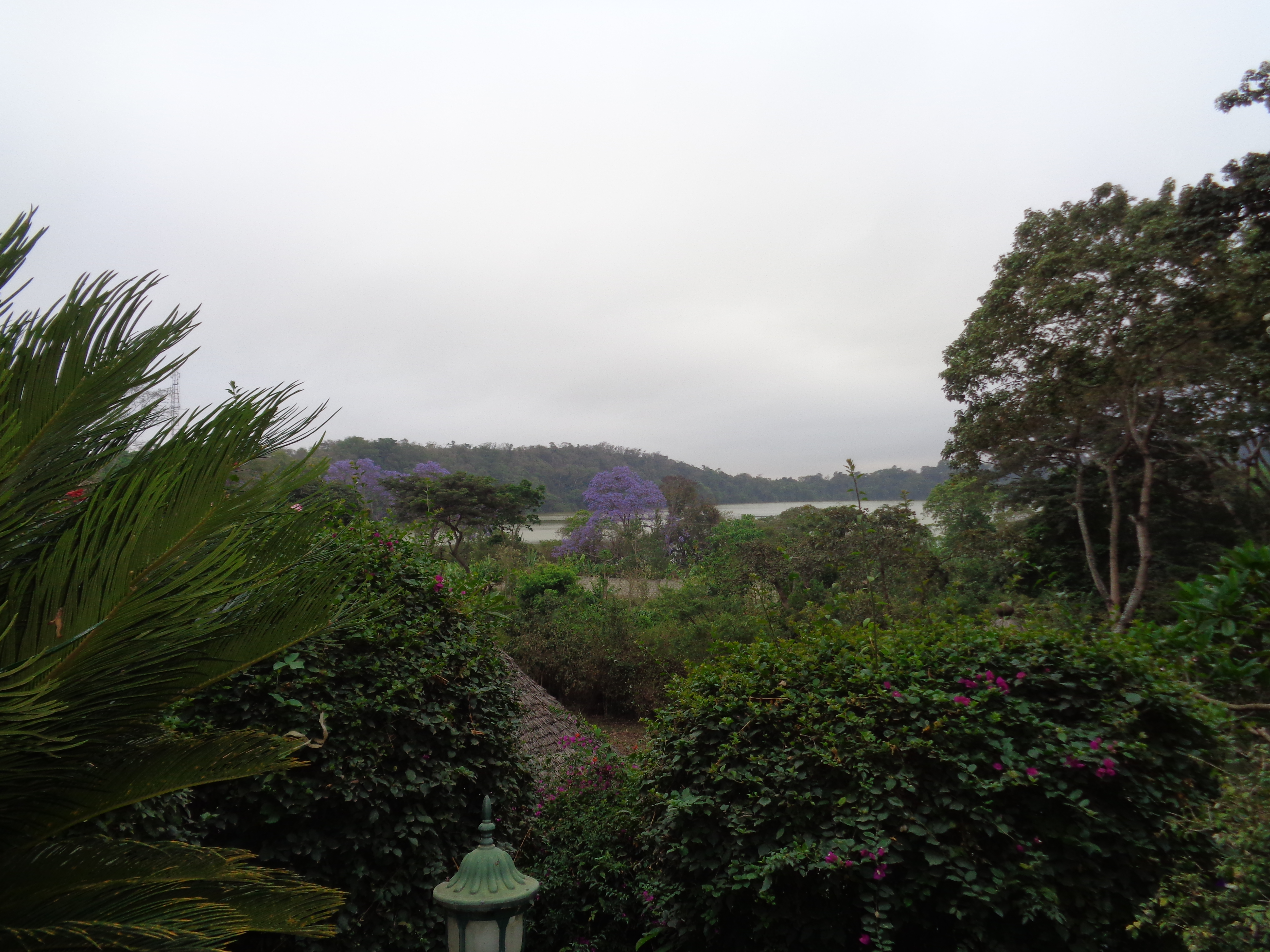
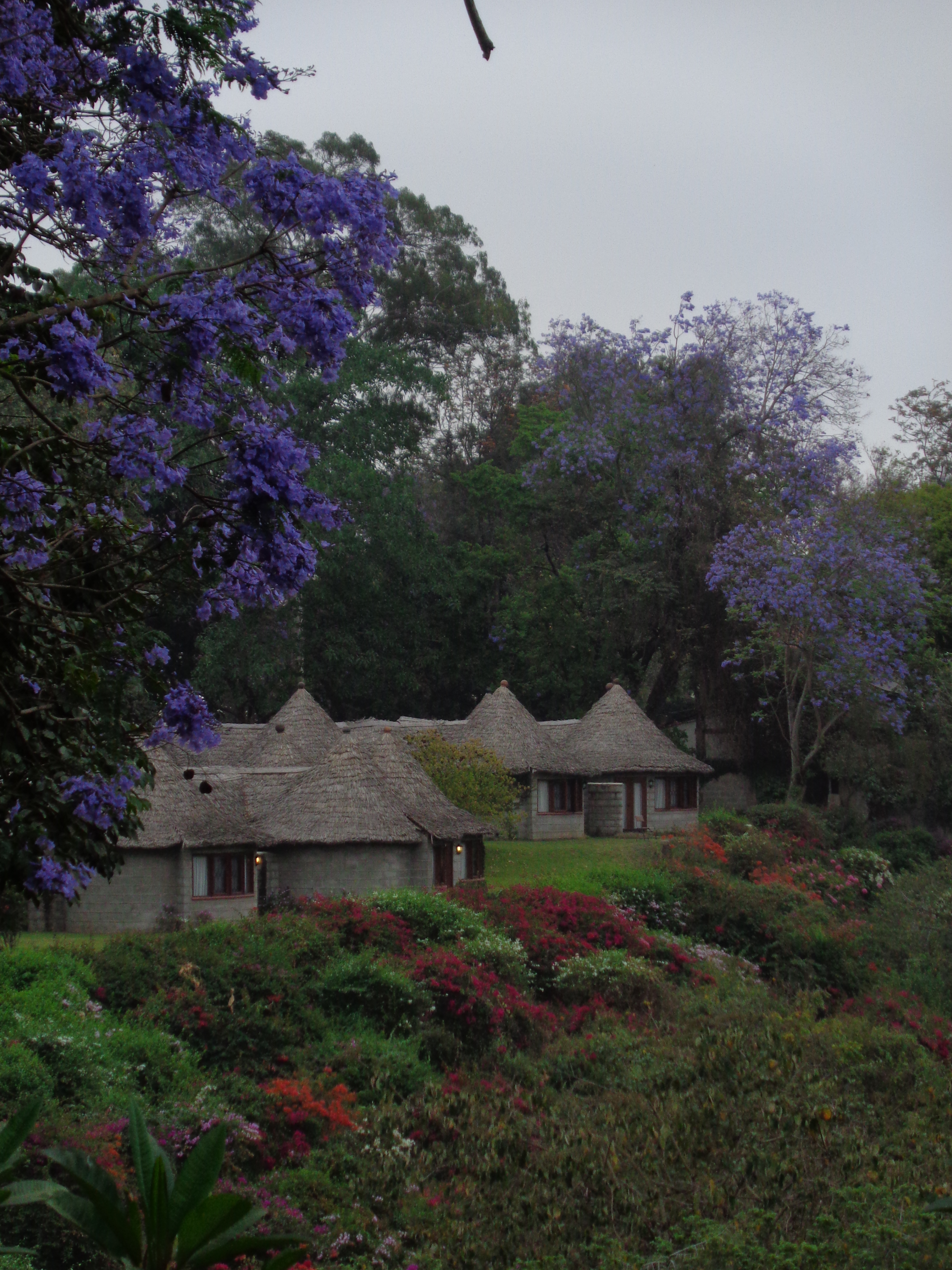
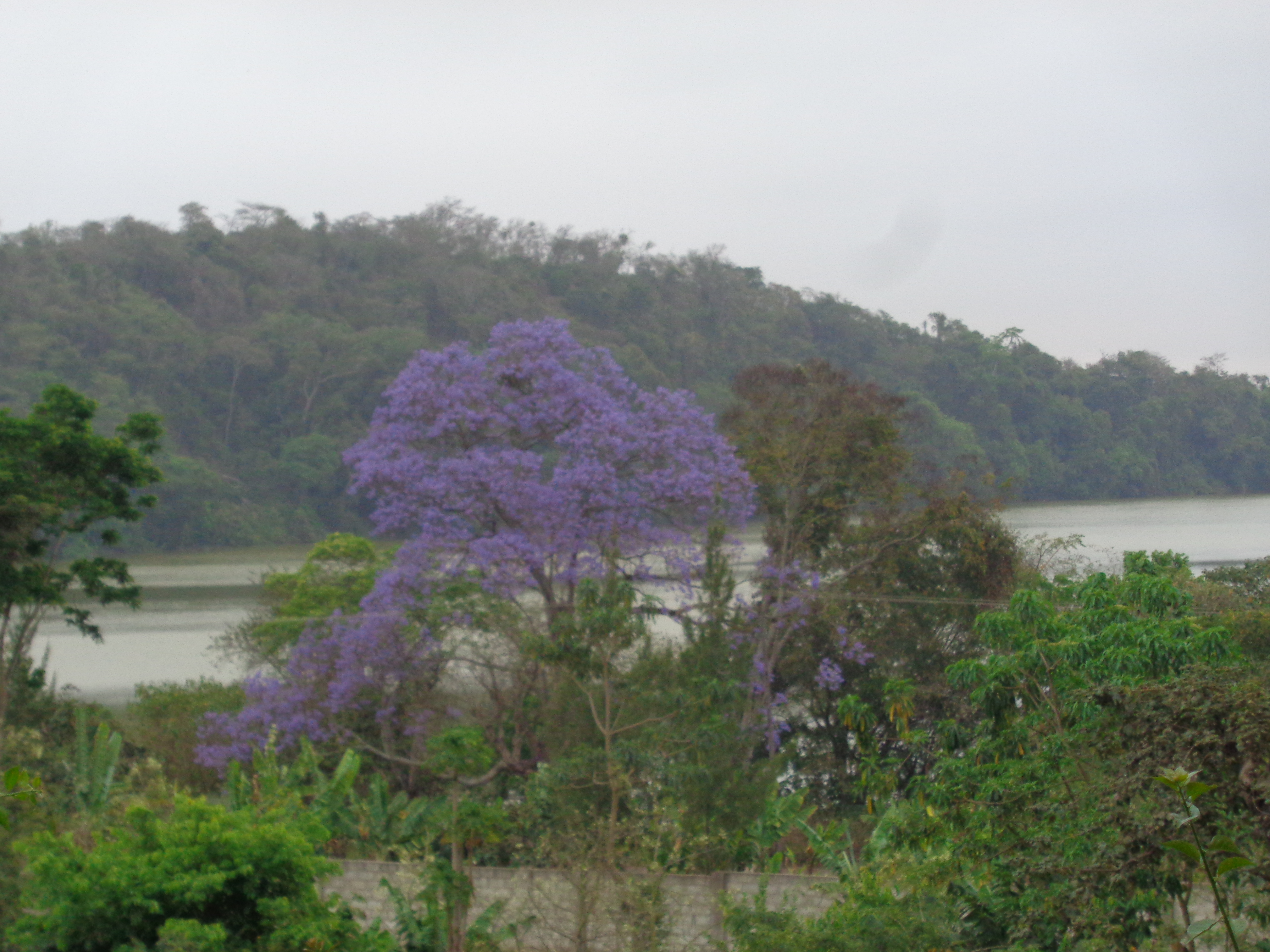
The purple trees are called Jacaranda. They filled the countryside and were in full bloom the whole time we were there.
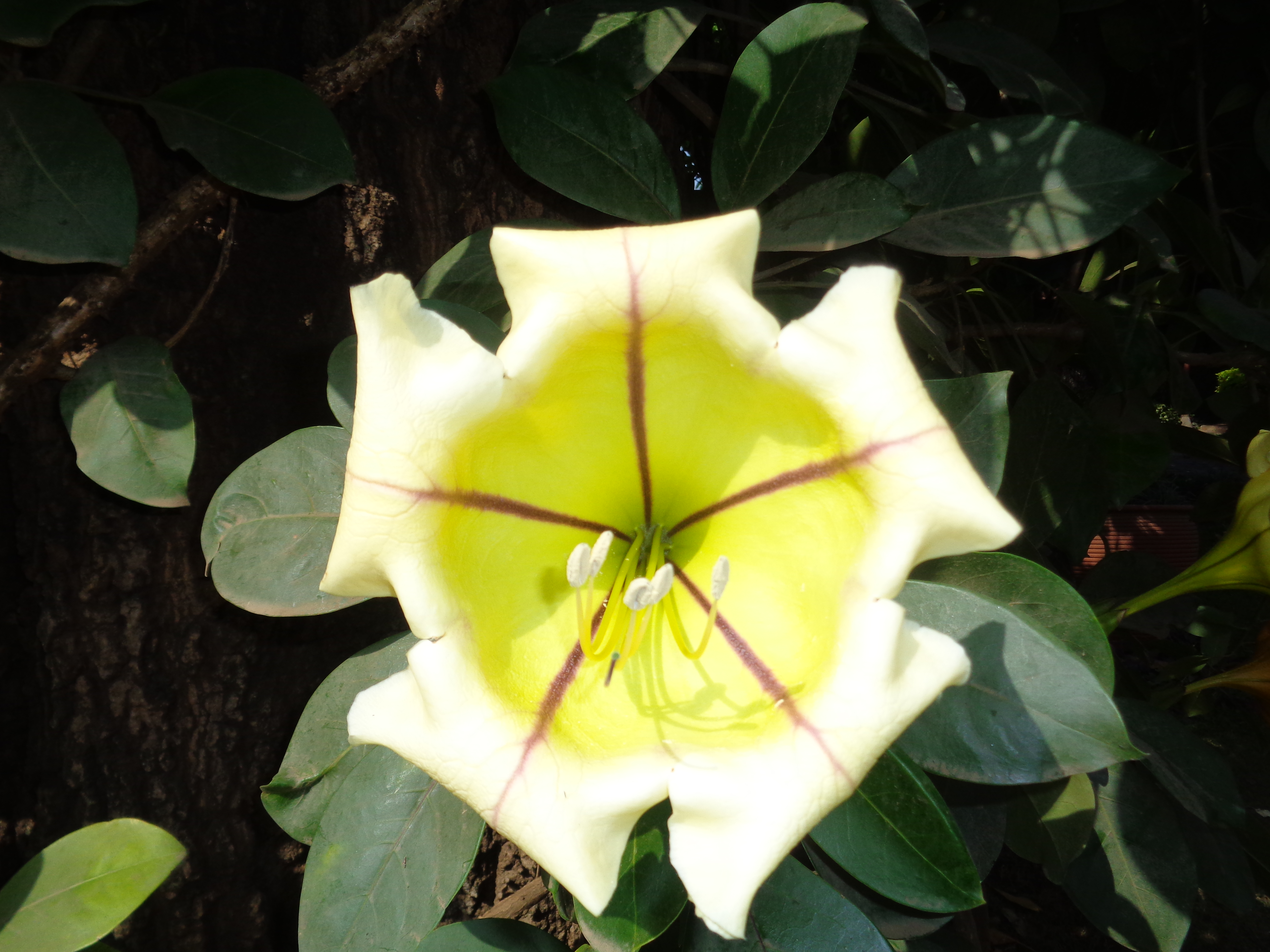
This flower was the size of a large dinner plate. Not sure what it is called.
Lake Duluti.
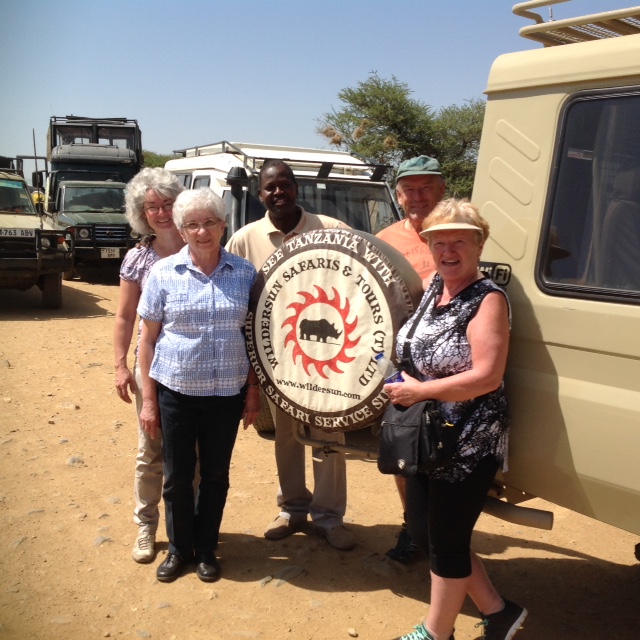
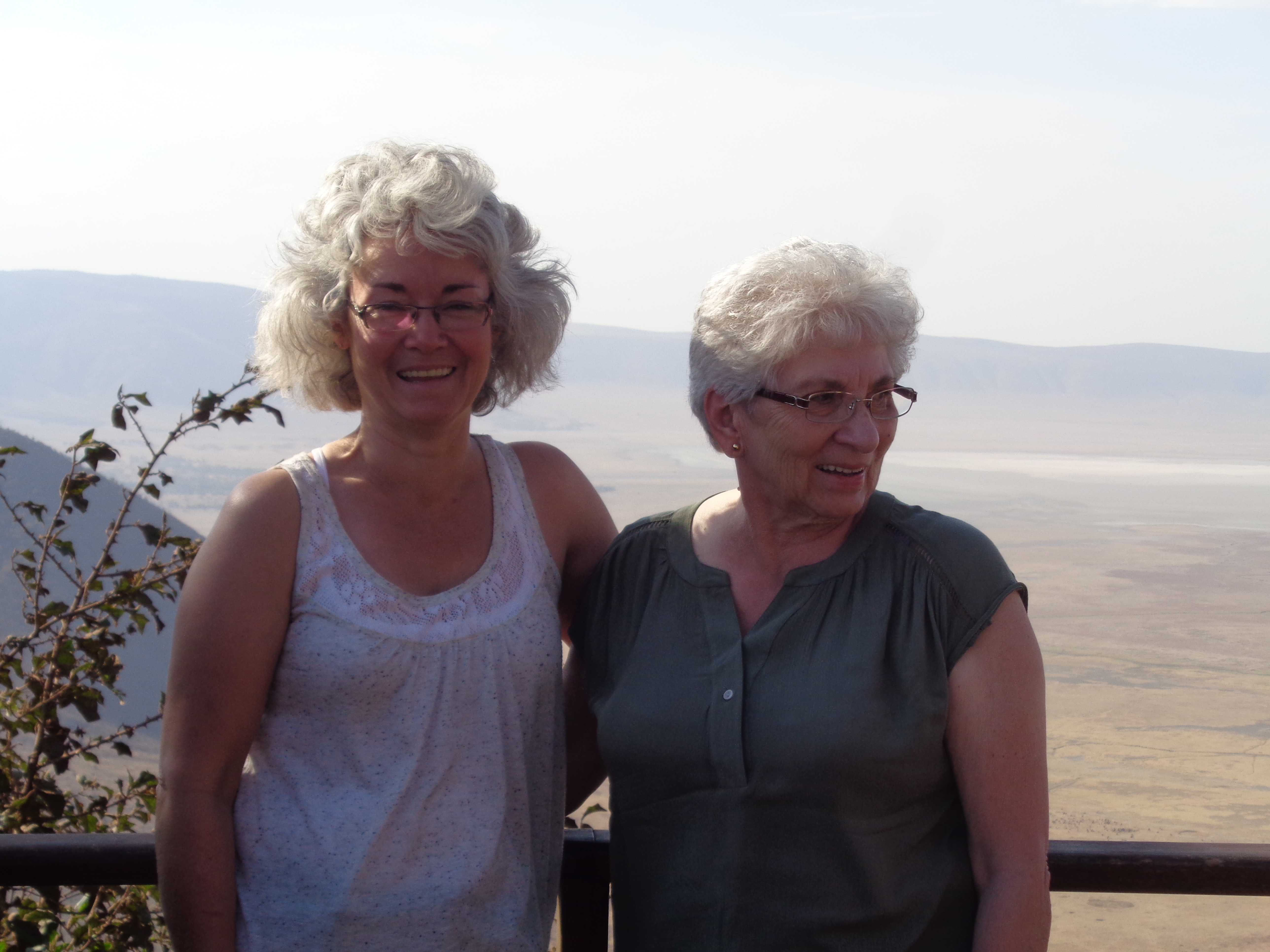
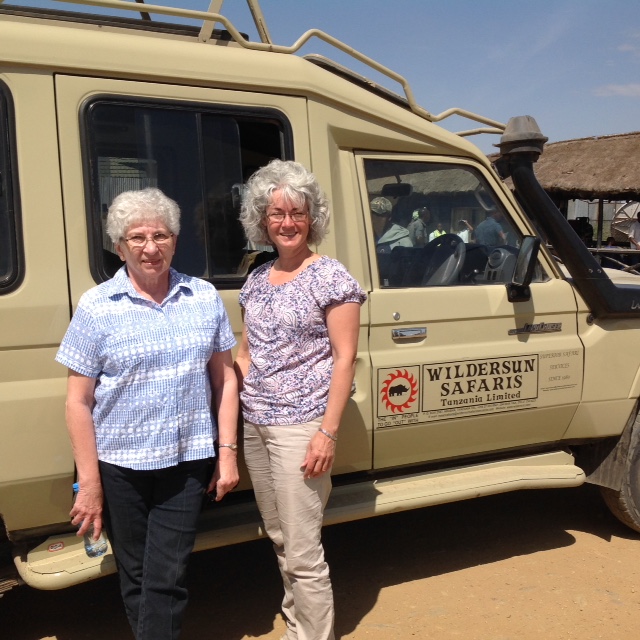
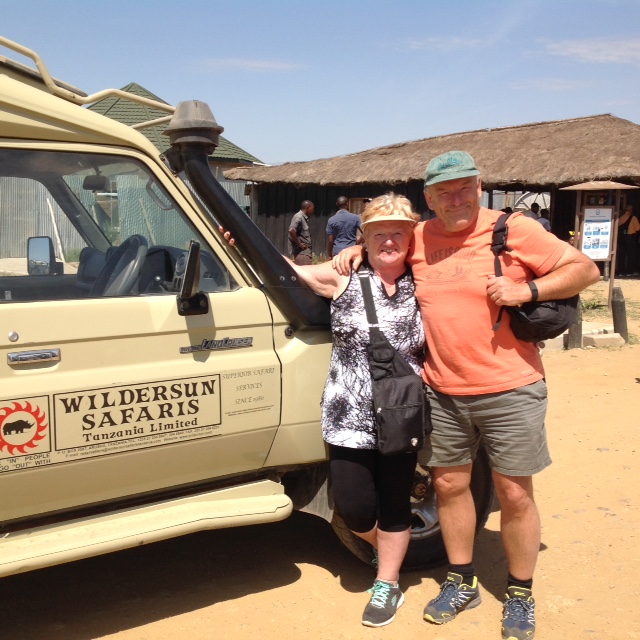
These are our safari companions, June and Deanna. They were a great couple to safari with. We really lucked in for this trip as there were only the four of us and our guide Martin. It was not crowded in the jeep. We saw other jeeps with 7 people plus the guide.
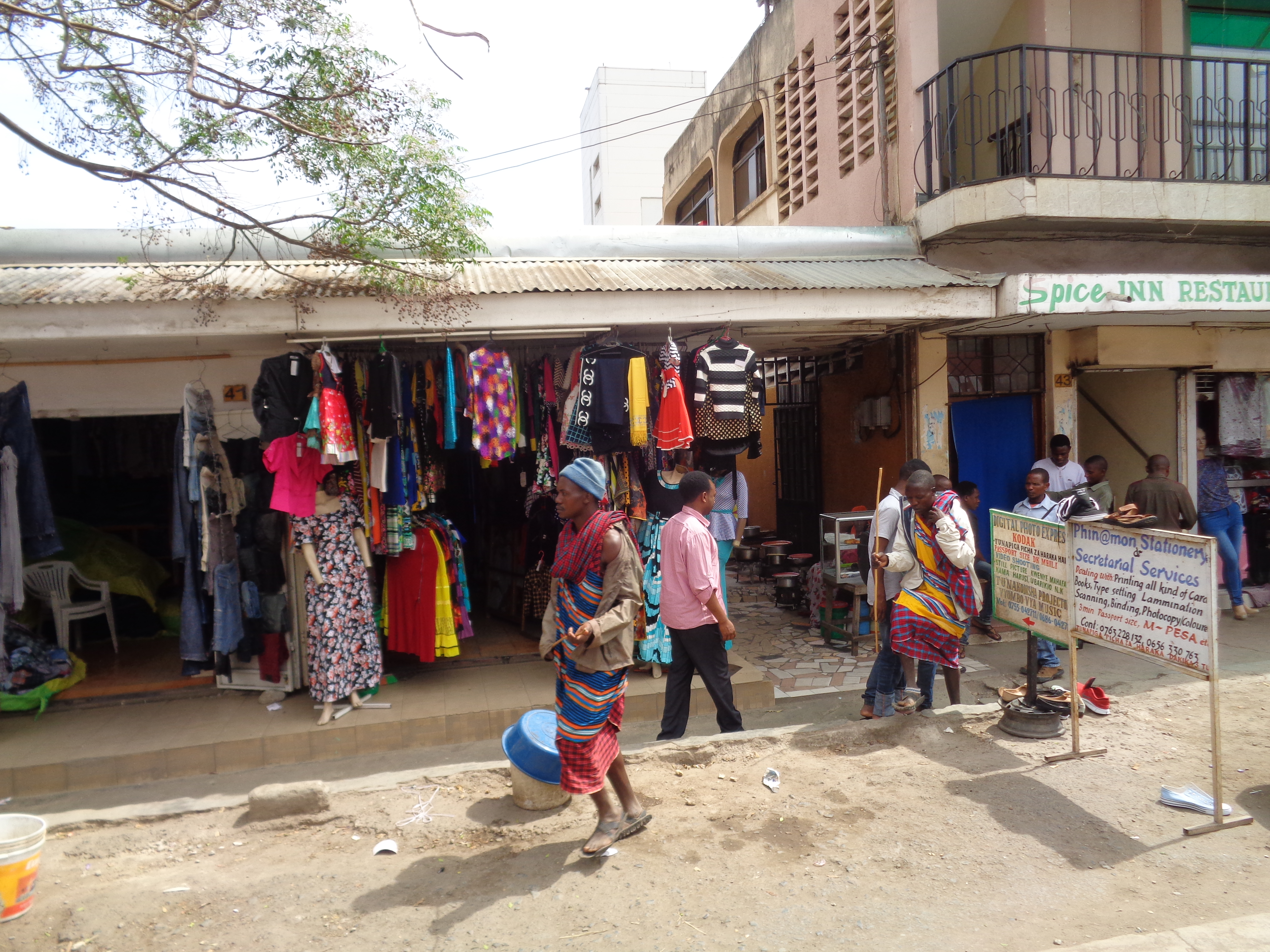
We spend the next morning enjoying the scenery around the hotel and were picked up and taken to lunch. Here are some shops along the way.
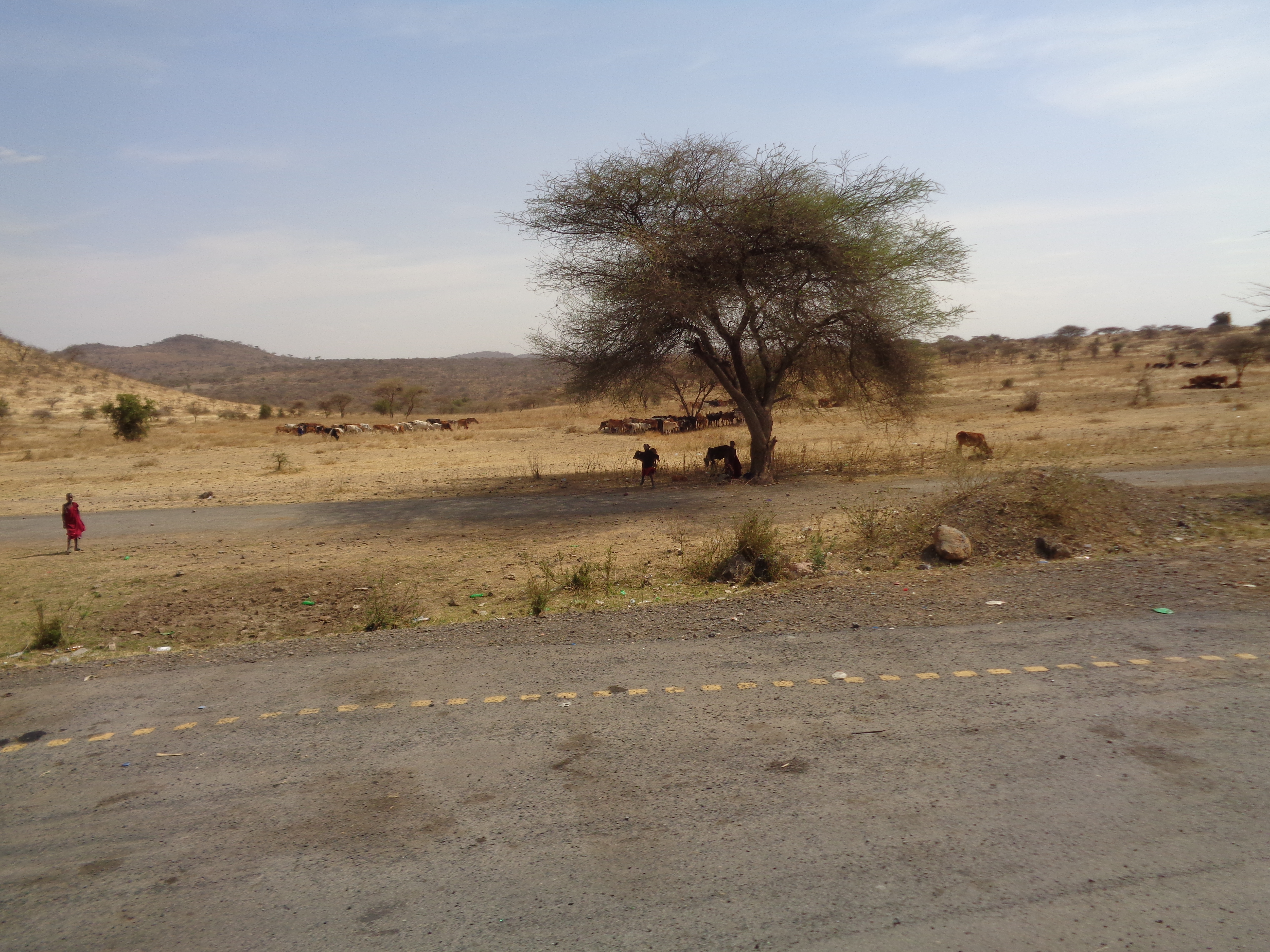
Here are some young Masai kids. They don’t like their picture taken without getting a tip. These particular one through rocks at the van.
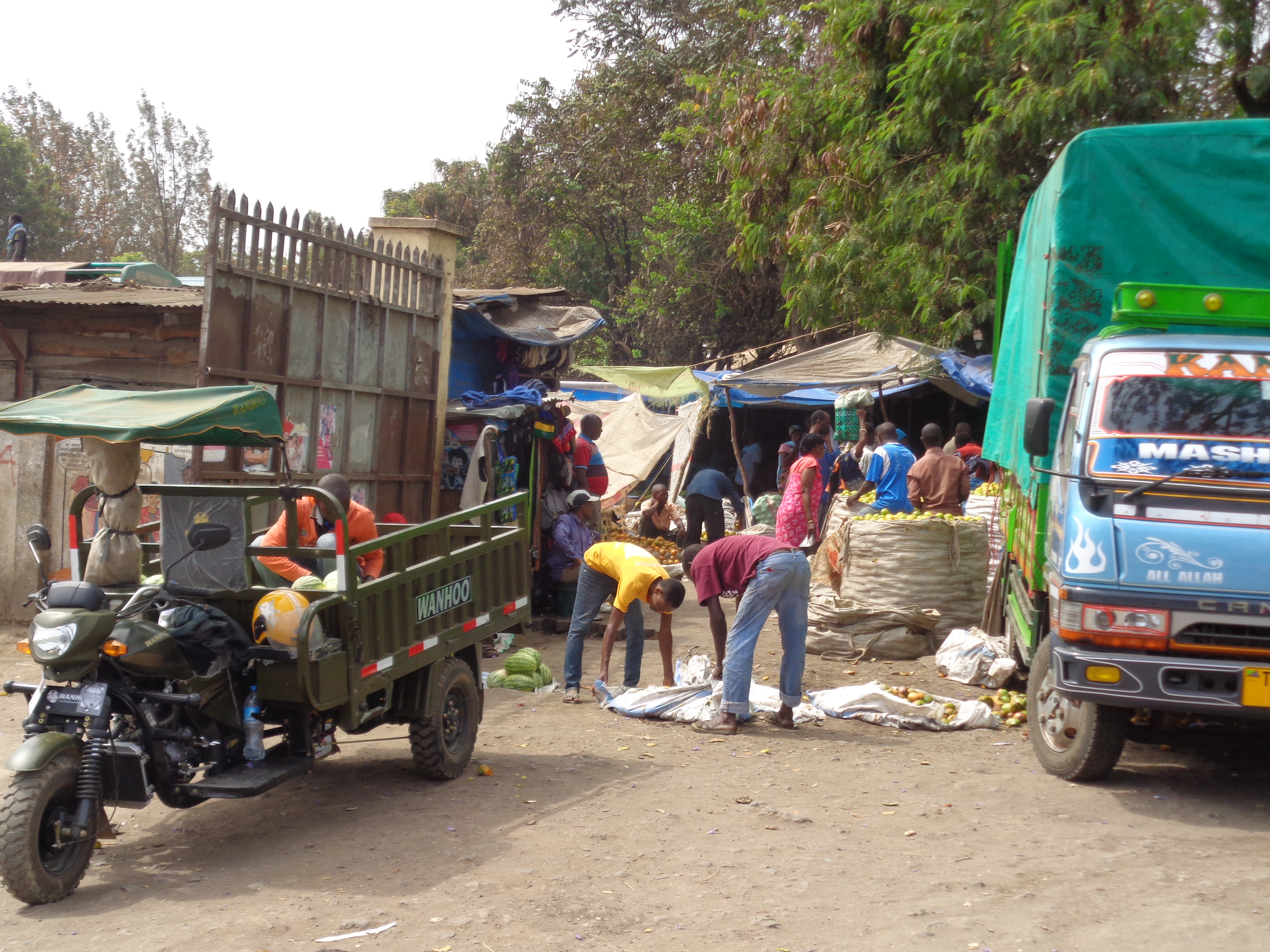
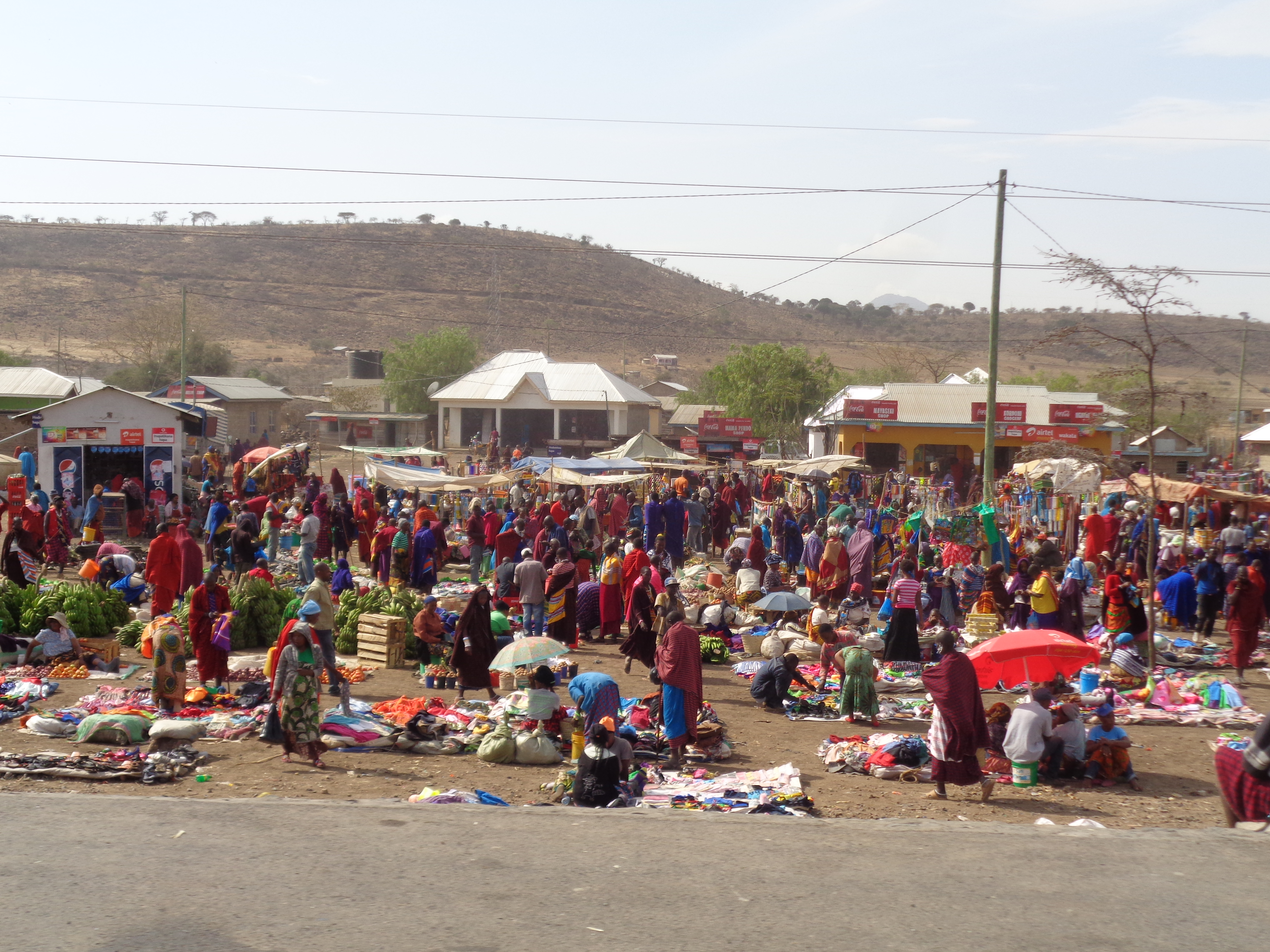
A Masai market.
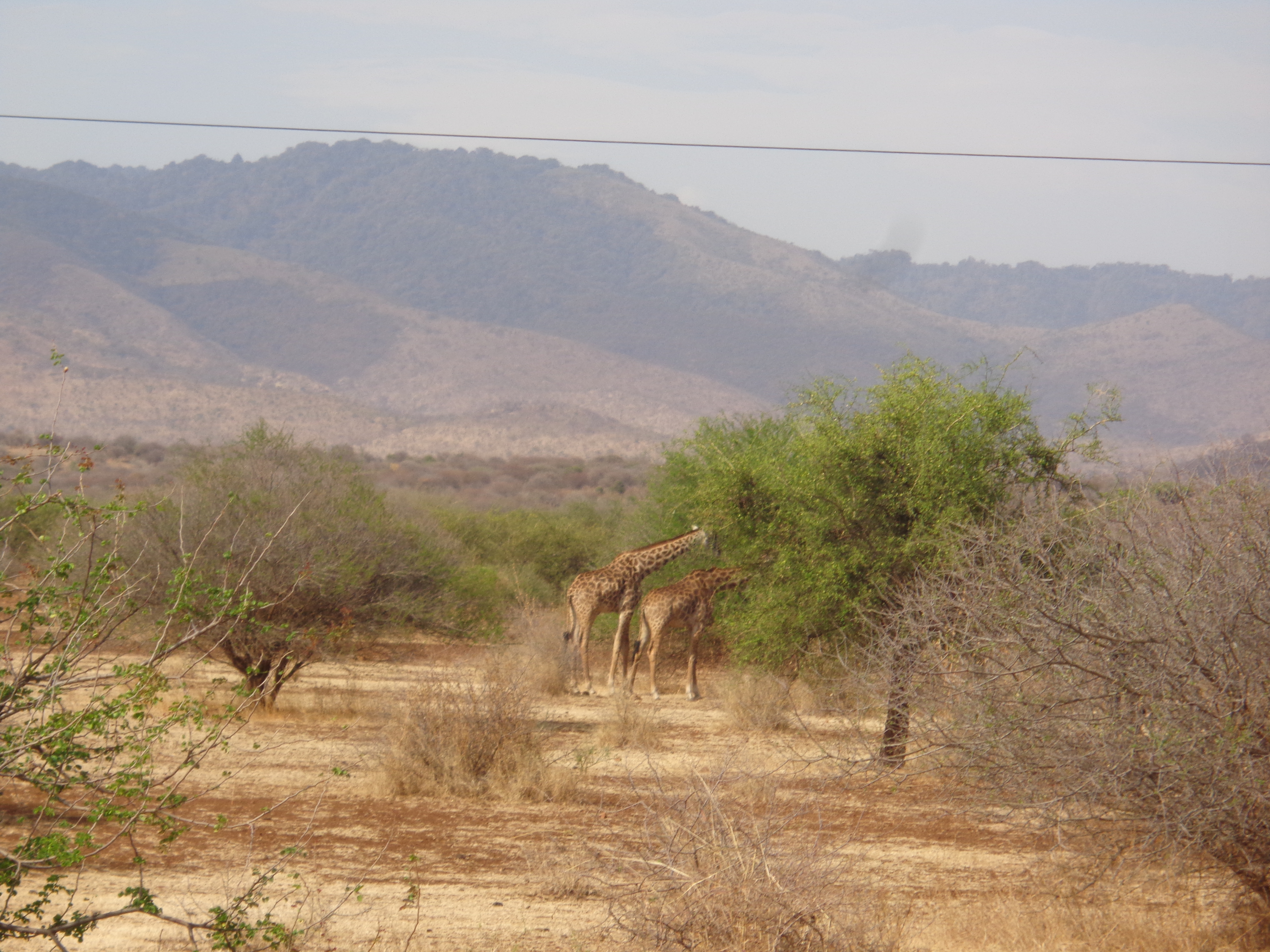
After lunch we headed out to our accommodations for the first night. These are the first animals we saw. We freaked out. Little did we know what was in store for us.
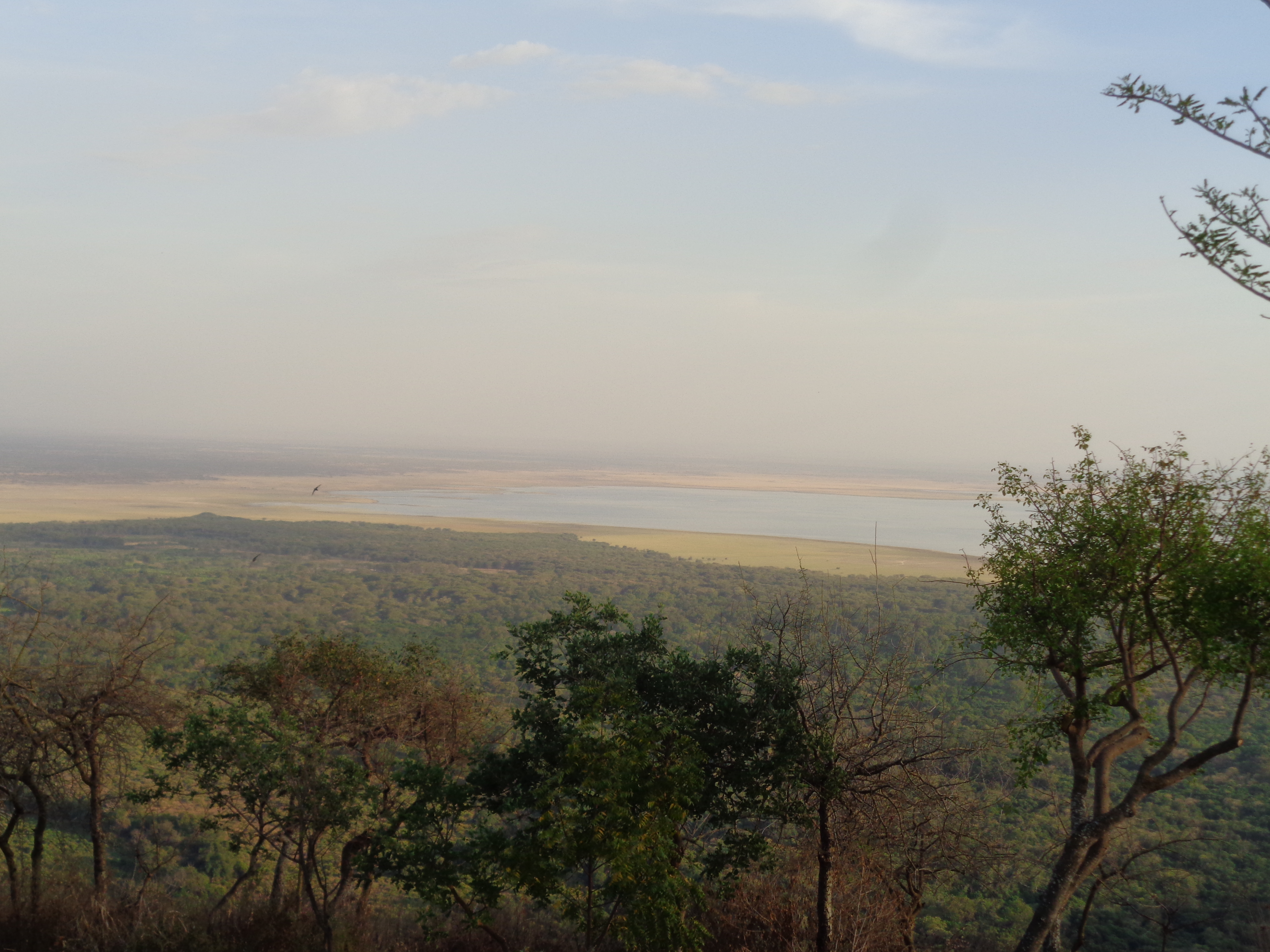
Lake Manyara!
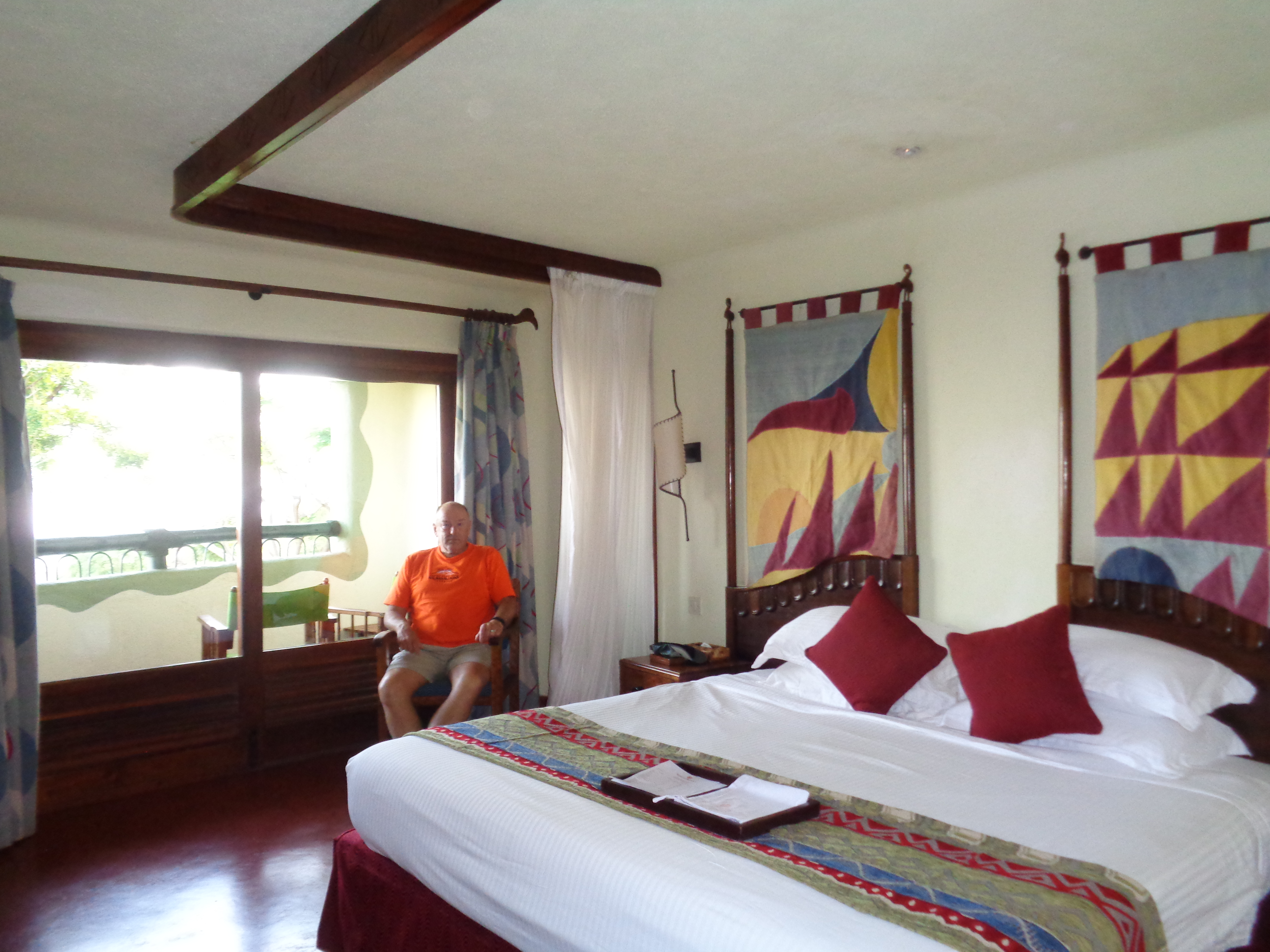
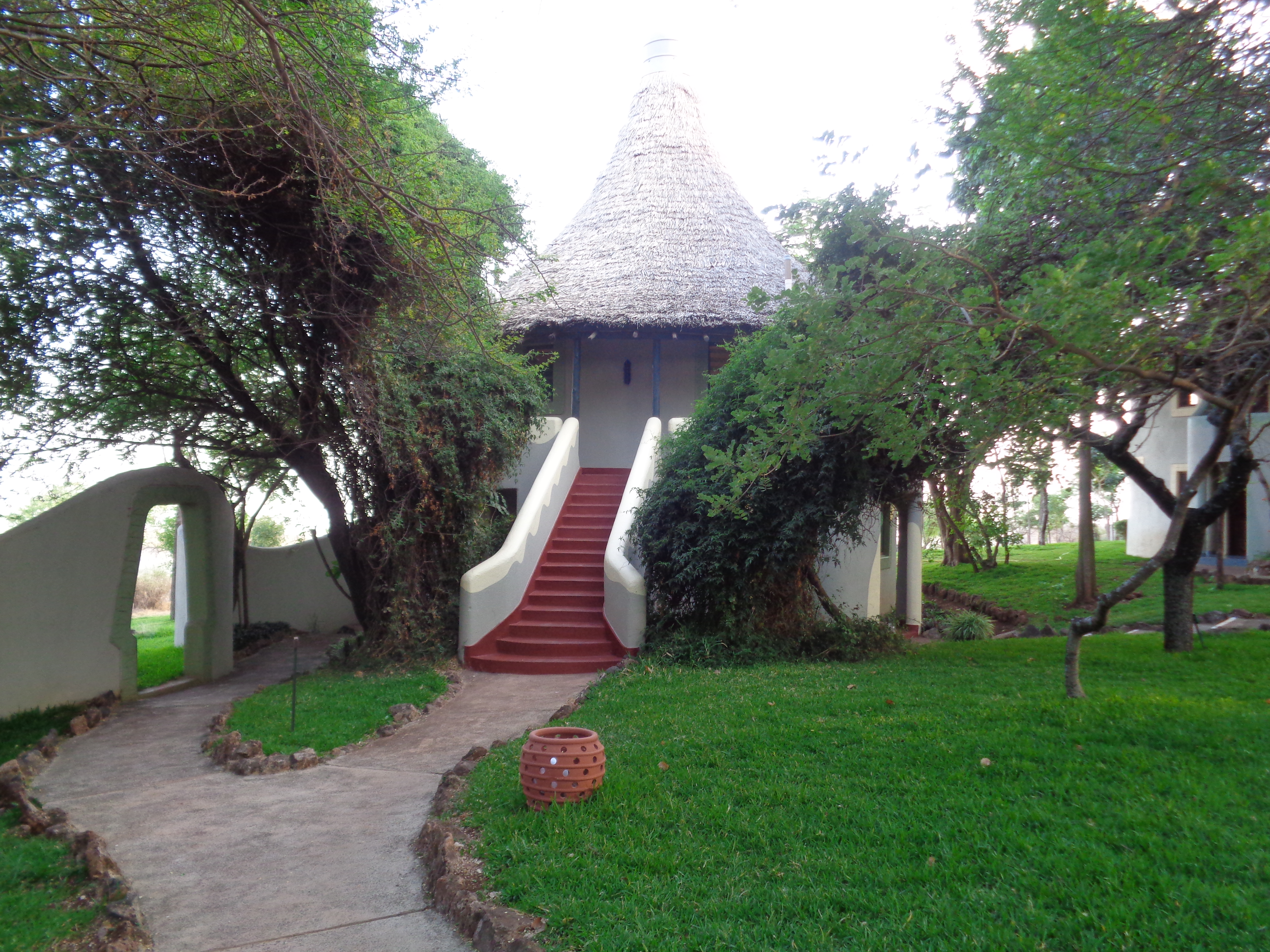
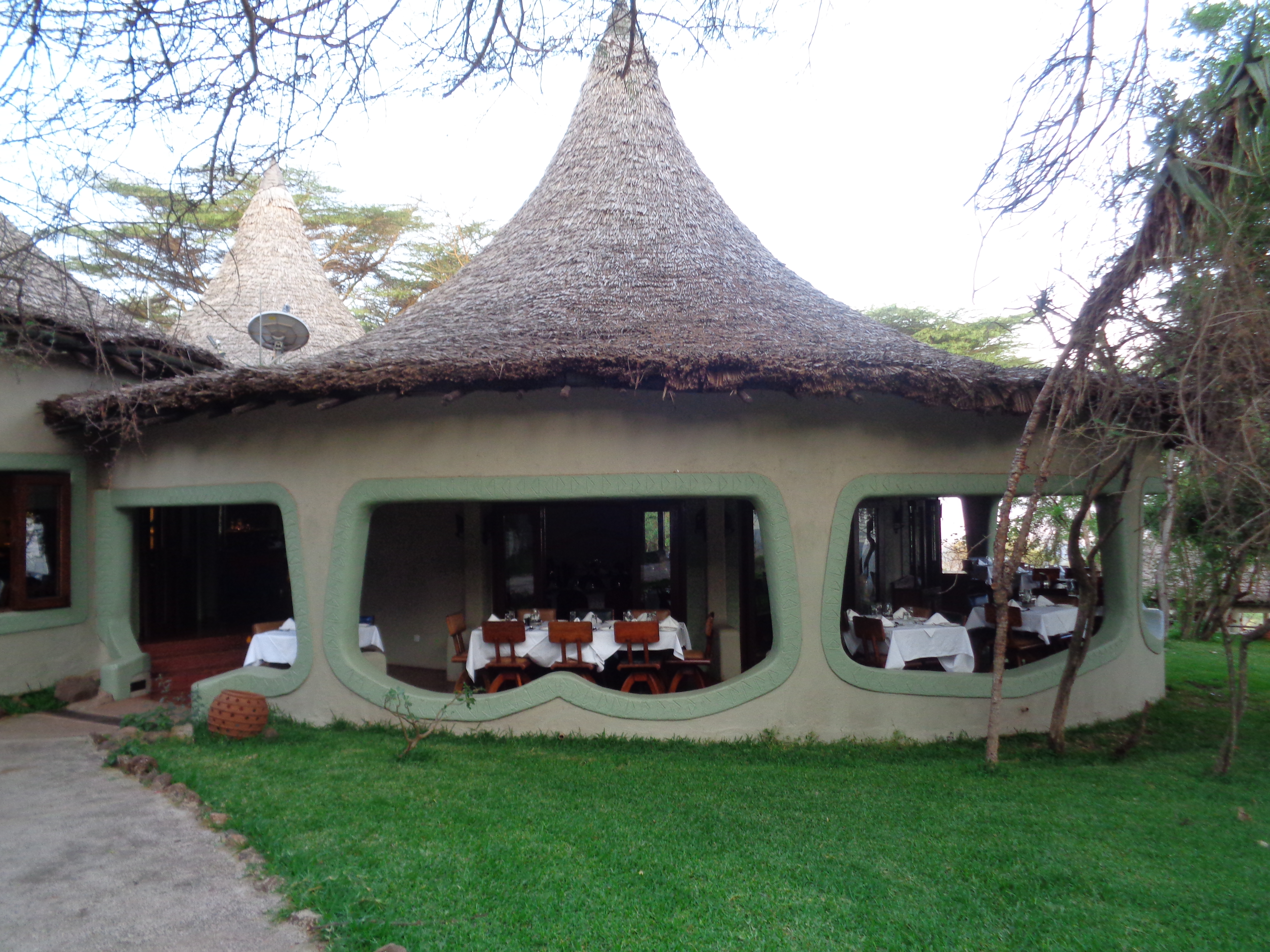
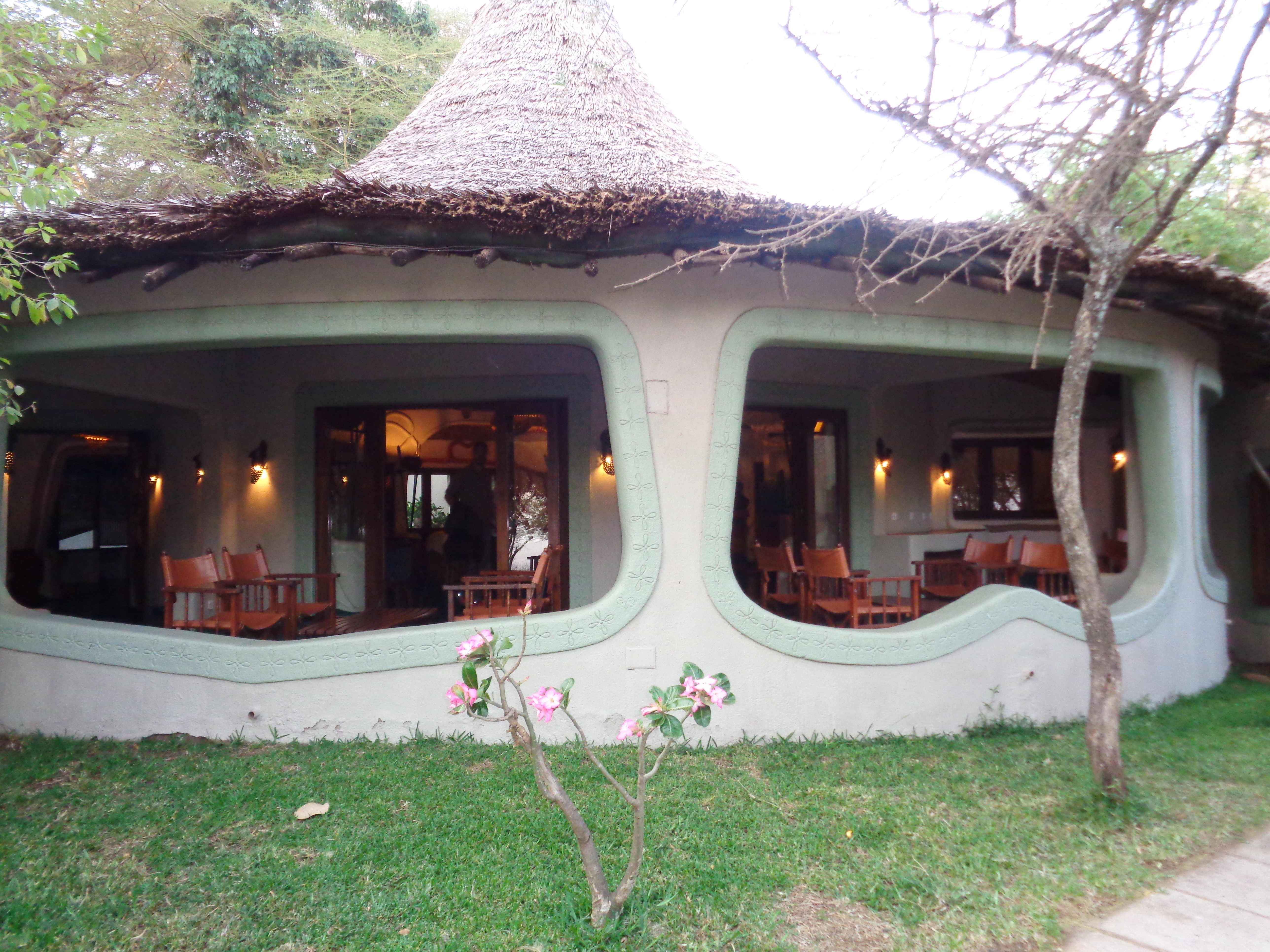
We ended up at the Serena Lodge outside Lake Manyara National Park. Nice accommodations.
They look like little smurf houses.
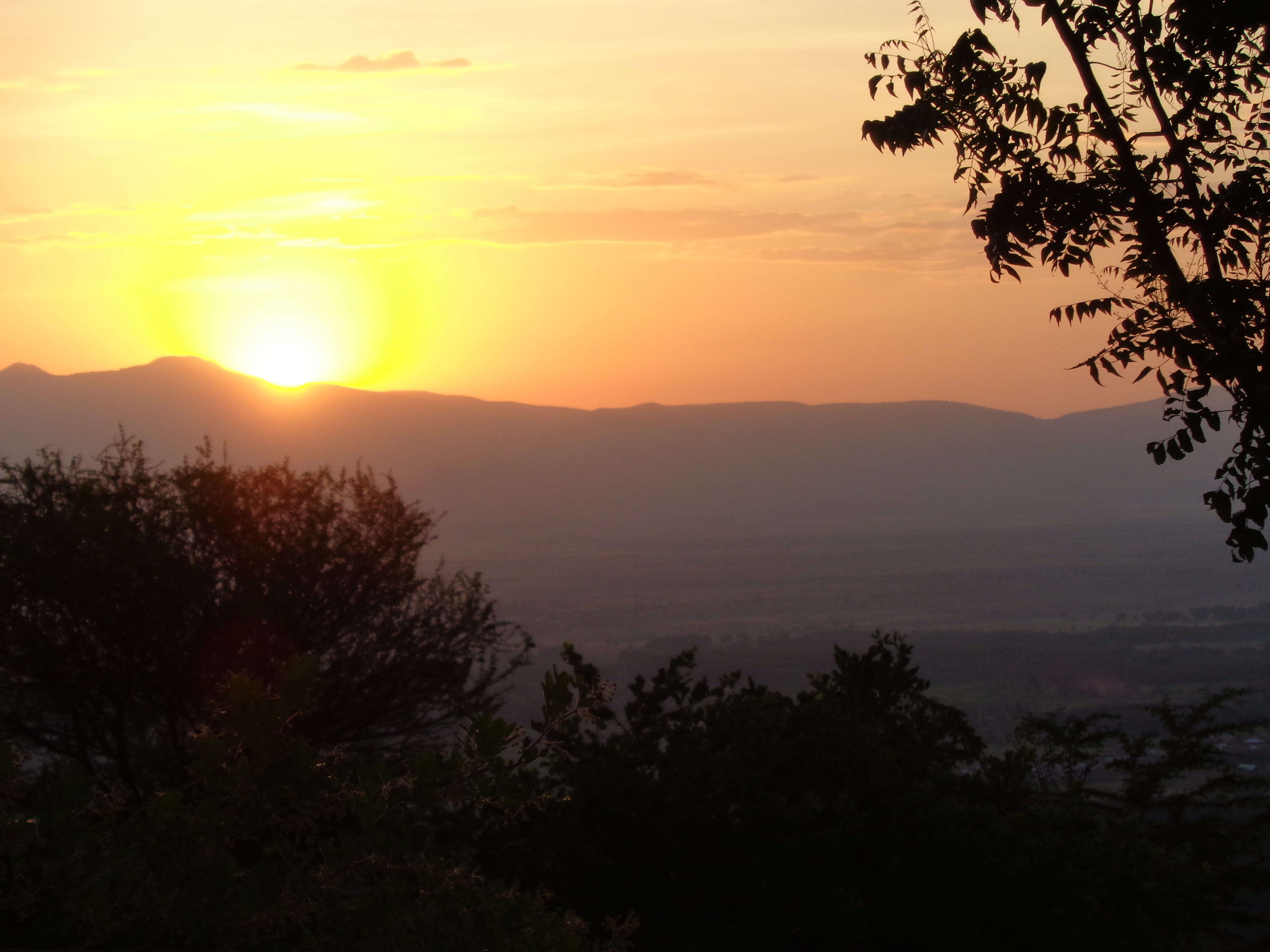
Sunrise over the valley. Nice to wake up to. Now, breakfast and on to some animal watching.
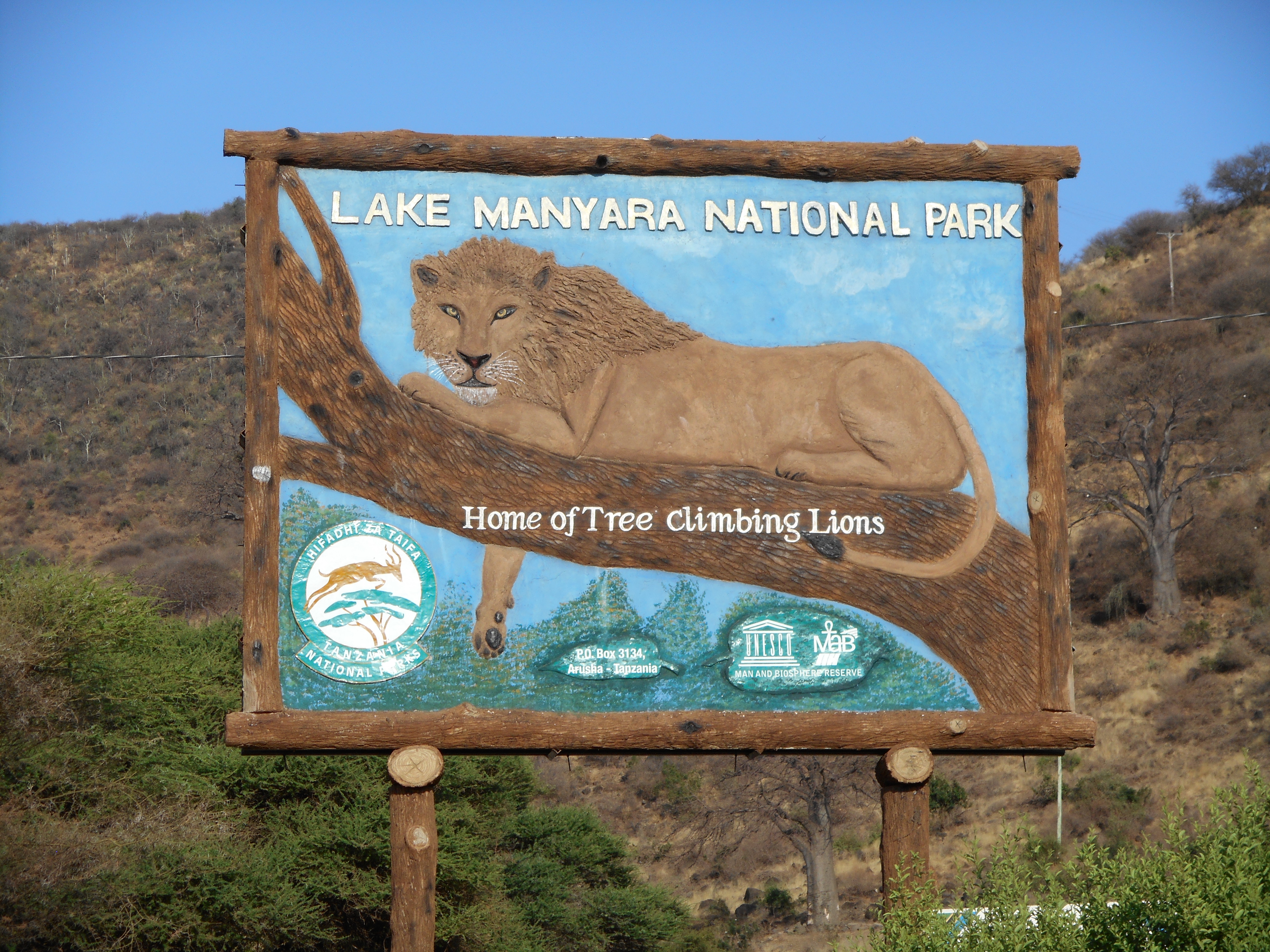
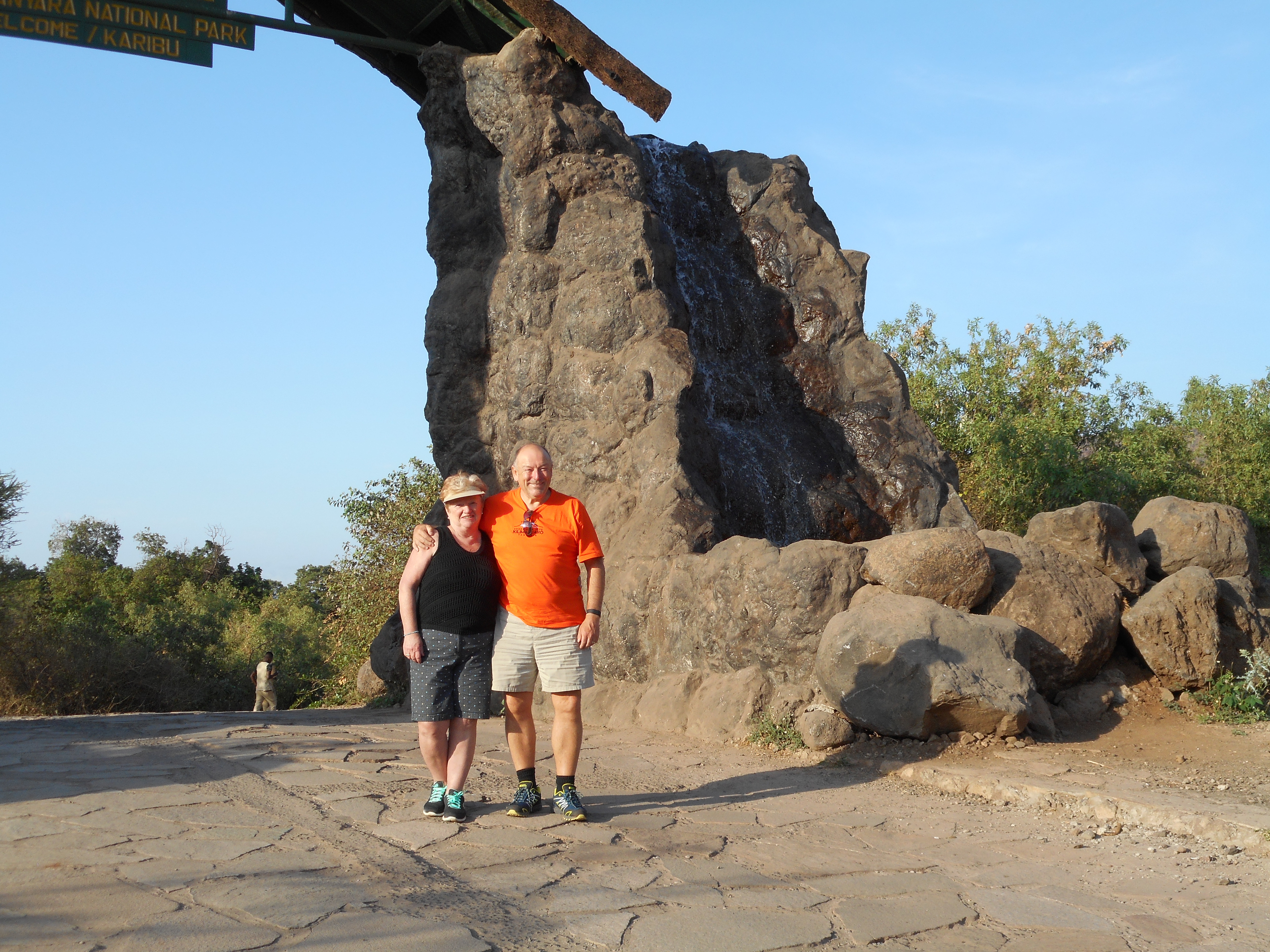
Park entrance. We saw a billion baboons, a zillion zebras but no tree climbing lions.
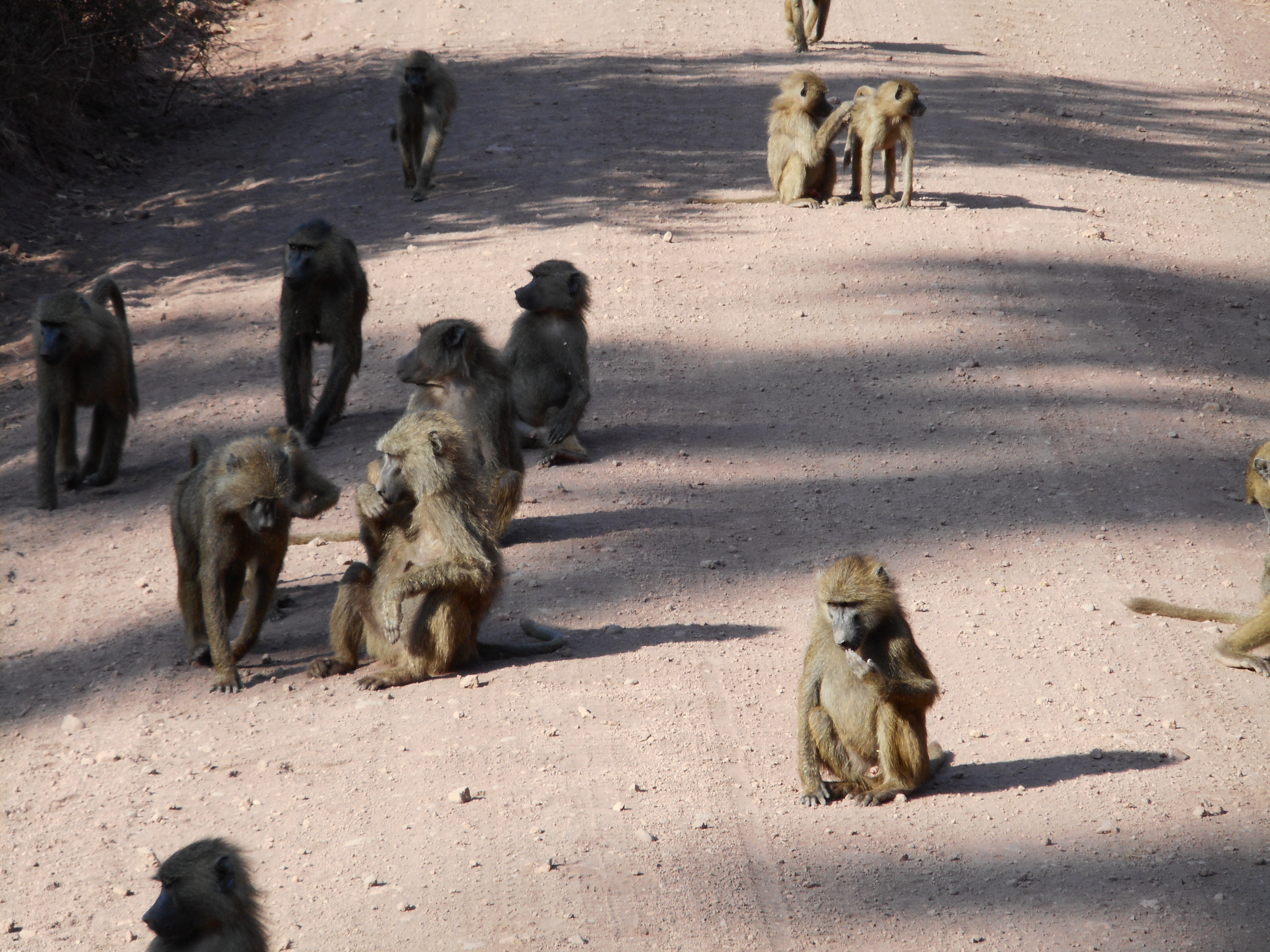
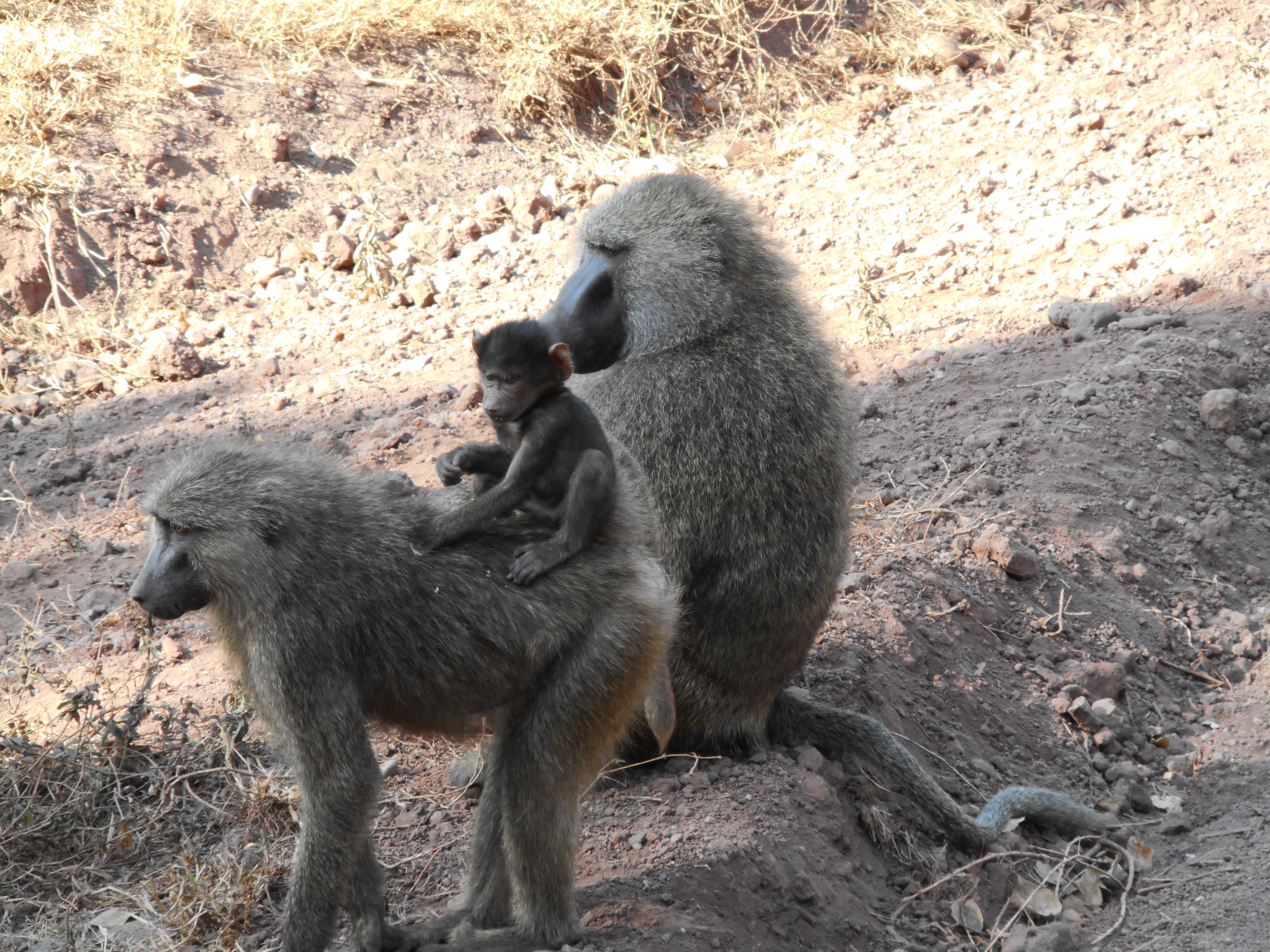
At the entrance to the park, we were greeted by some Baboons.
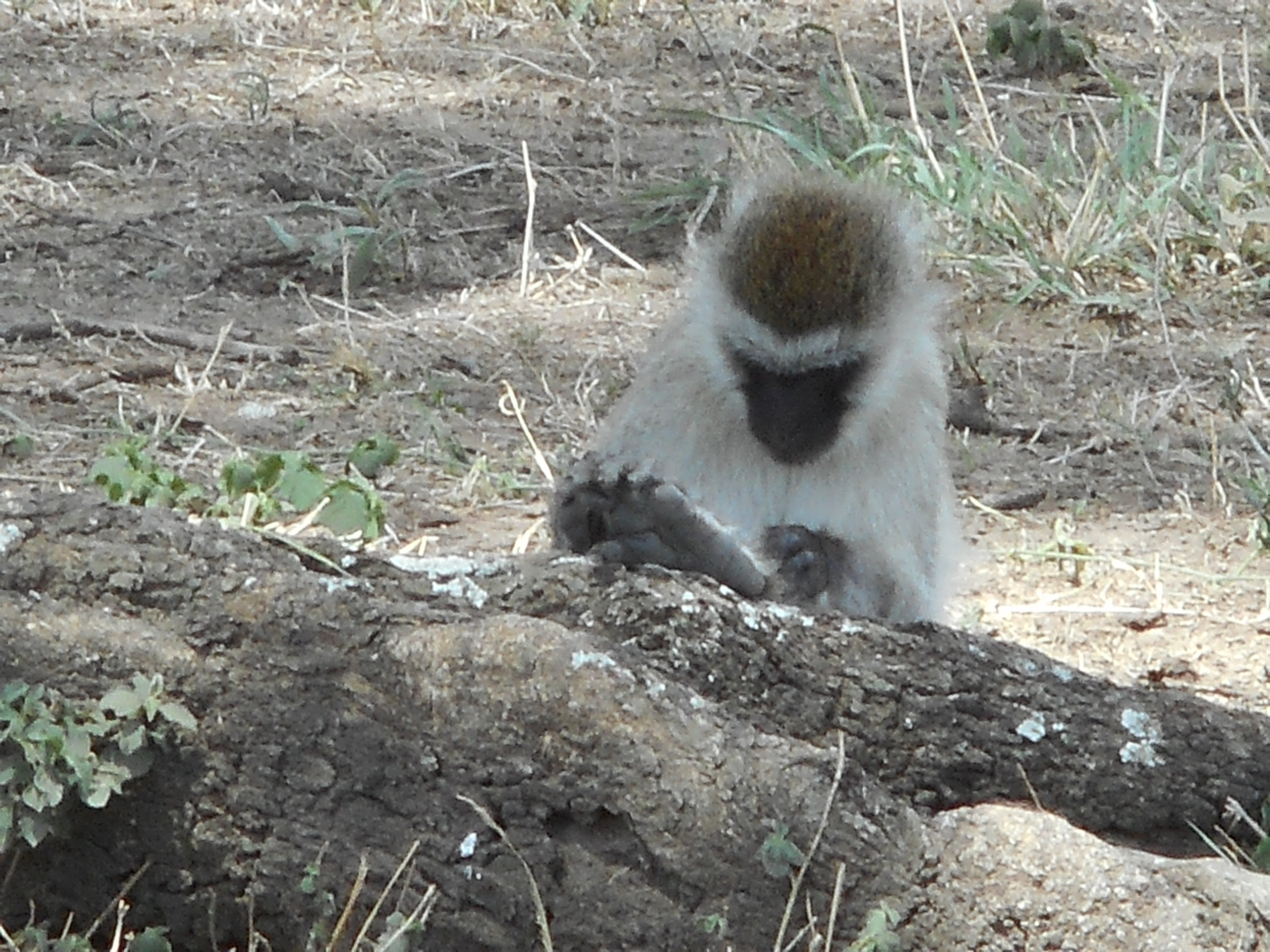
This Velvet Monkey was checking us out while our guide signed us in.
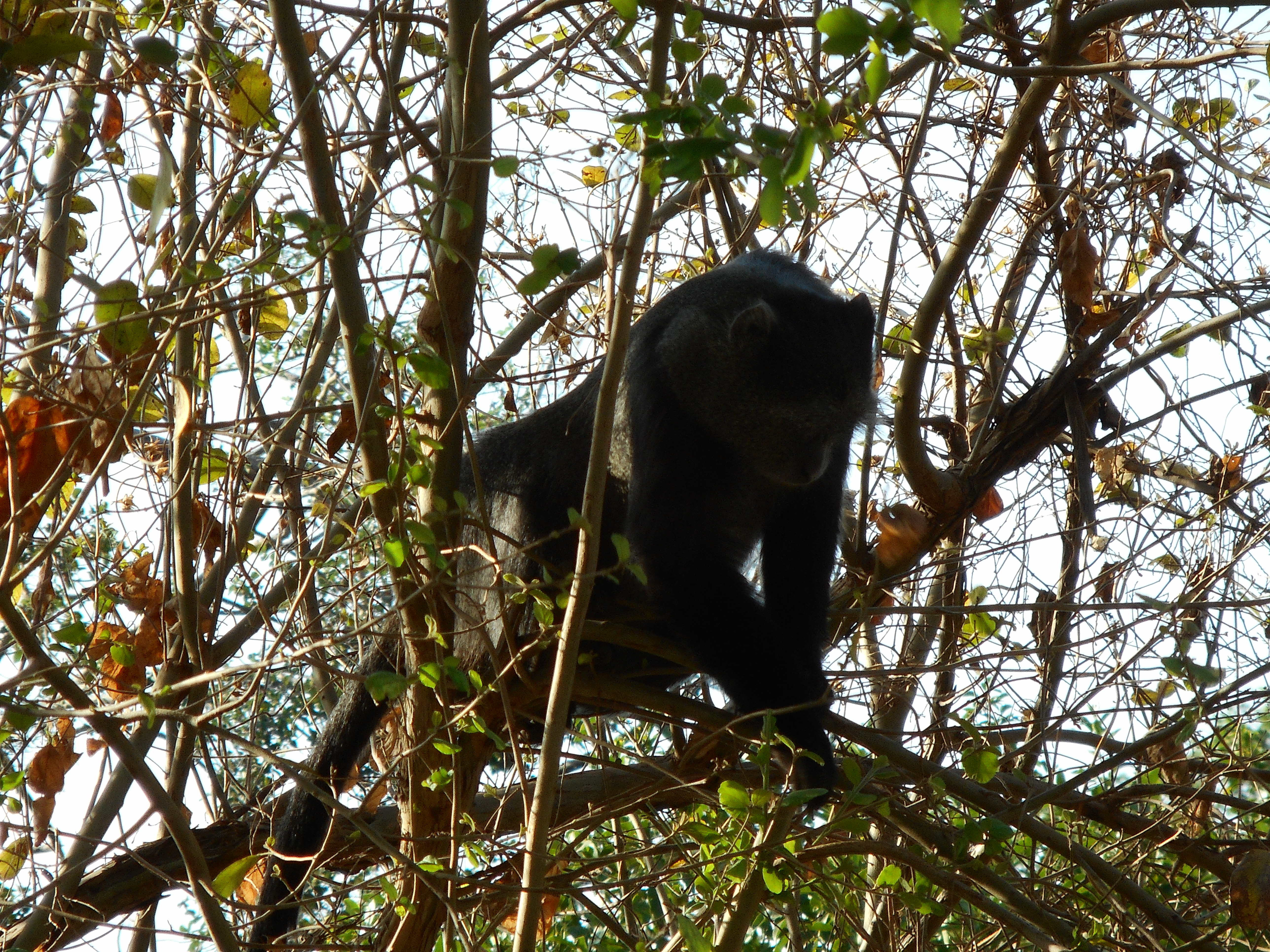
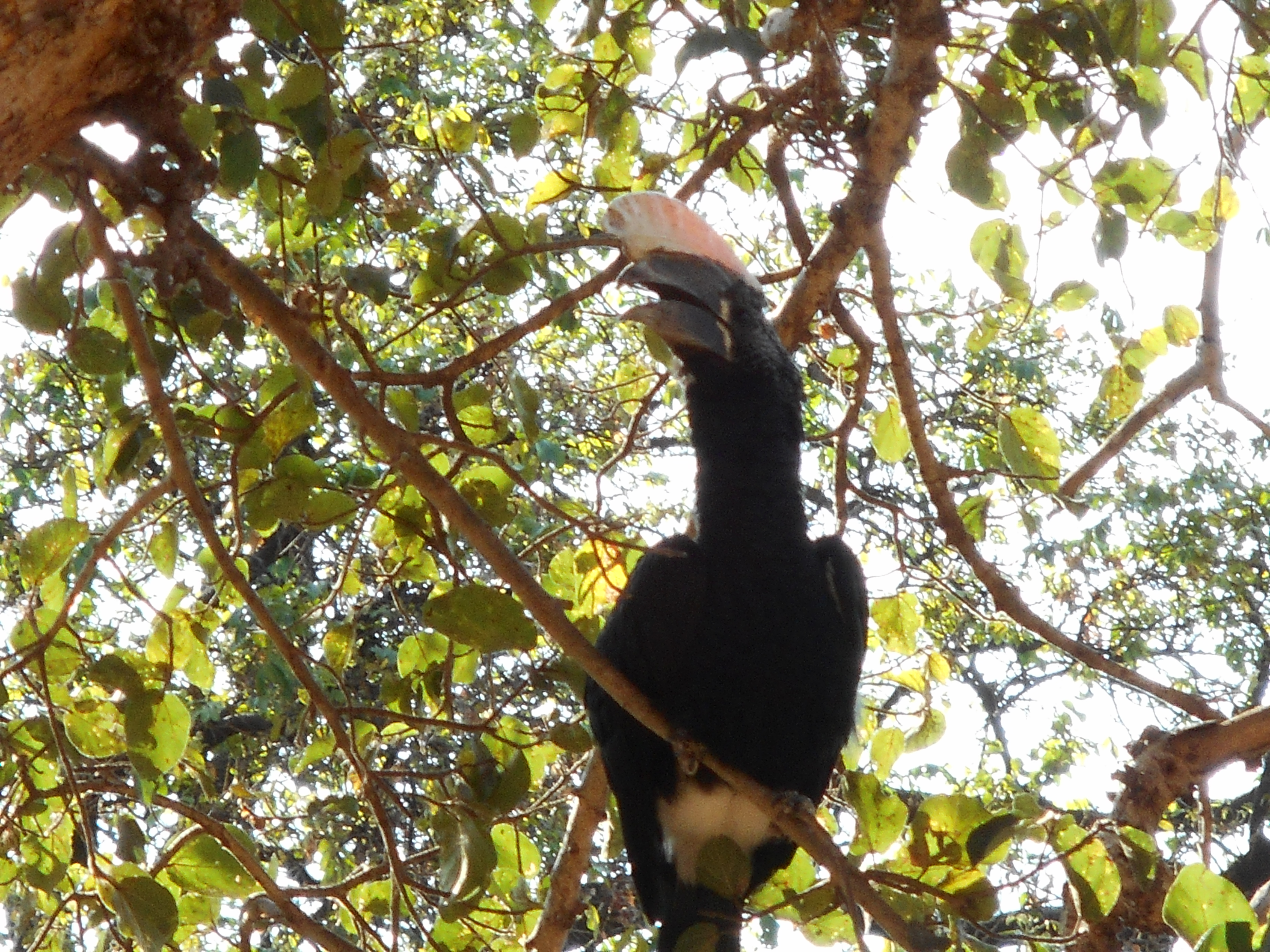
On our way to the lake we came across this Silver Cheeked Horned Bill. It was a huge bird, size of a turkey.
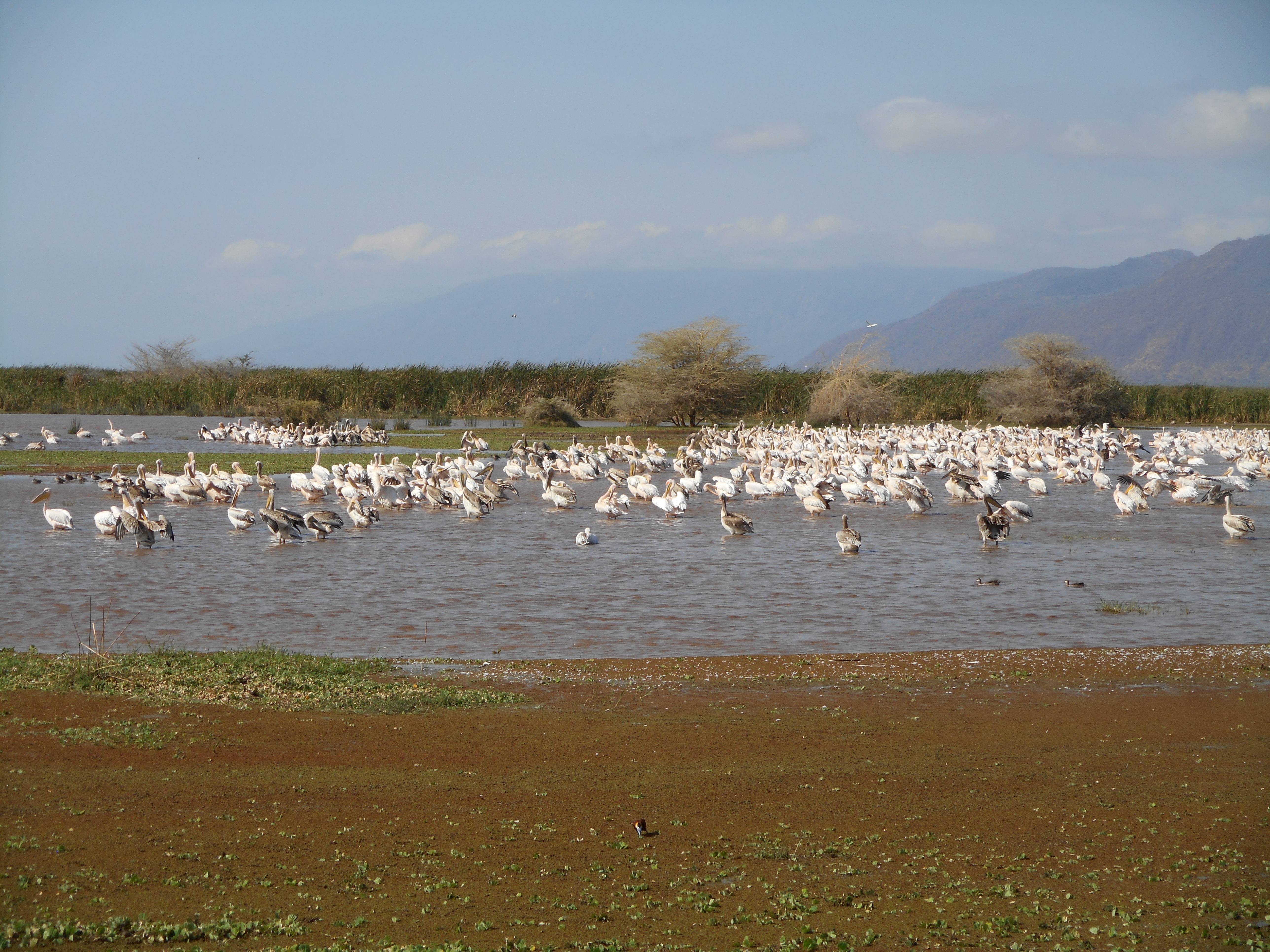
Lake Manyara is a soda lake, meaning high concentrations of sodium, which attract all kinds of wildlife.
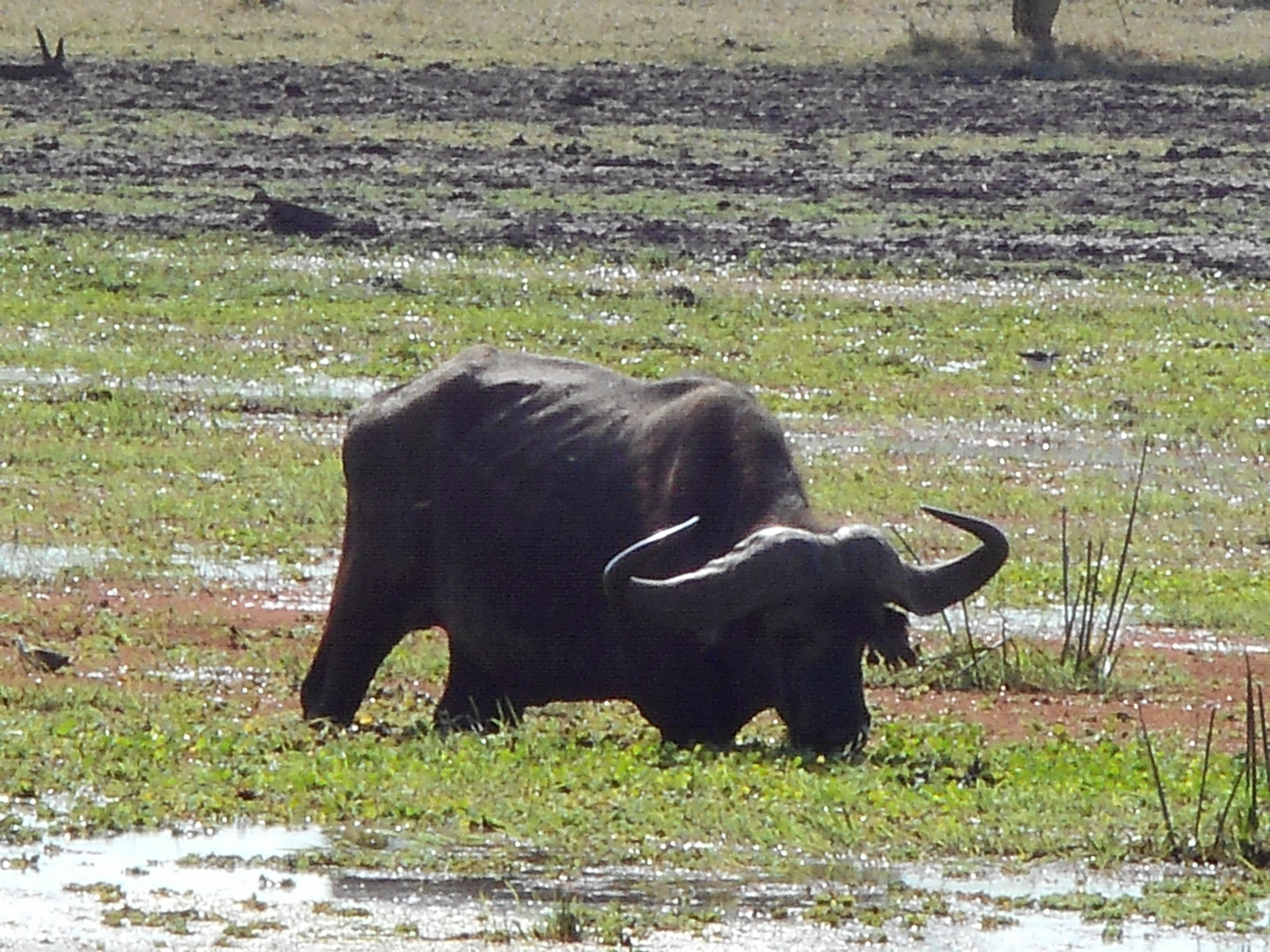
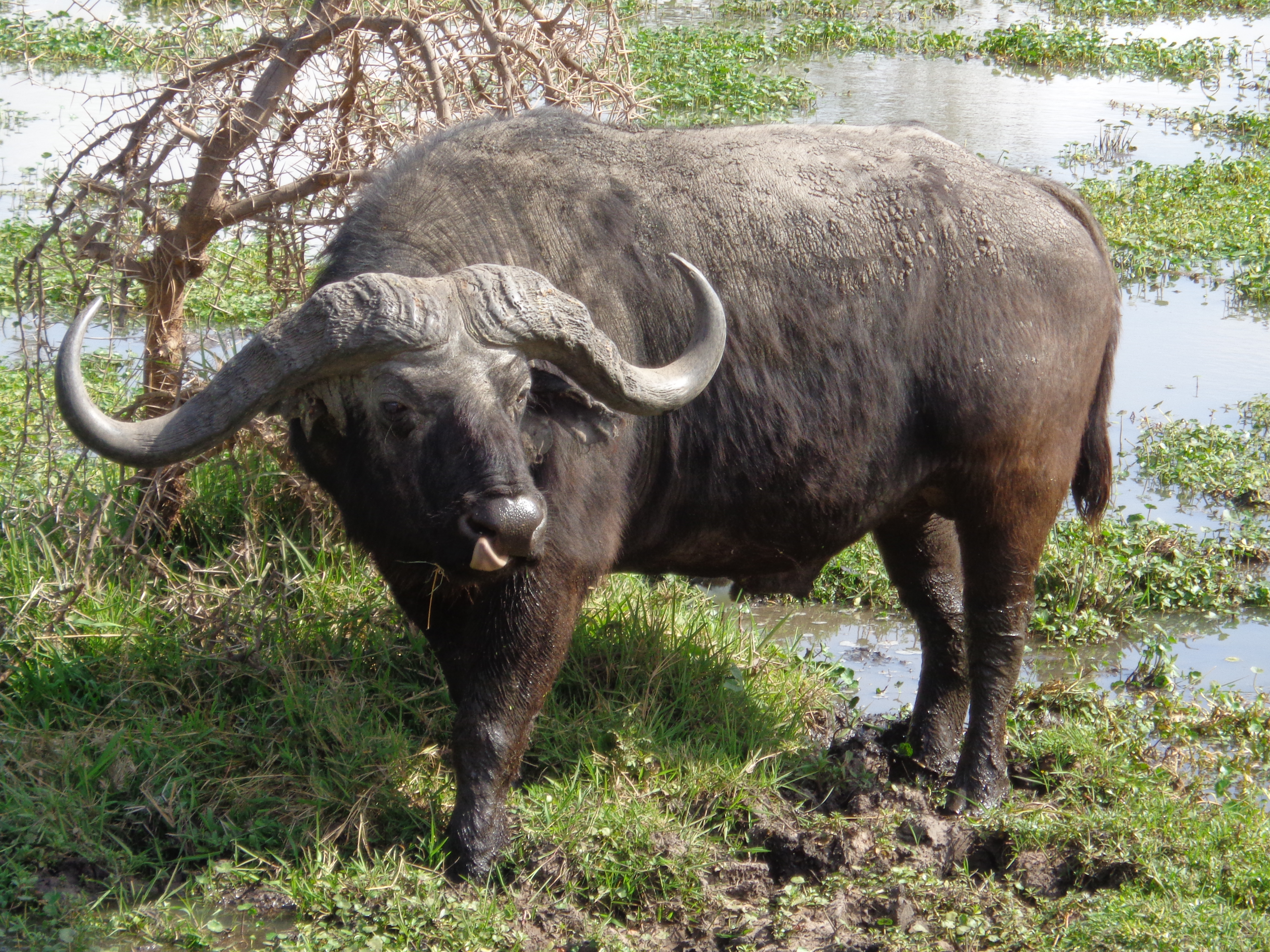
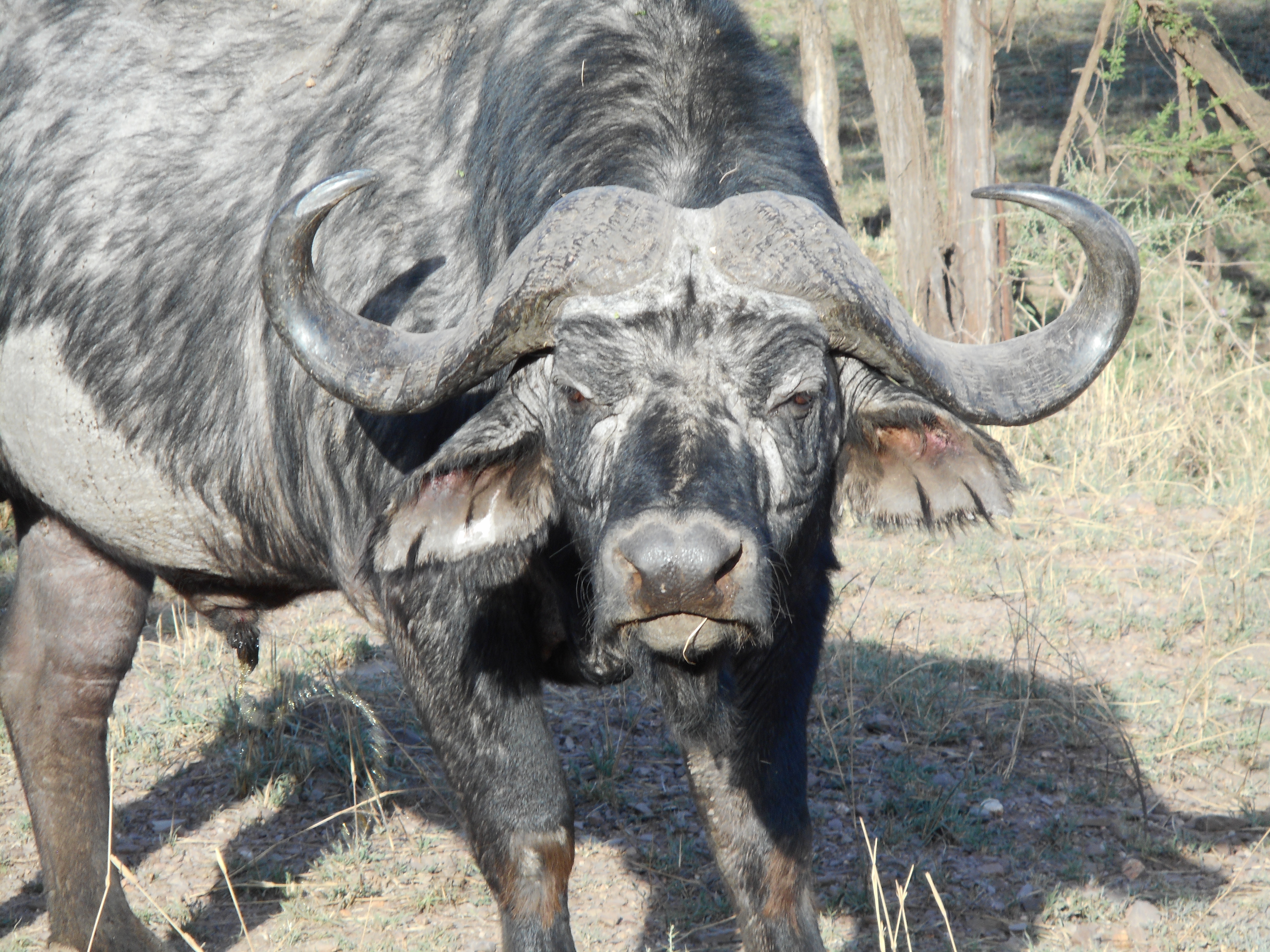
This is a Cape Buffalo, not to be confused with a Water Buffalo. There are no Water Buffalo here.
Pelicans in the water.
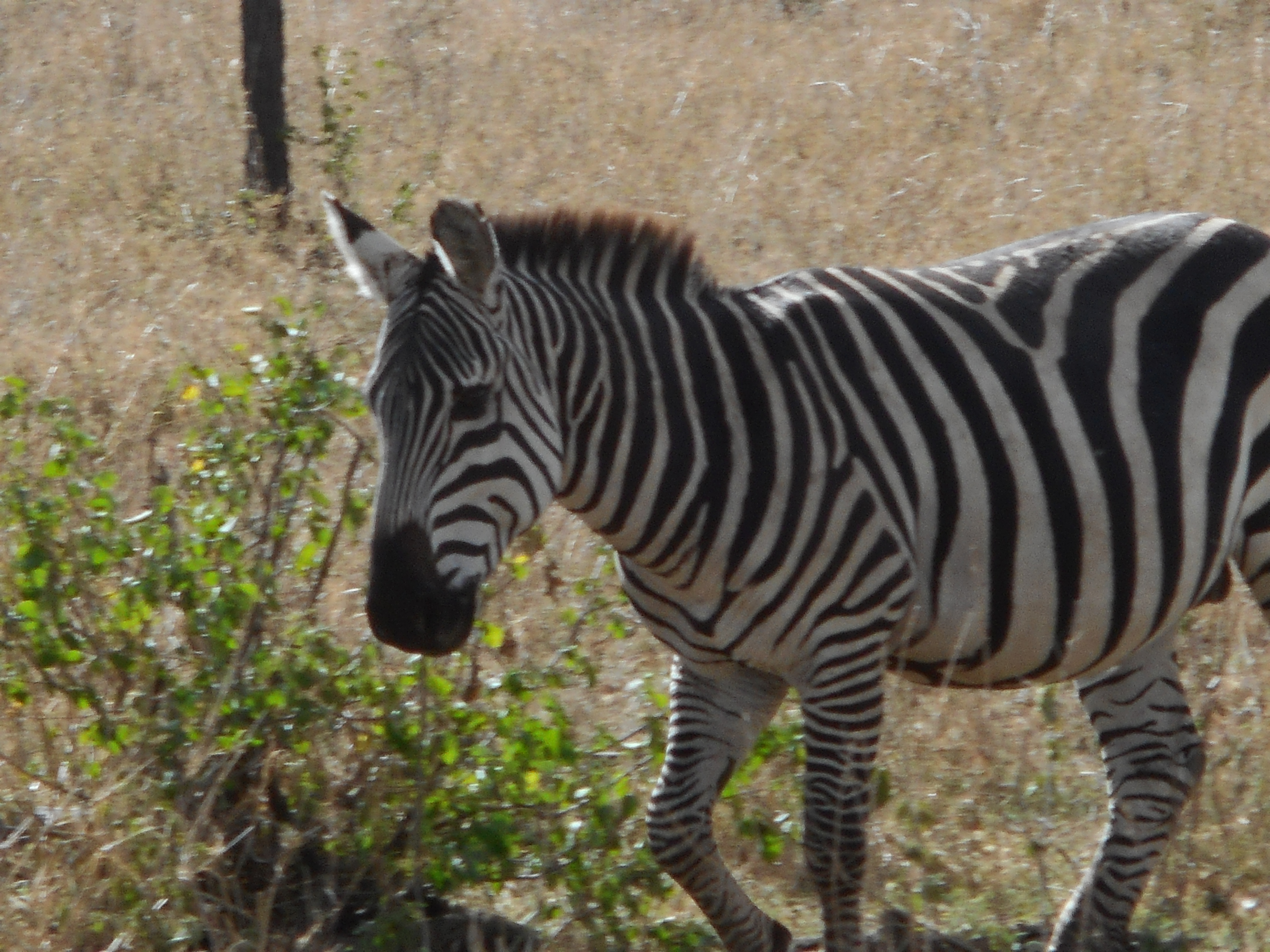
A pregnant Zebra. Martin, our guide, figured she had about two weeks to go.
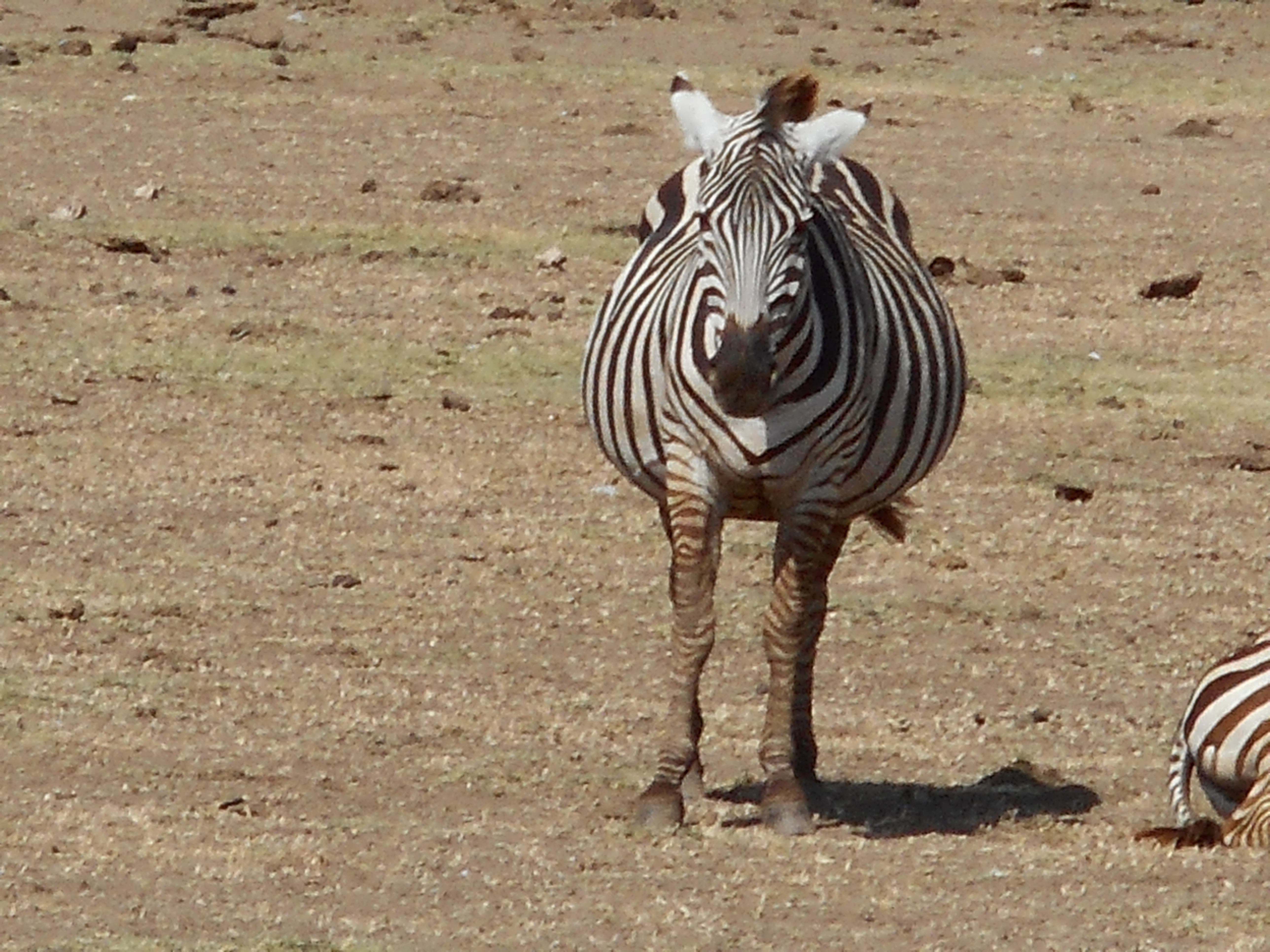
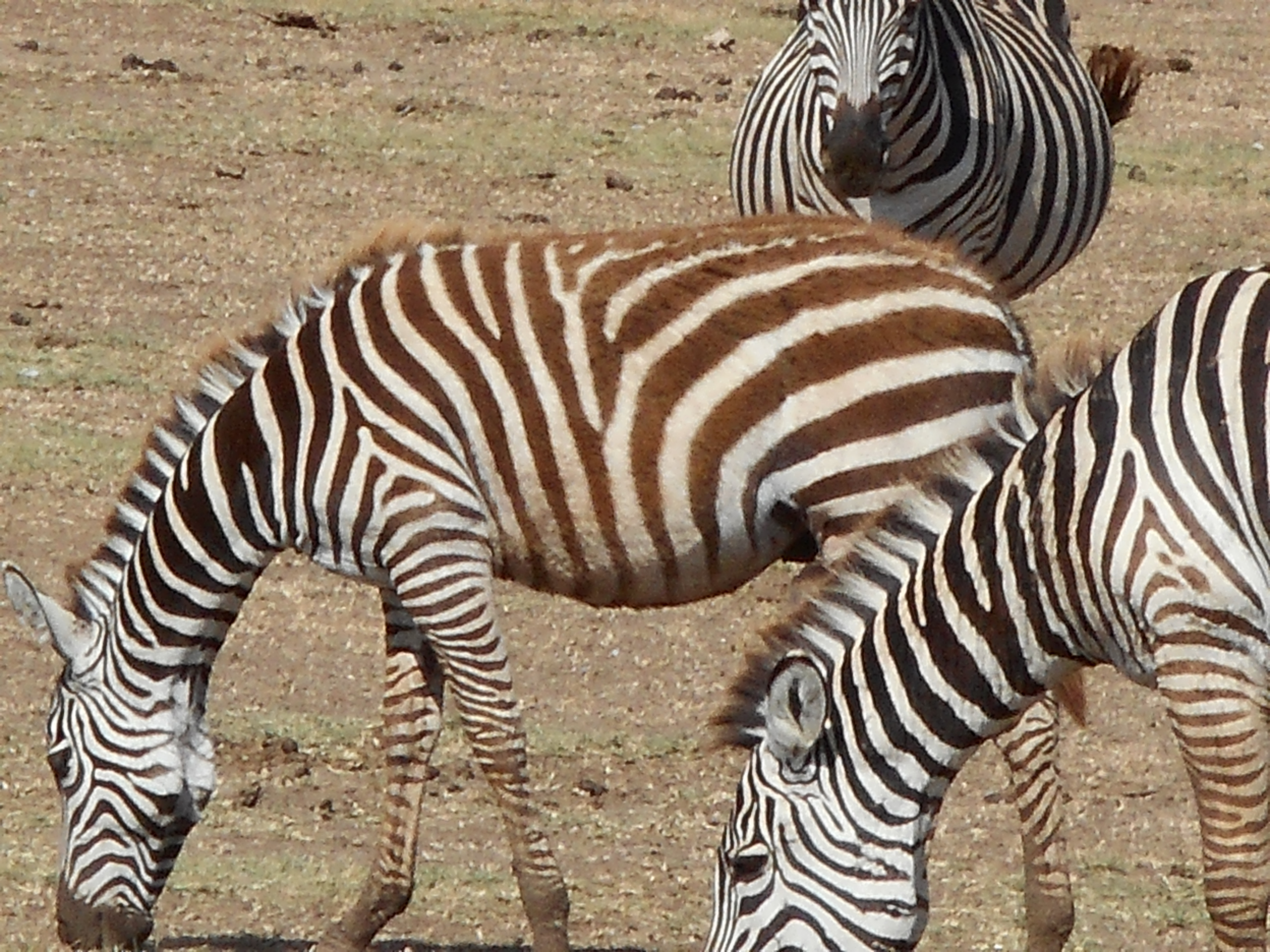
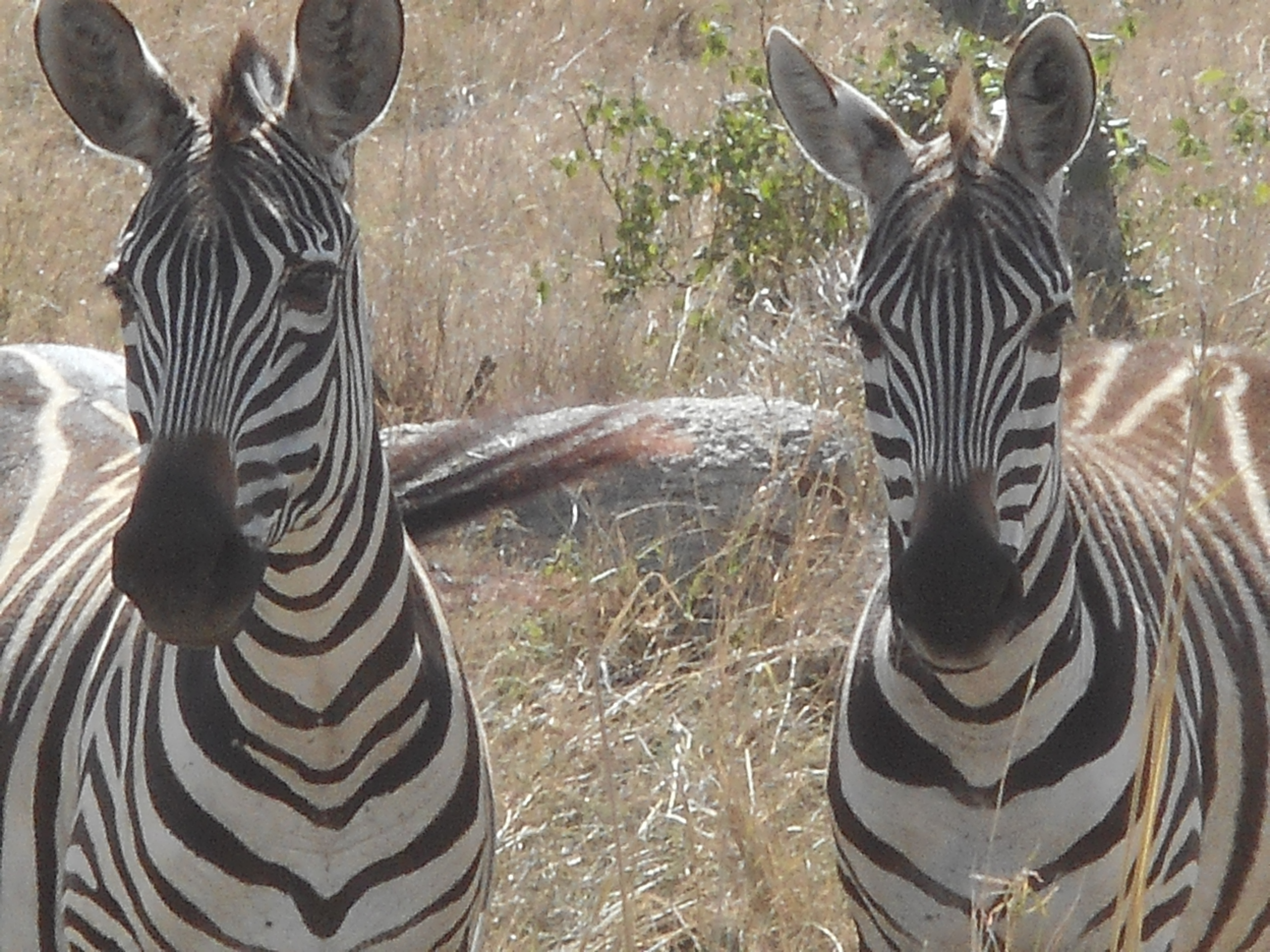
Zebra stripes start out brownish and turn black as they grow older.
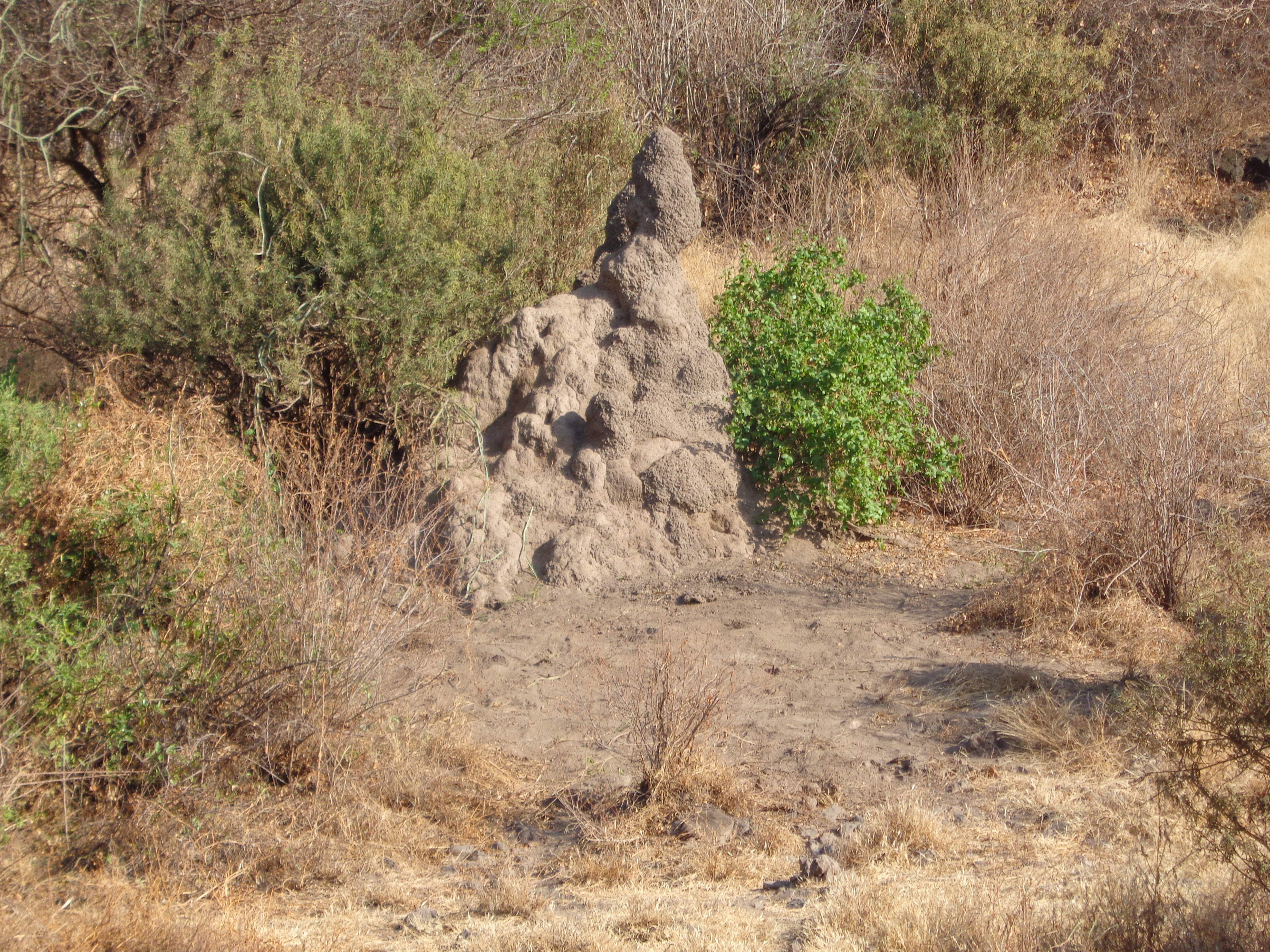
Termite mount. Five feet high.
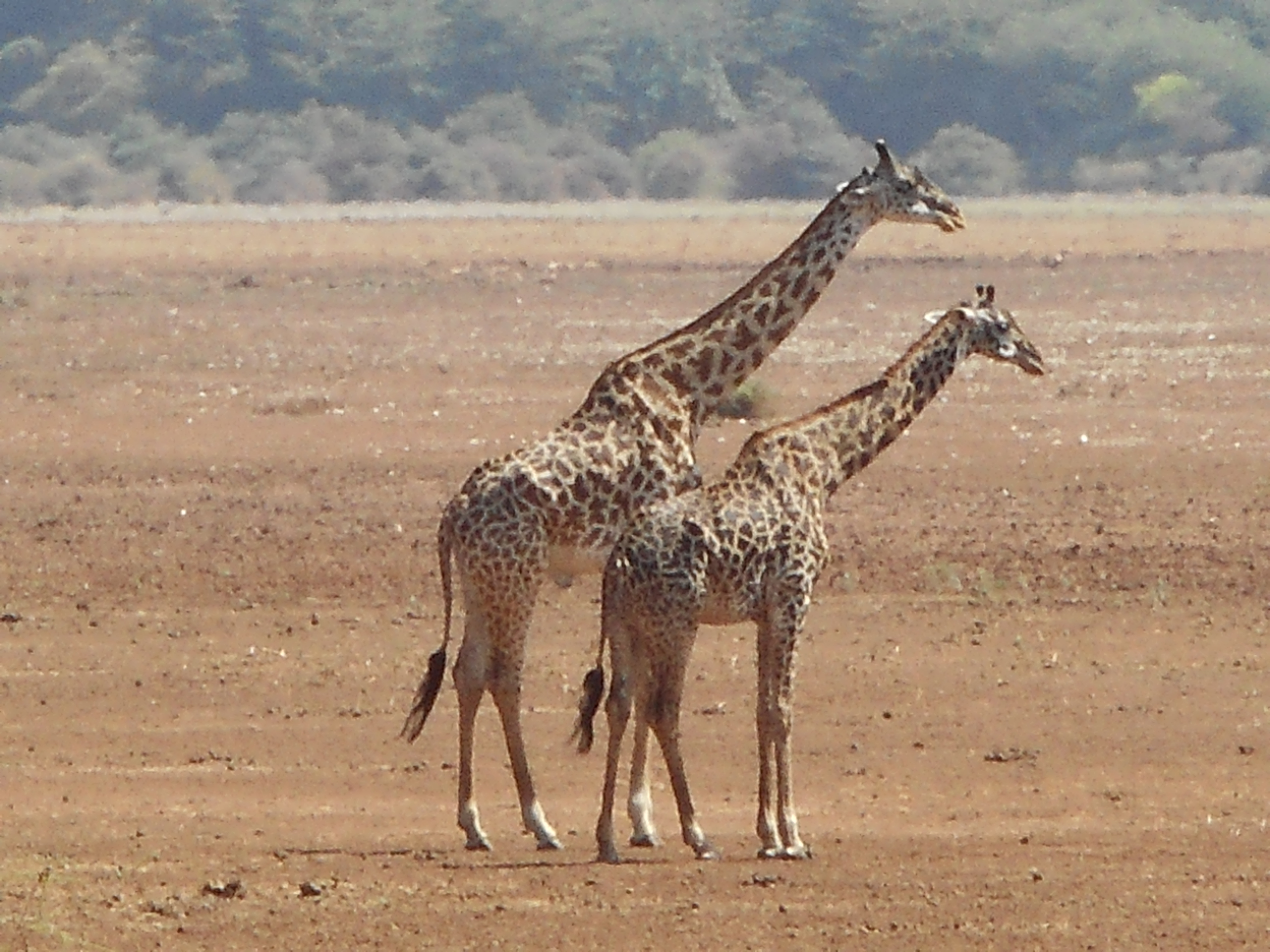
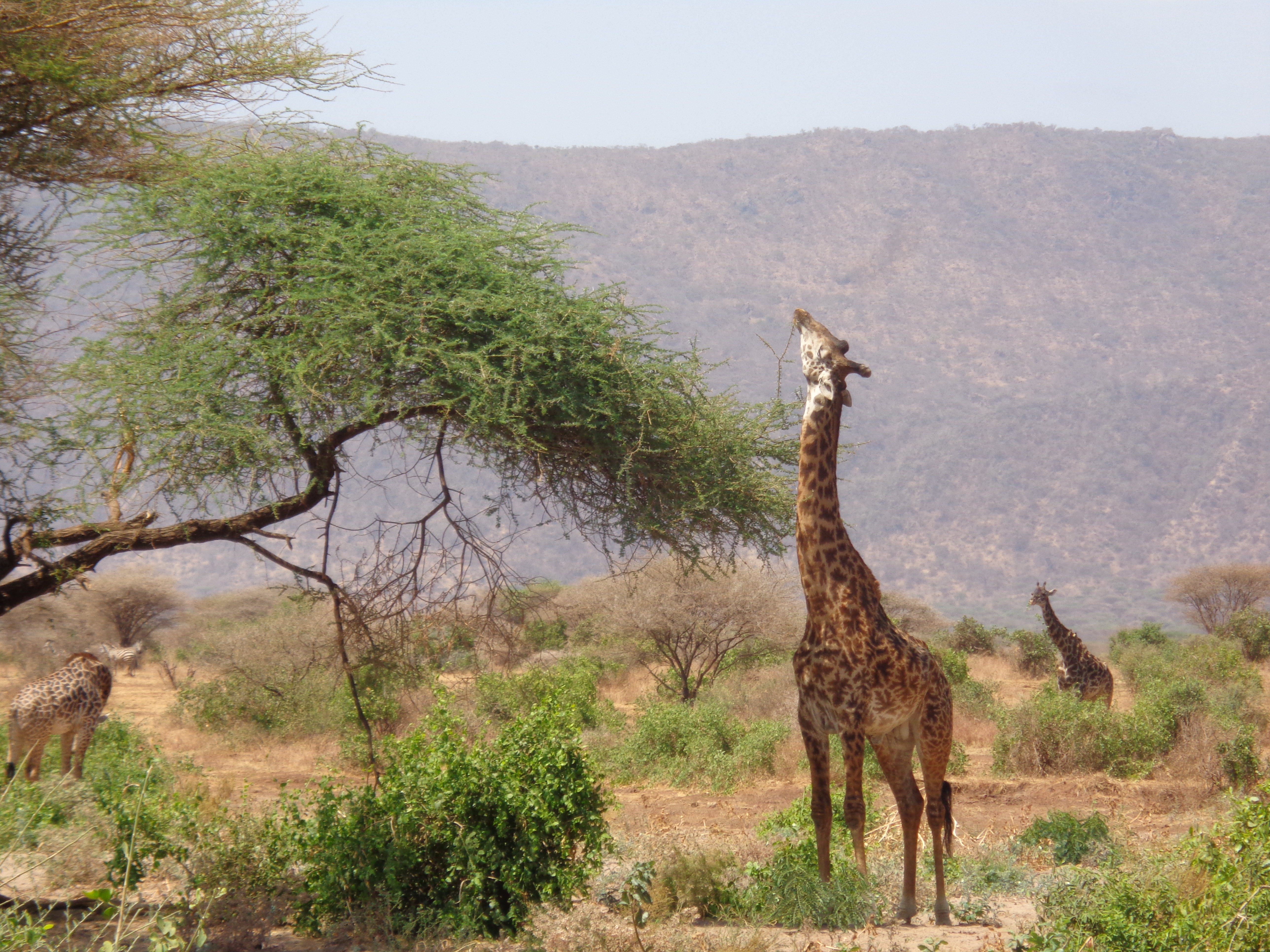
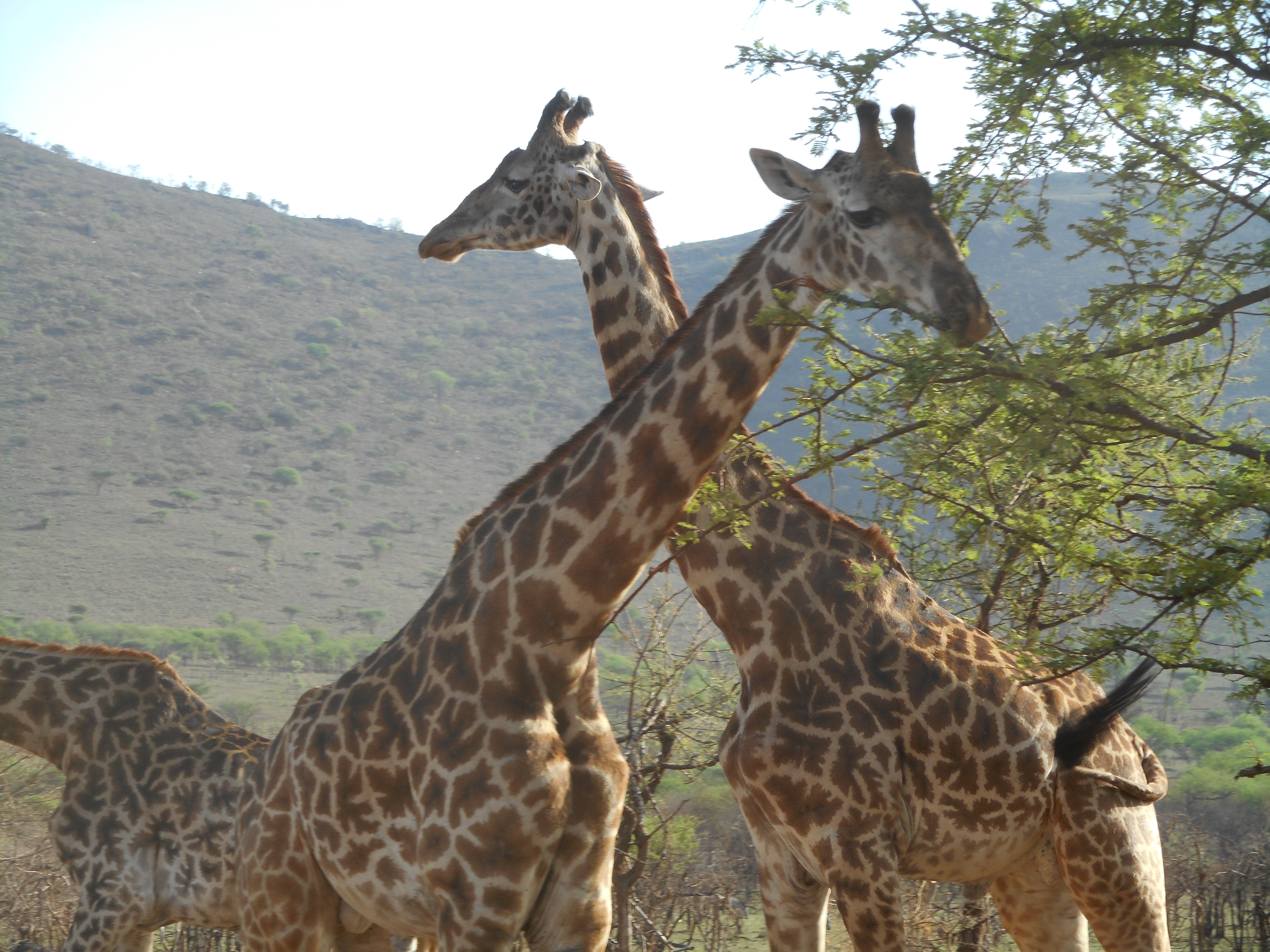
Giraffes. These are Masai giraffes. You can tell by the irregular brown spots, like puzzle pieces. The other giraffes we saw were called Reticulated. They have rounder, more uniform brown spots.
Our first spotting of an elephant. Again, we were really excited.
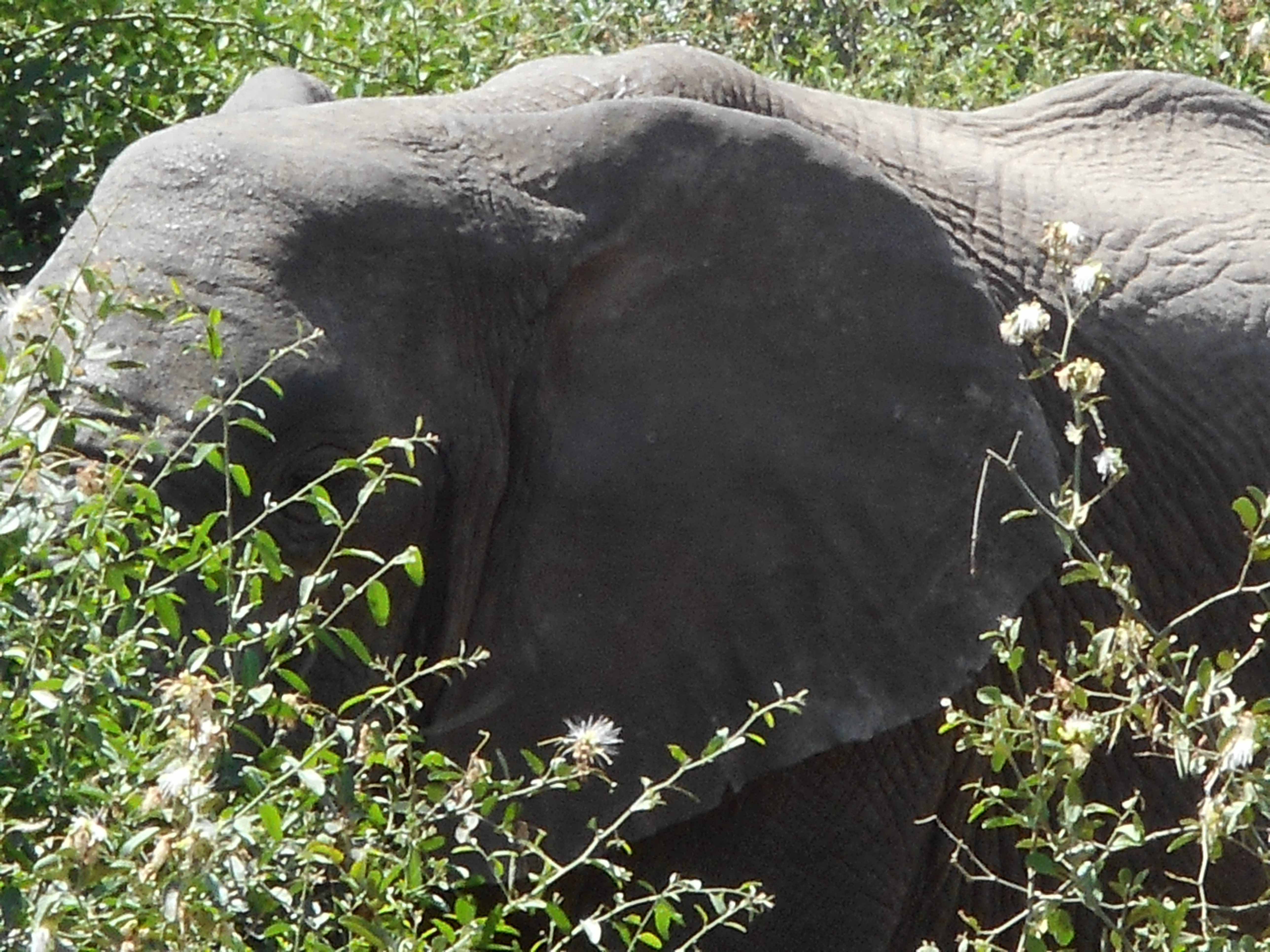
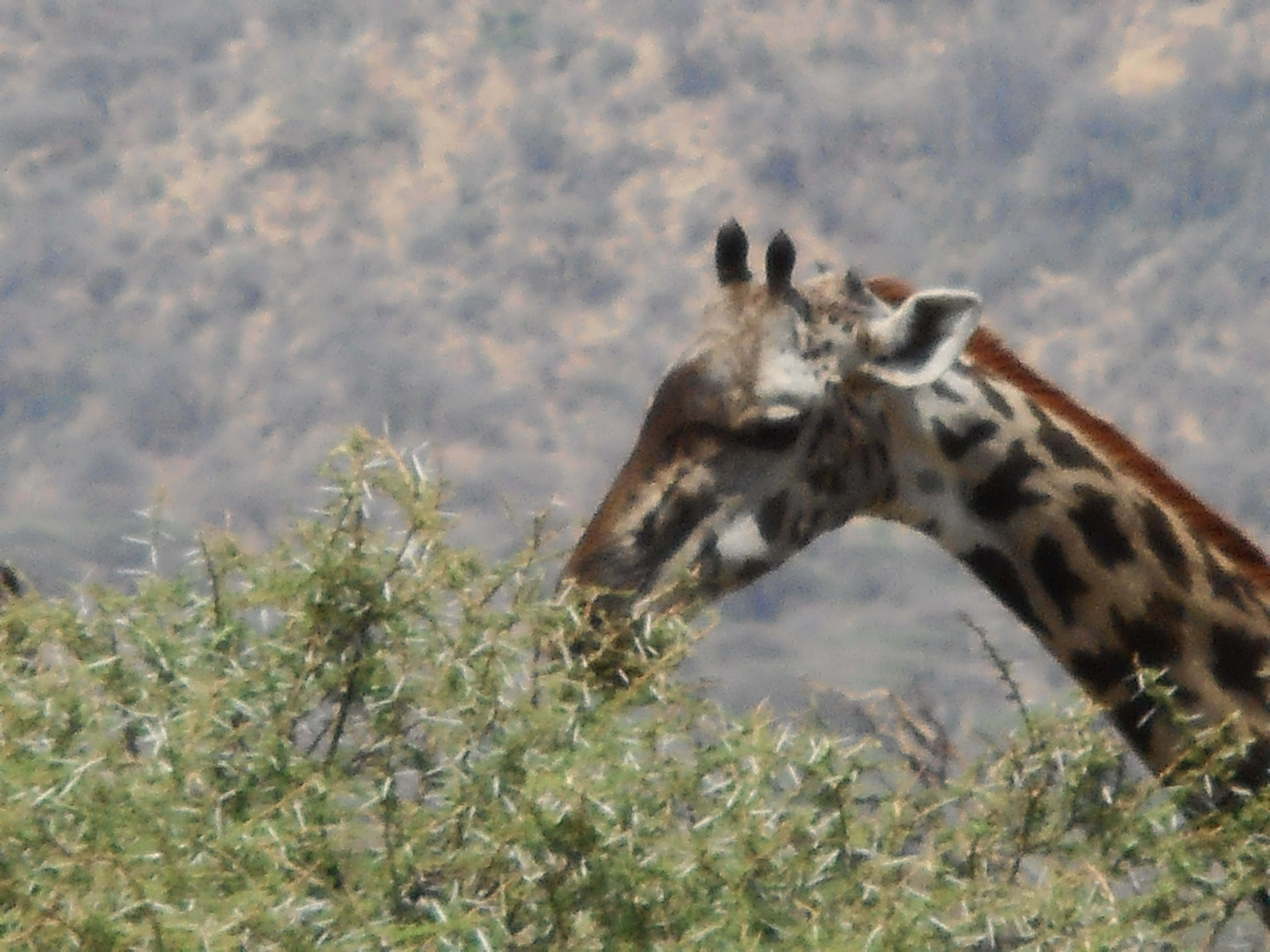
Some more giraffes.
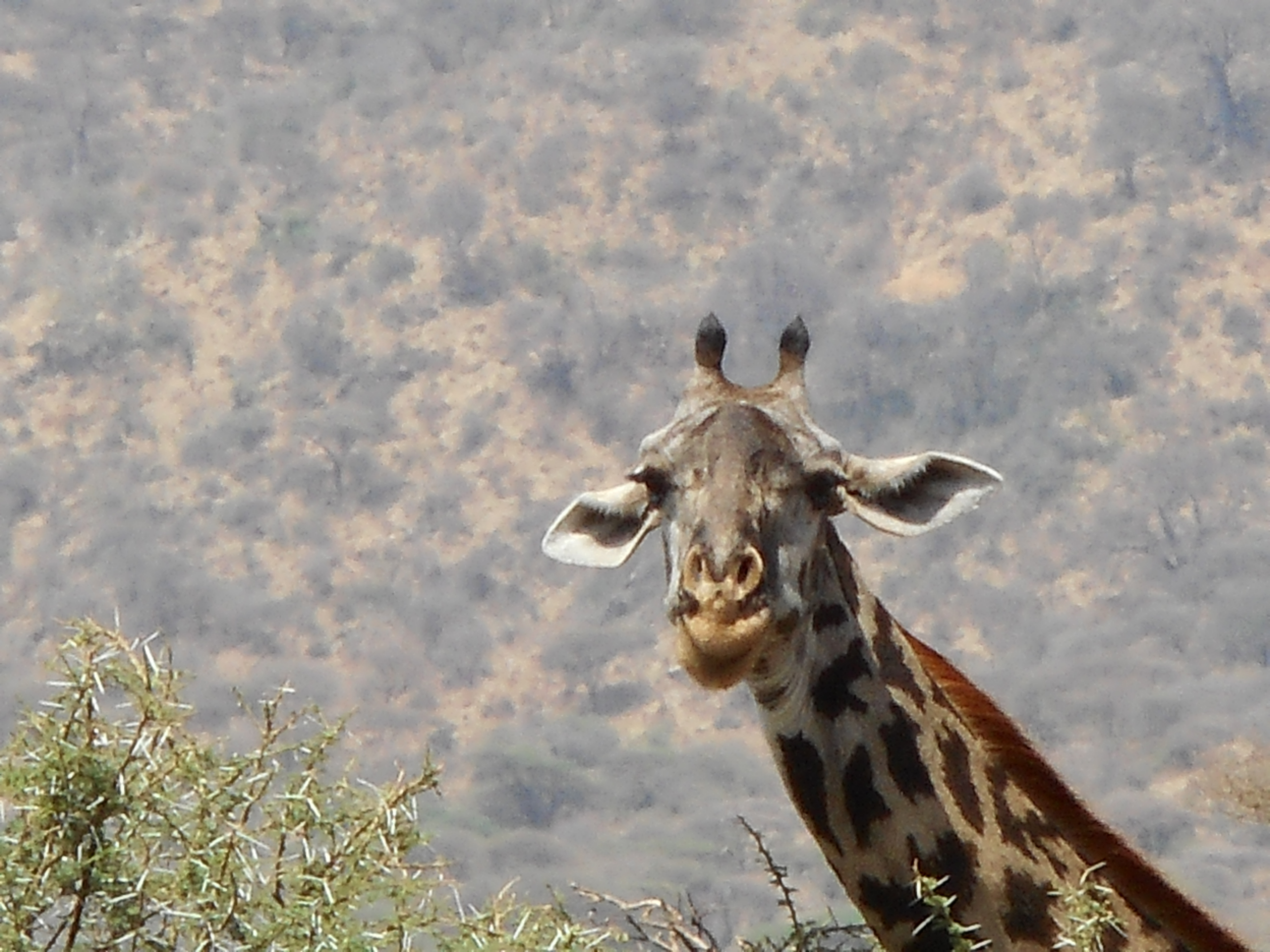
Isn’t she cute?
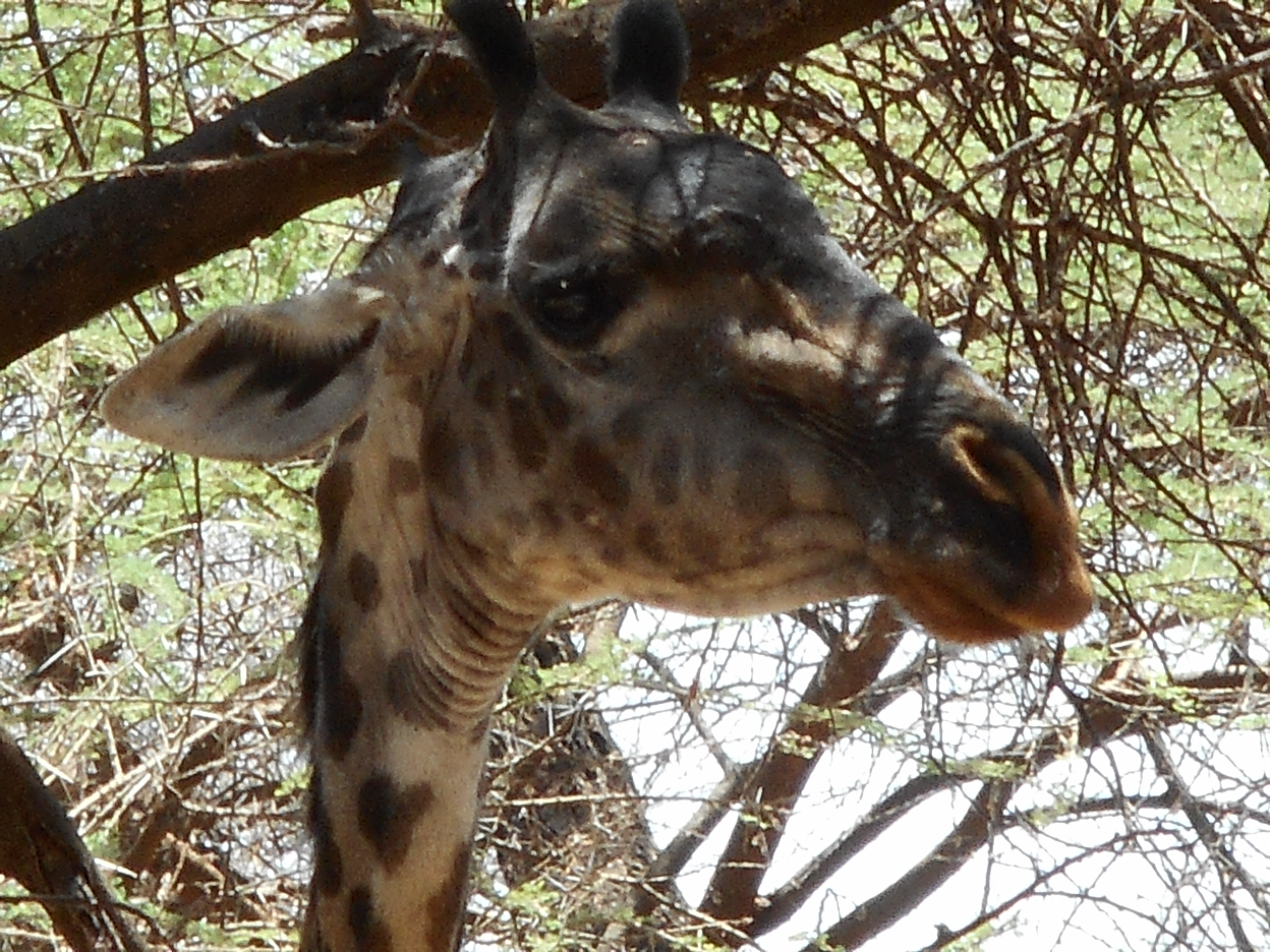
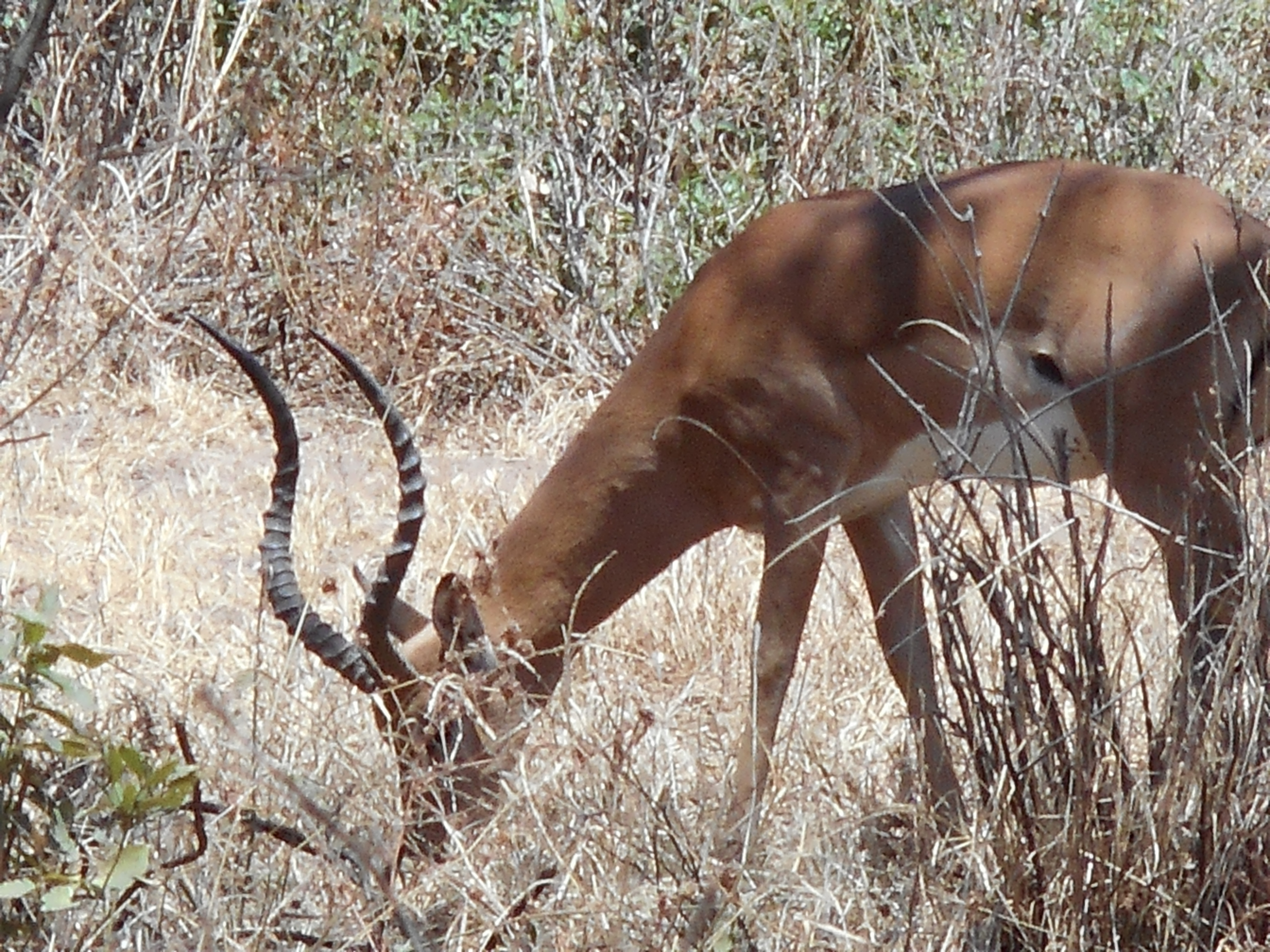
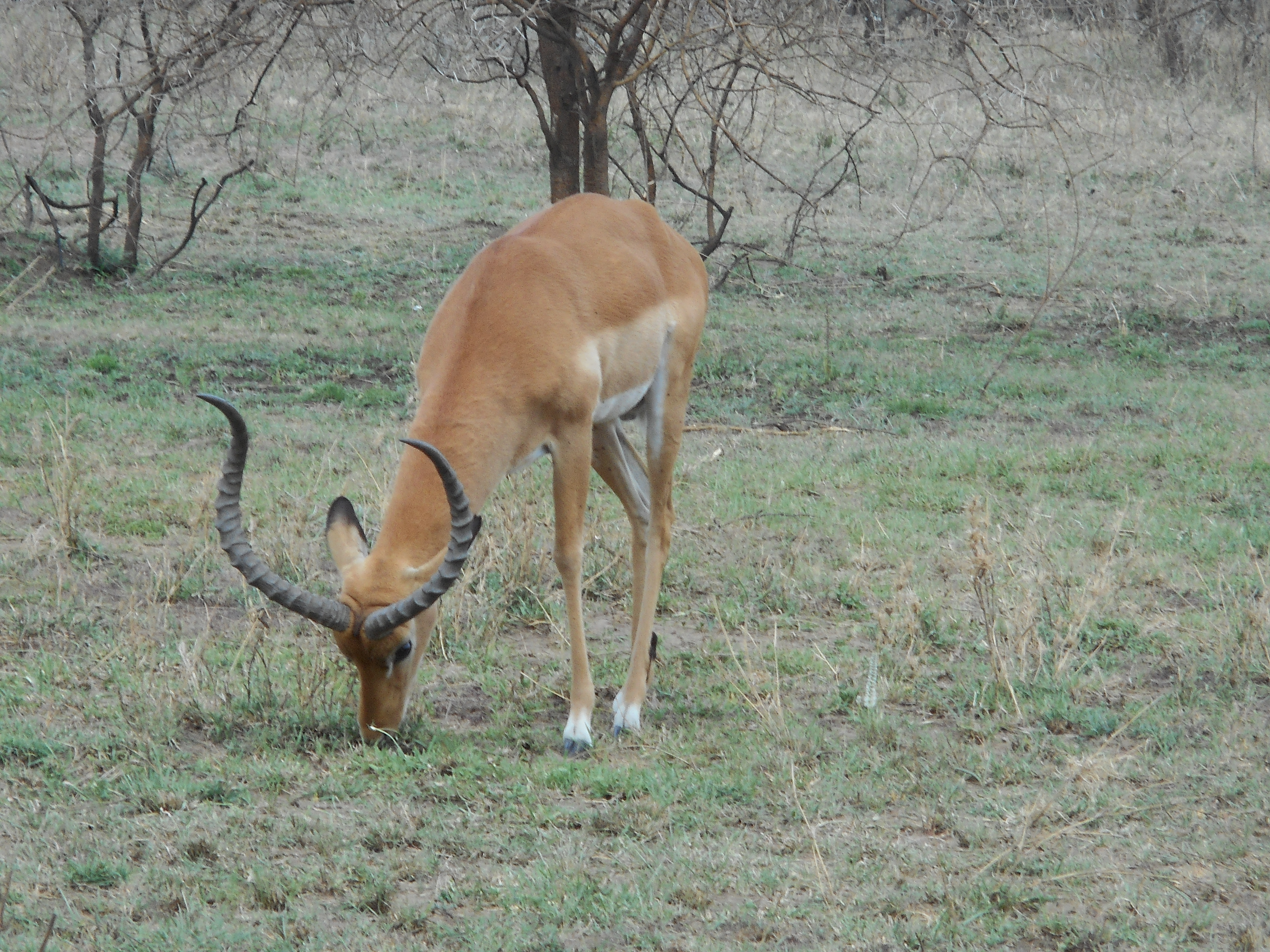
This is a Grant Gazelle. They have a brown side, where as the Thompson Gazelle has a black stripe on its side.
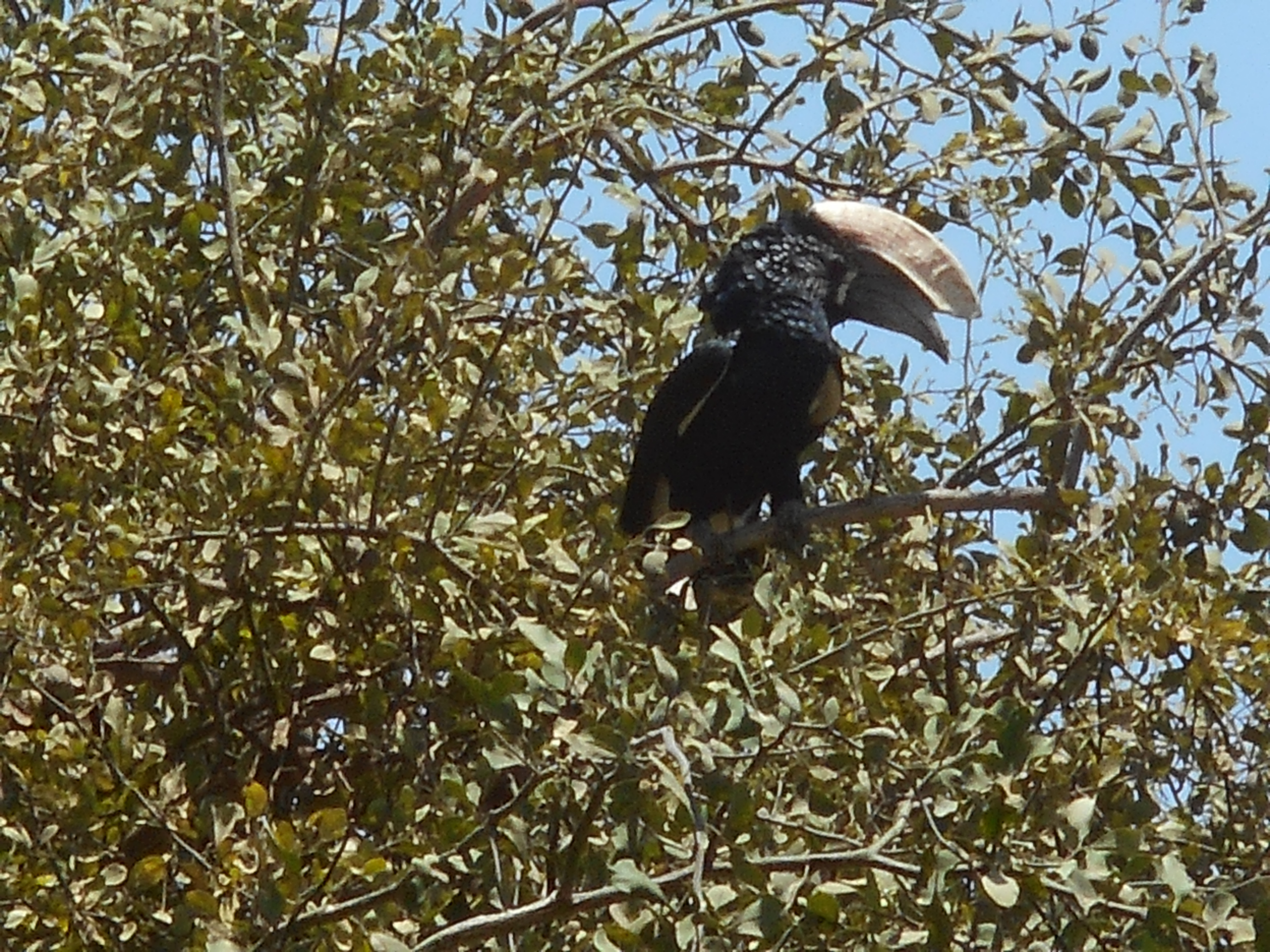
Another Silver Cheeked Horned Bill.
See the really jagged pattern of brown spots on his body, almost like leaves.
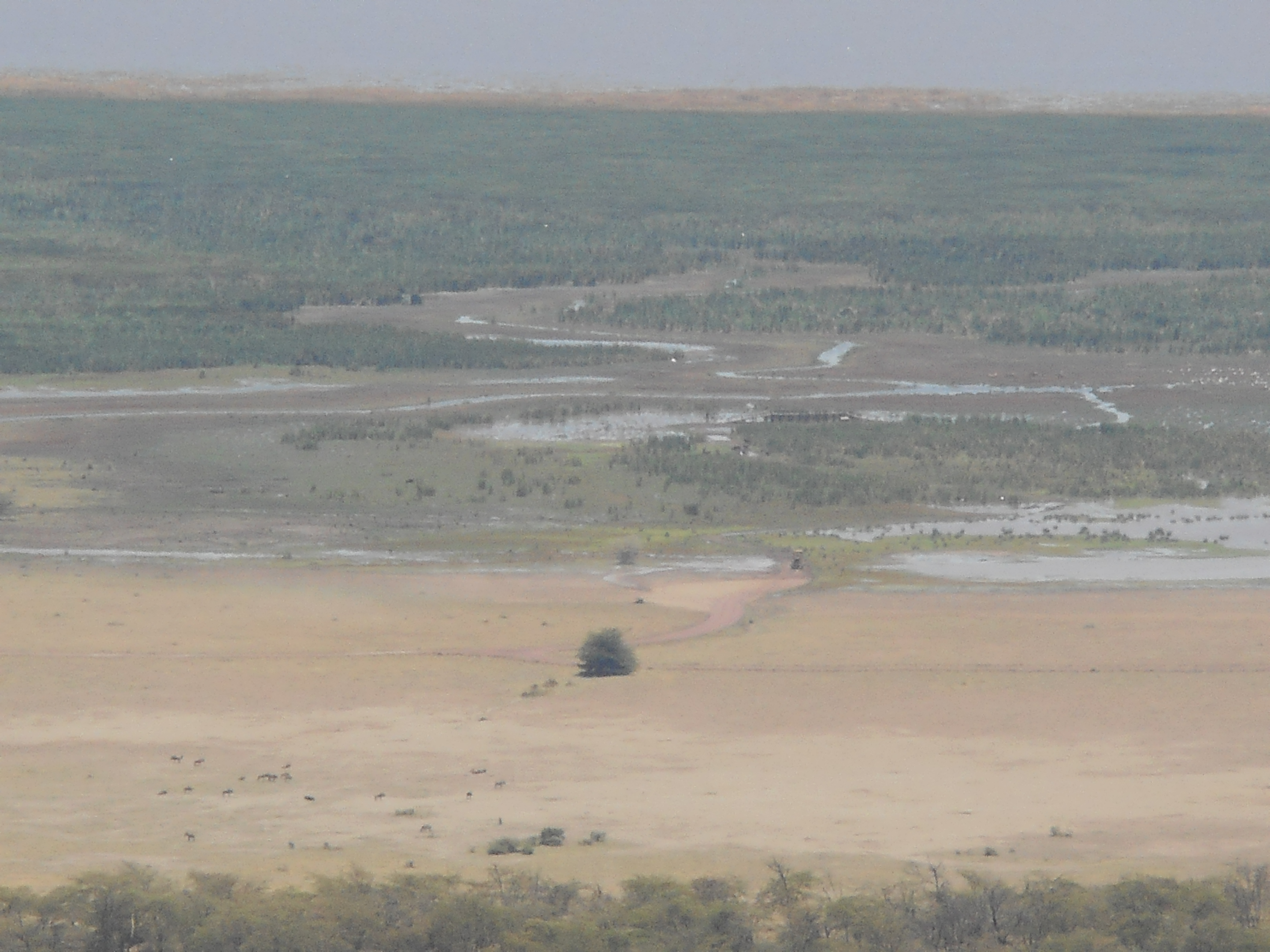
Last look at part of the park before heading back to the lodge.
The next day we headed to the Ngorongoro Crater.
At the gate we were again greeted by baboons. We were warned to keep the windows closed and not have any food on us whatsoever. The baboons here had learned to raid any jeeps with open windows. They would jump in and raid the jeep for the boxed lunches provided. We actually saw one jump in the open roof of a jeep and all the occupants scattered out the doors. Quite comical, actually, if it wasn’t happening to you. The guy in this video was lucky.
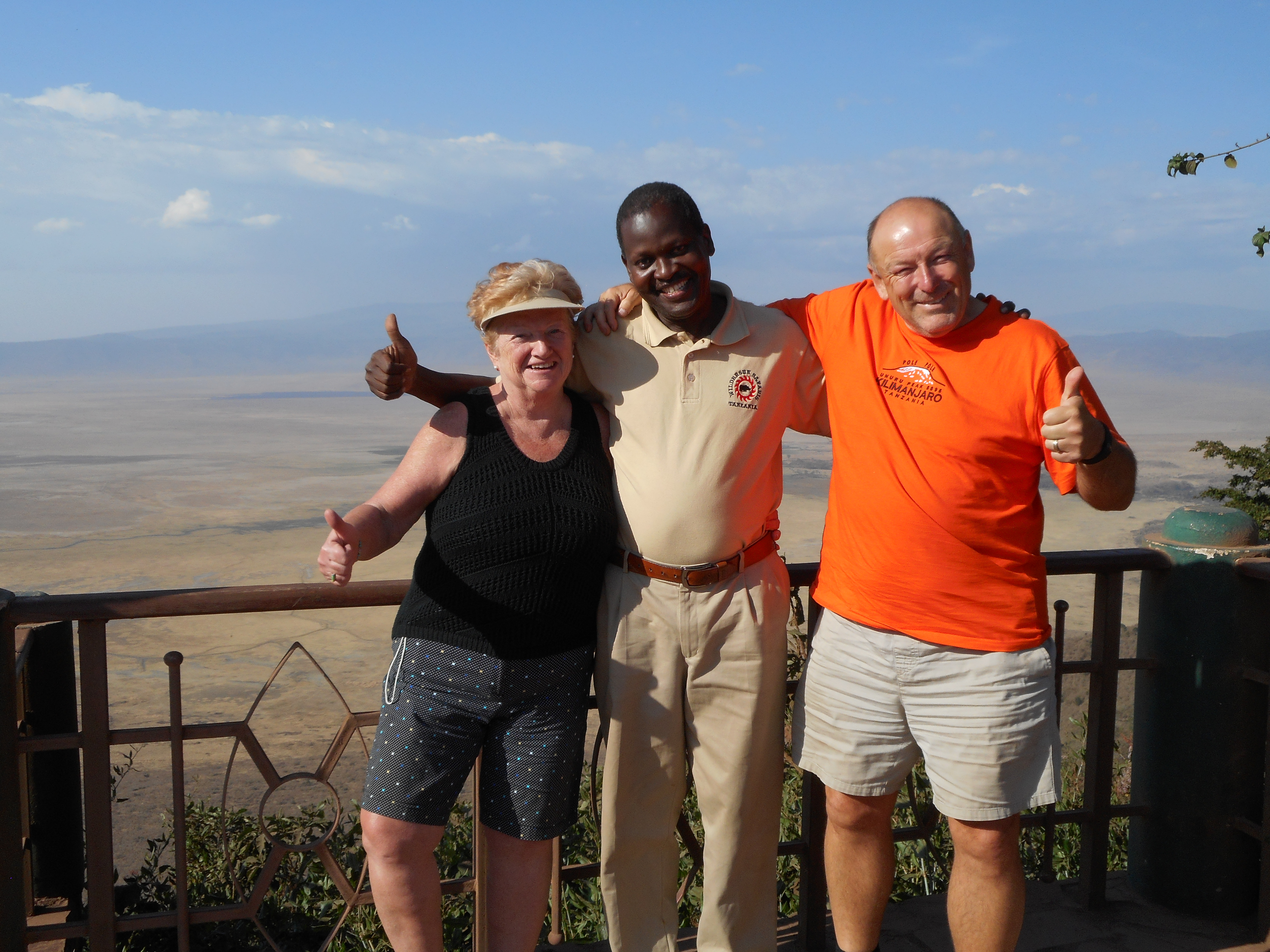
Here we are with our guide, Martin at the edge of the crater.
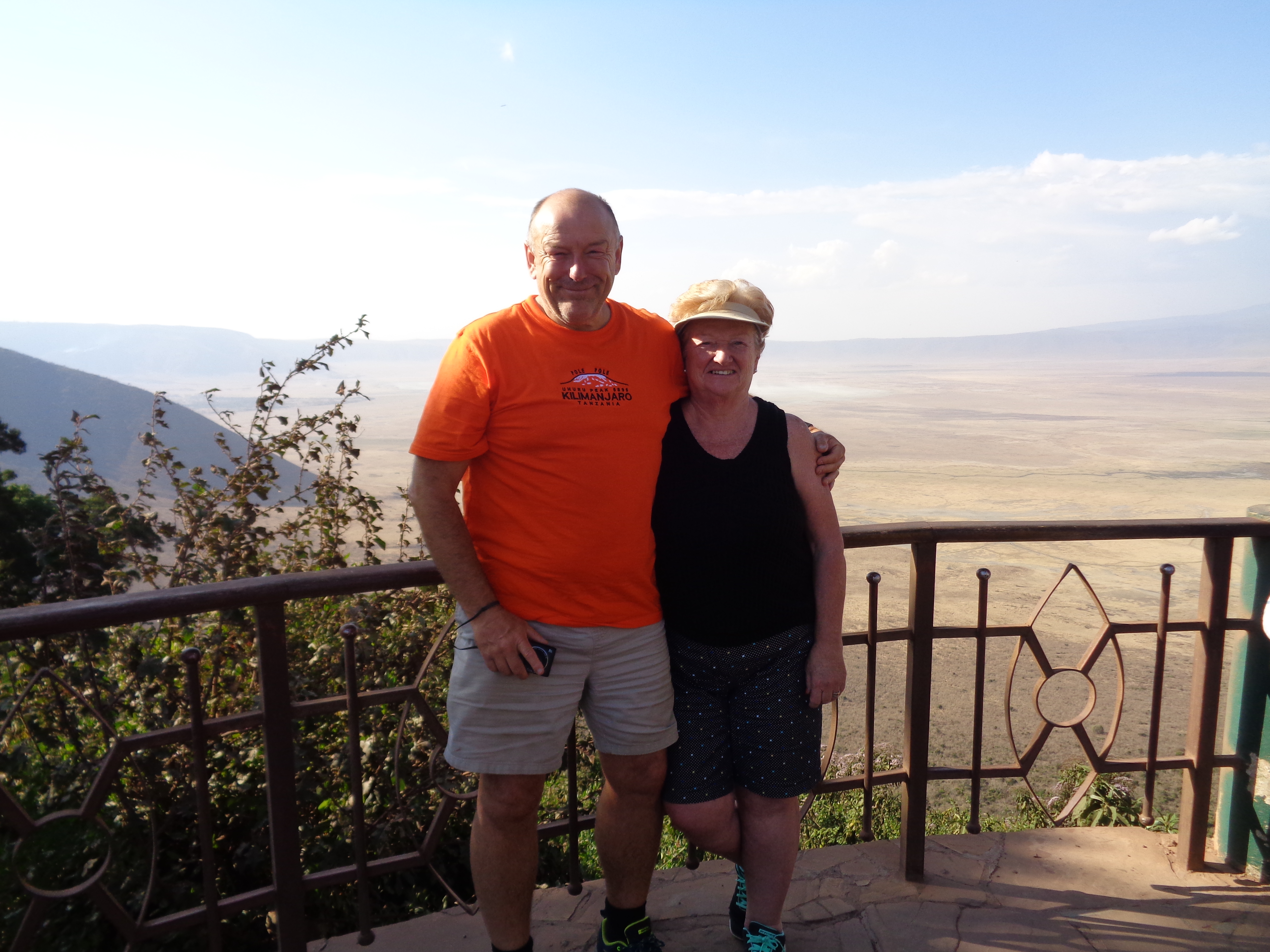
Deanna and June
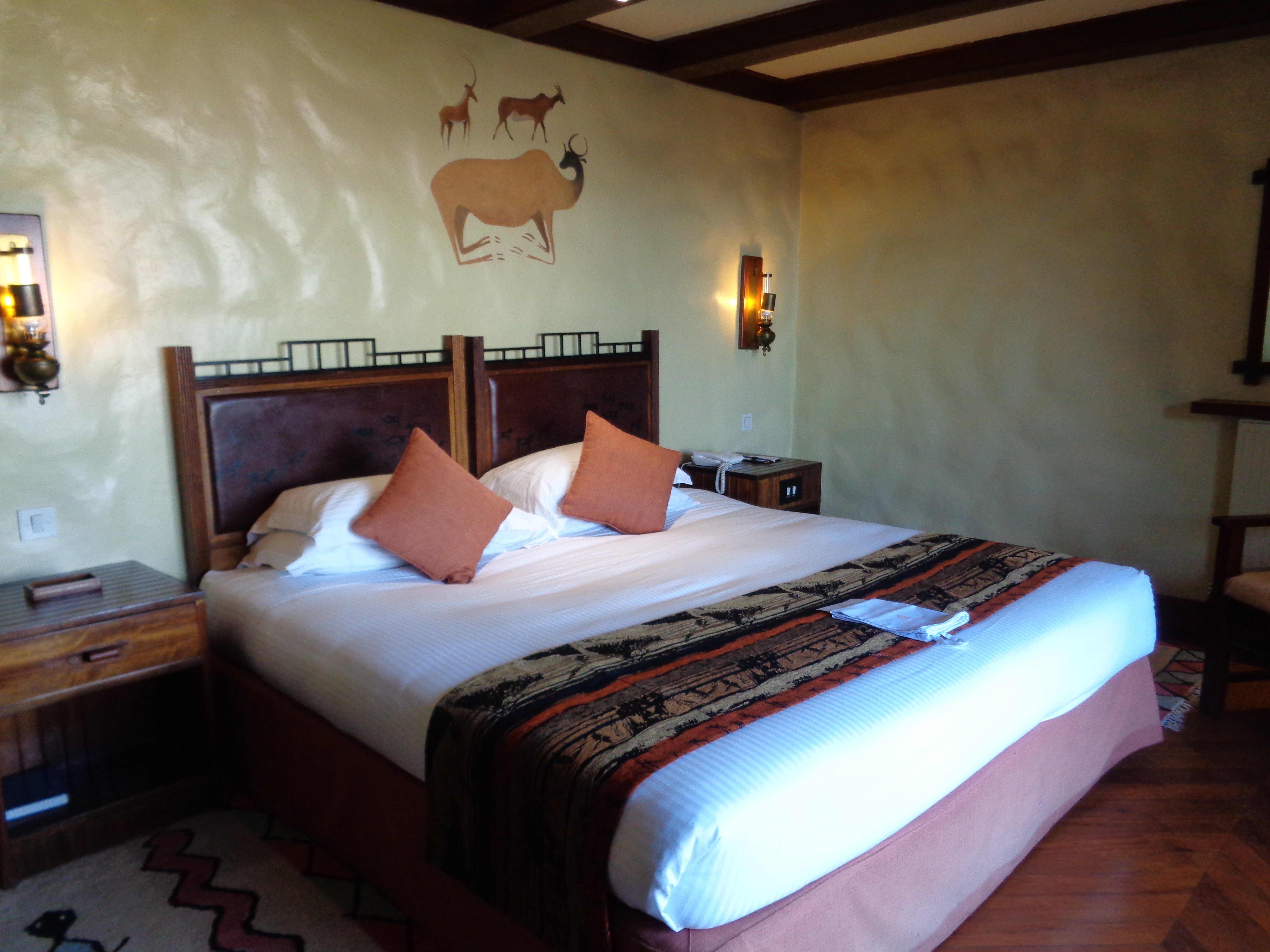
Arrived at the Ngorogoro Serena Safari Lodge. We were around 8,000 ft here, and a little cooler, especially at night. Went down to 60. During supper, the turn down service put the heaters on, closed the windows and put hot water bottles in the bed so we wouldn’t freeze. The person doing the turn down service was in long pants and a hoodie. We shut off the heaters and opened the windows, and got rid of the hot water bottles. Stayed here 2 nights.
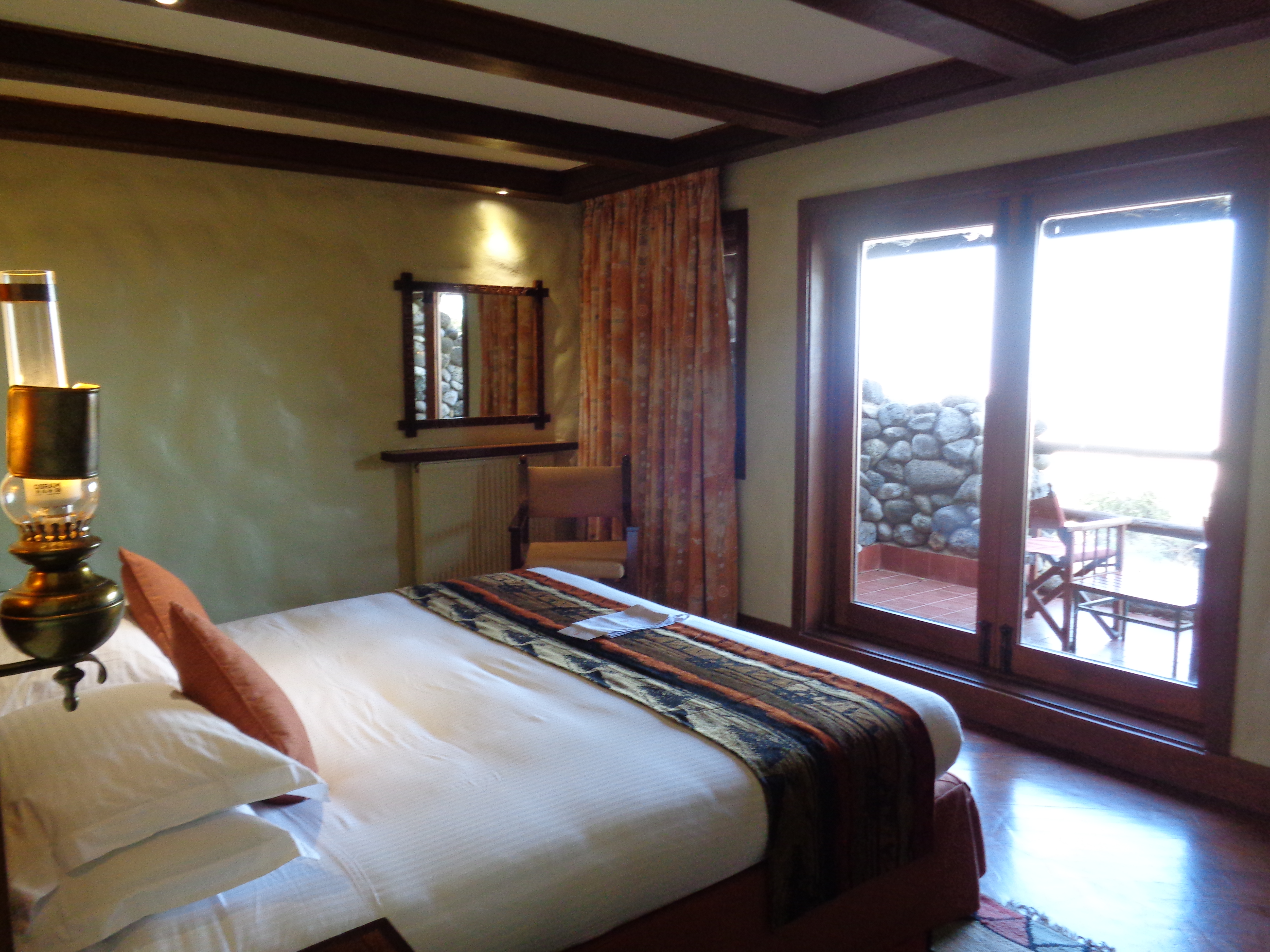
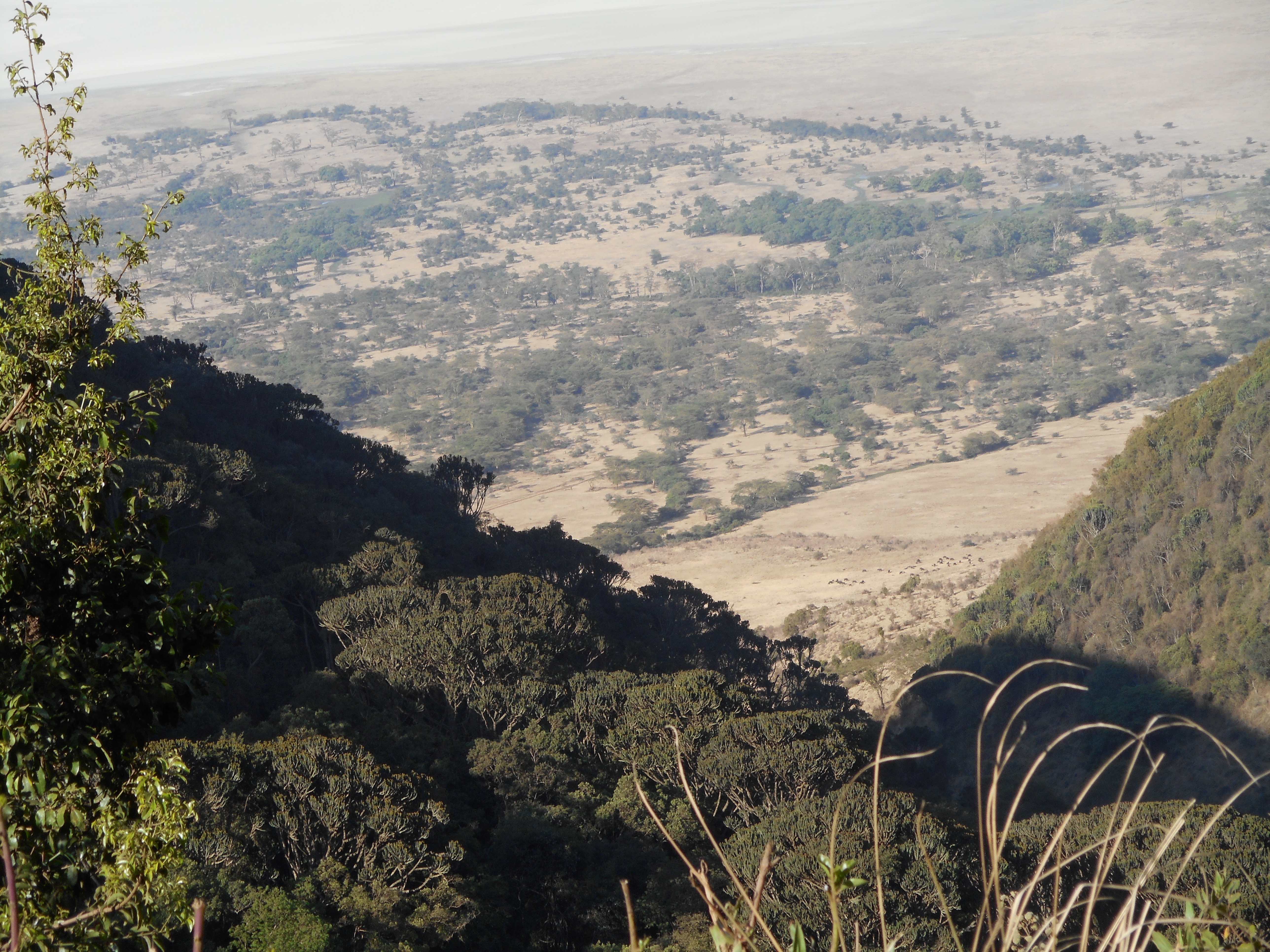
The crater from the balcony of our room.
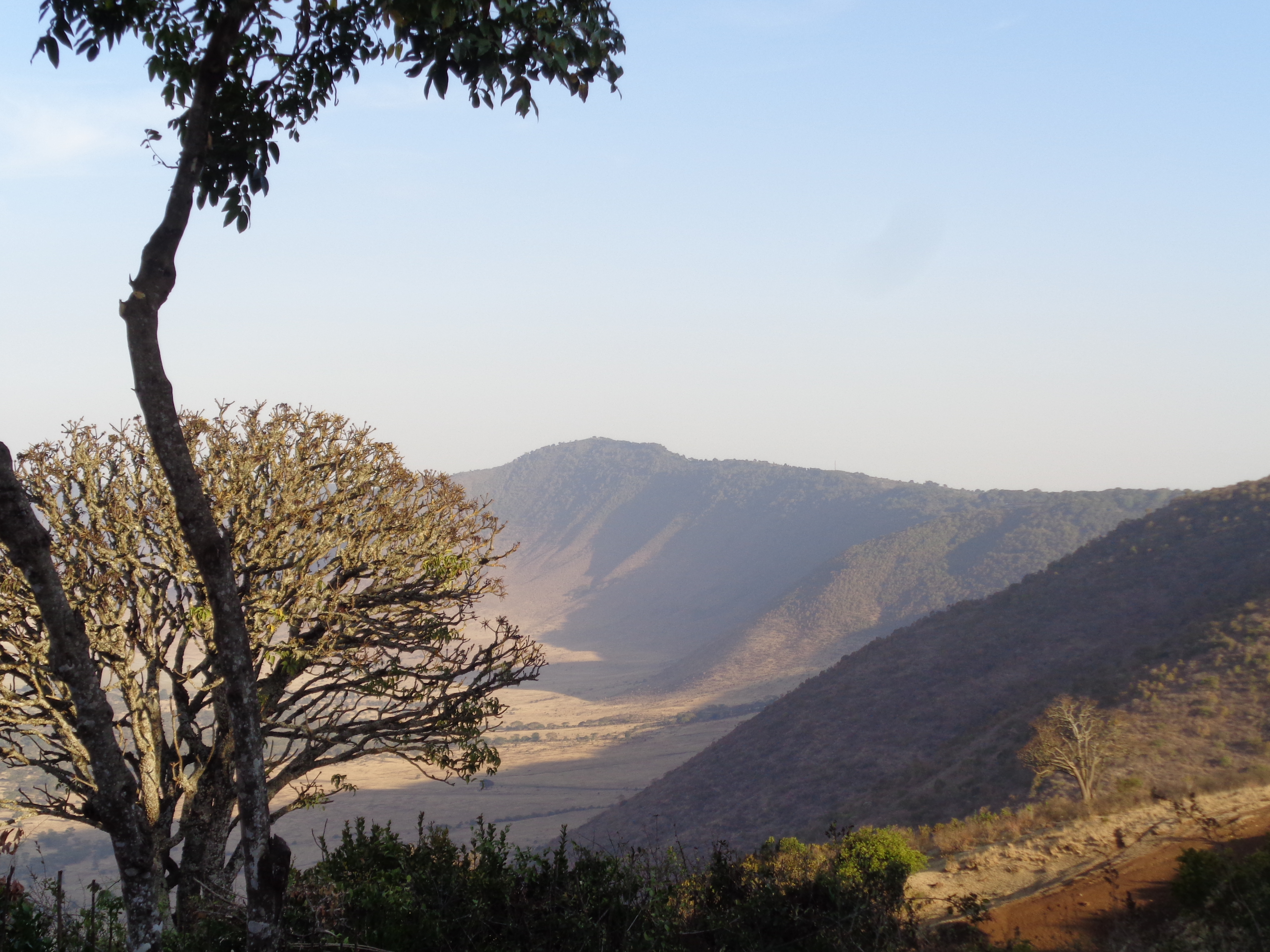
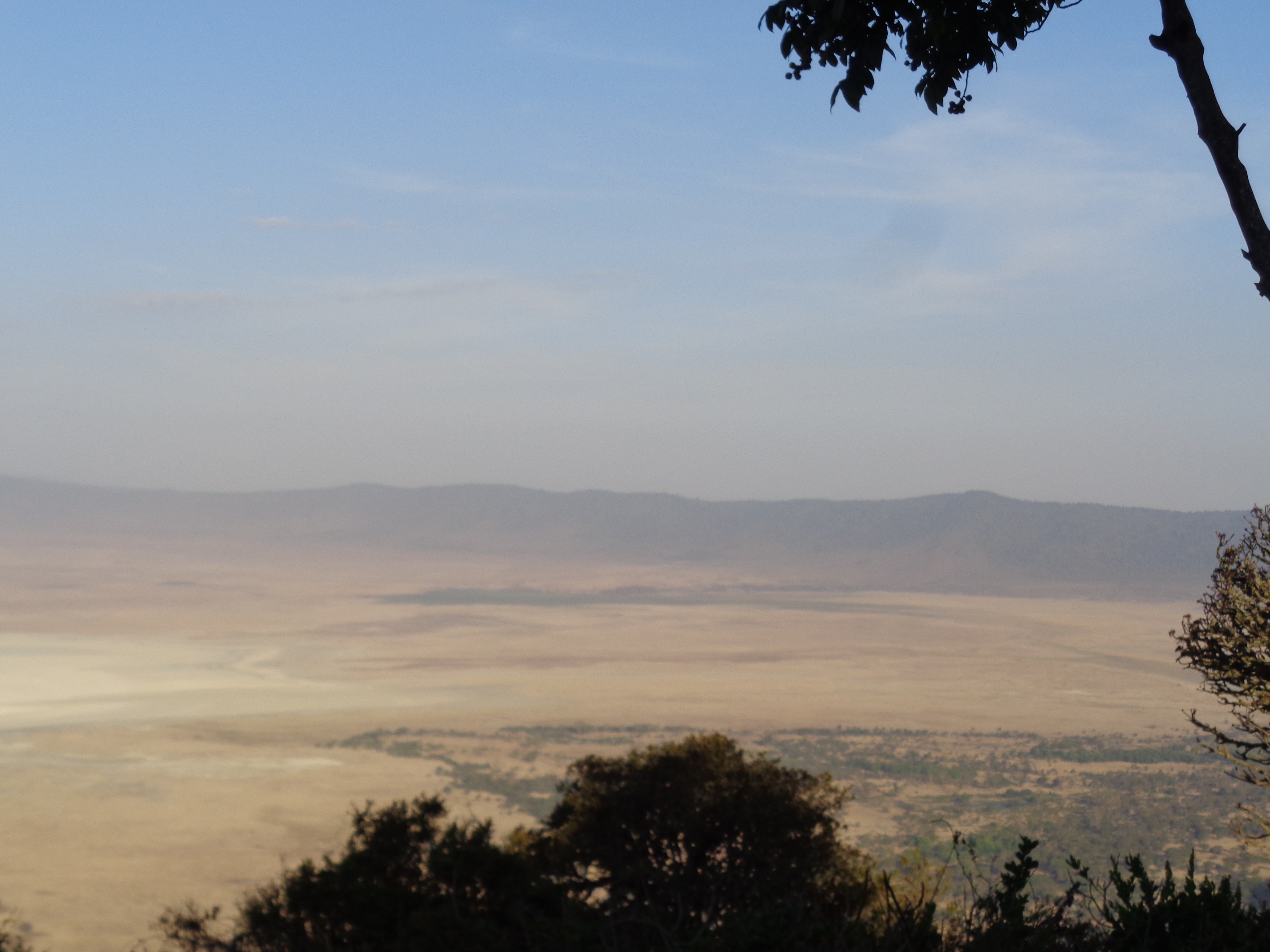
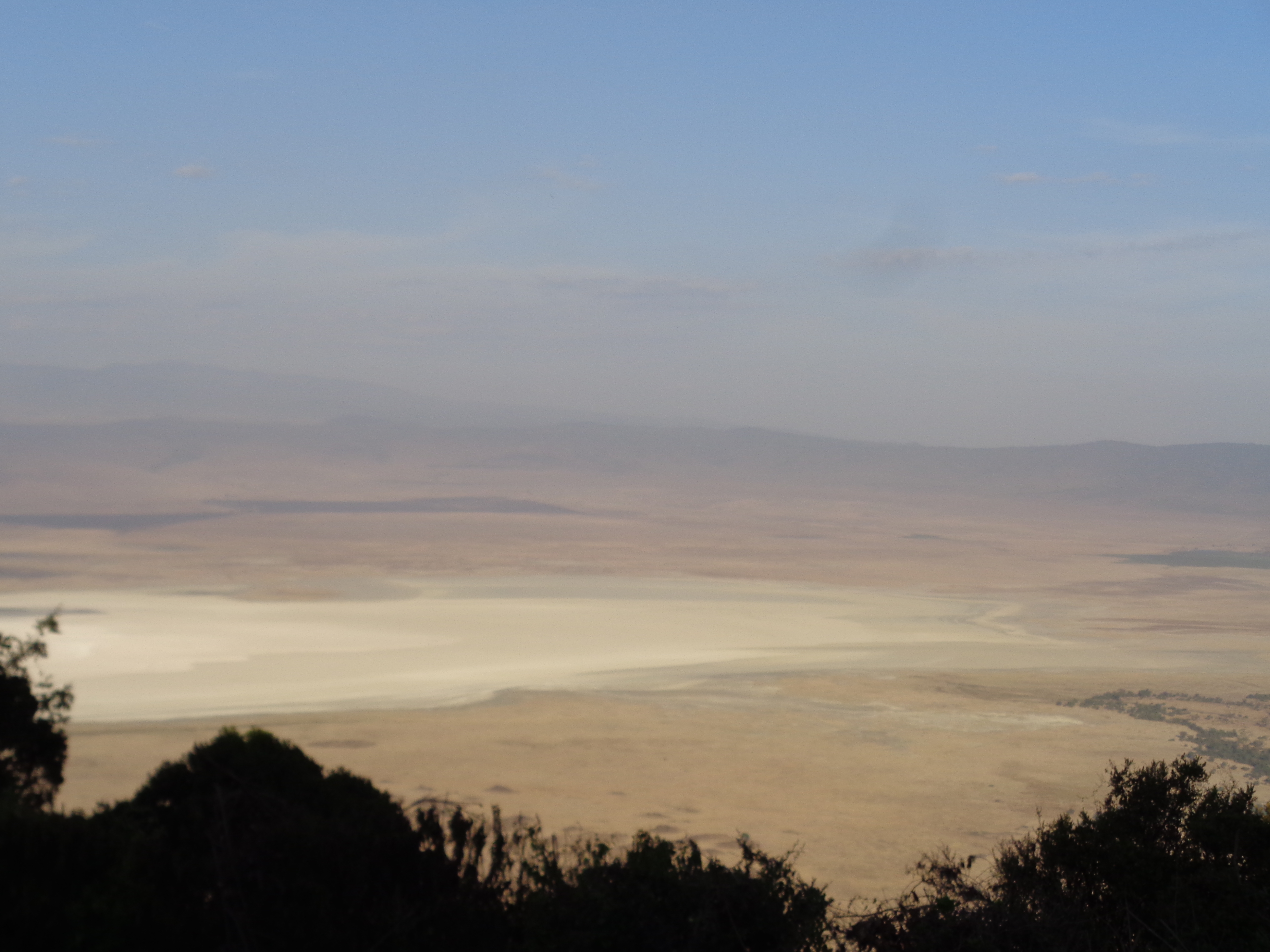
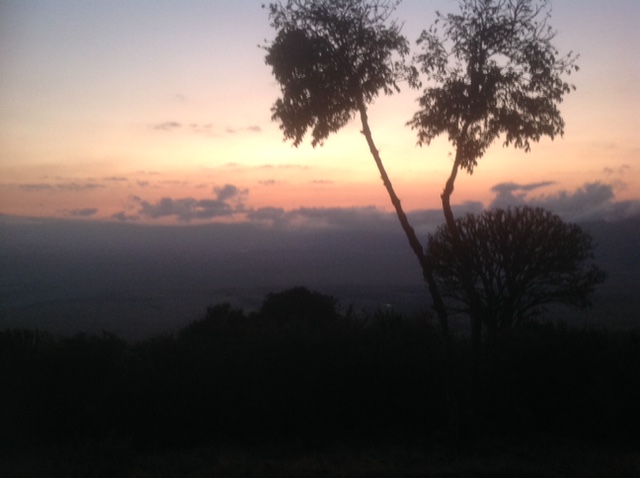
Sunrise over the crater. Time for some breakfast and off to see the animals.
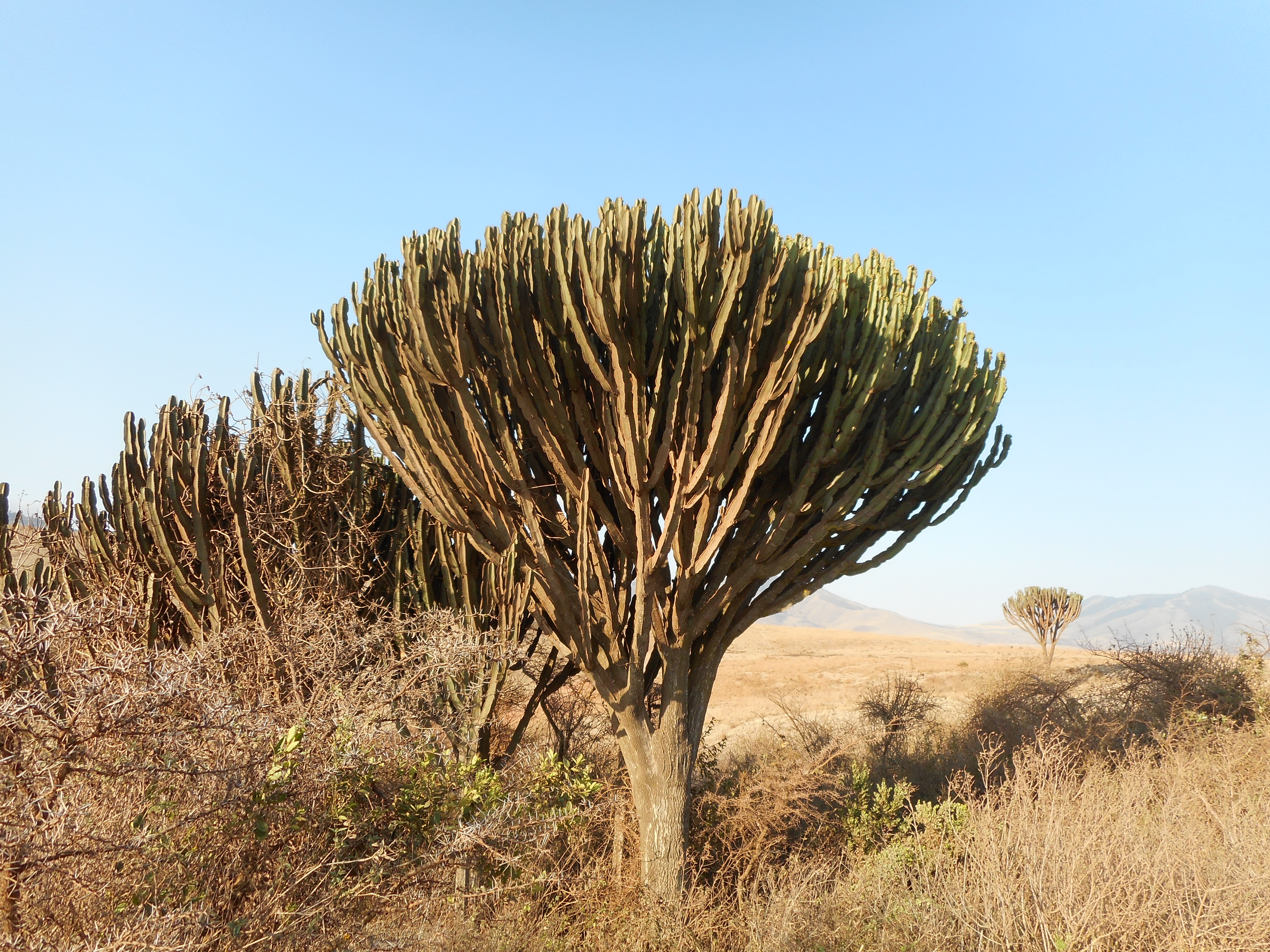
A Candelabra Tree. Actually a cactus. It was during the dry season and you can see all the dust gathering on the vegetation at the side of the road.
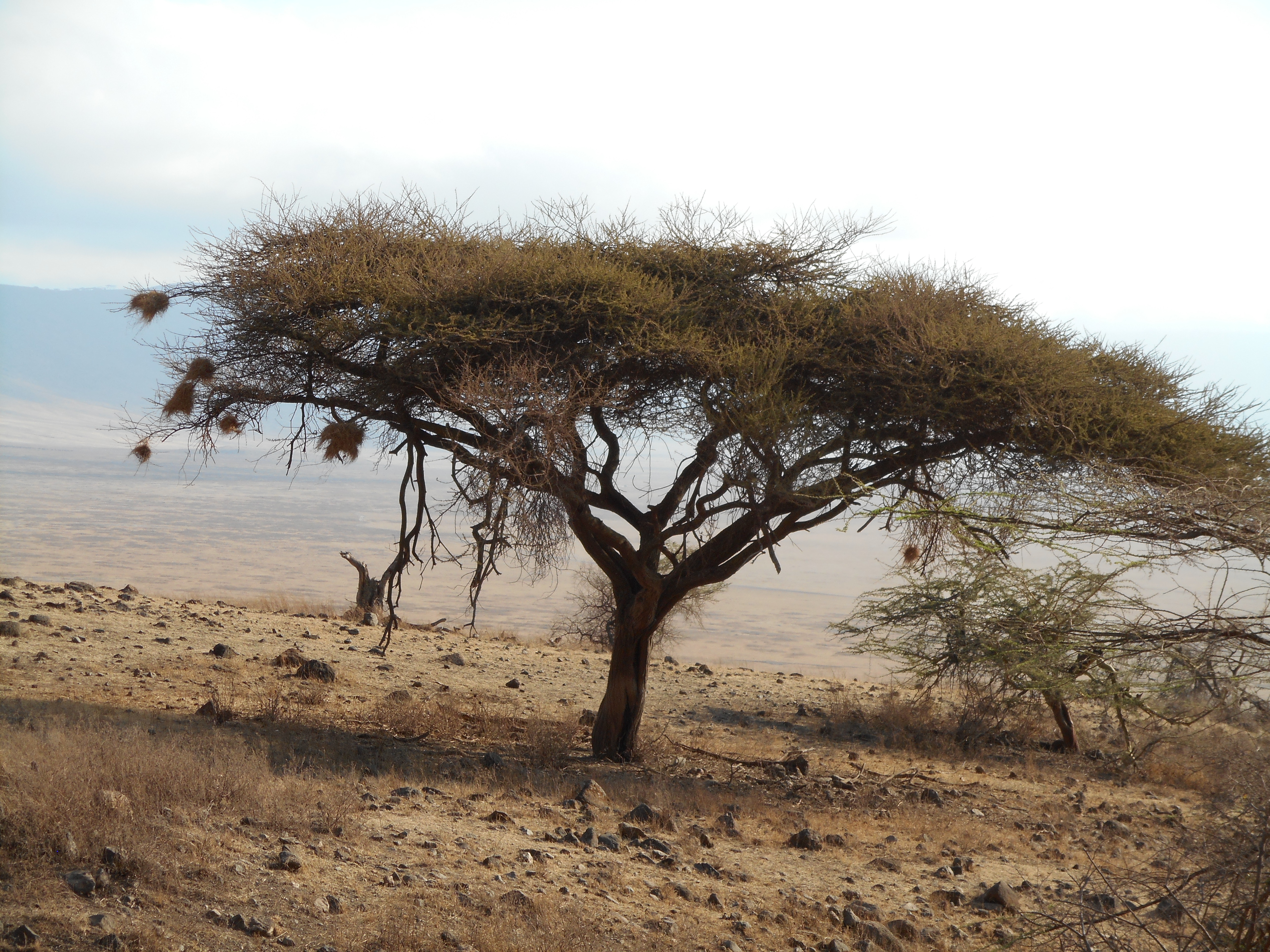
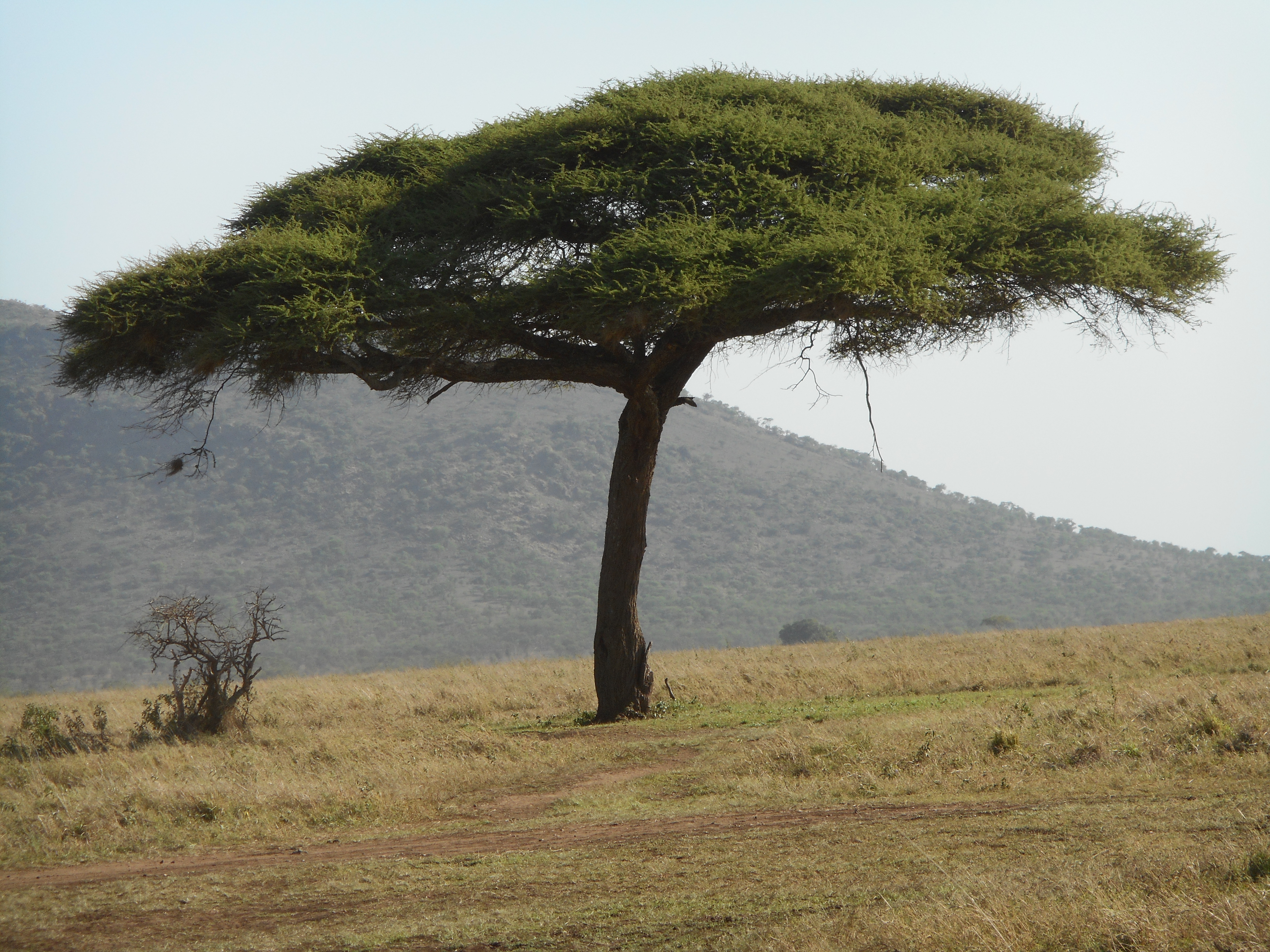
Acacia tree. You can see swallows nests in the tree.
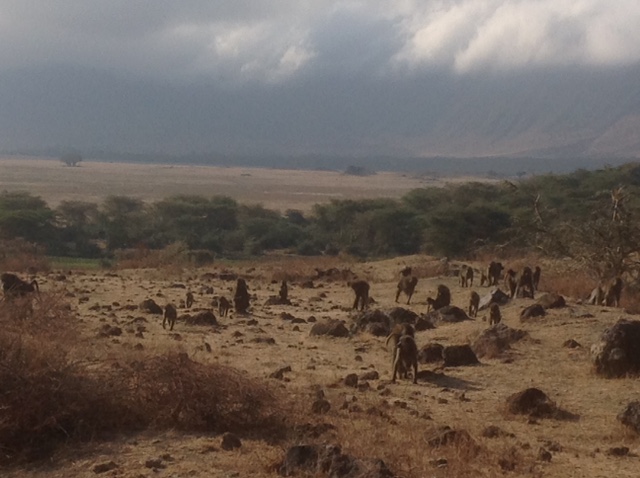
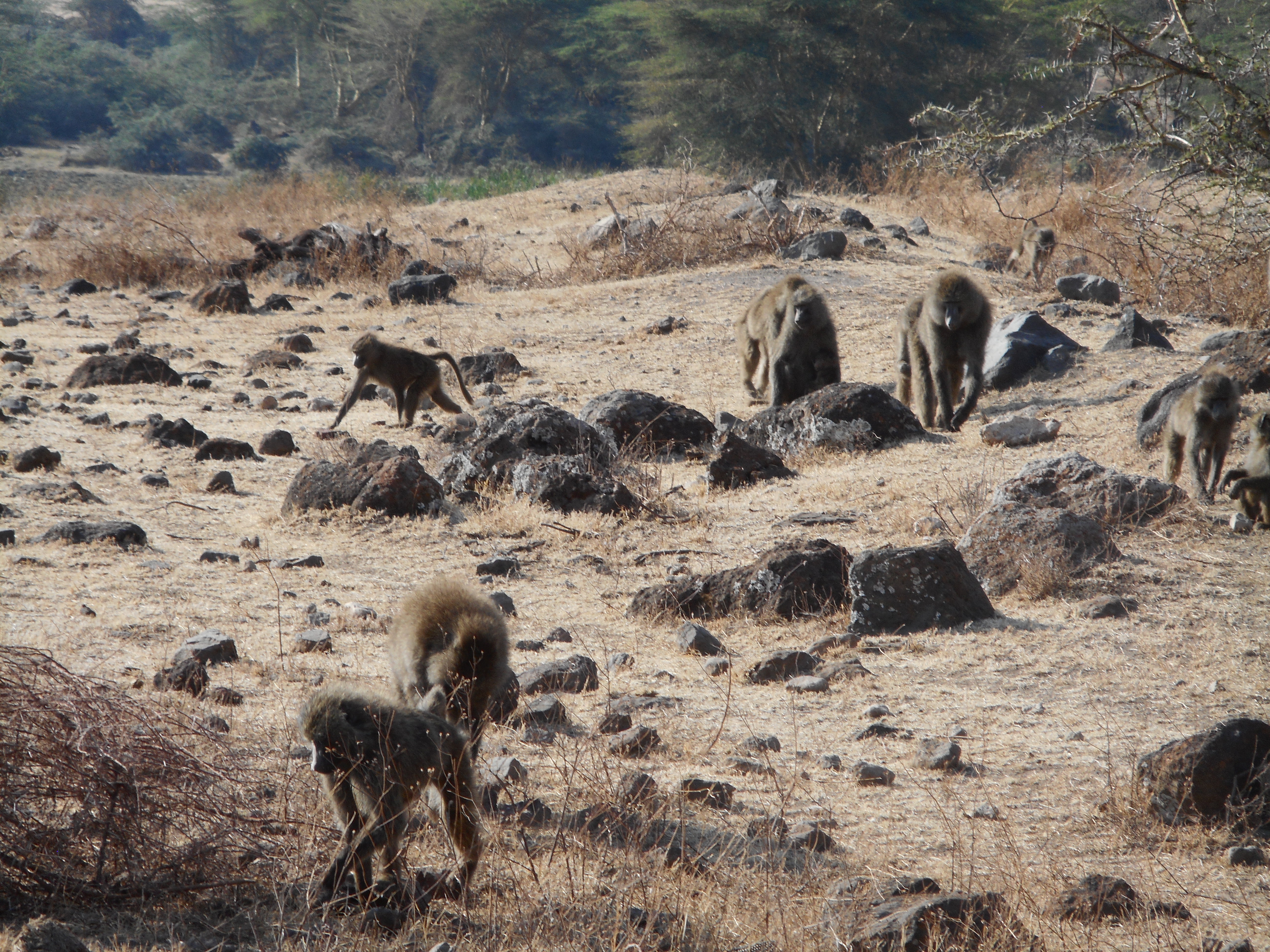
Some more baboons. Looks like something from planet of the apes.
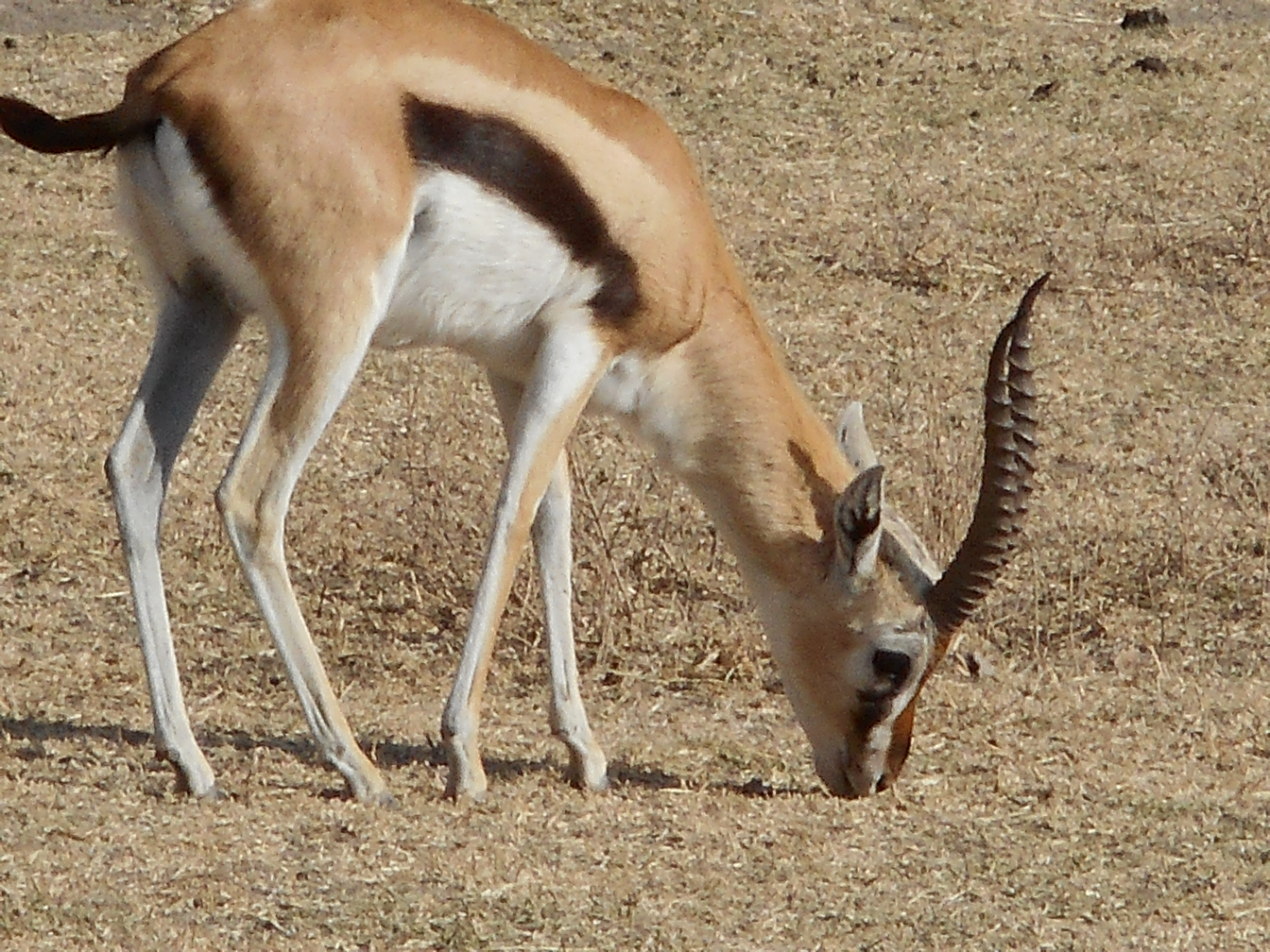
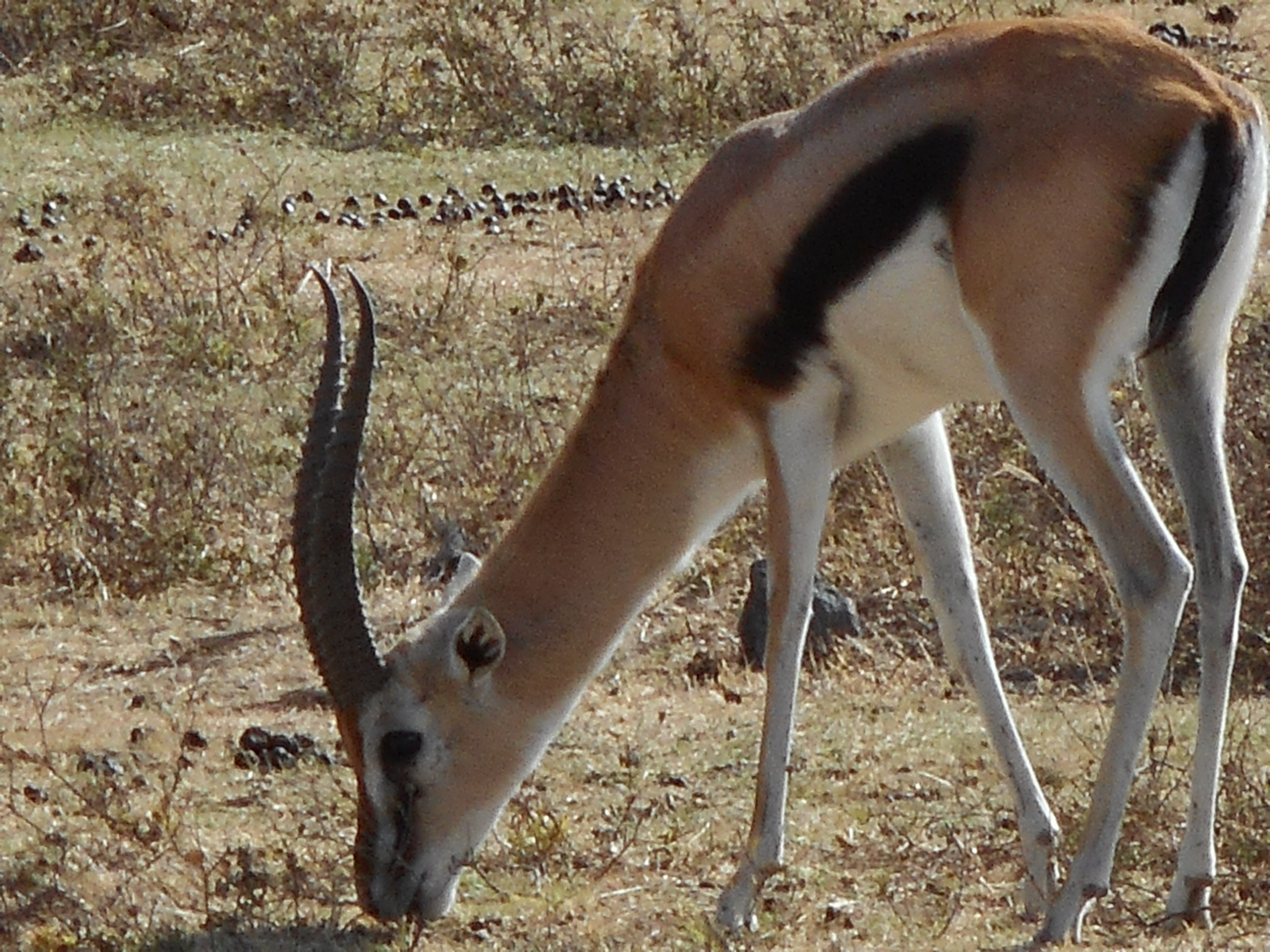
Some Thompson Gazelle.
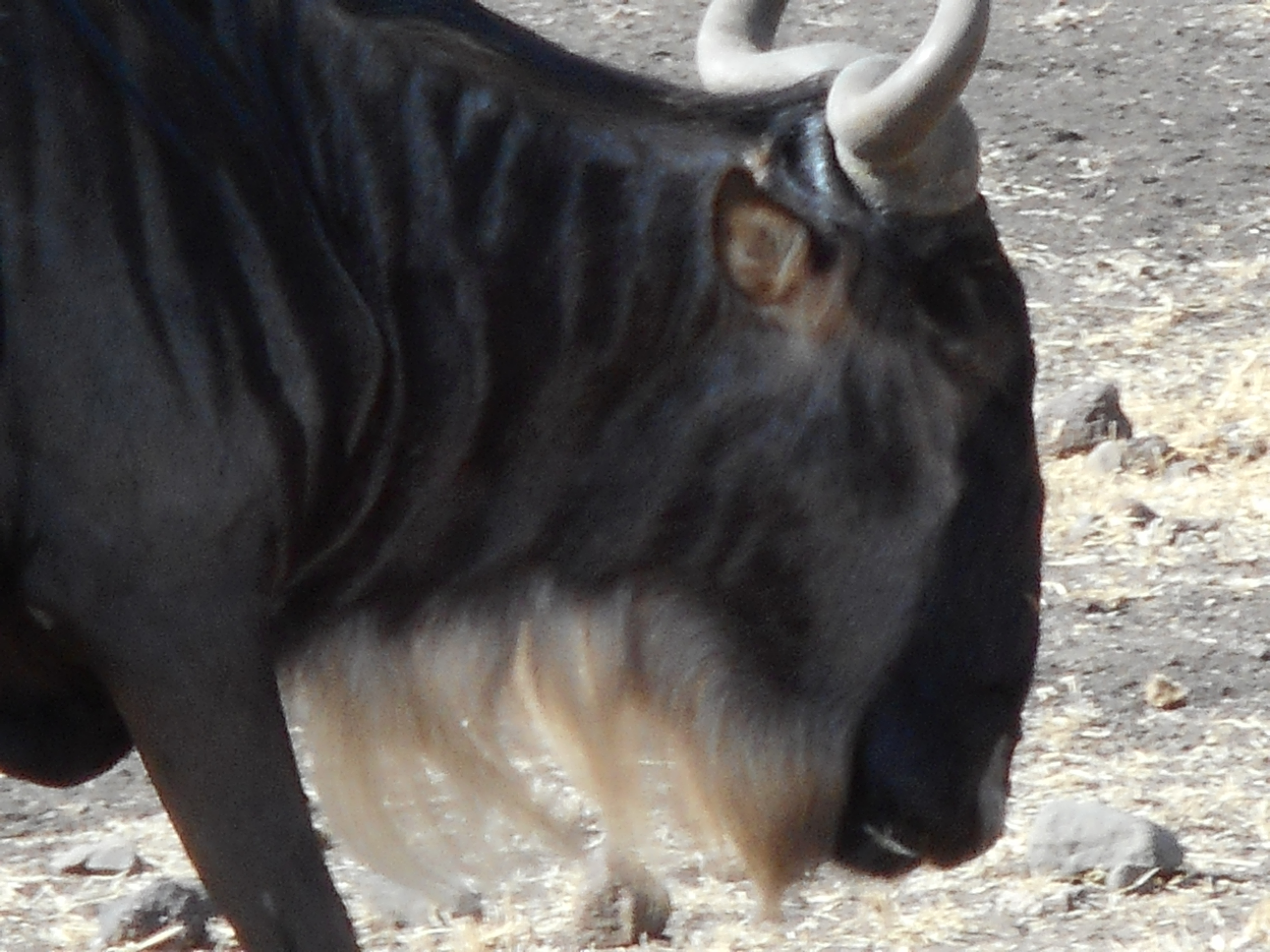
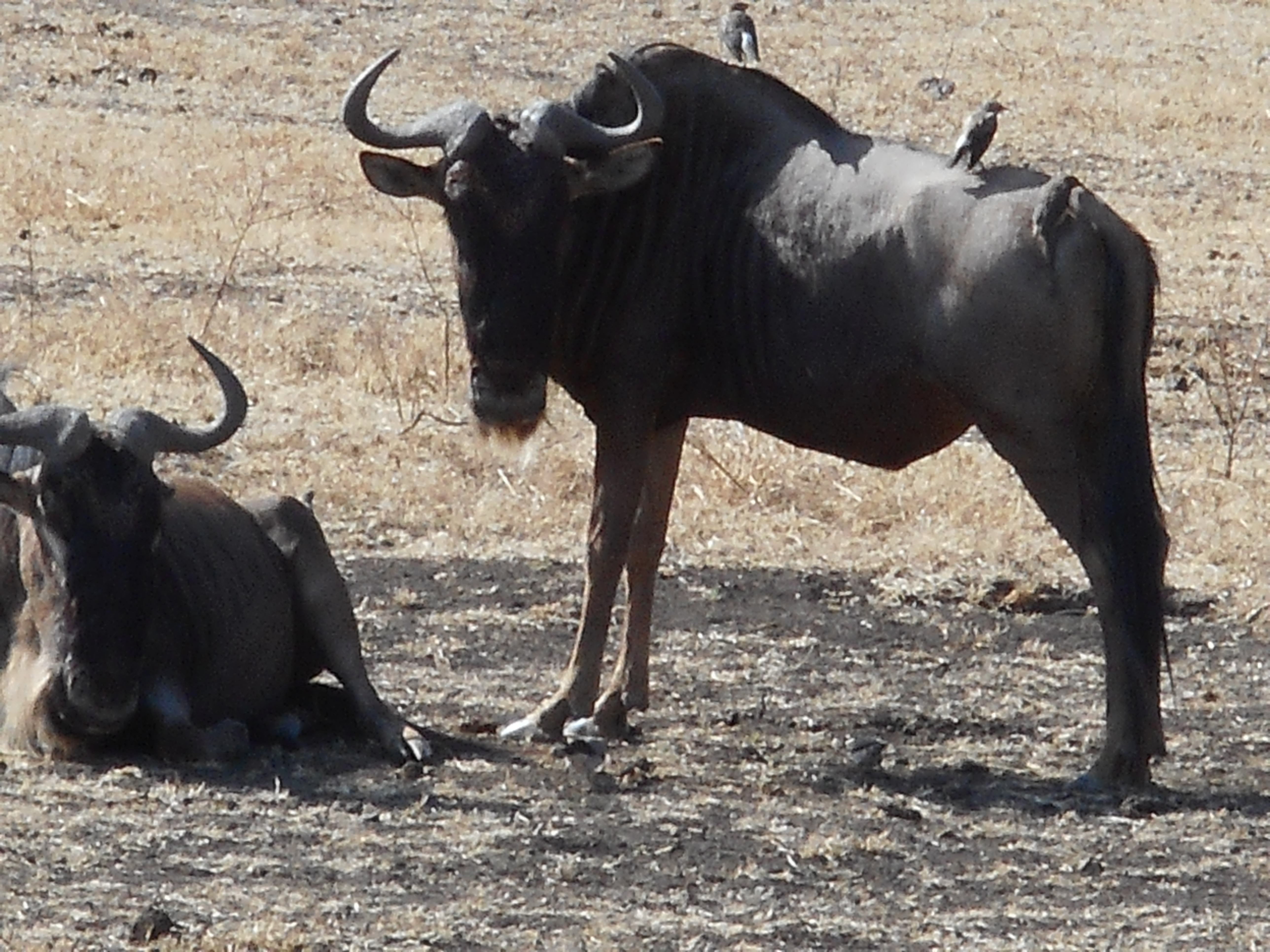
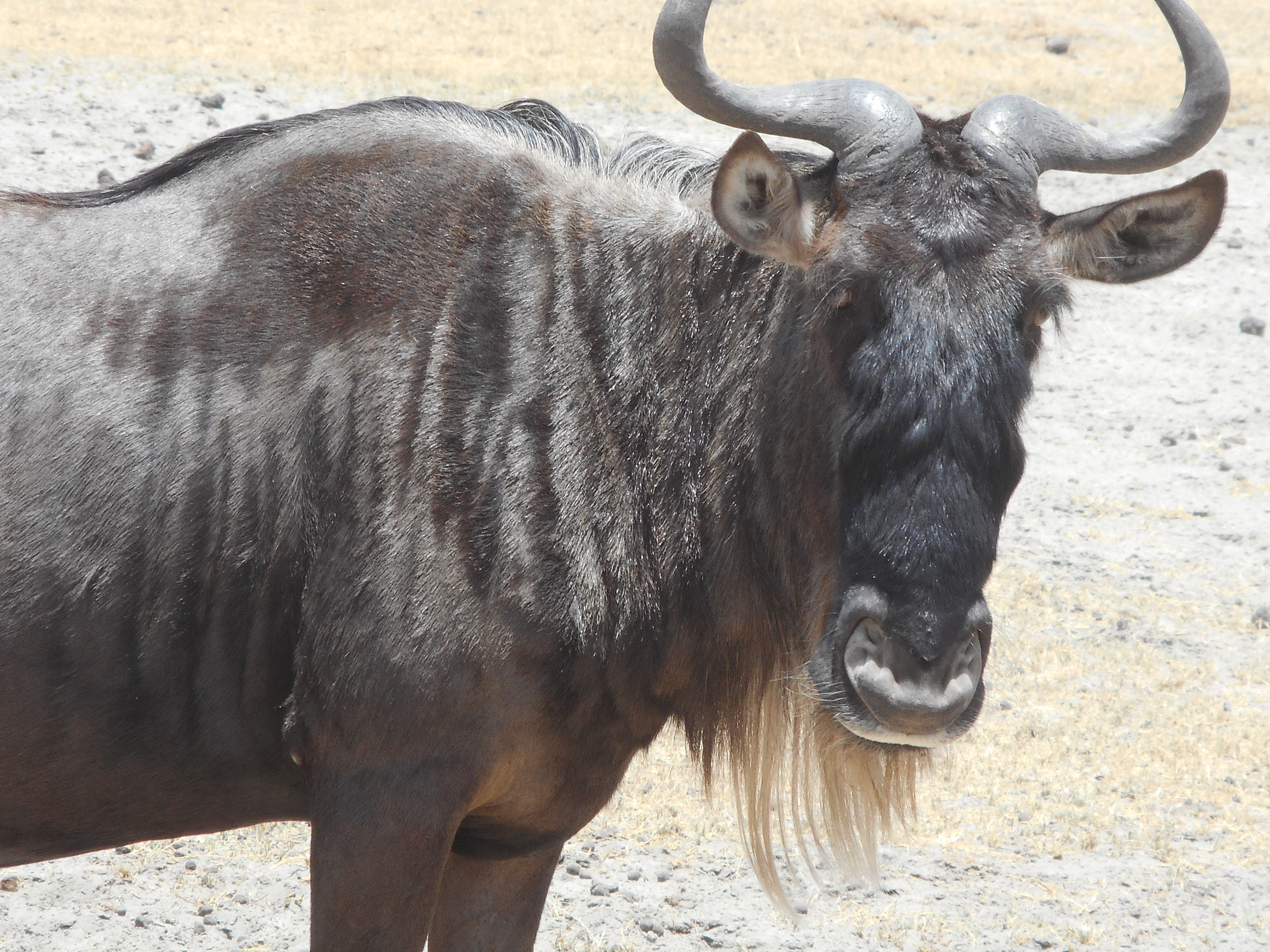
A Wildebeest or Gnu. Strange looking creature.
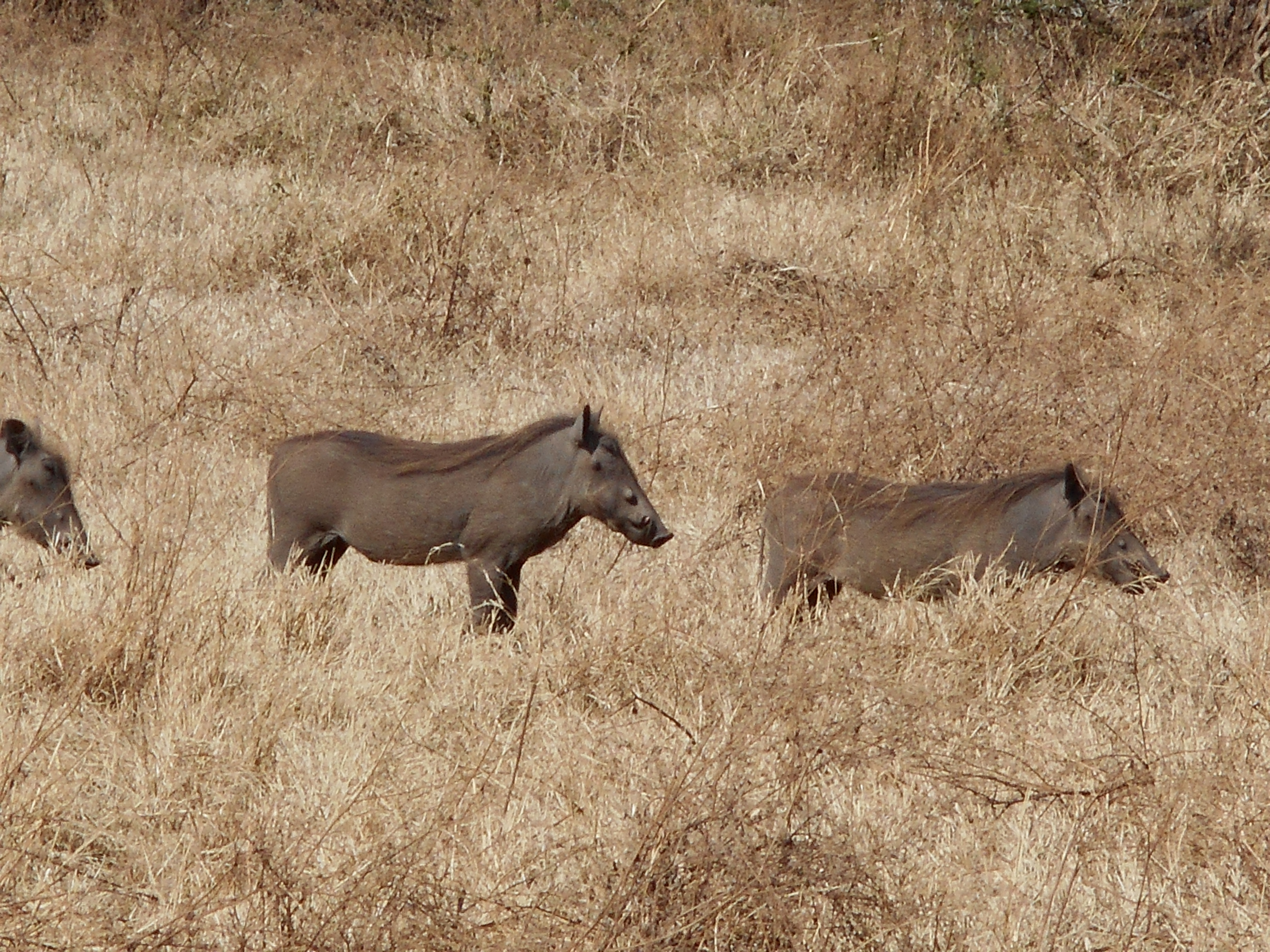
Warthog, or Pumba.
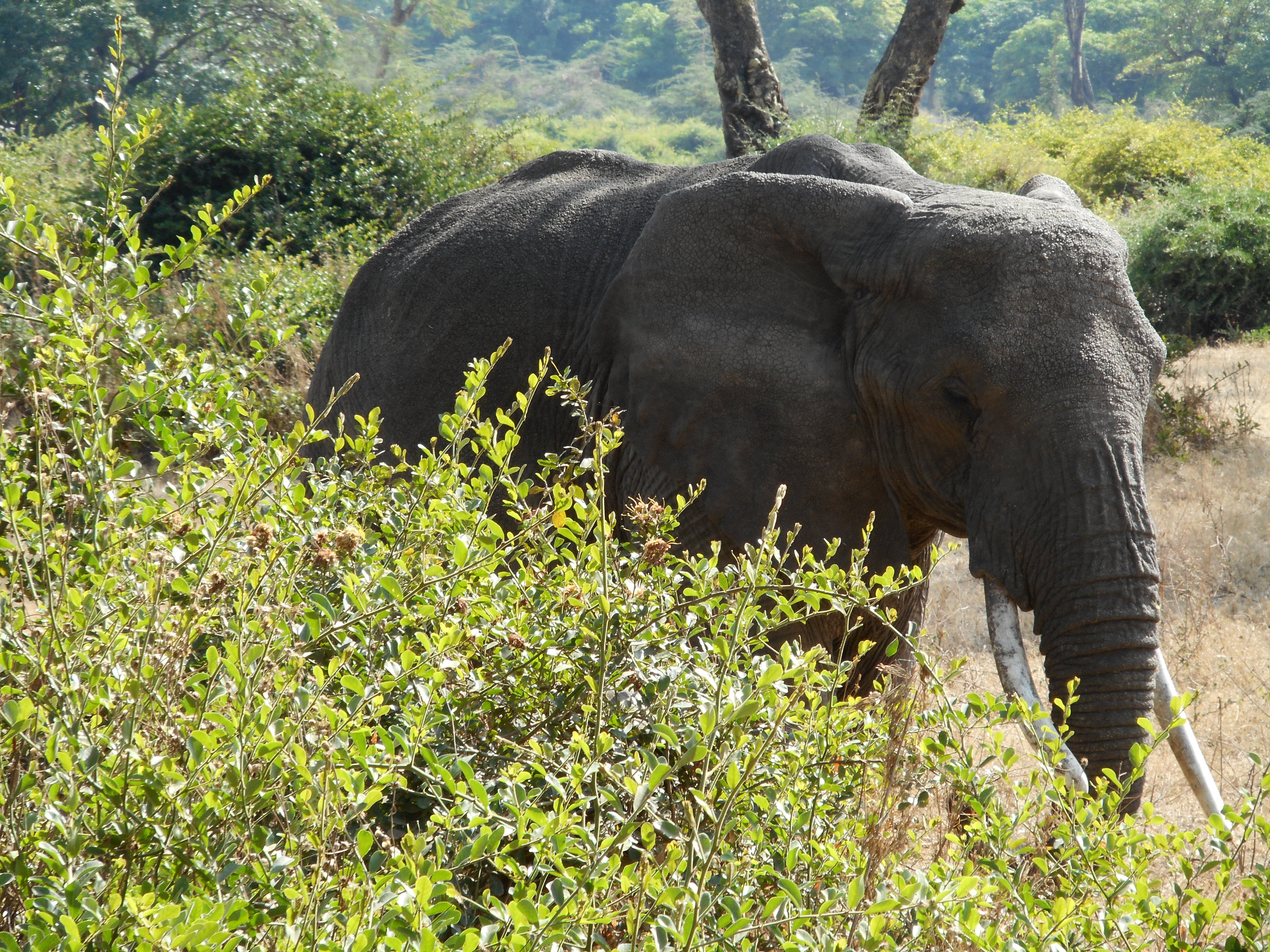
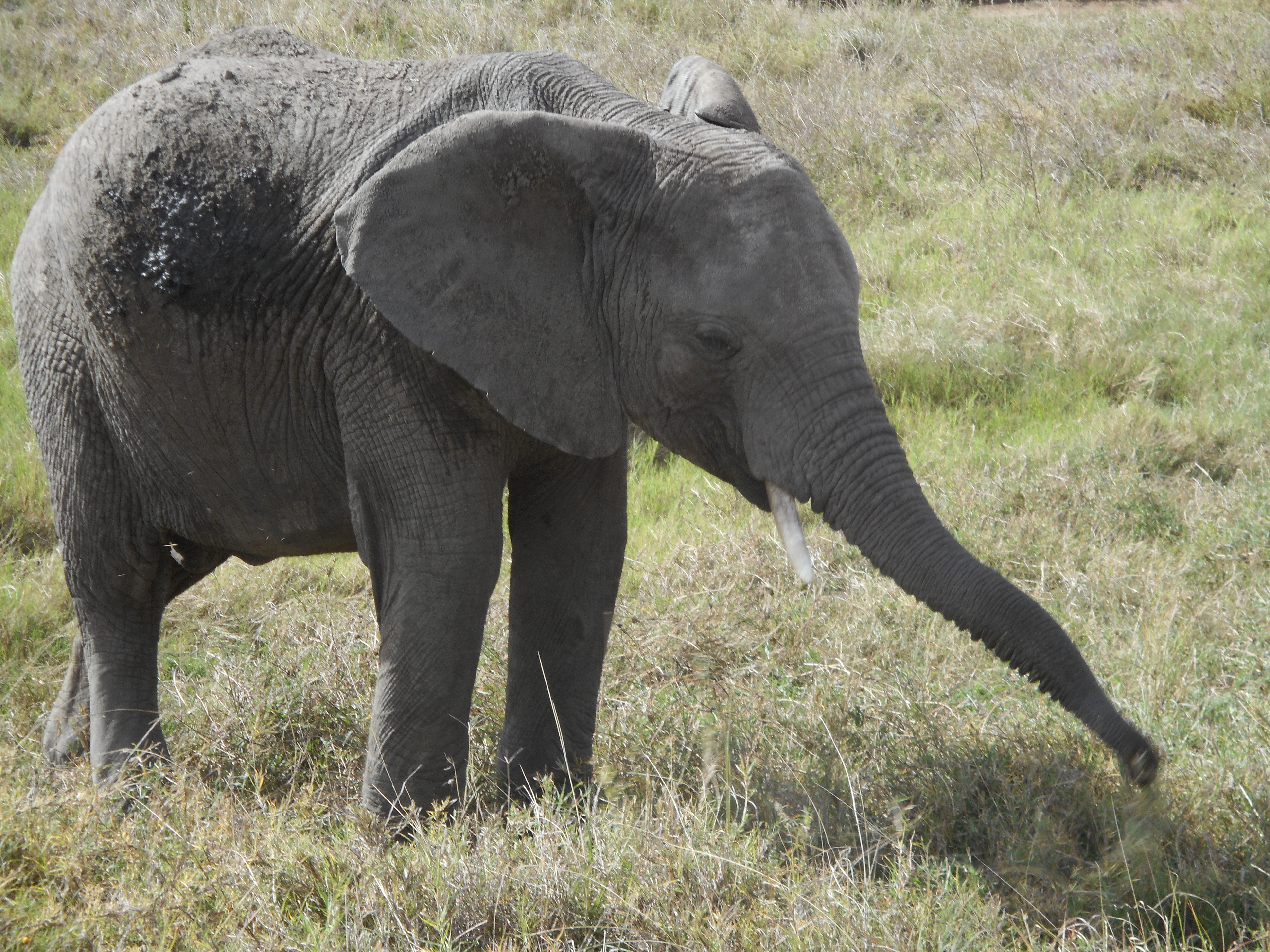
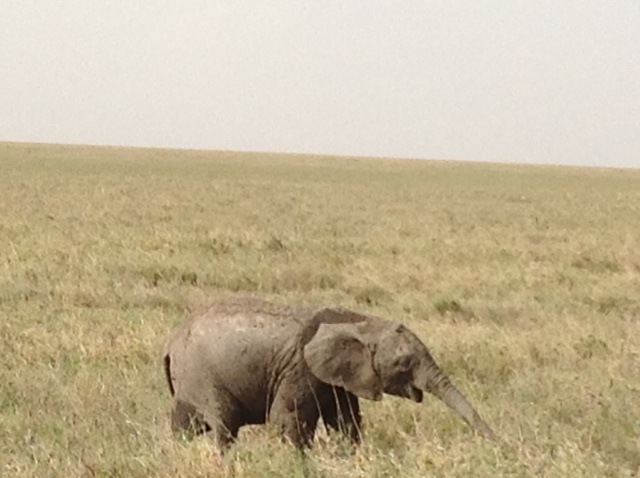
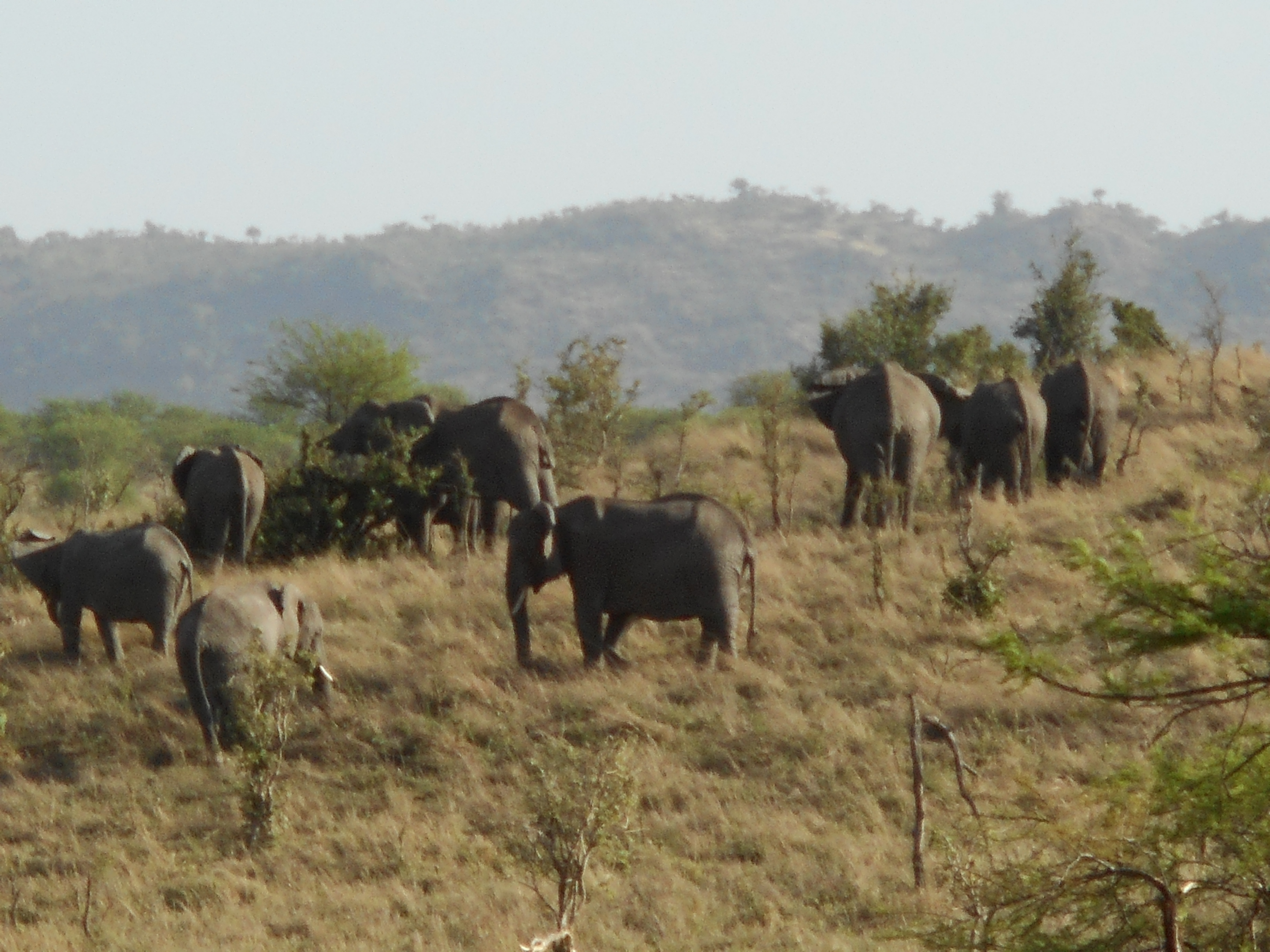
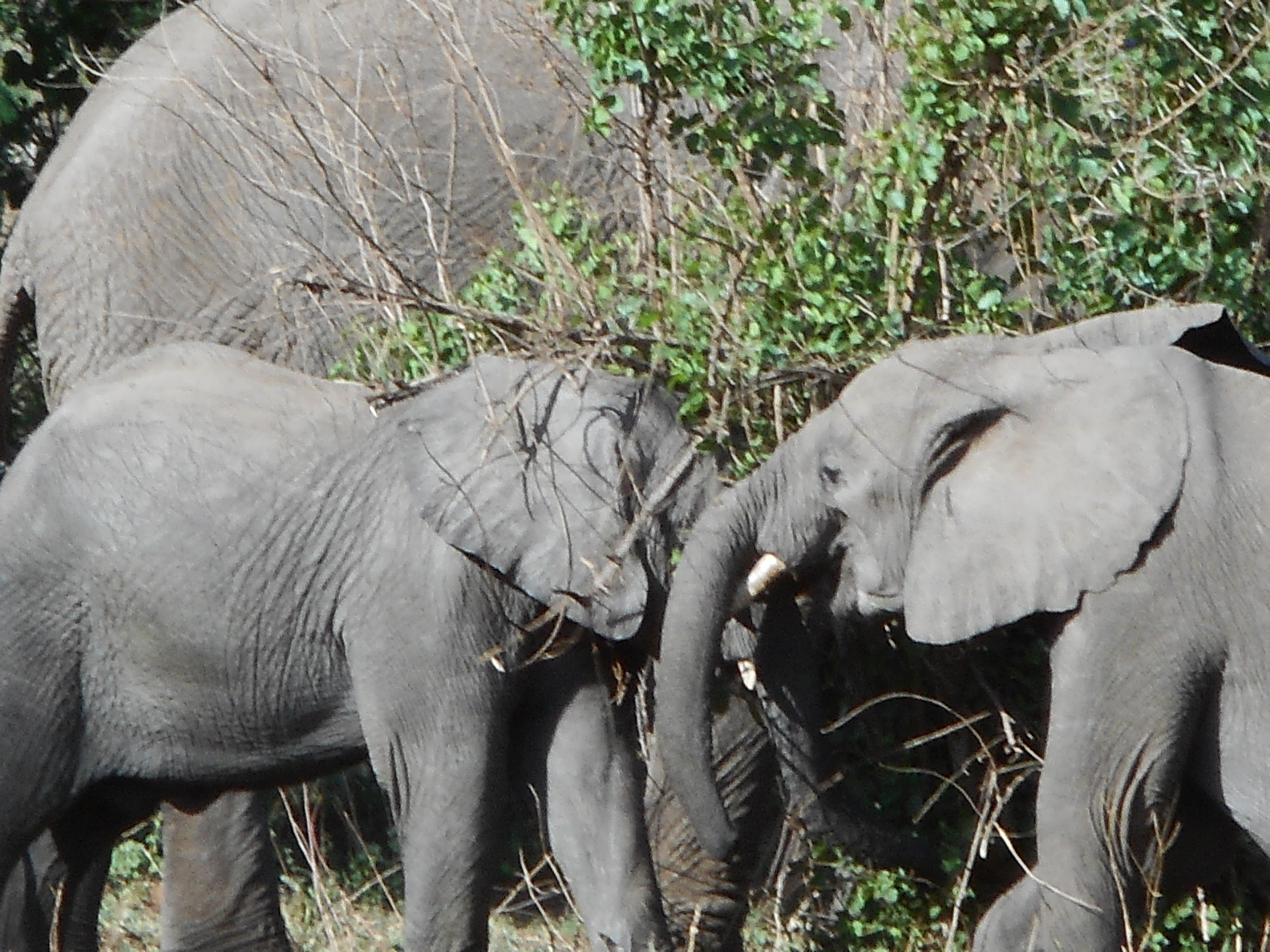
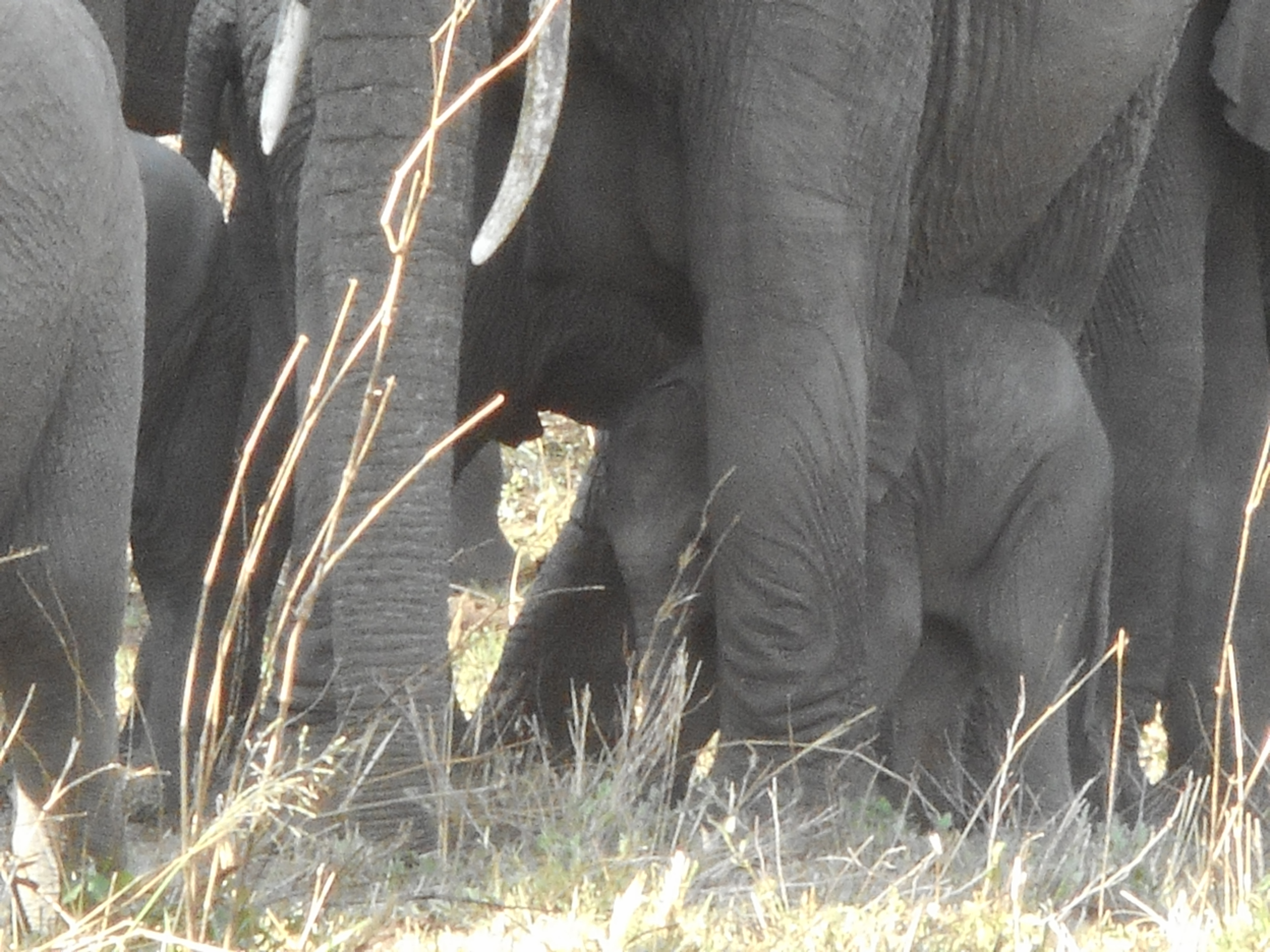
Baby Elephant. This was a good sized herd, with lots of youngsters.
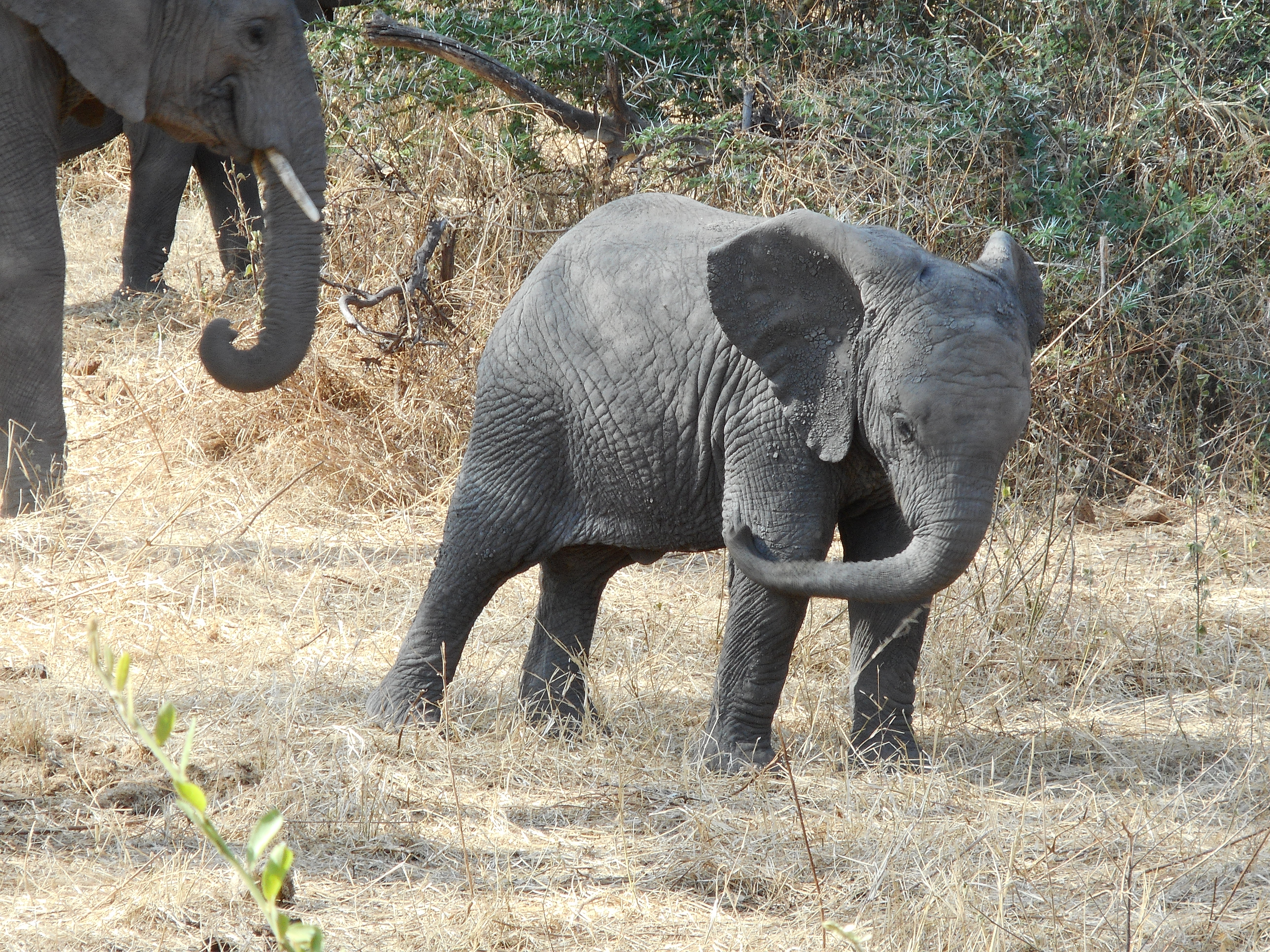
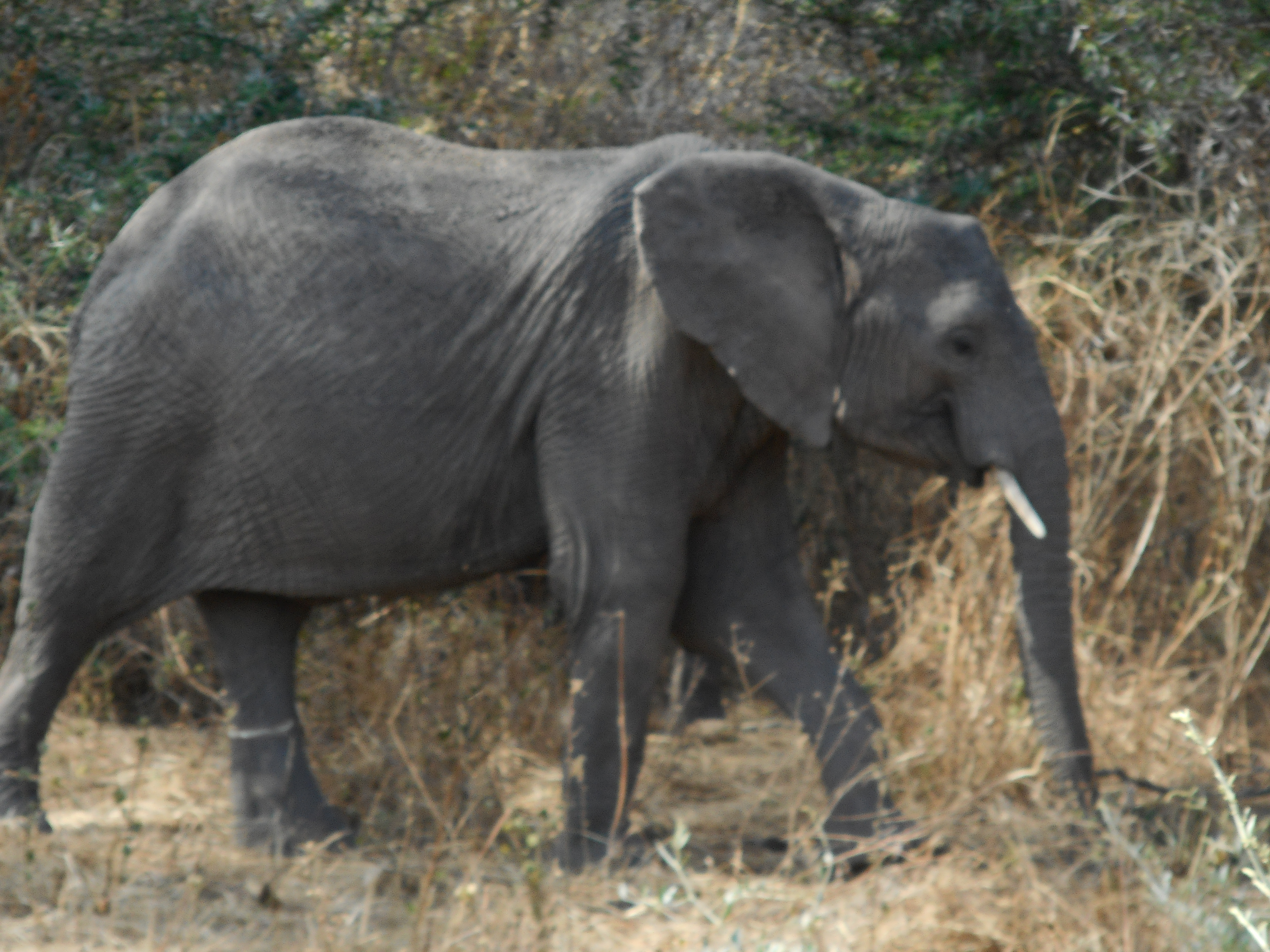
You can see the thorns on the trees and the elephants striping the leaves off.
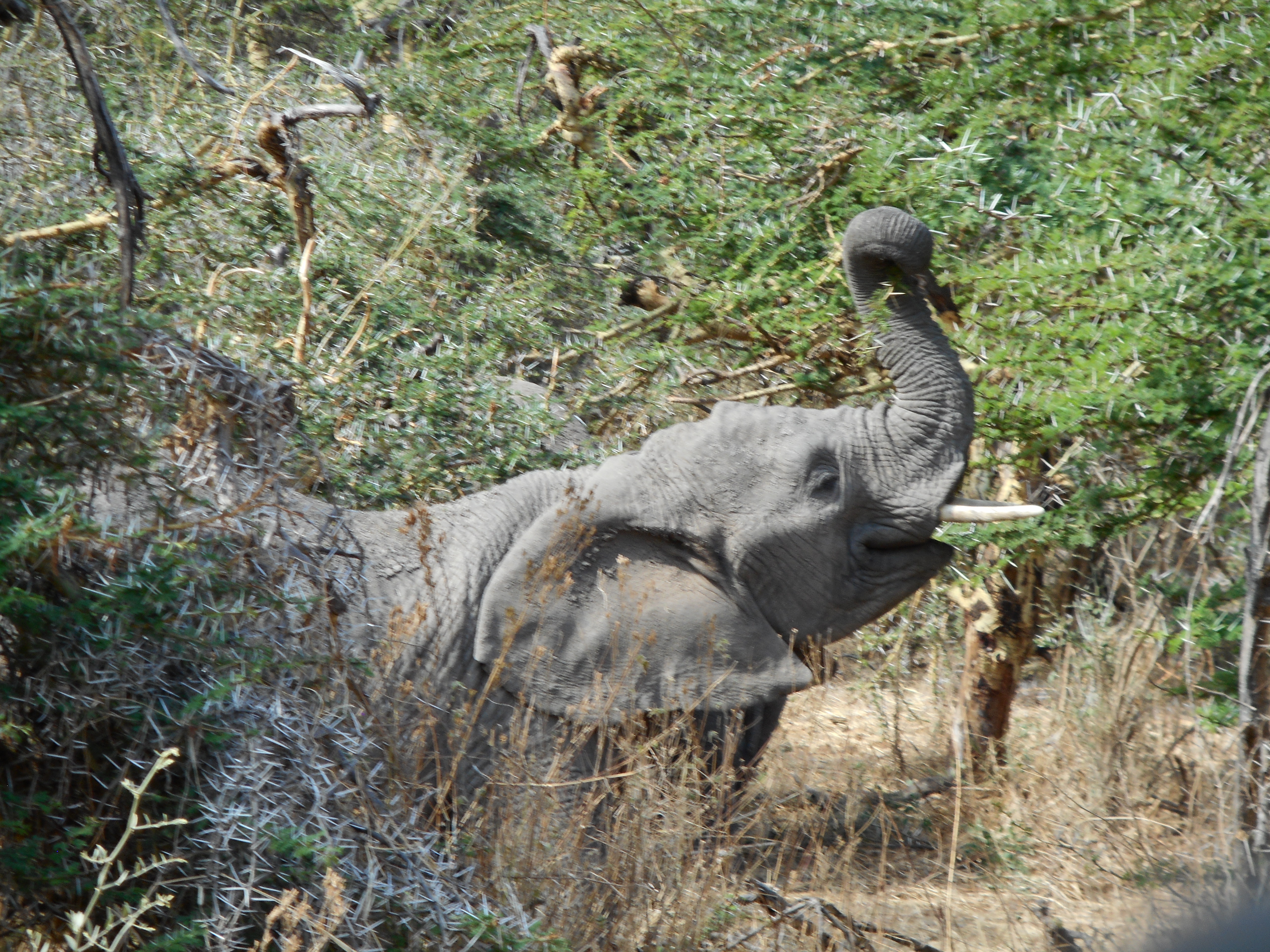
This was a mother checking out our jeep before walking across the road.
Cape Buffalo
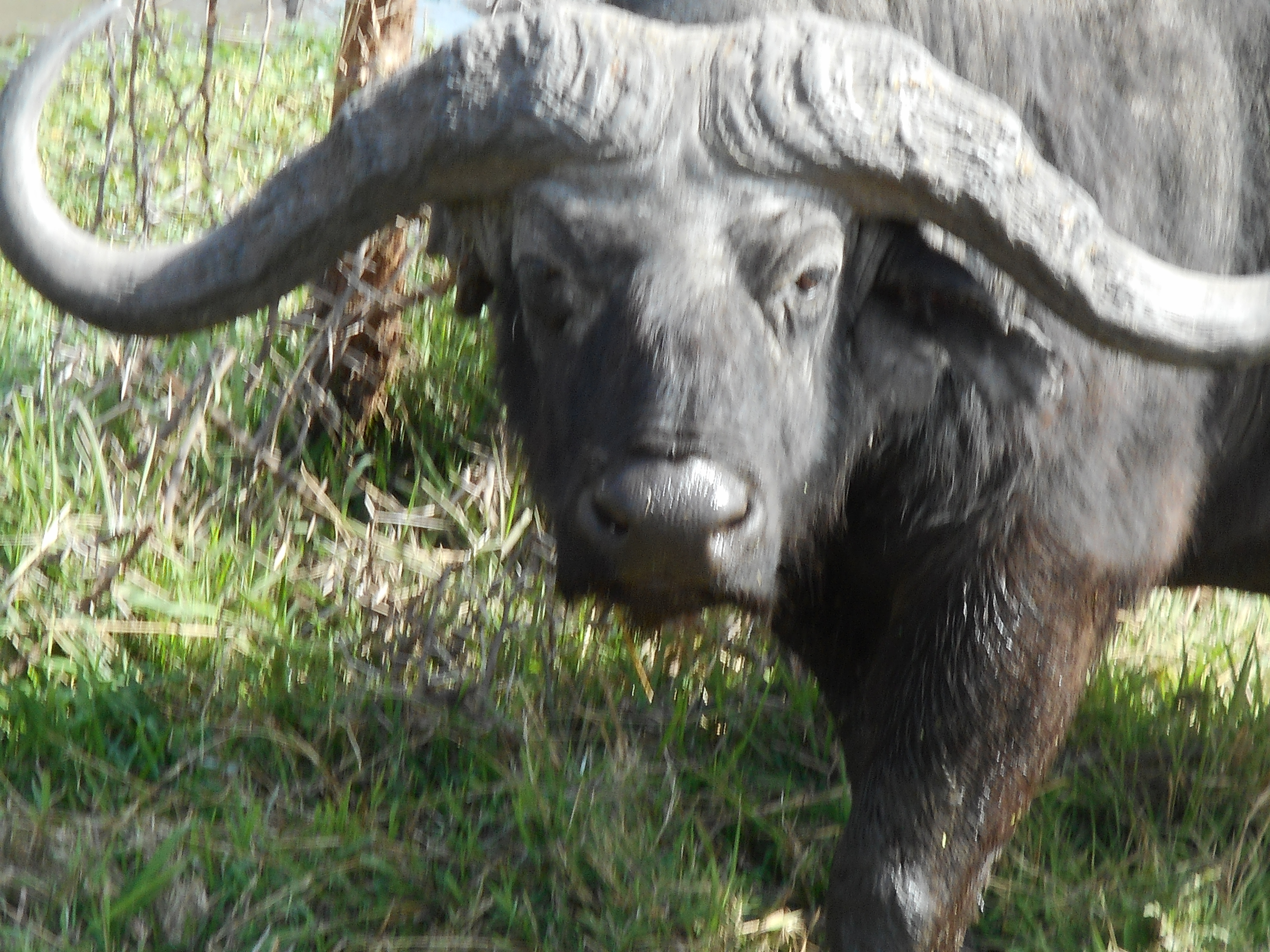
Some more zebra
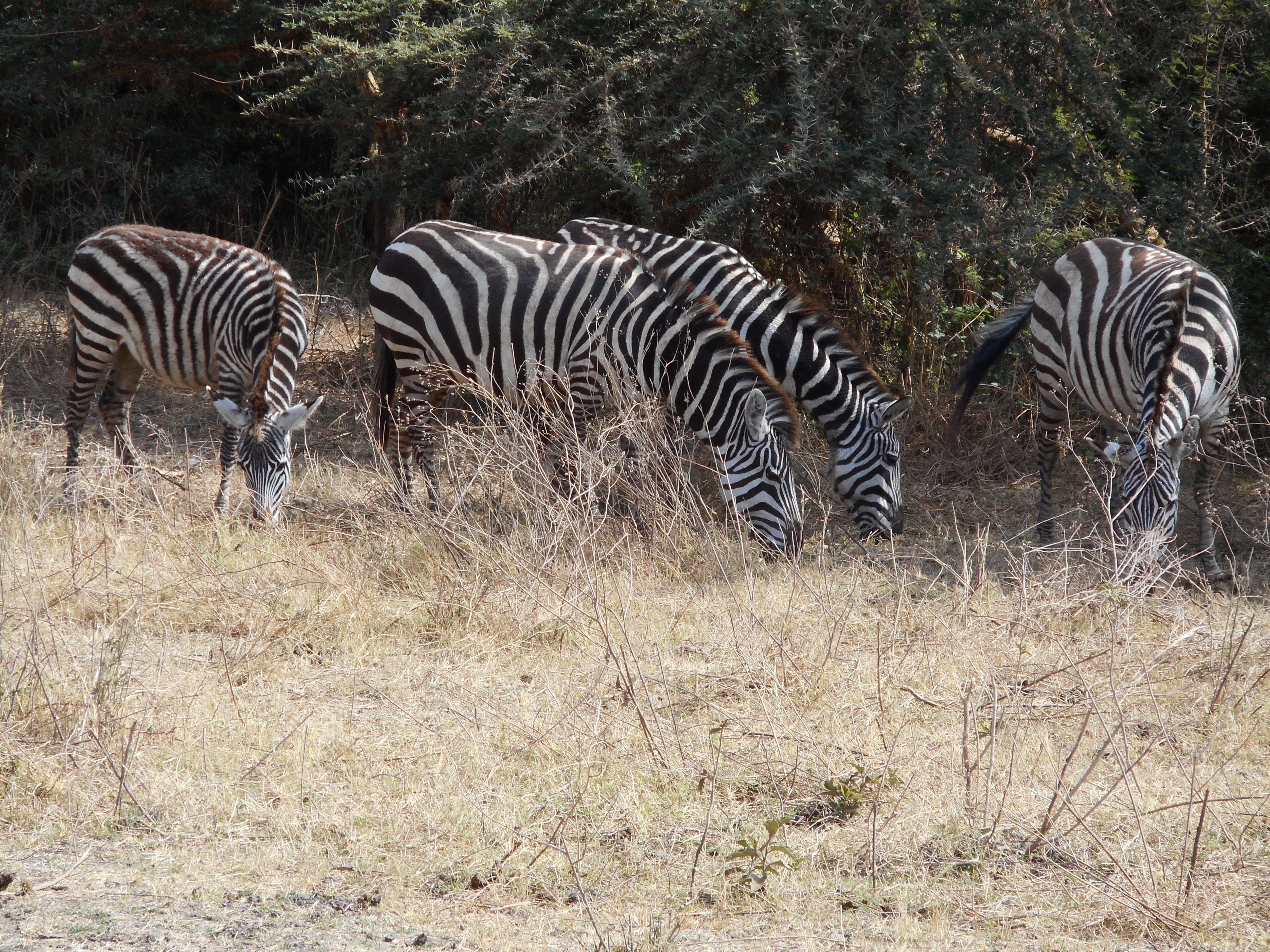
Thompson Gazelle
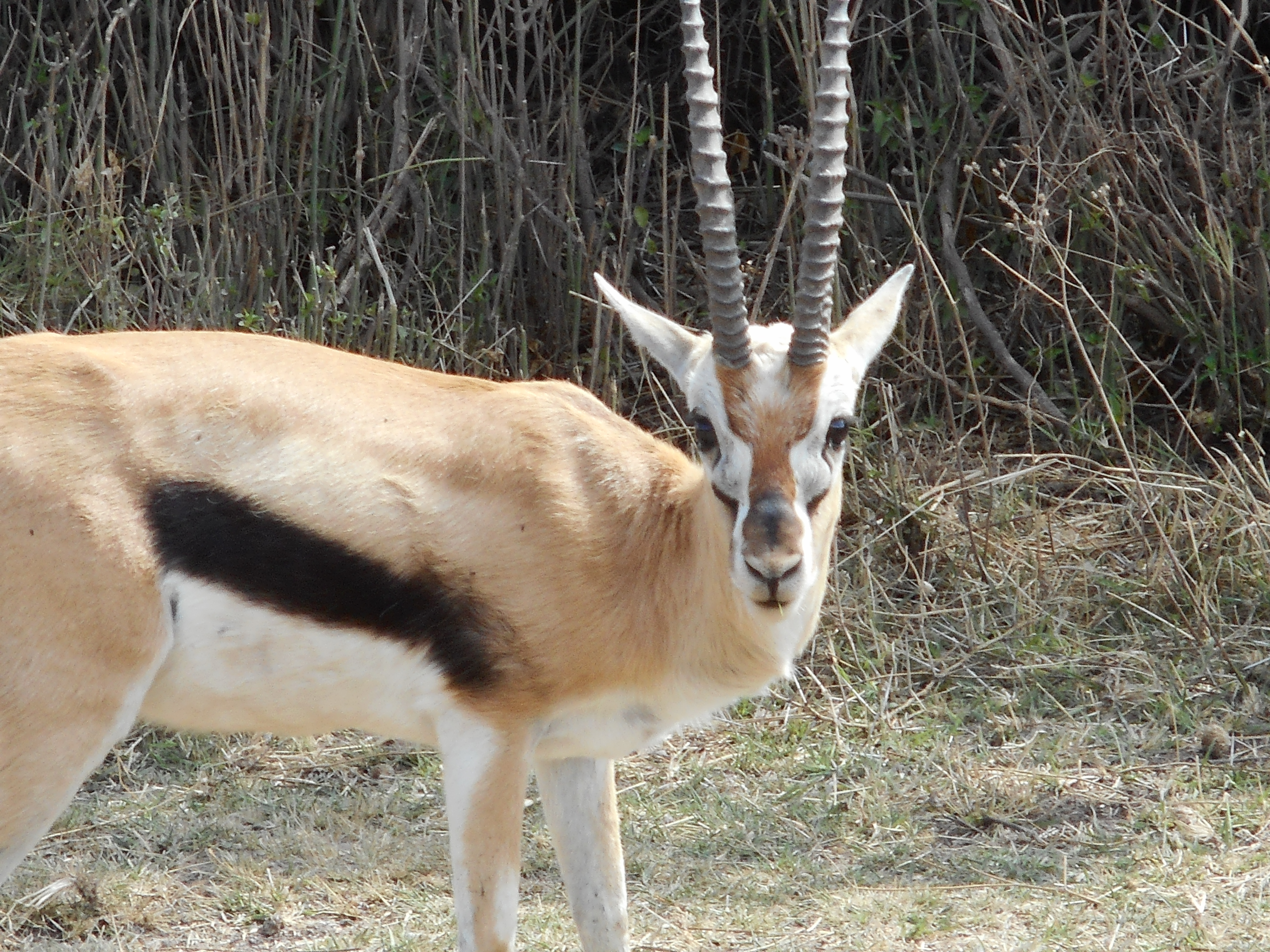
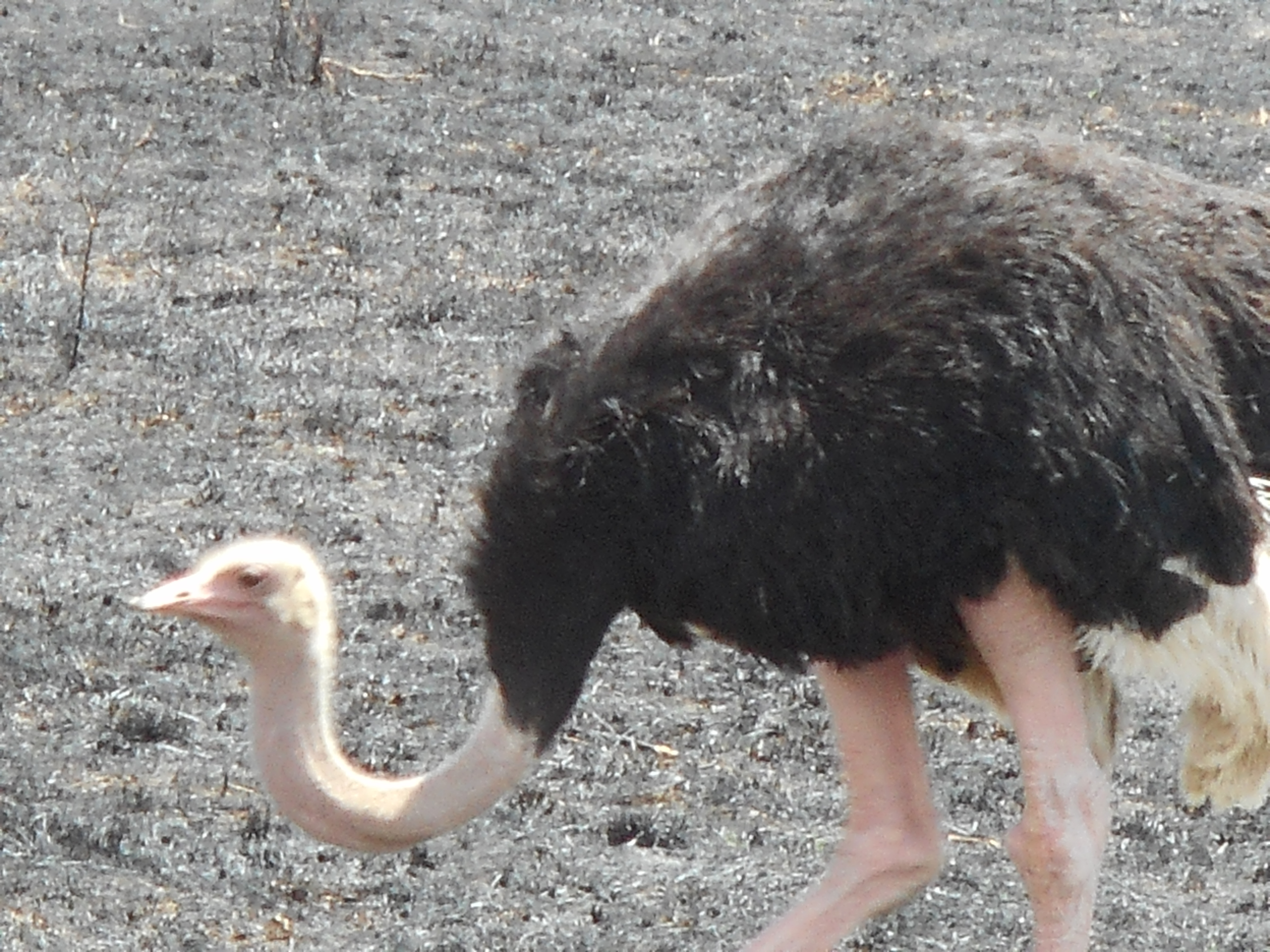
Ostrich. Males are black, females grey. He’s scoping the landscape for some fine looking females.
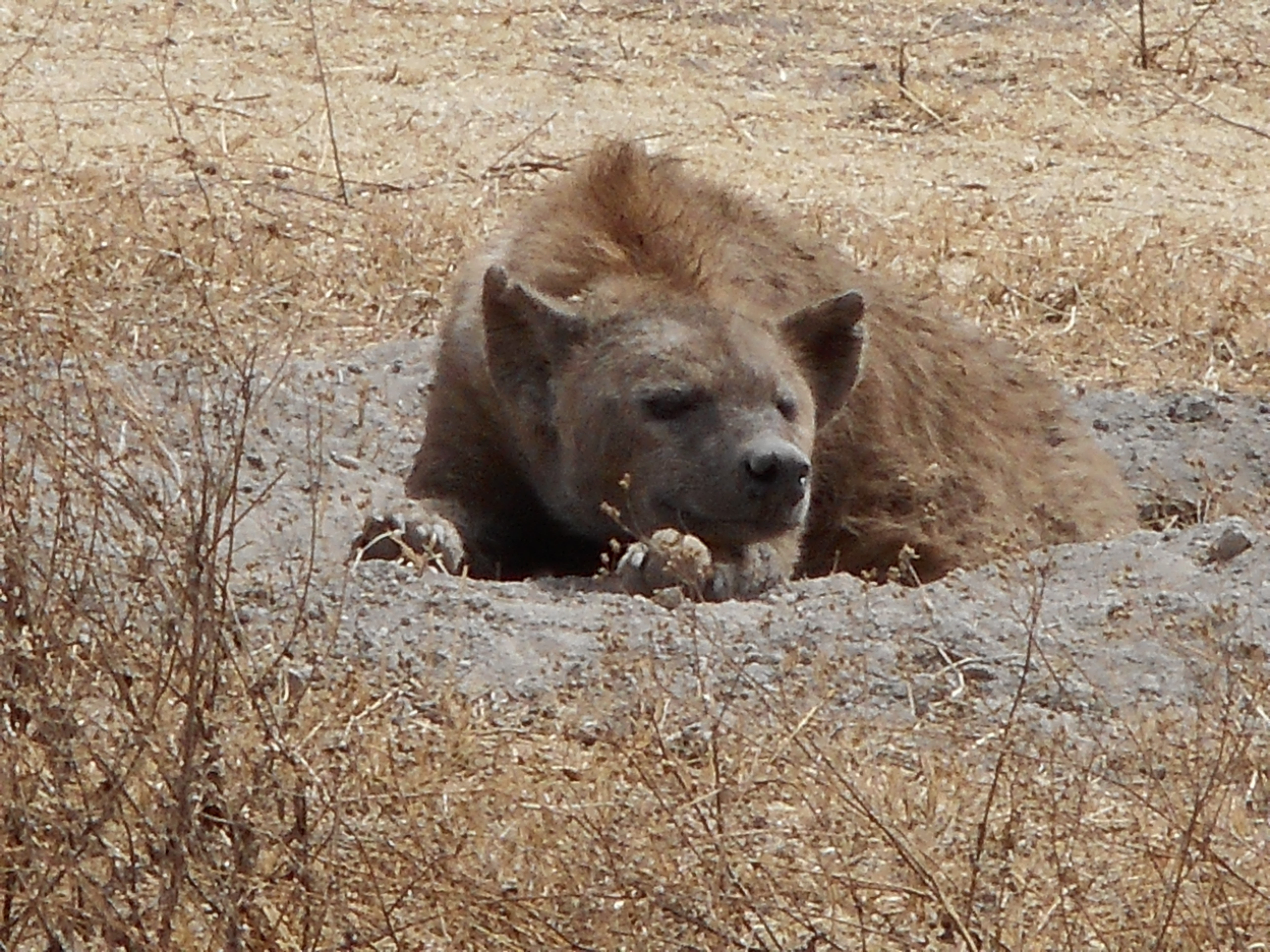
Everybody’s friend, the hyena.
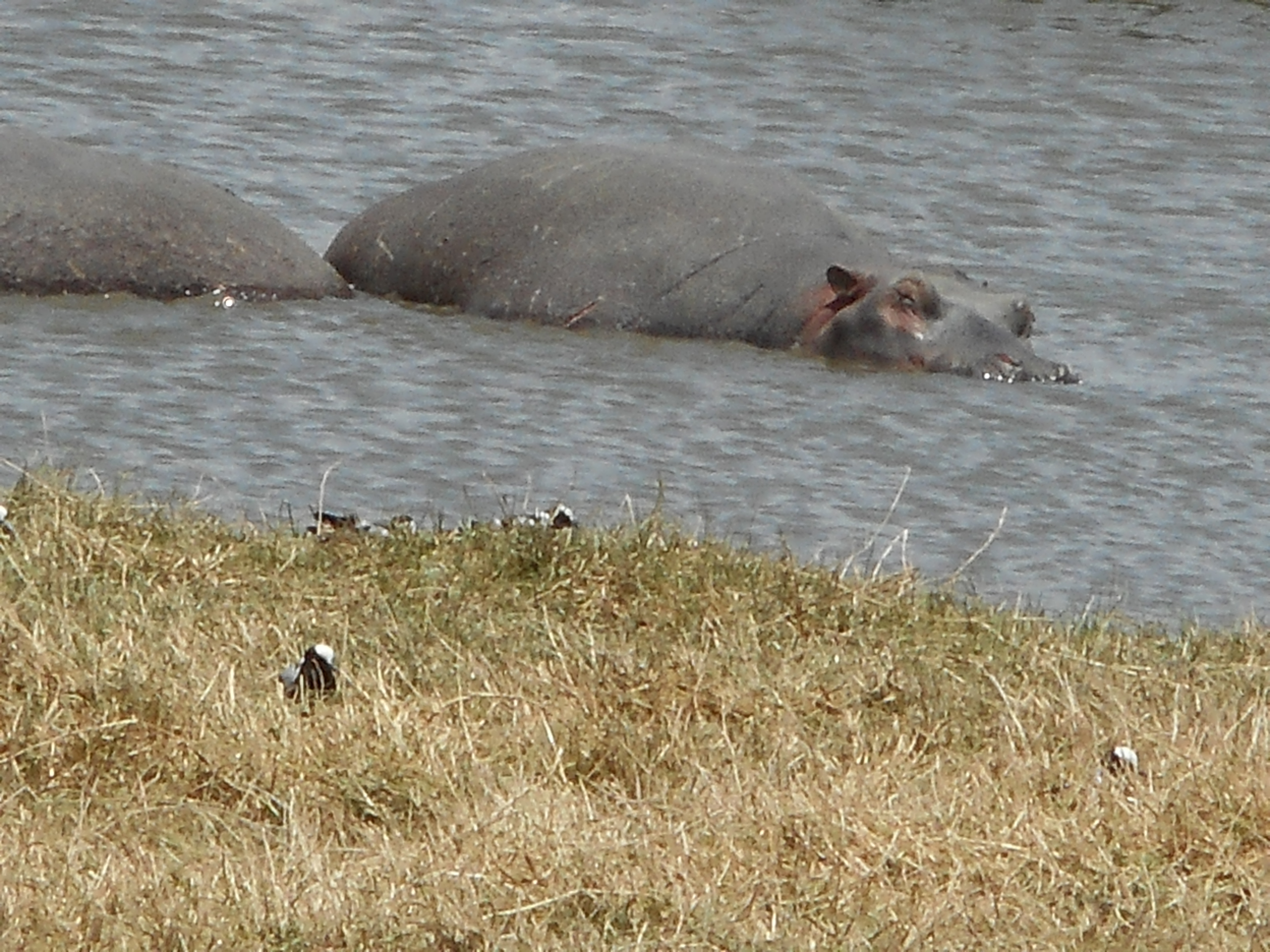
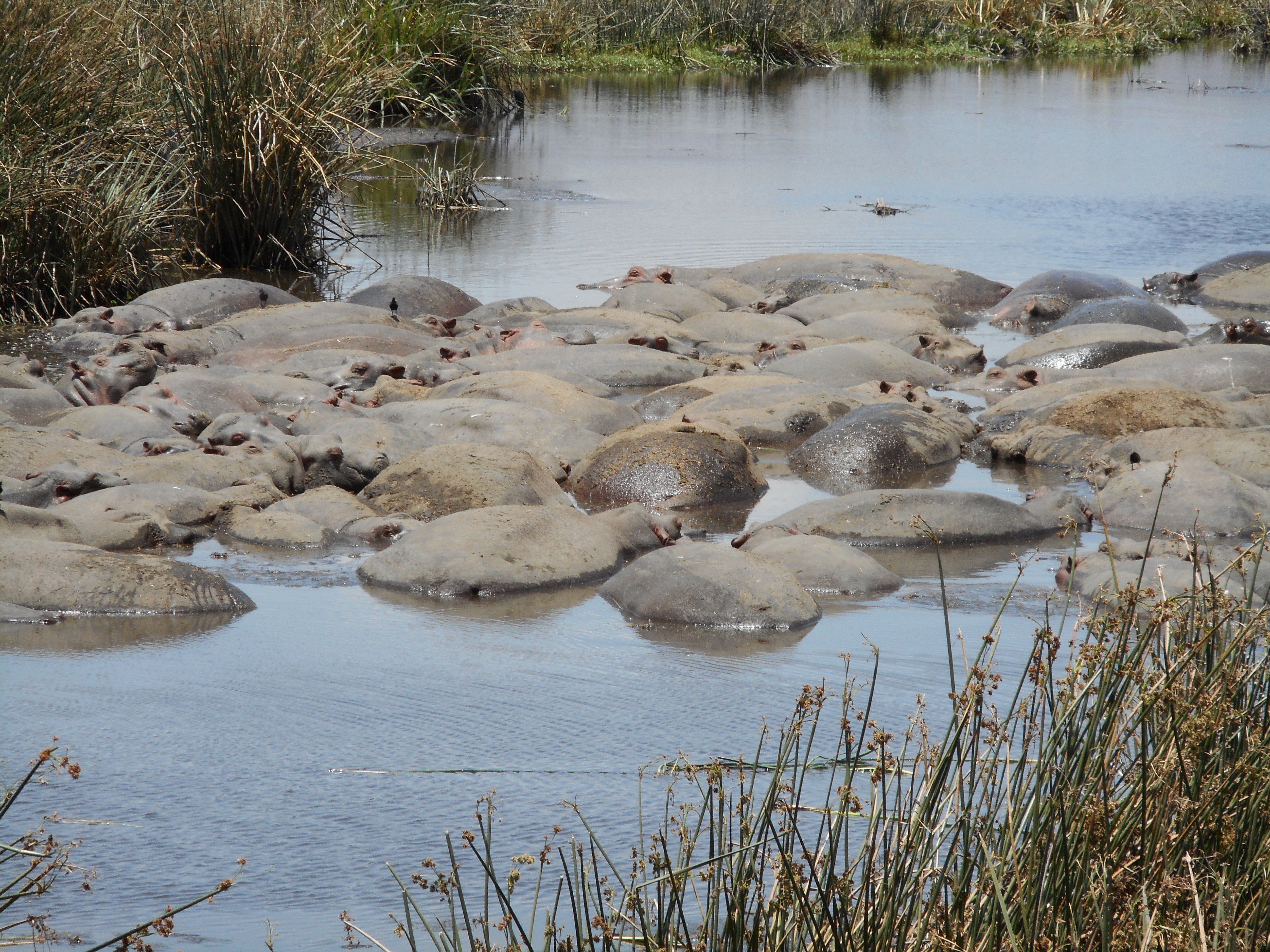
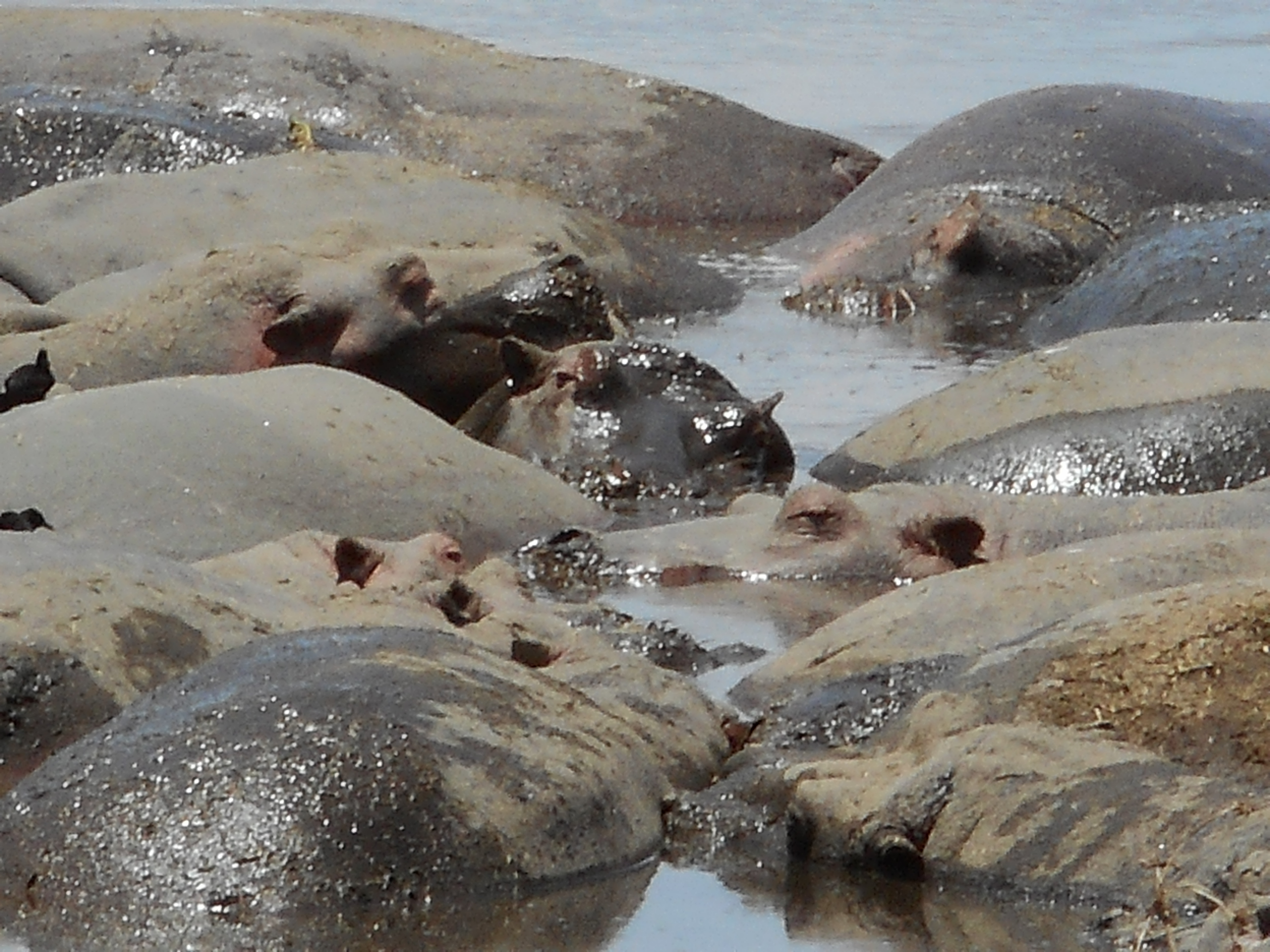
The Hippo pool.
A wildebeest.
Male ostrich. When they get ready to mate their legs turn pinkish-red.
Lunch break at the lake. Hippos and crocs in the water.
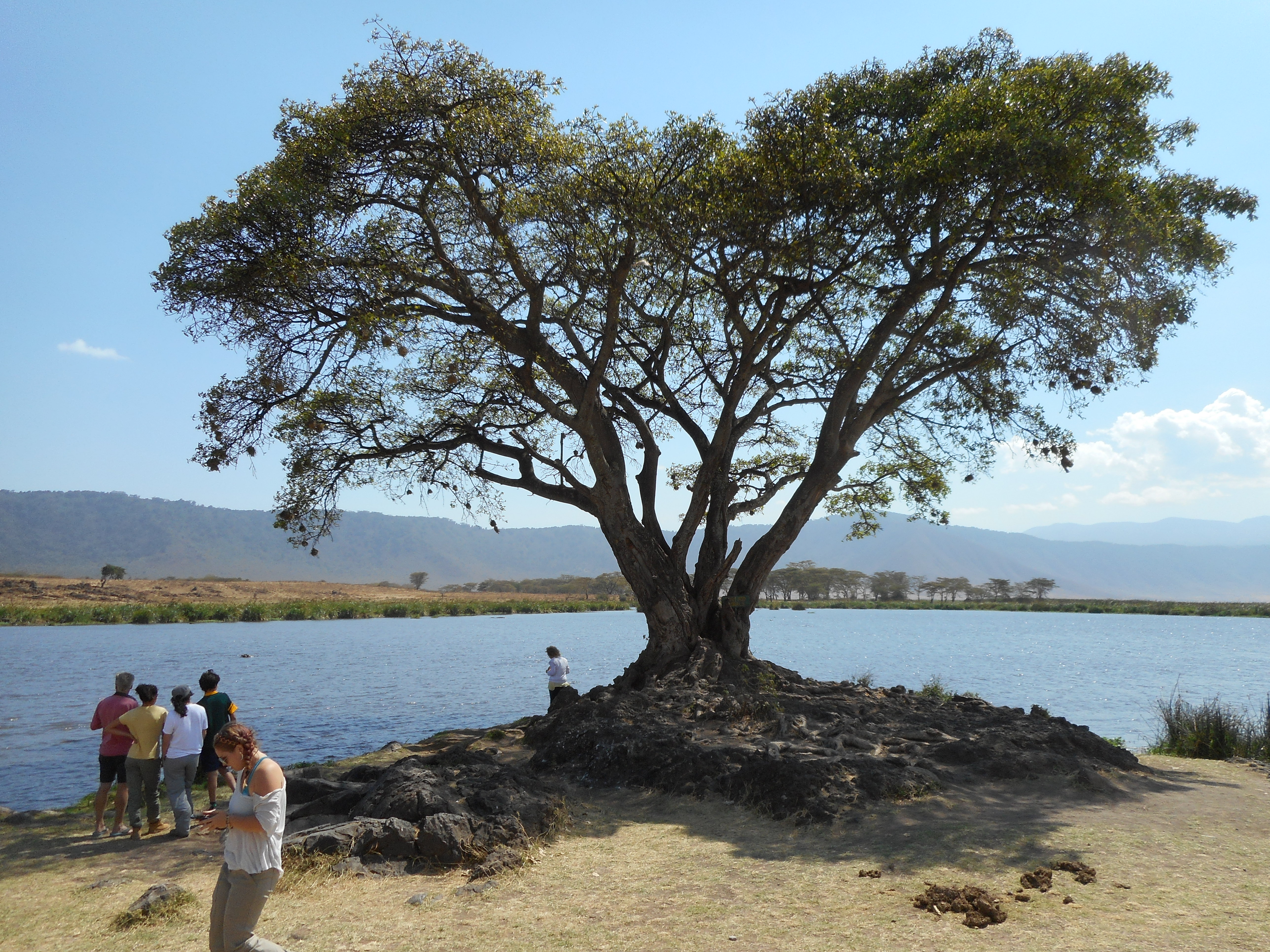
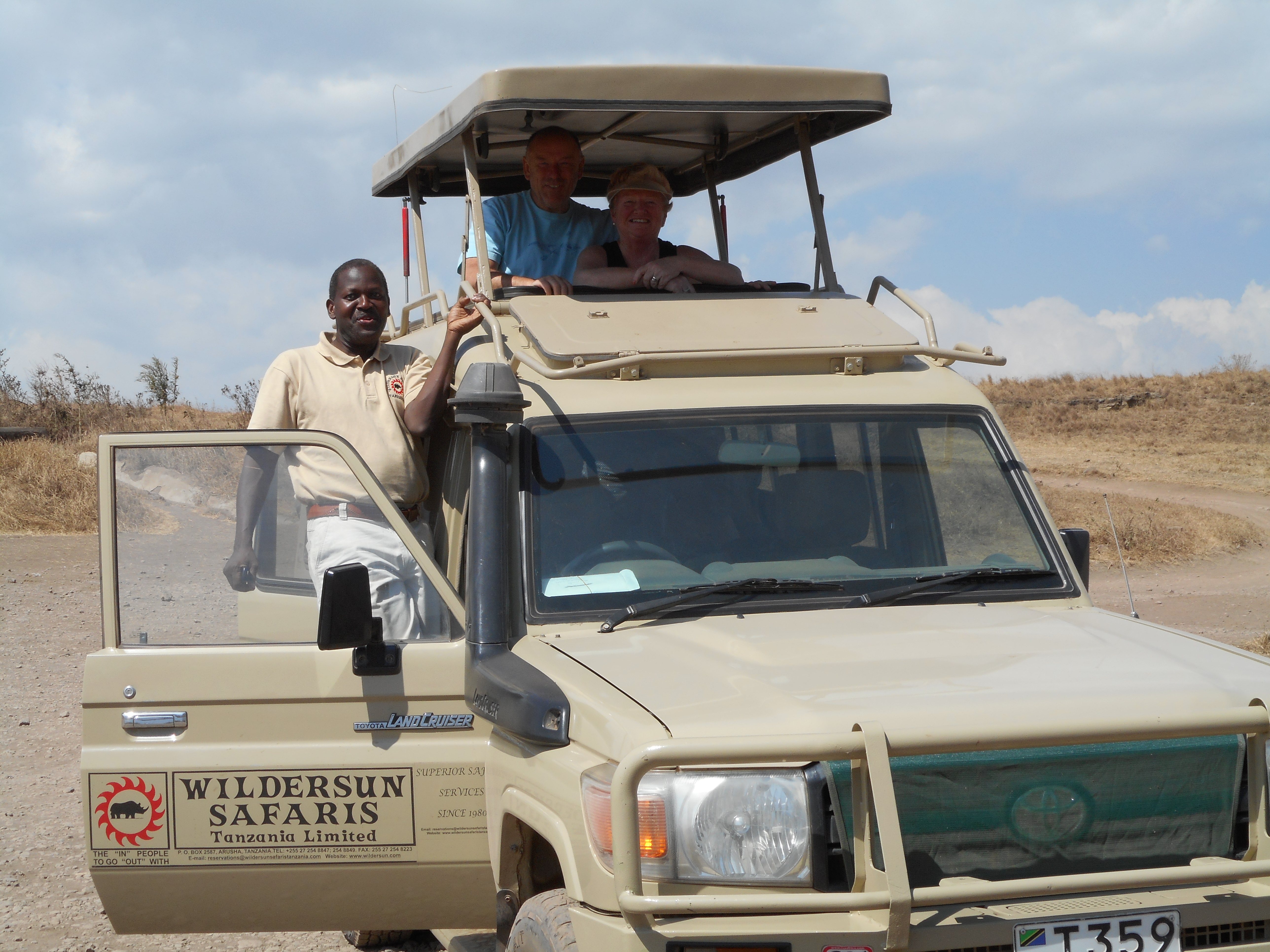
Leaving the crater at the end of the day.
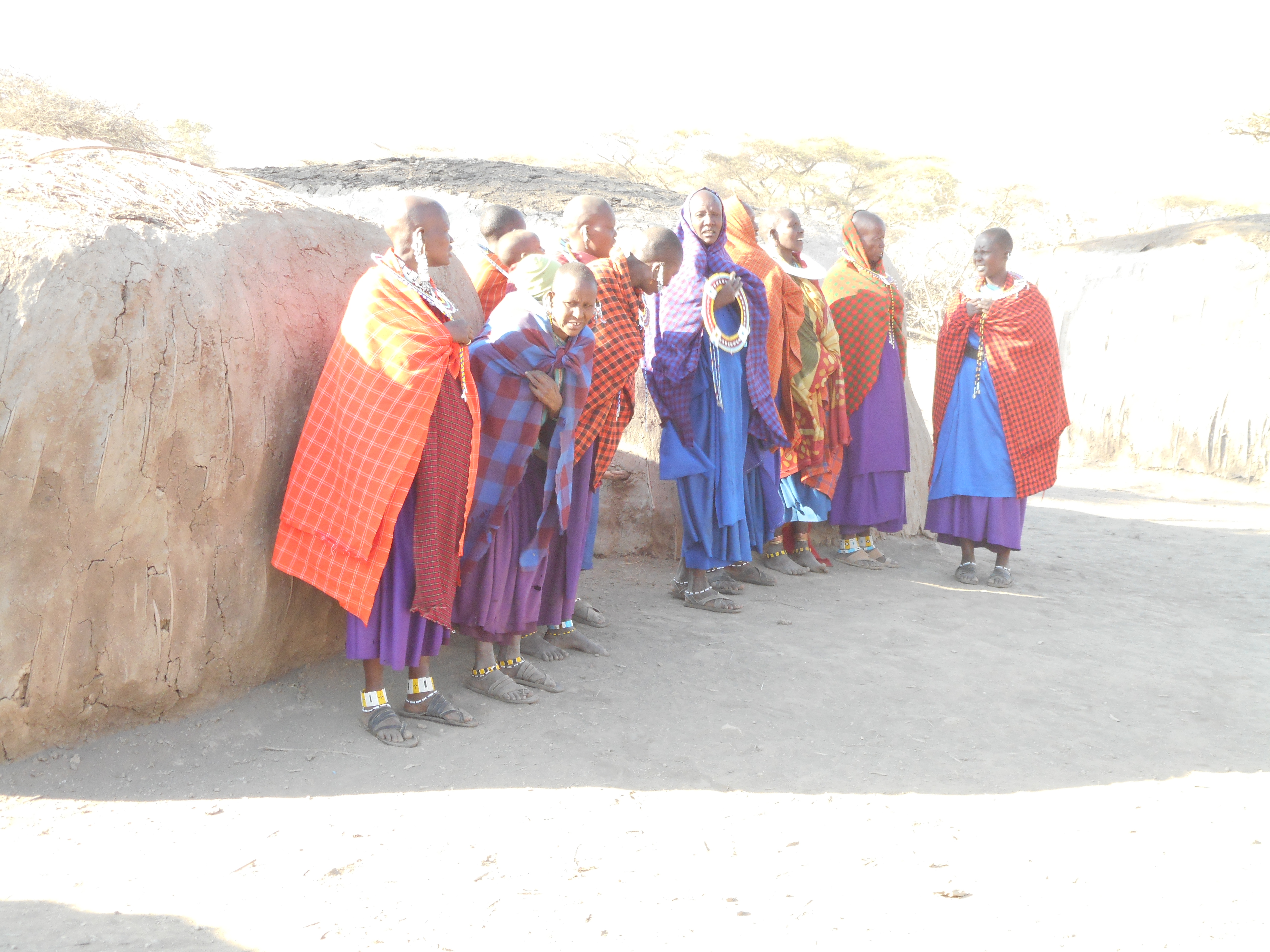
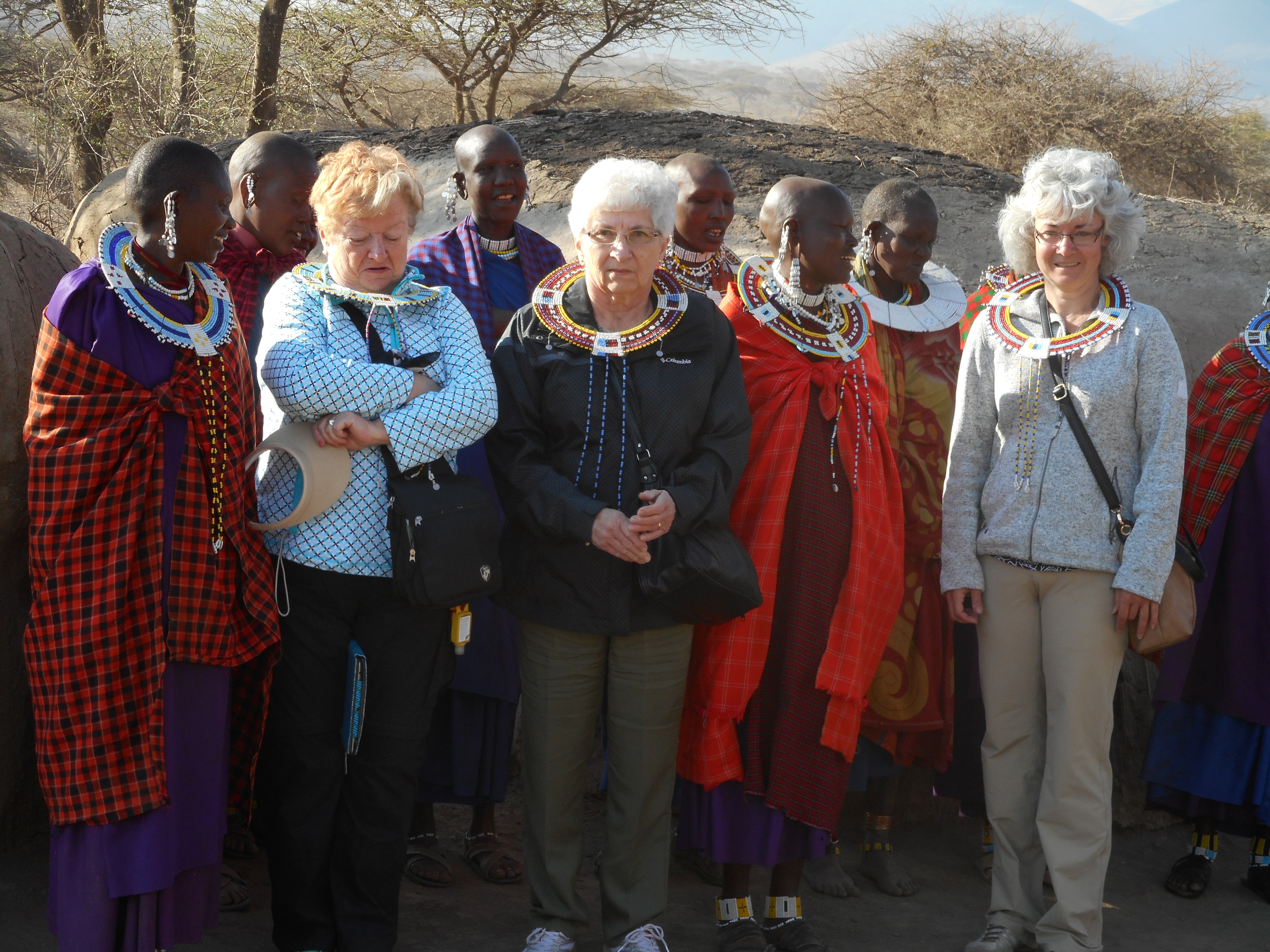
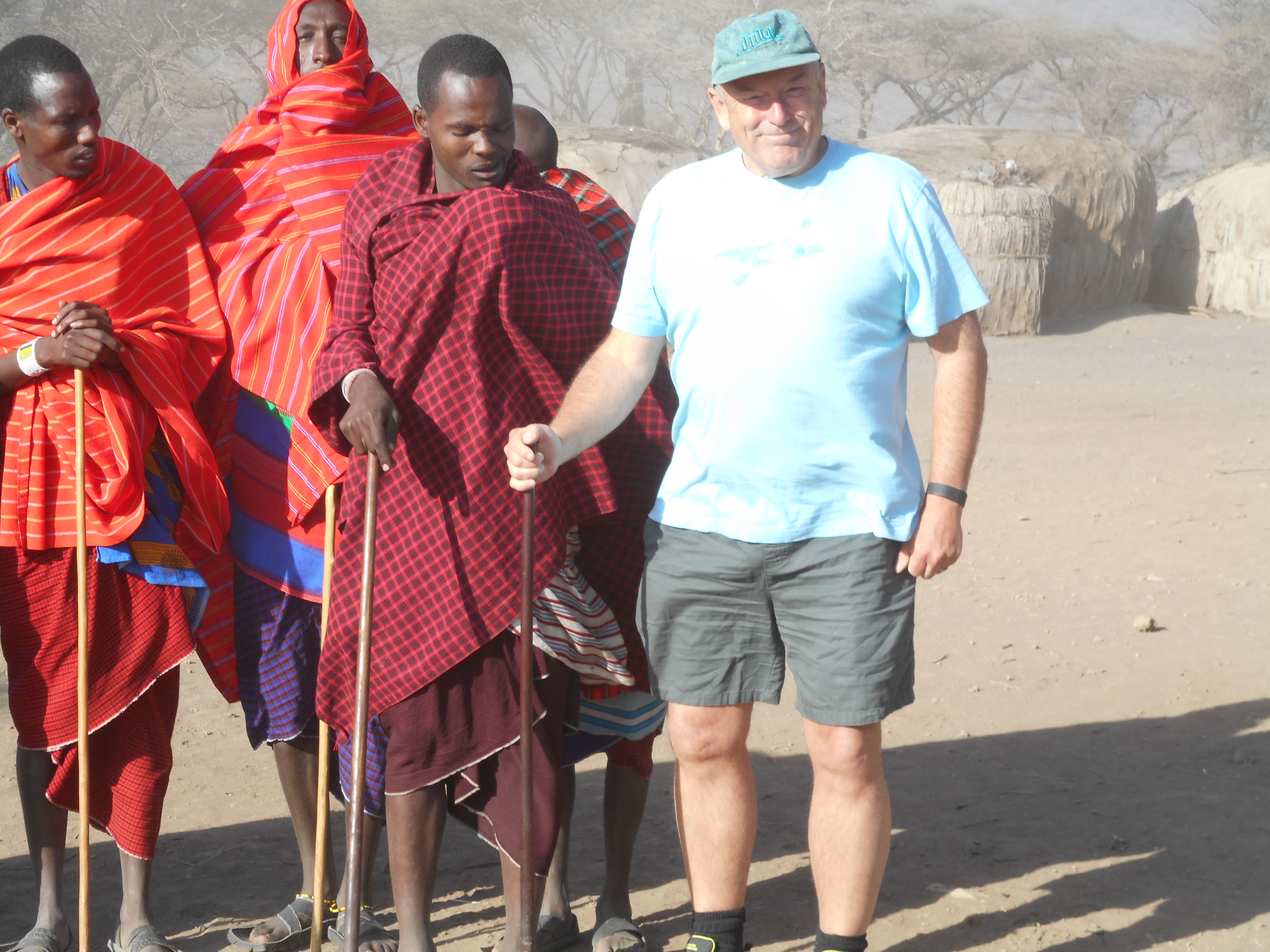
The next day it was off to the Serengeti. First we stopped at a Masai village. This village had approx. 150 people. They lived in horrible conditions. The huts were built using small saplings formed in a circle and packed with cow dung and mud. We saw a few traditional dances and even participated in some of them.
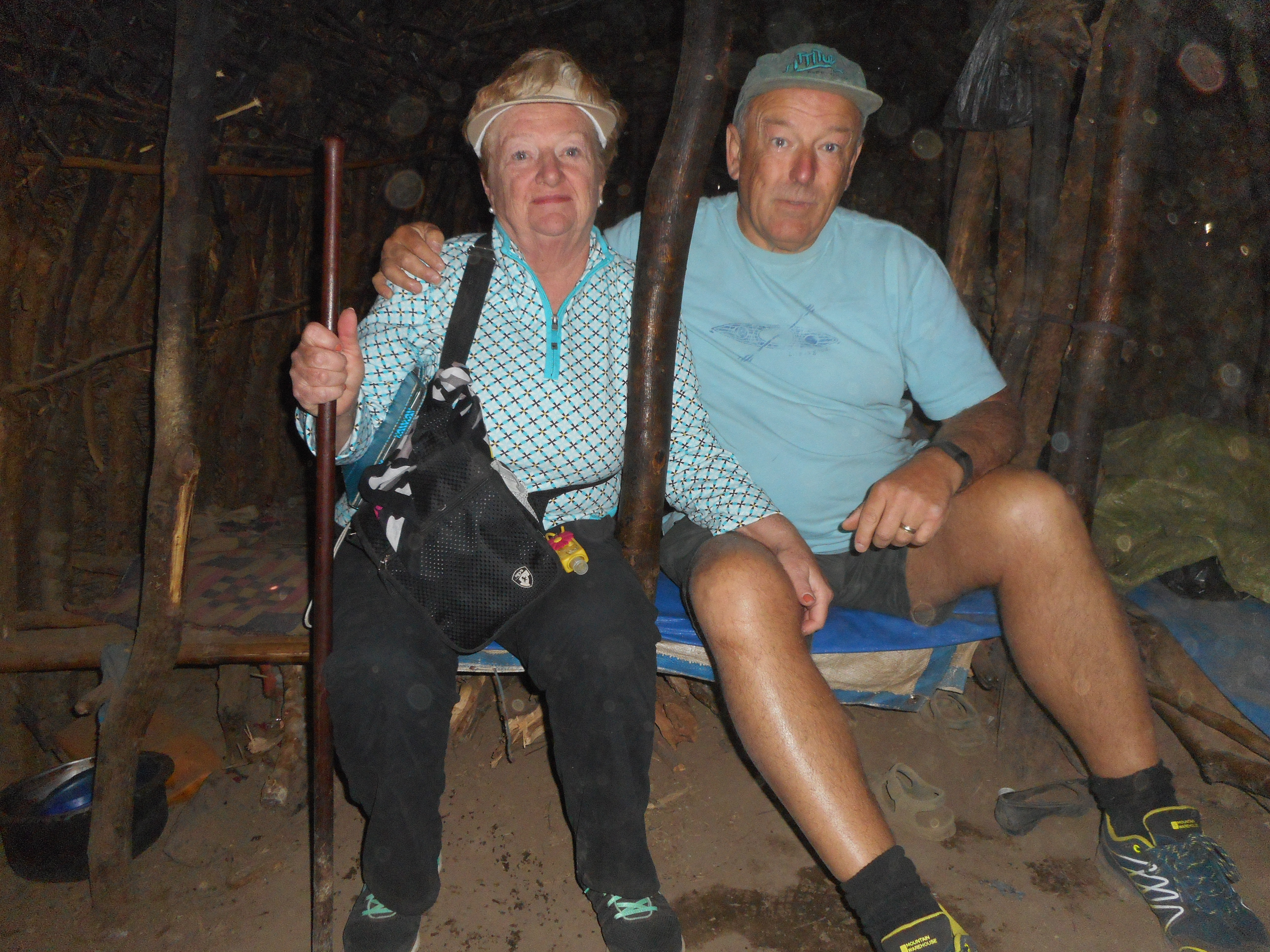
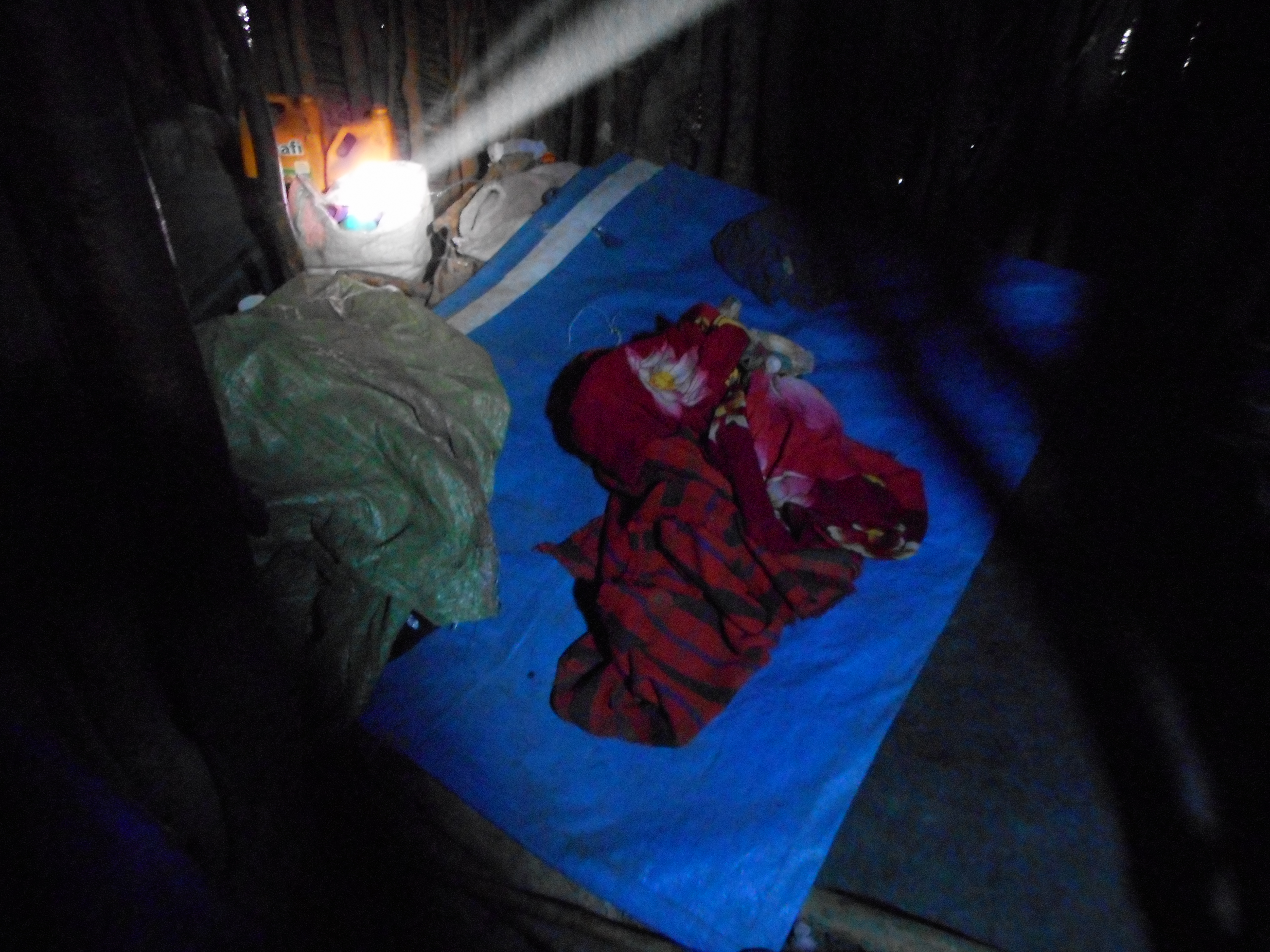
This is the inside of the hut. We were sitting on the parents bed and to our left was the bed for the three kids.
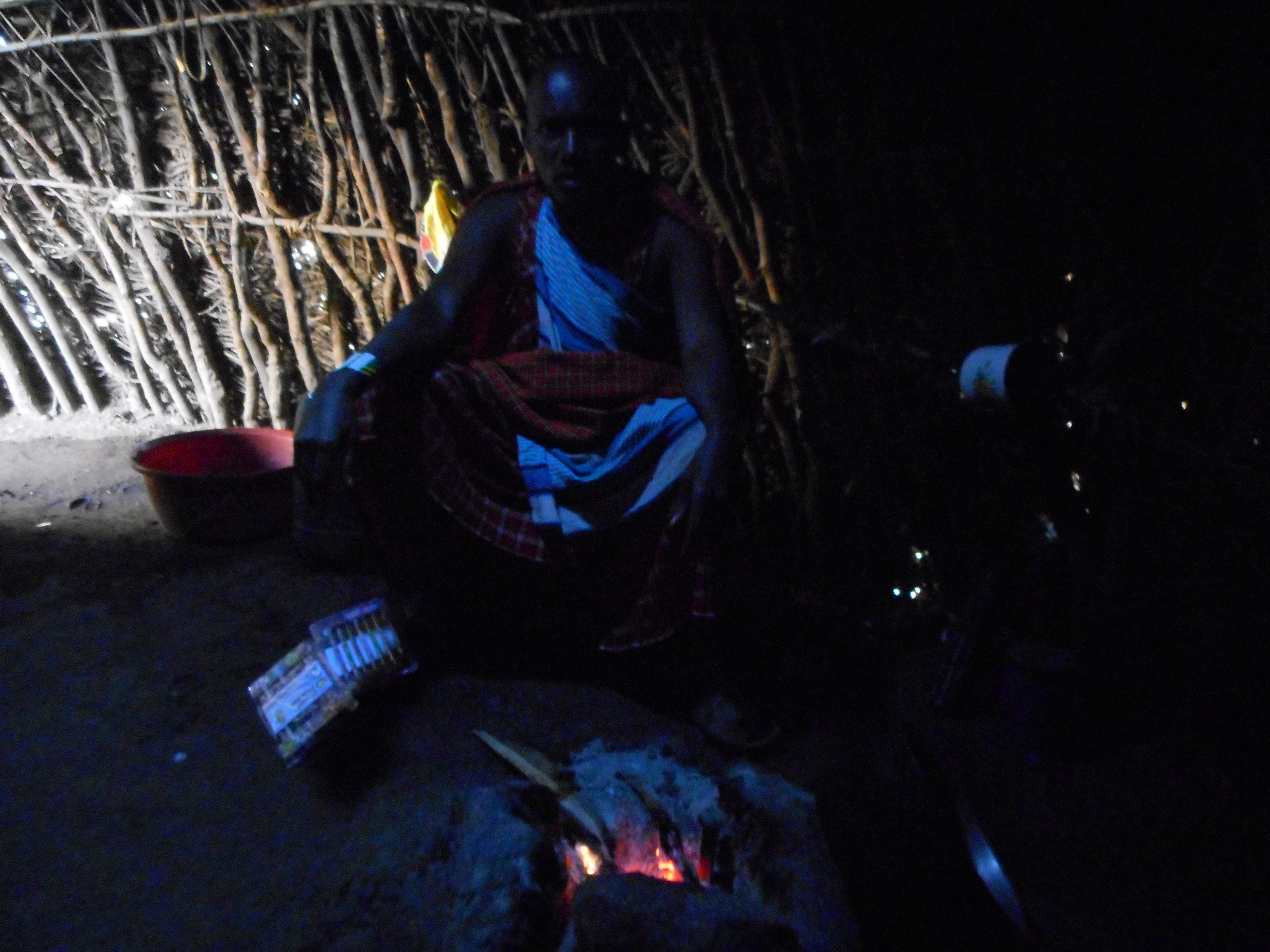
This is the man of the house. In front of him is their cook fire and beside him you see the wash basin for them and the dishes.
Ok, everyone! Follow me to the Serengeti.
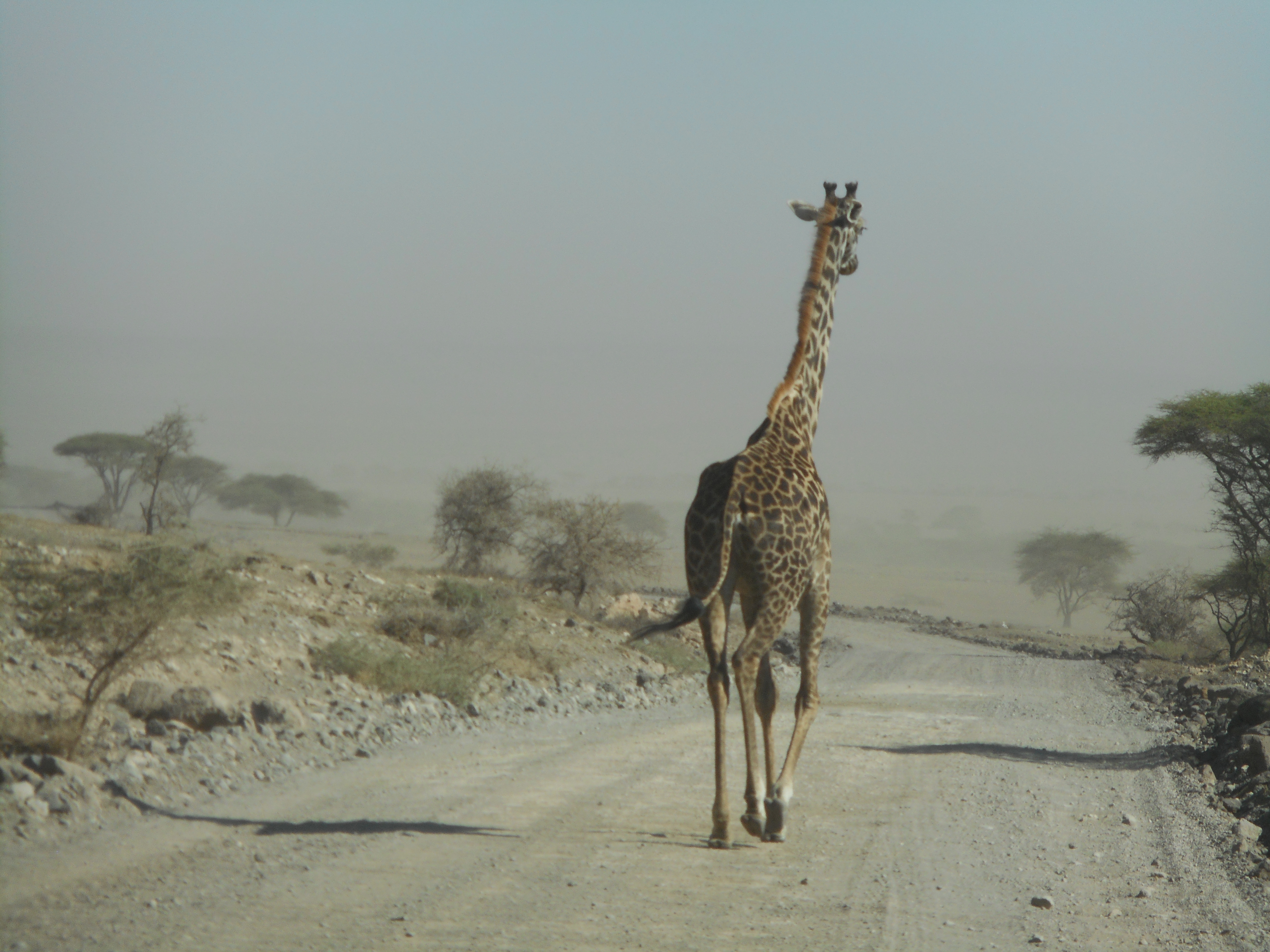
It was a dusty drive to the Serengeti. We had to chose between closed windows and suffocating heat, or windows open and choking dust. I know, you don’t feel sorry for us.
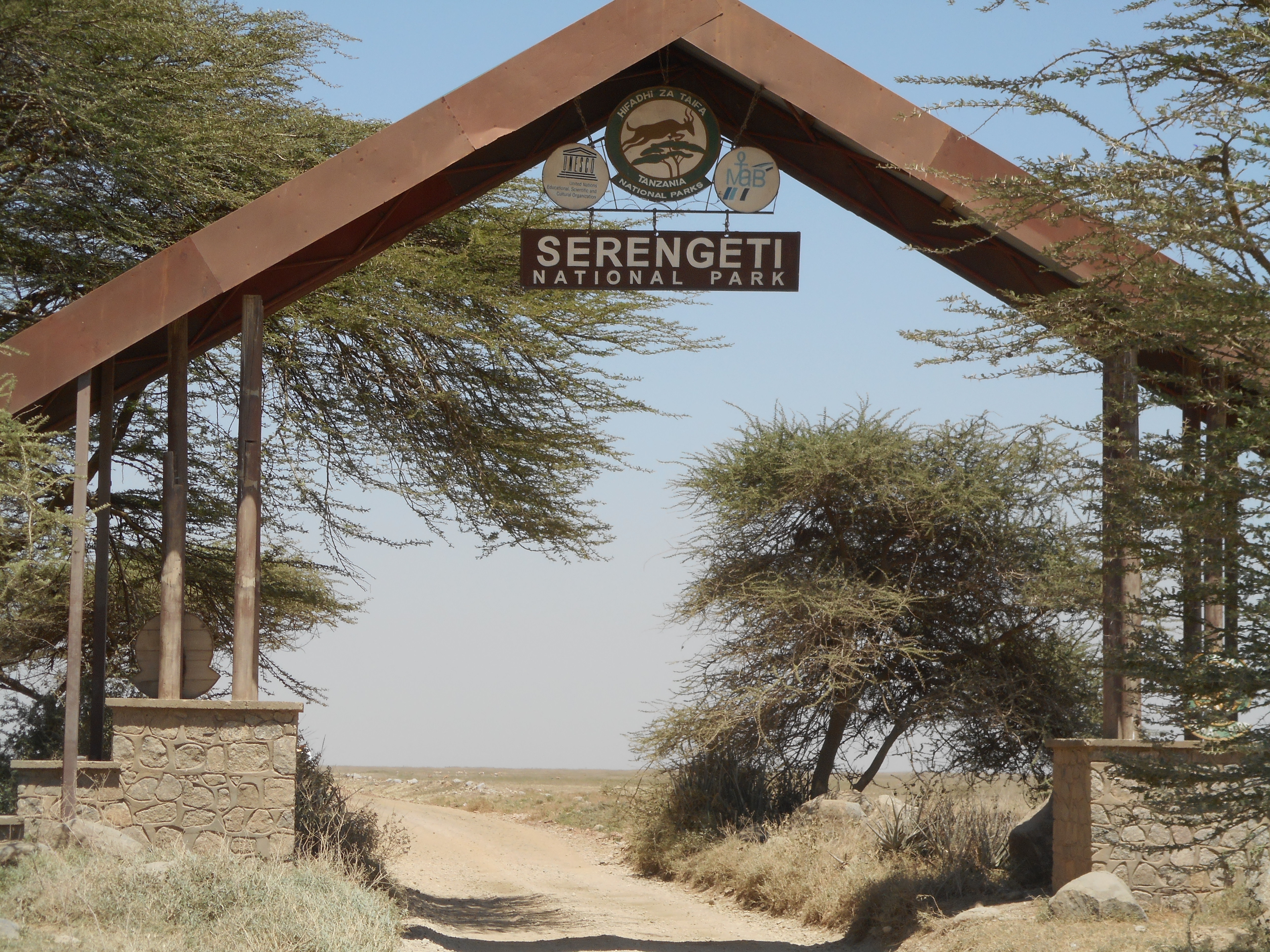
Along the way we stopped at the Leaky museum, where the oldest human skull was found.
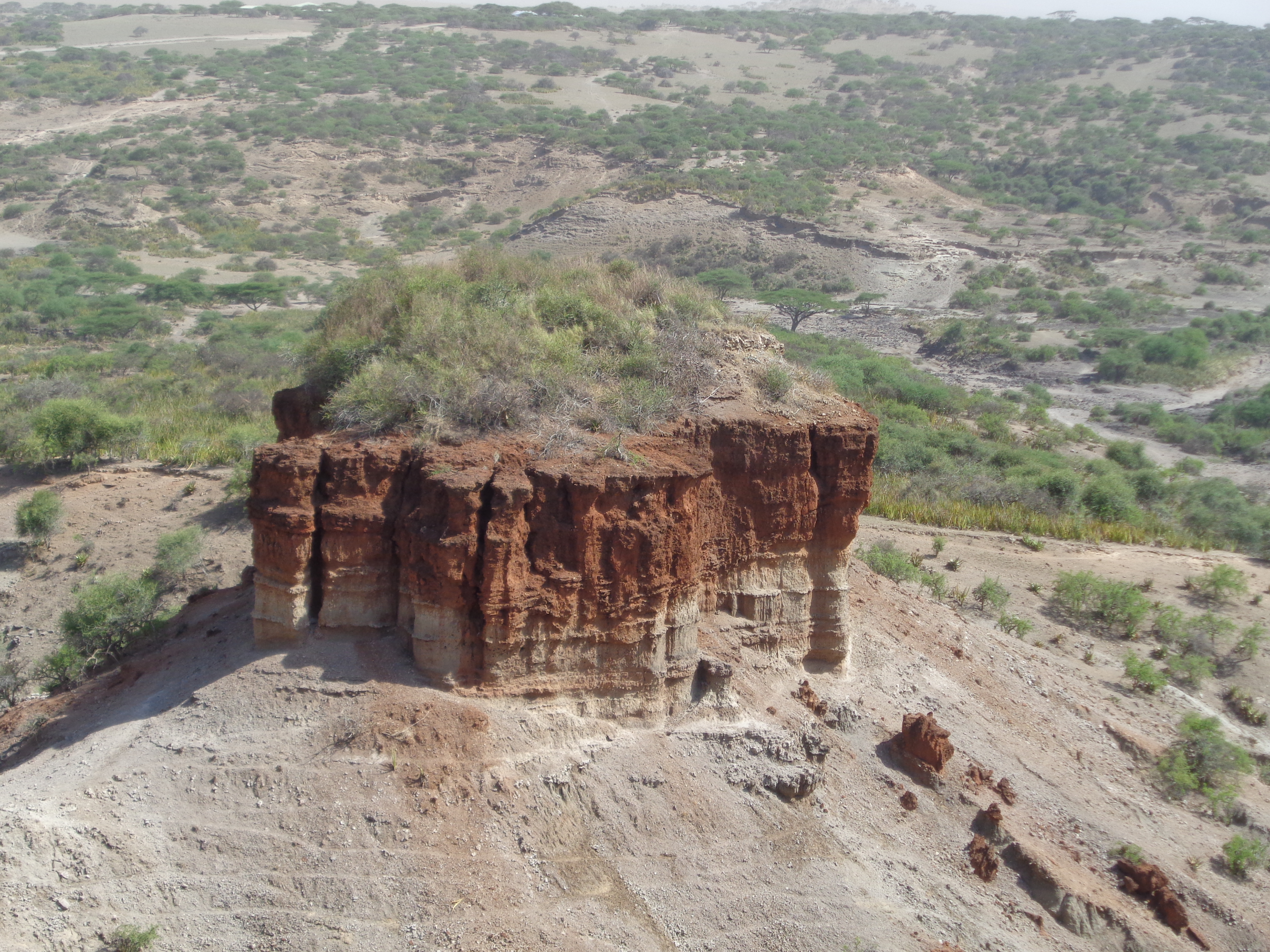
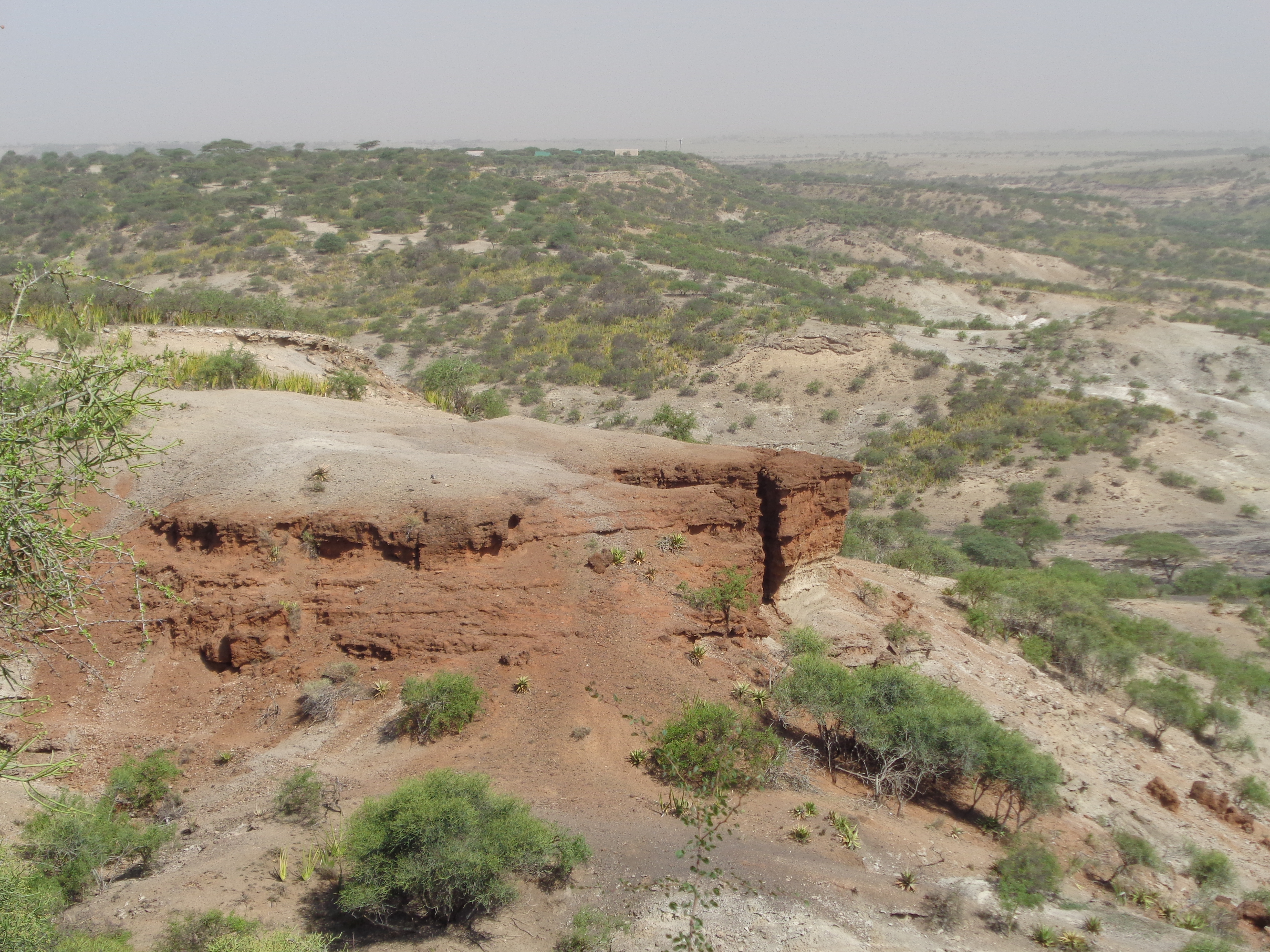
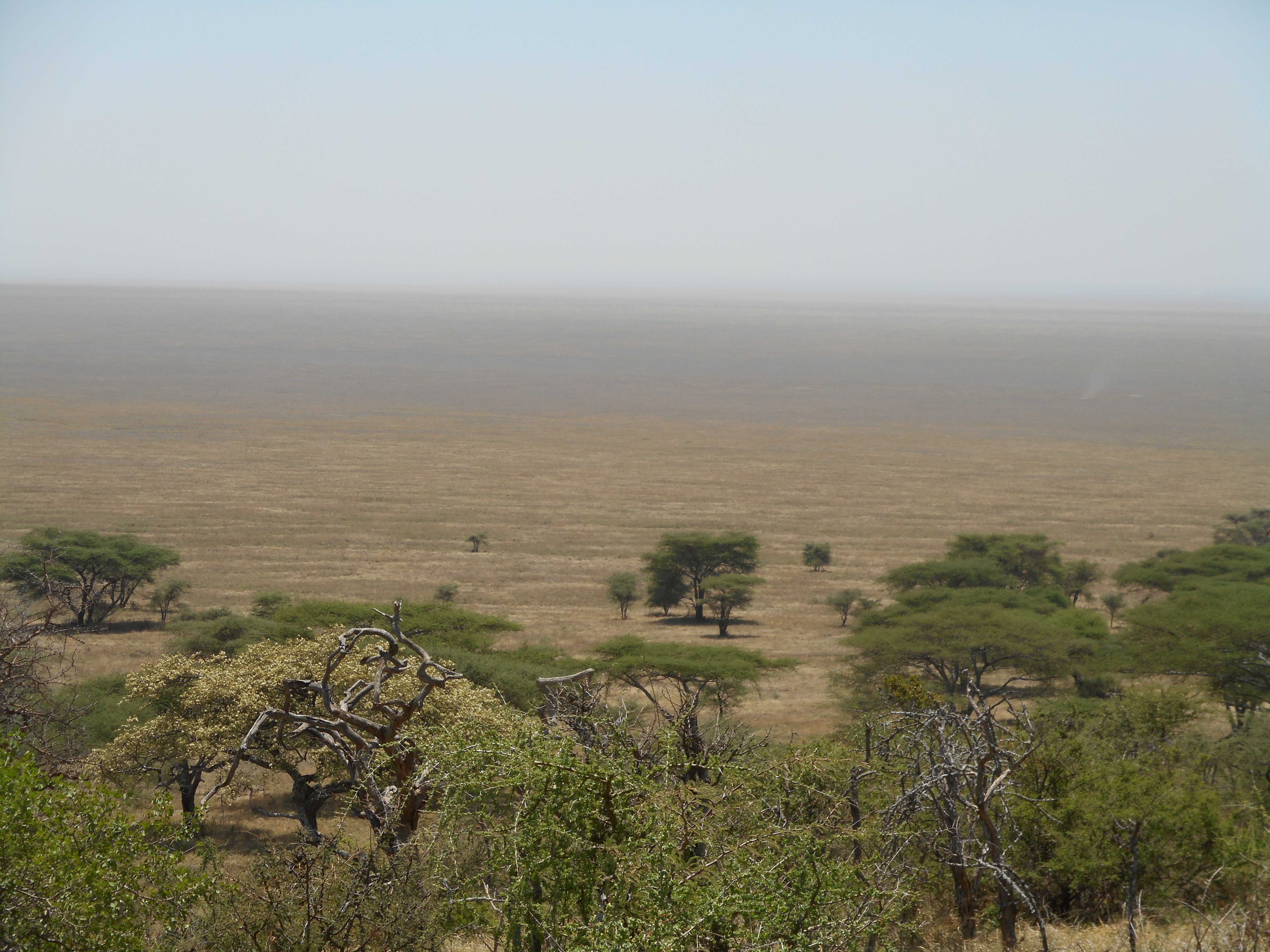
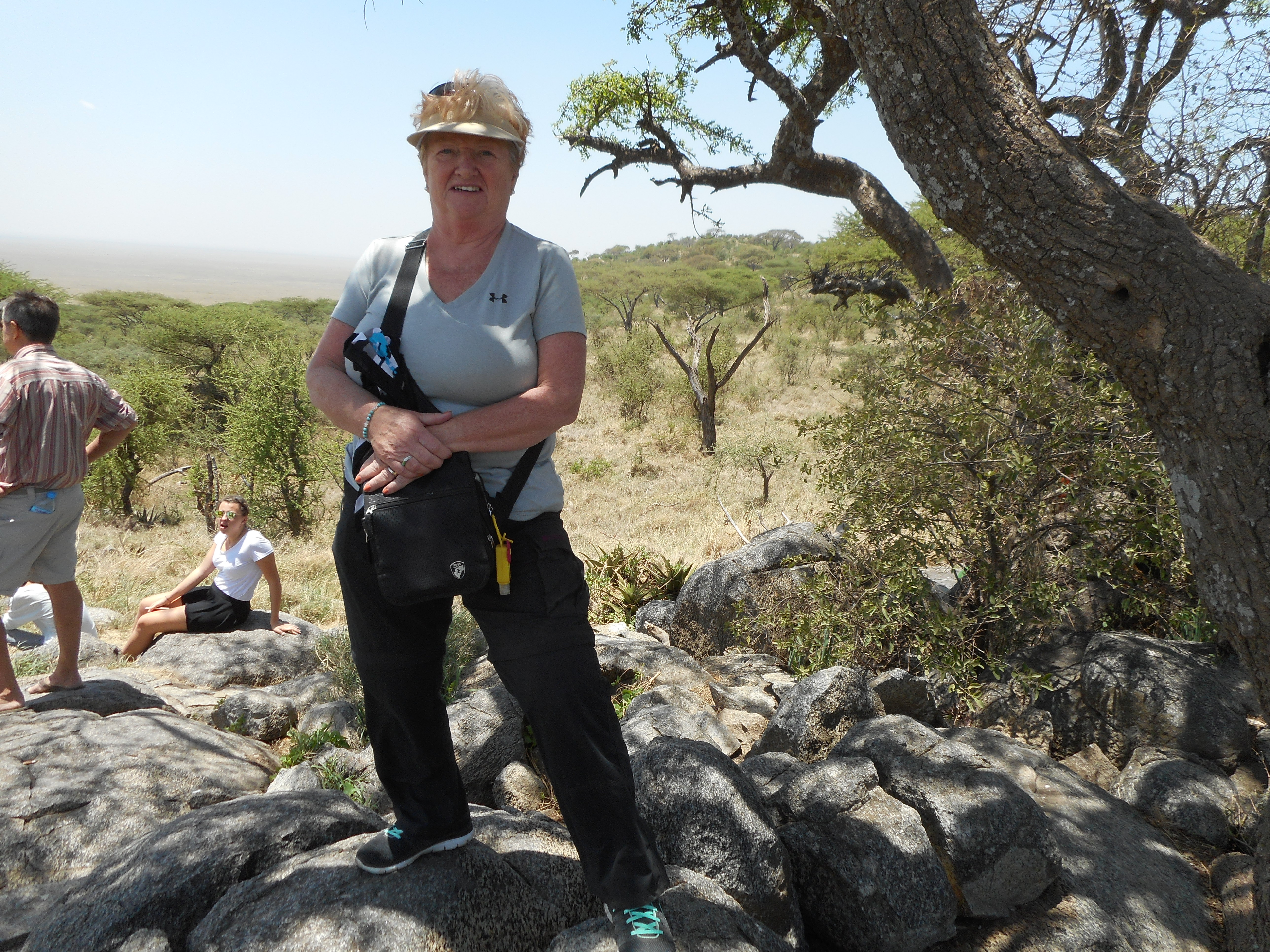
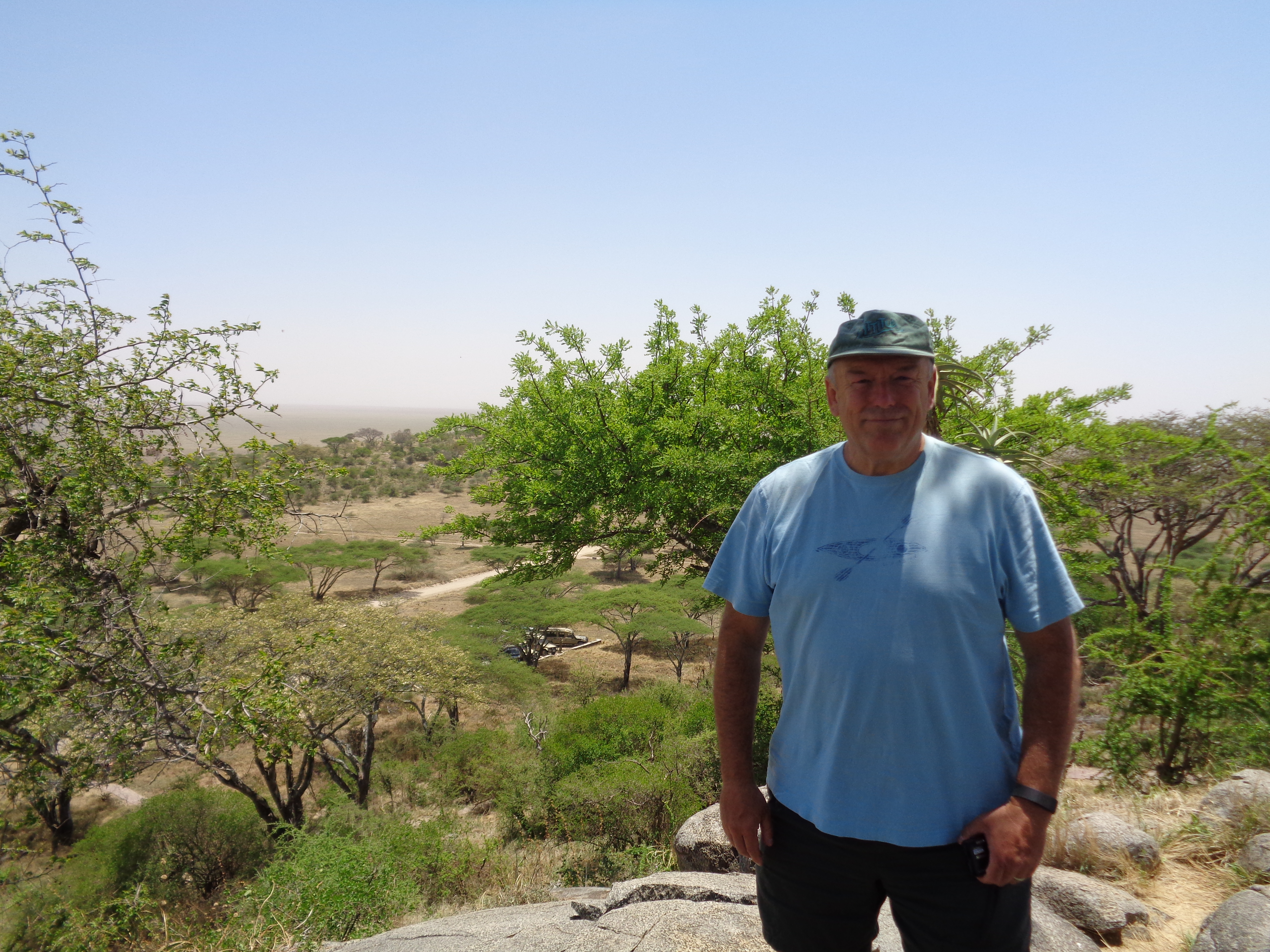
All of a sudden the landscape changed. Nice trees instead of dusty plains. Second picture showed where we came from.
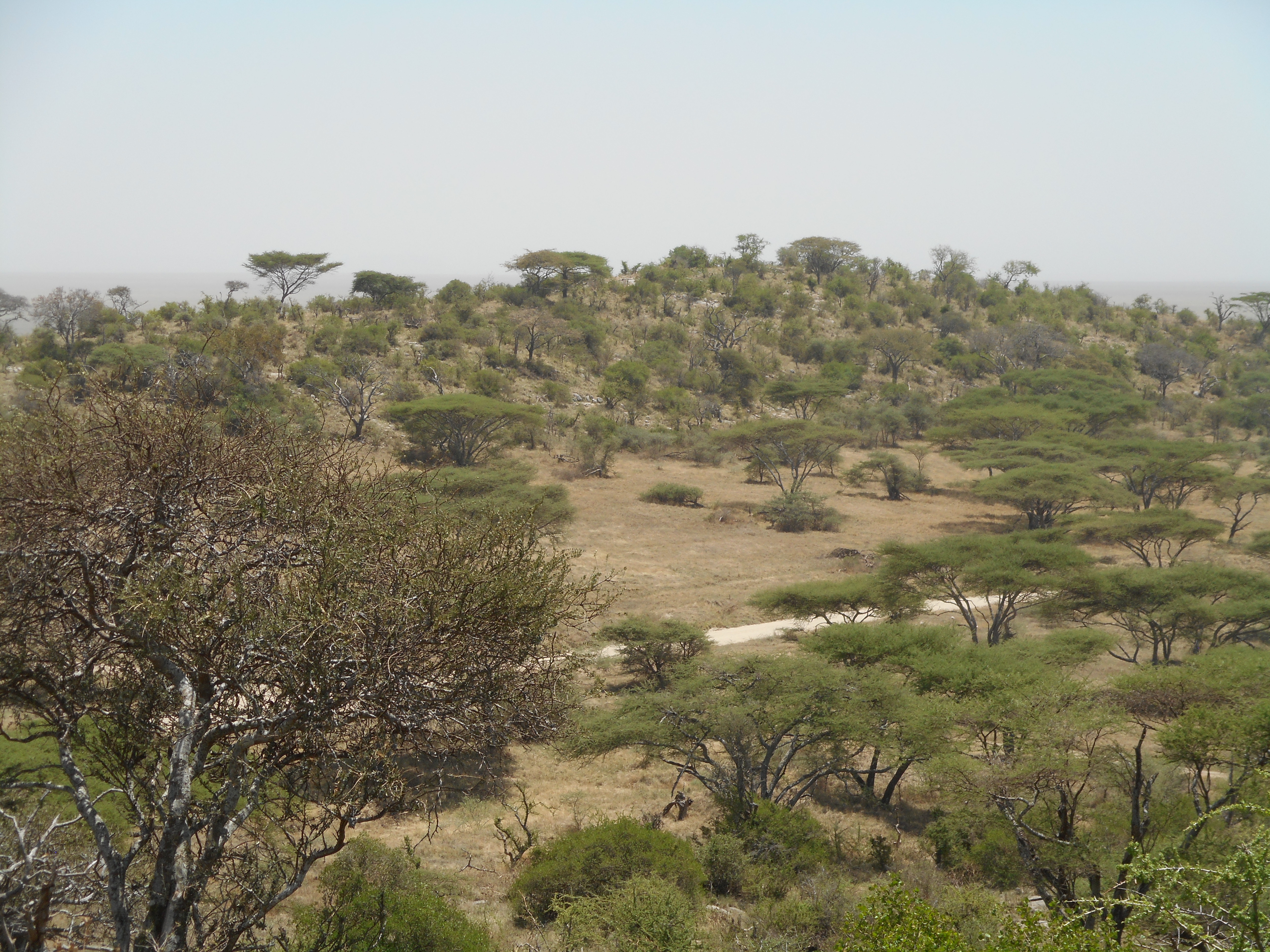
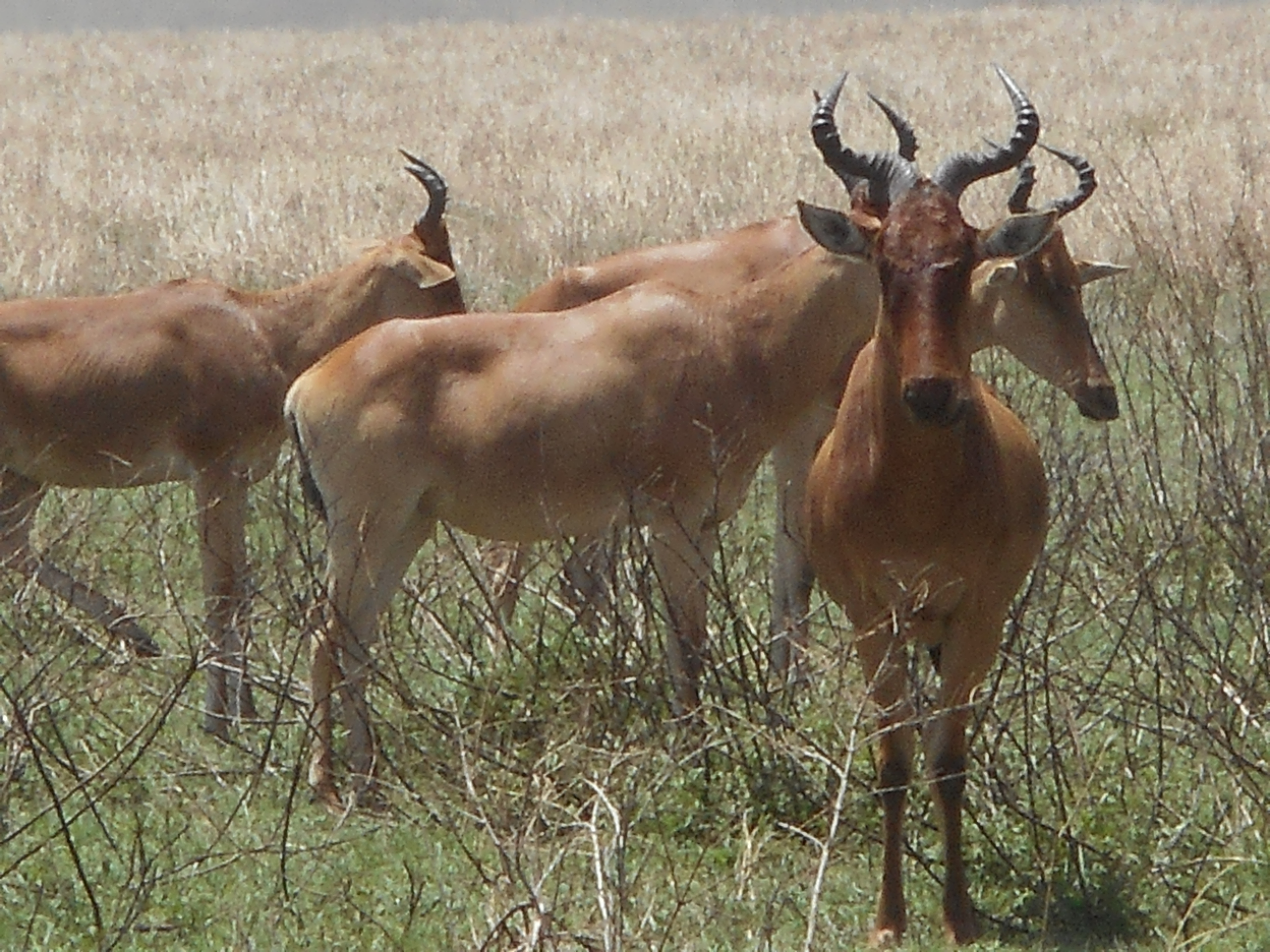
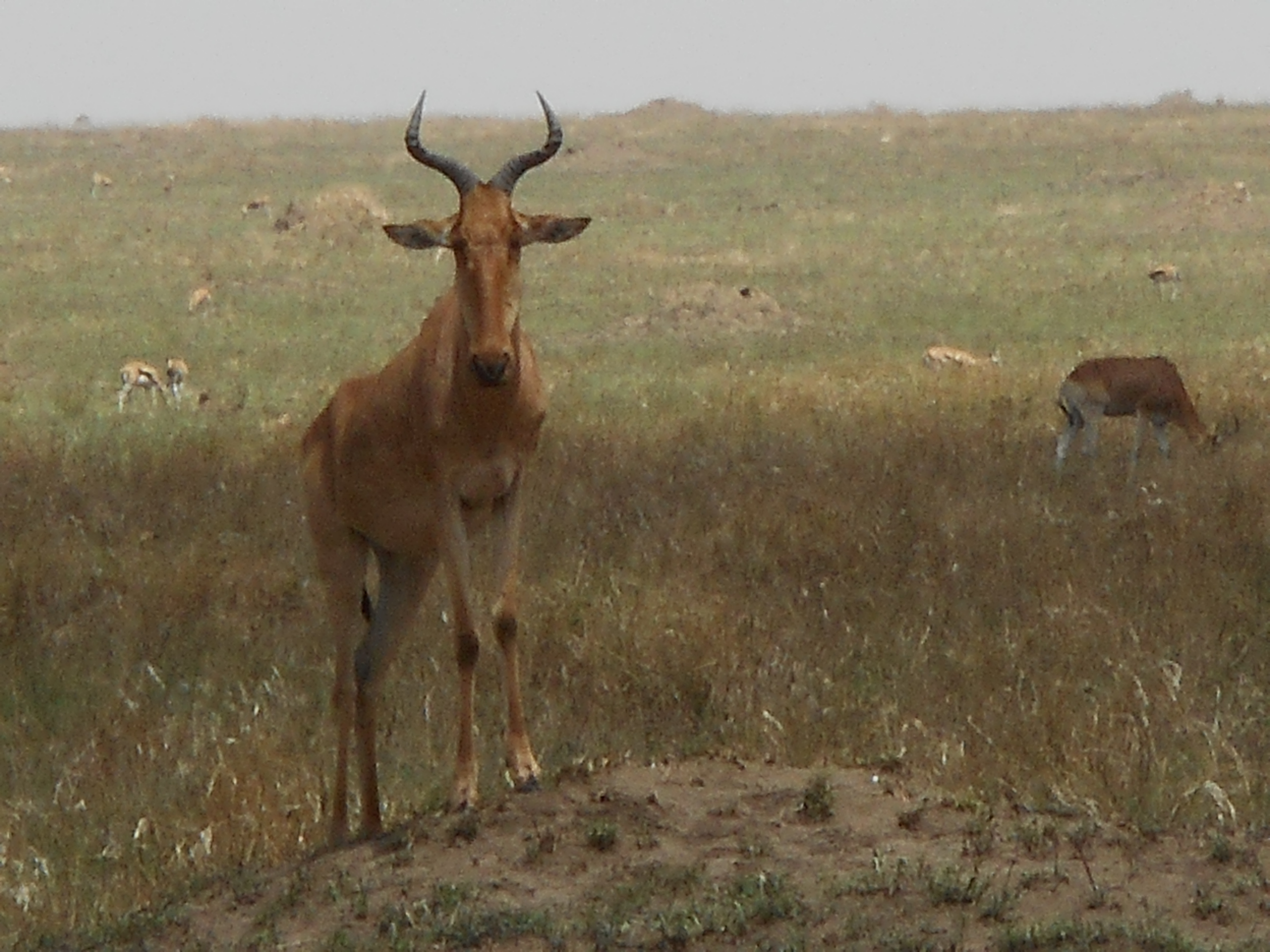
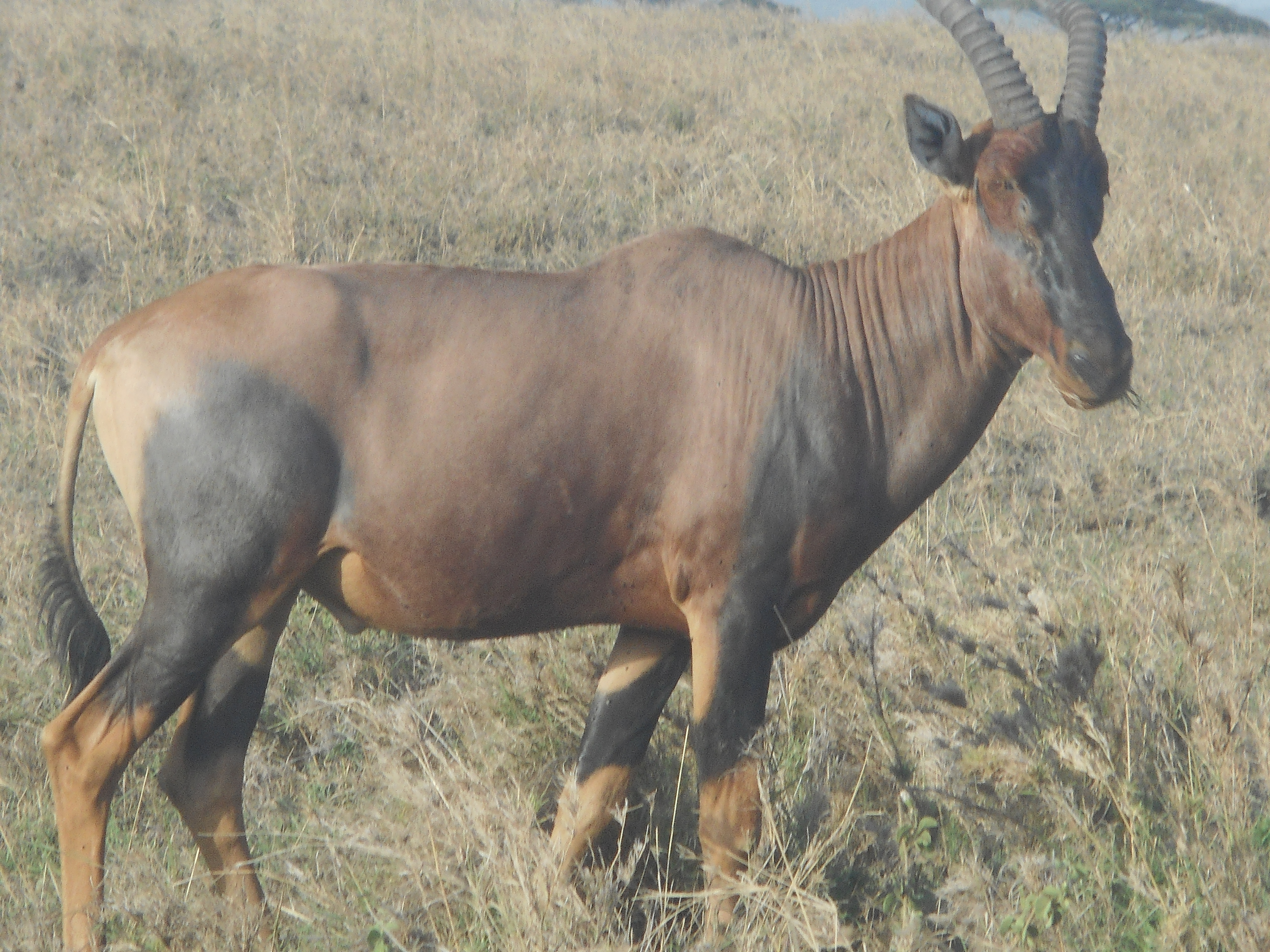
These are hartebeests. They, along with Blue Jean Topis are often used as sentries for the grazing animals, gazelles, zebras, warthogs, because of their long range vision. They often stand on broken down termite mounts to get up higher for a clearer view.
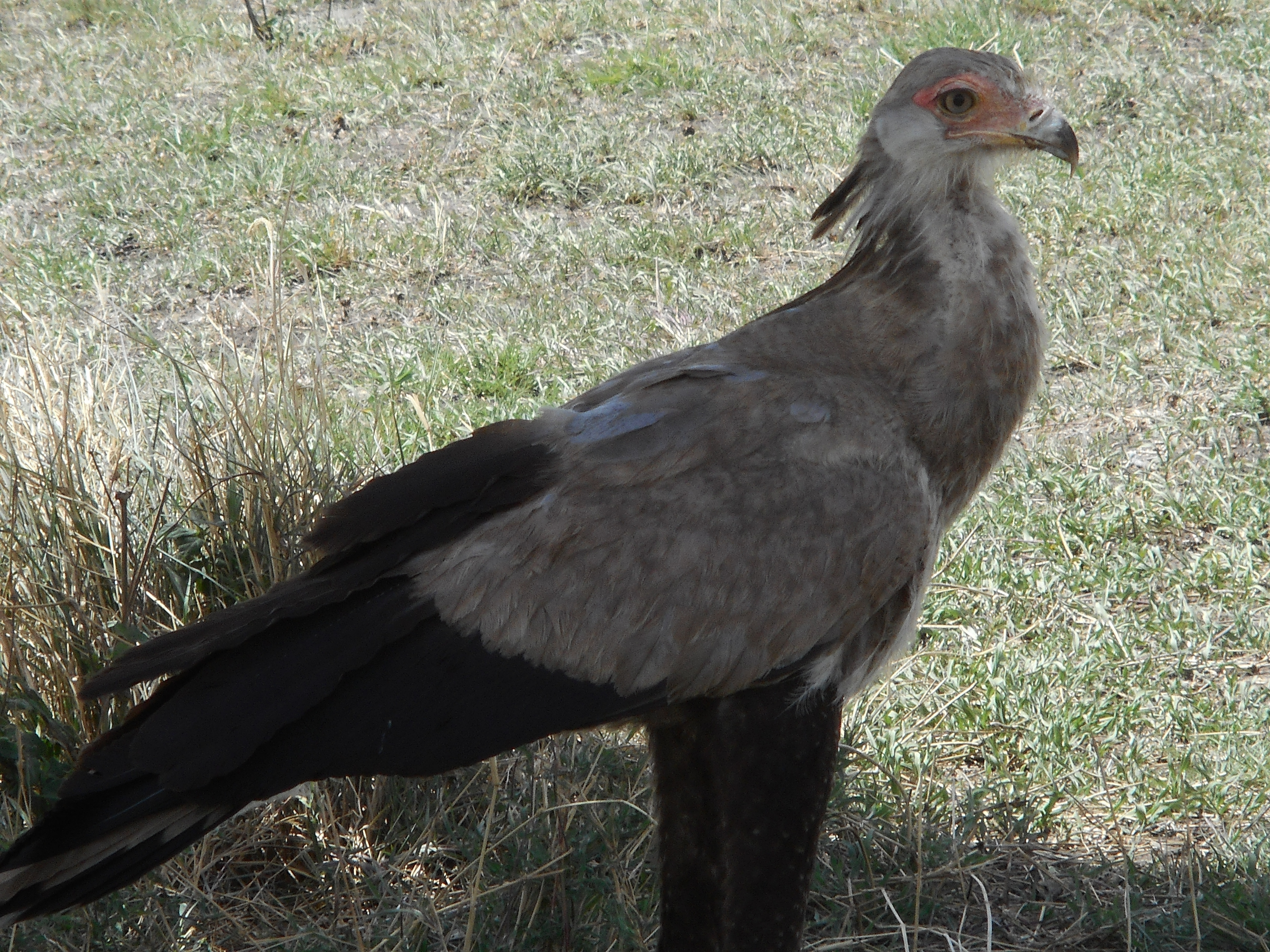
This is a Secretary Bird. They are often seen clawing at their prey and it looks like a secretary typing. Often they have plumage sticking out of their head, which looks like pens that a secretary would have.
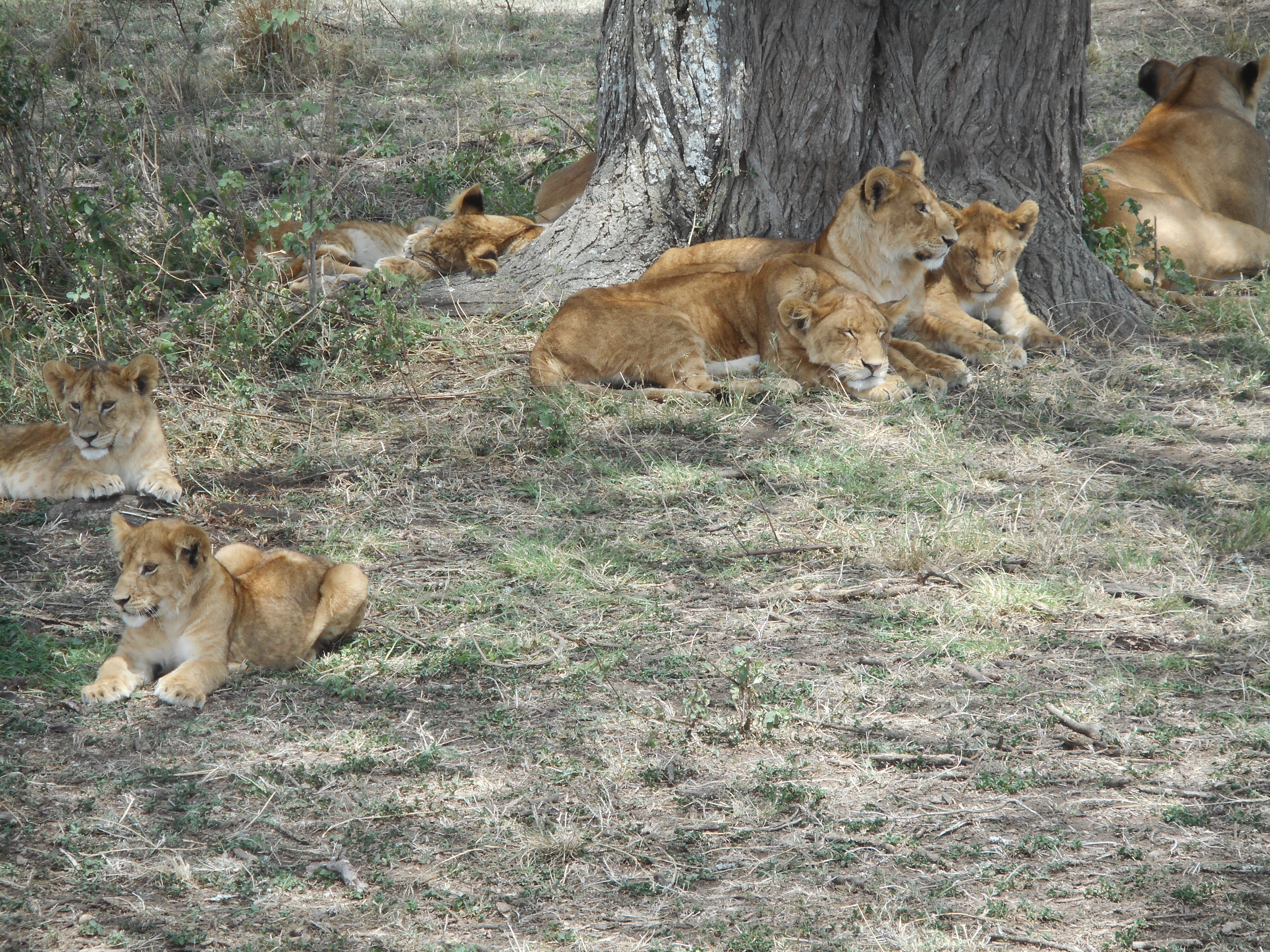
Our first pride of lions. Three females and a male. Lazing around after a feed. One of the females is collared for tracking.
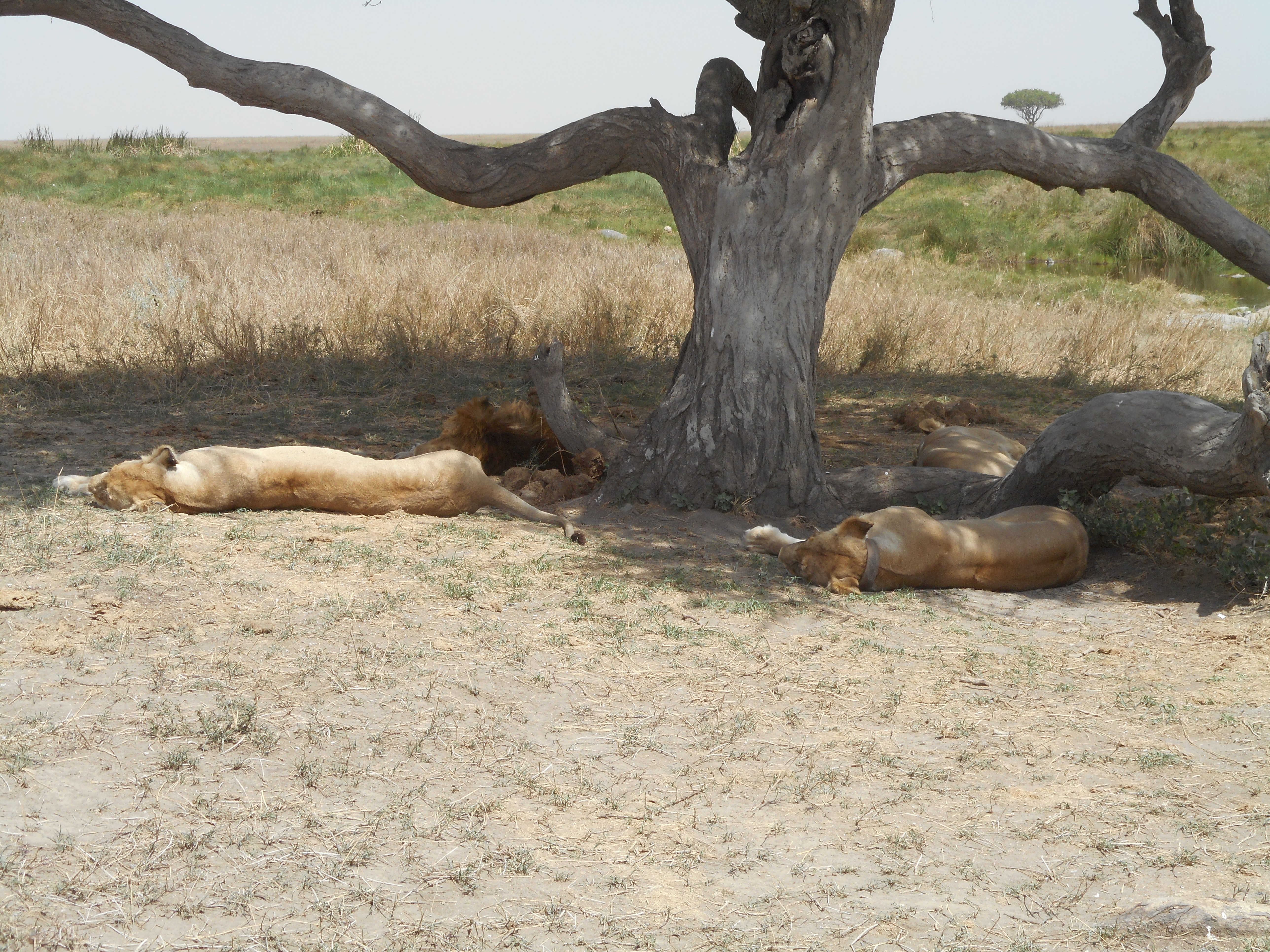
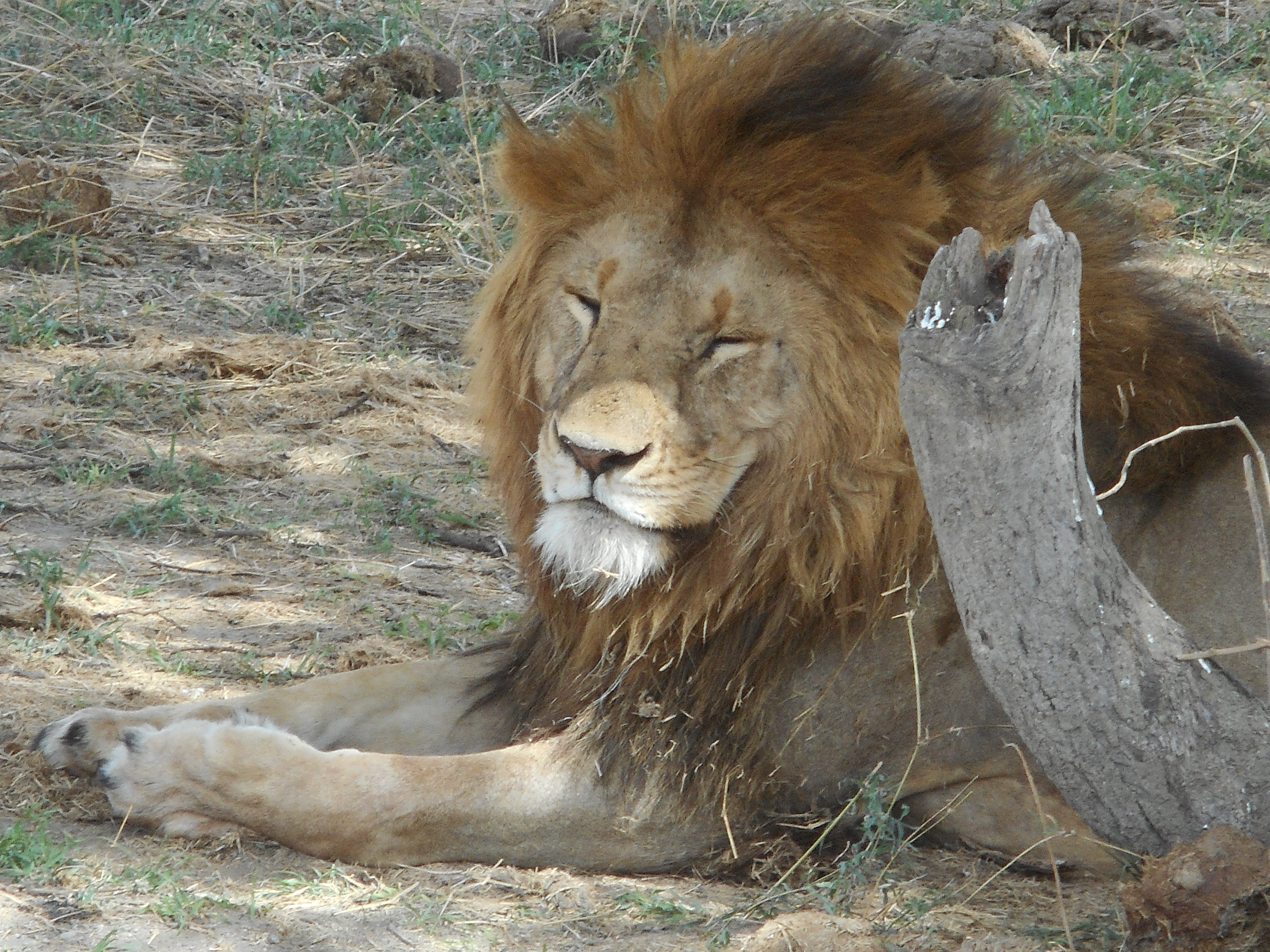
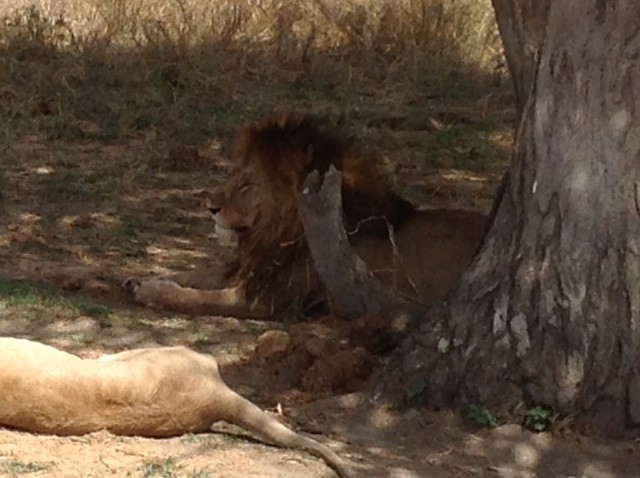
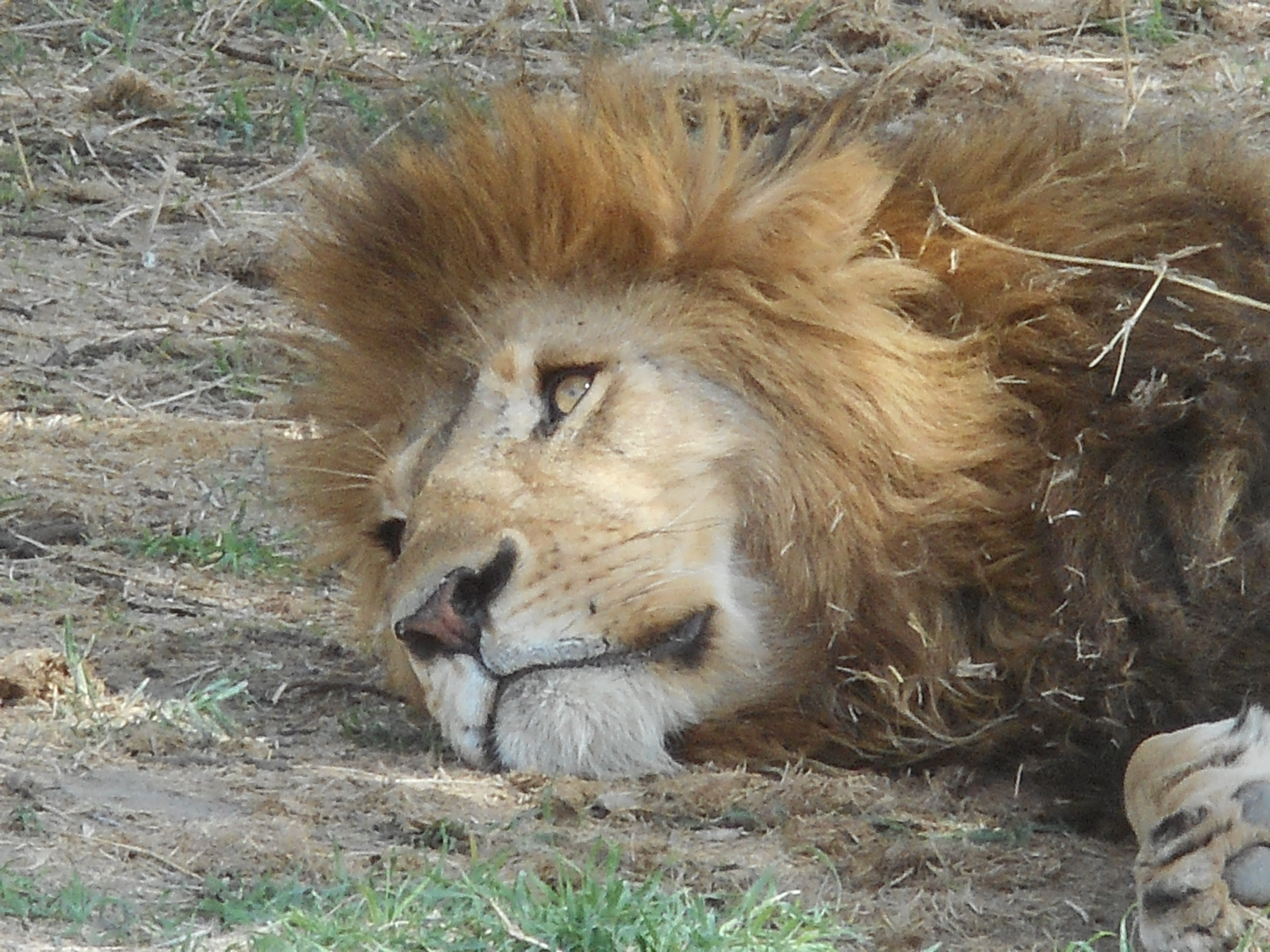
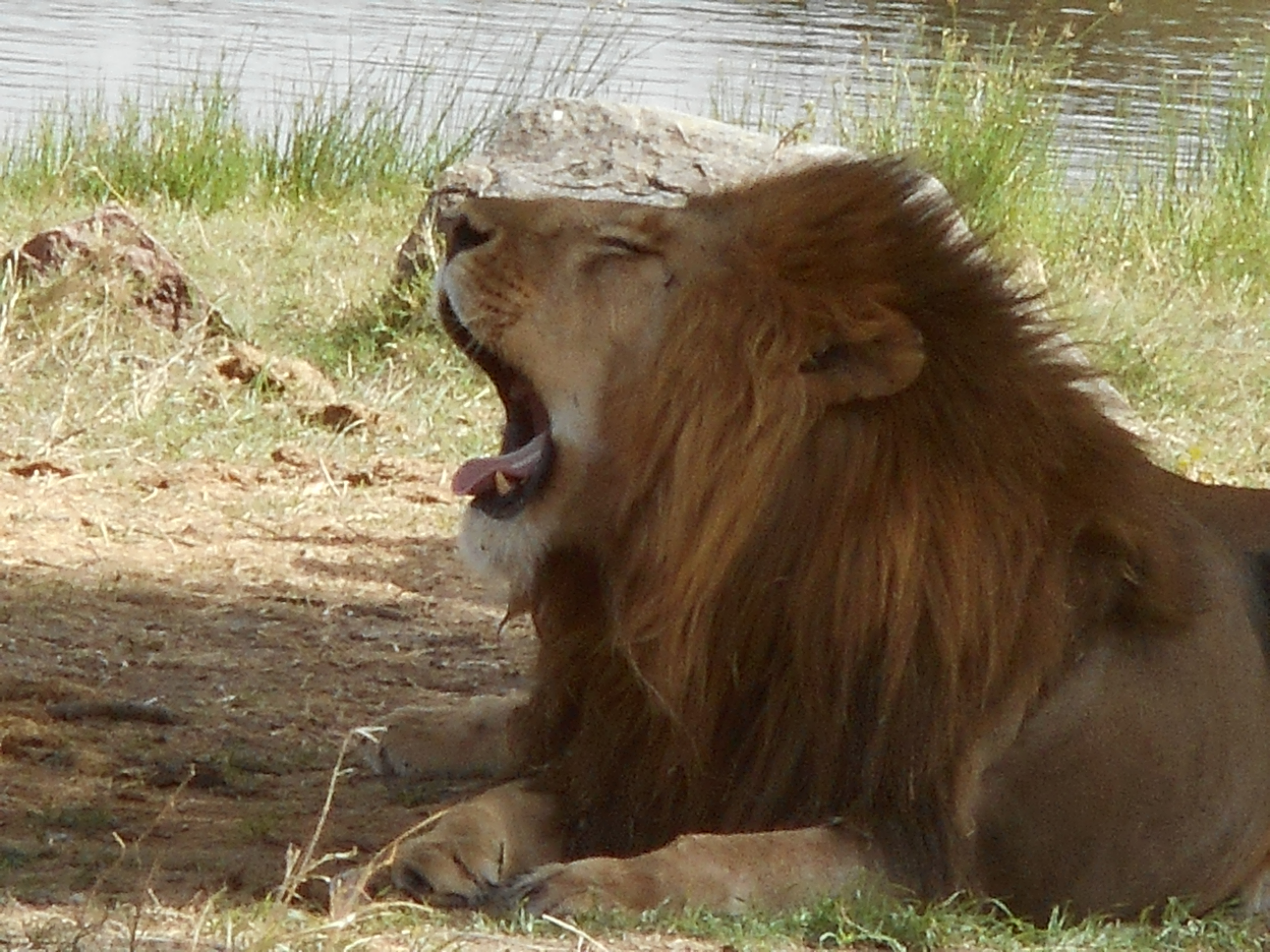
In these videos, the male catches the scent of something and the females perk up, watching.
Off to see some more elephants.
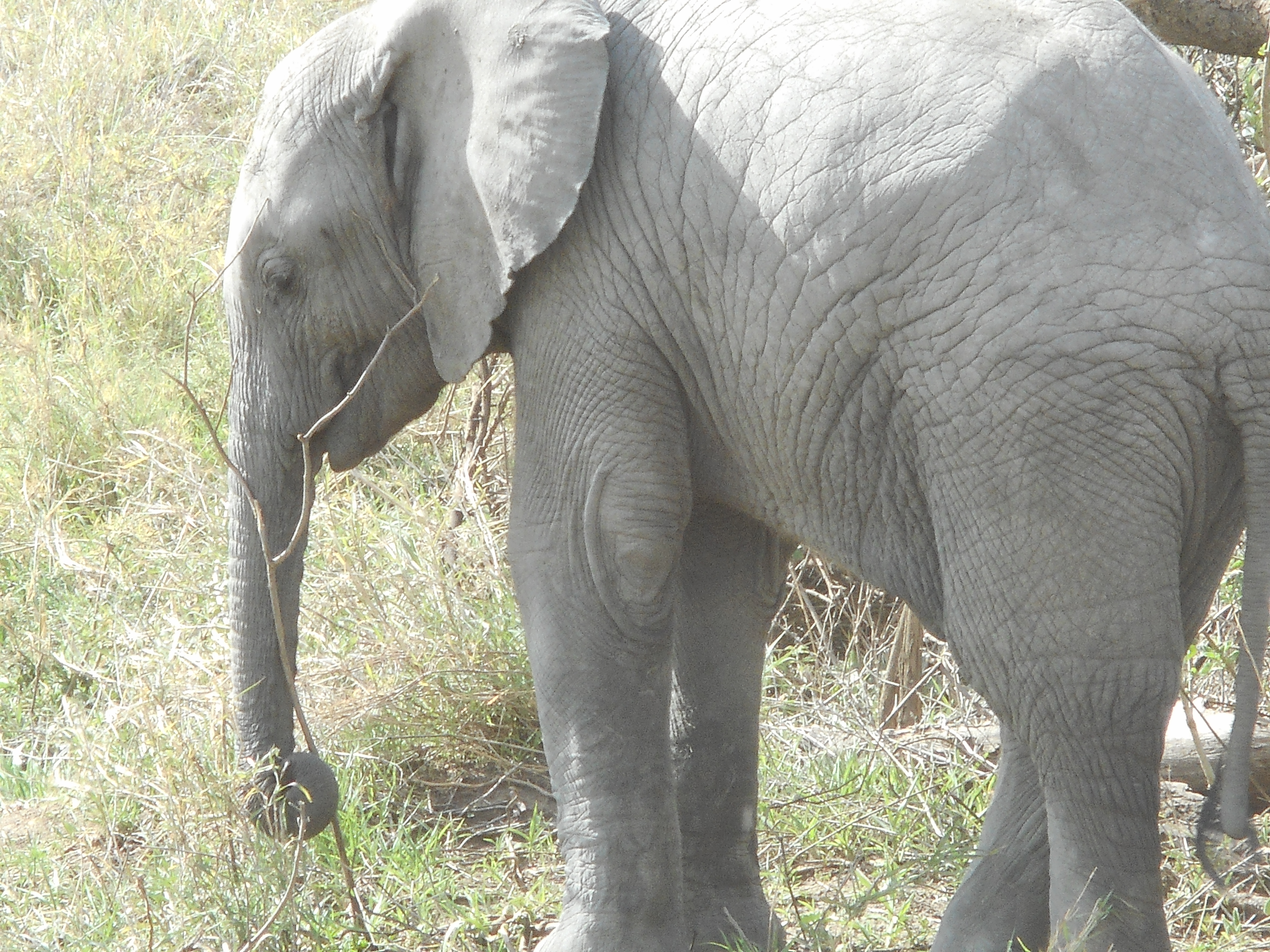
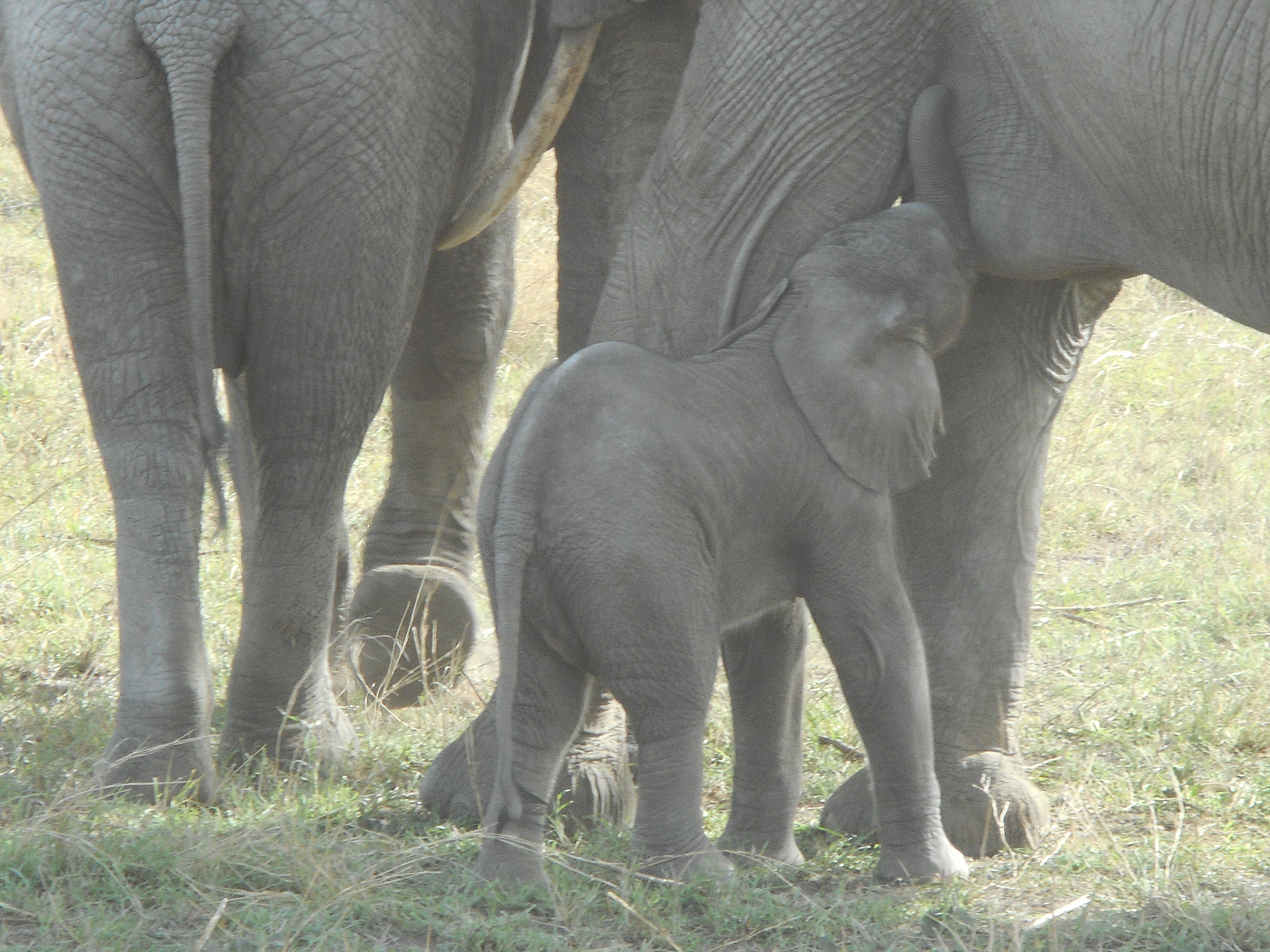
A baby feeding.
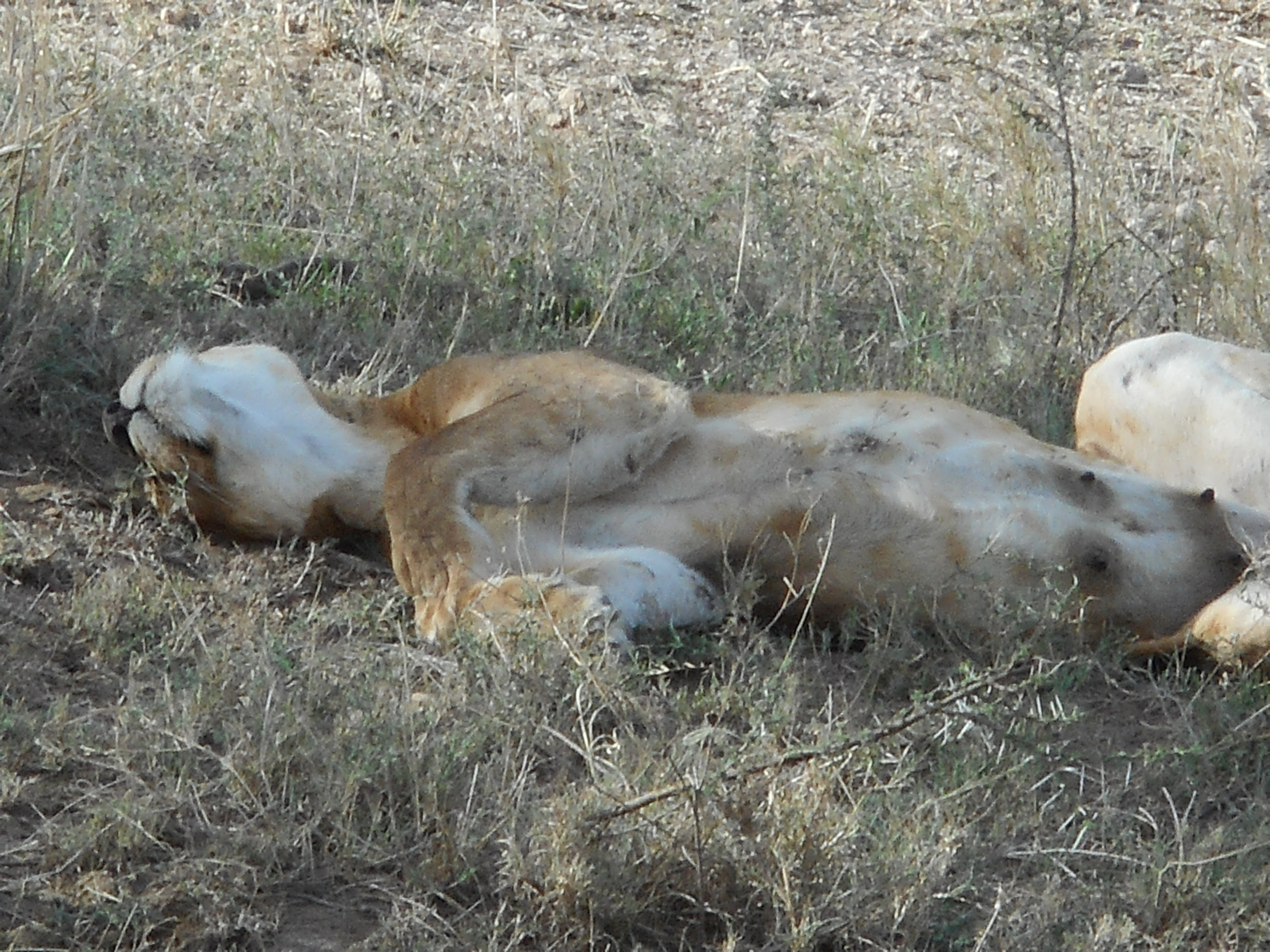
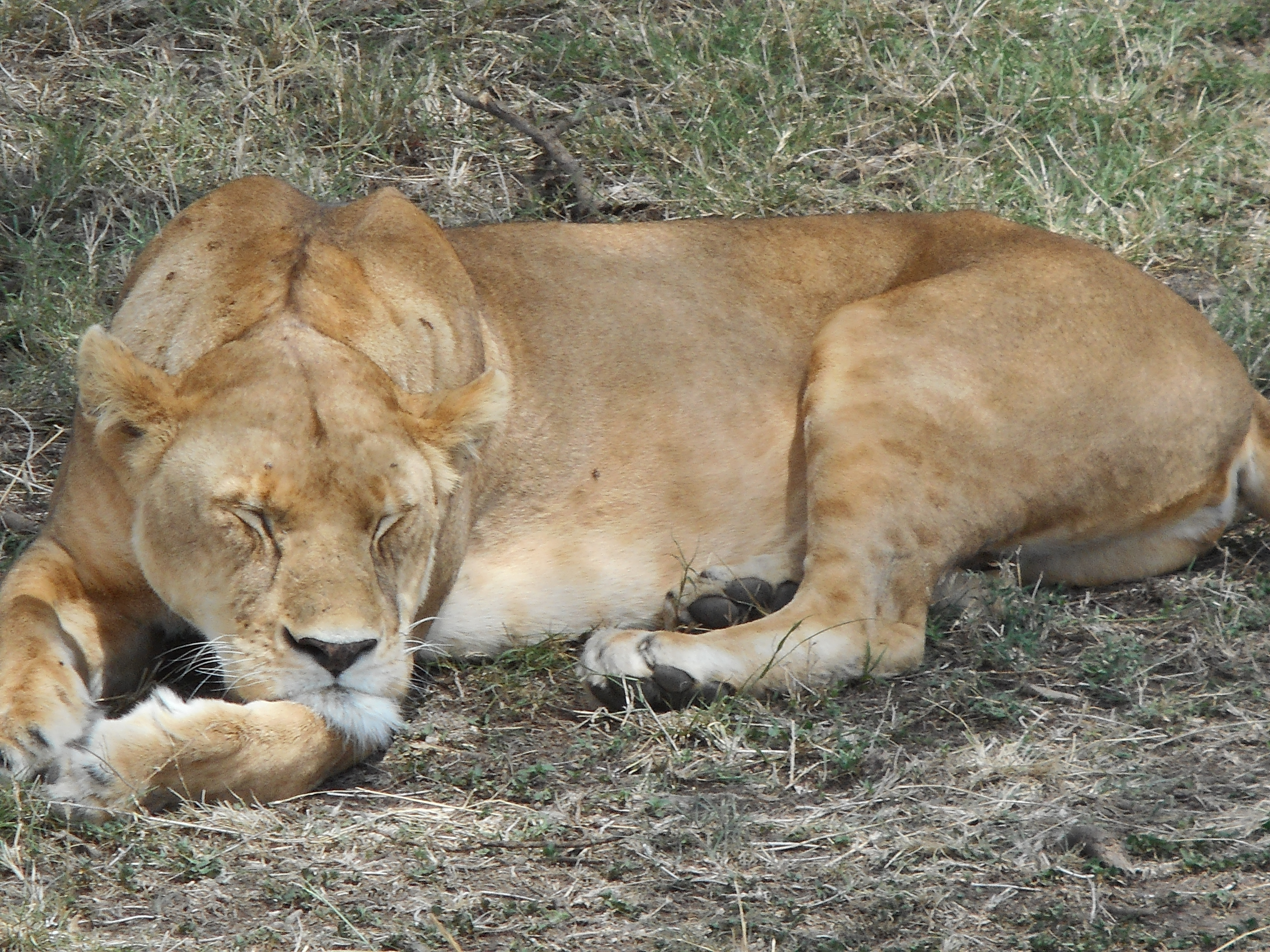
A lioness relaxing.
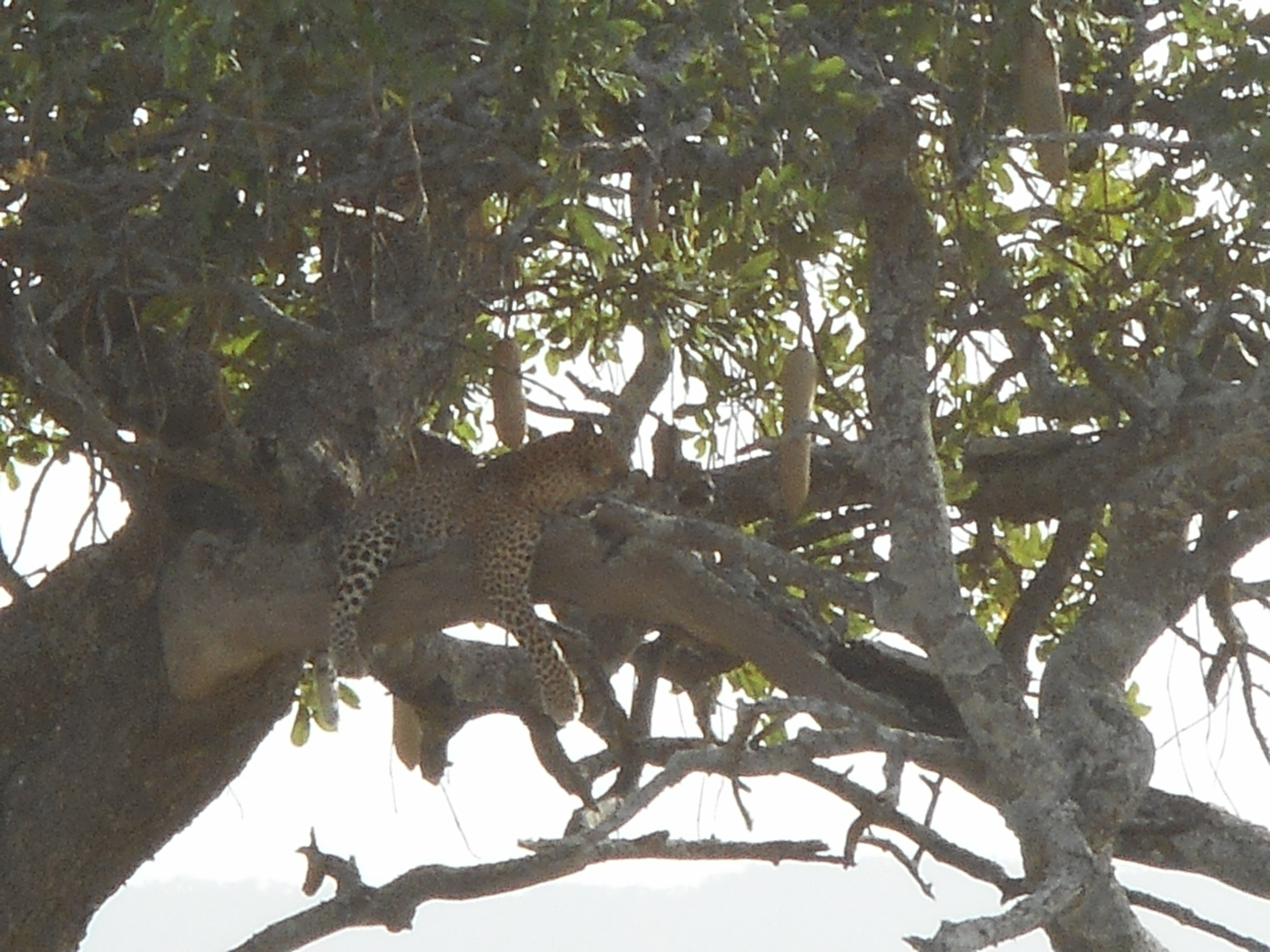
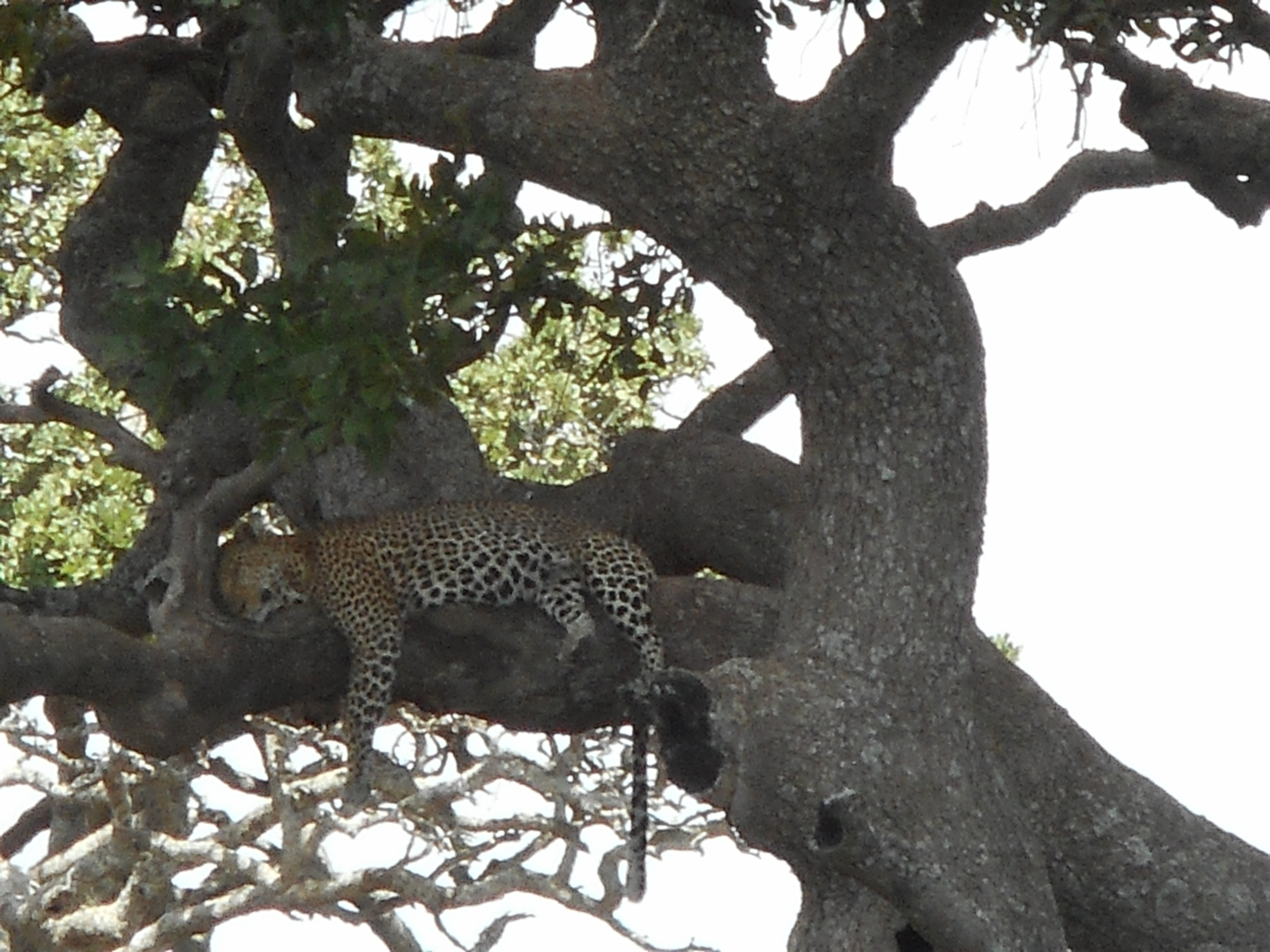
A Leopard in the tree.
A Blue Jean Topi
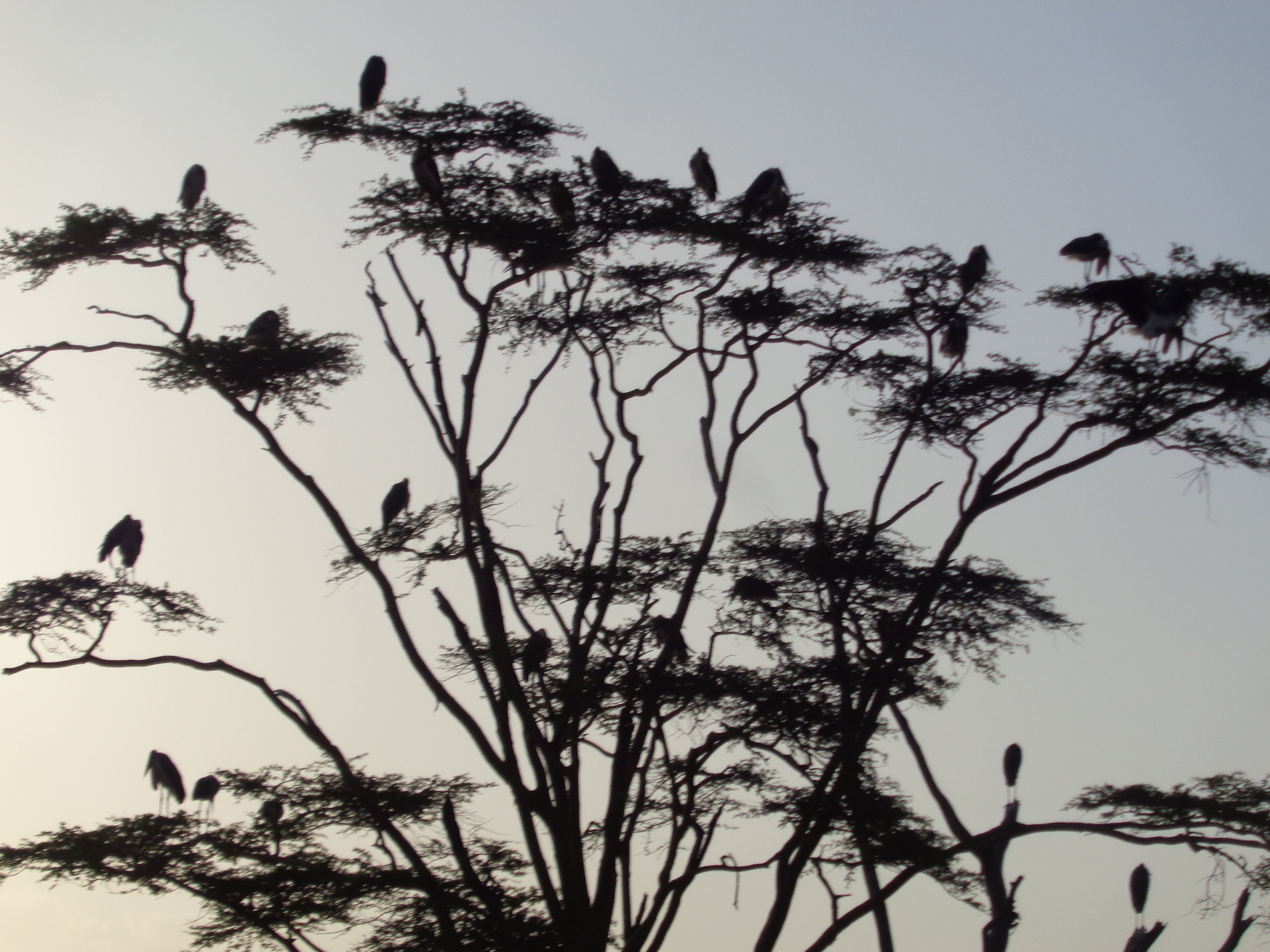
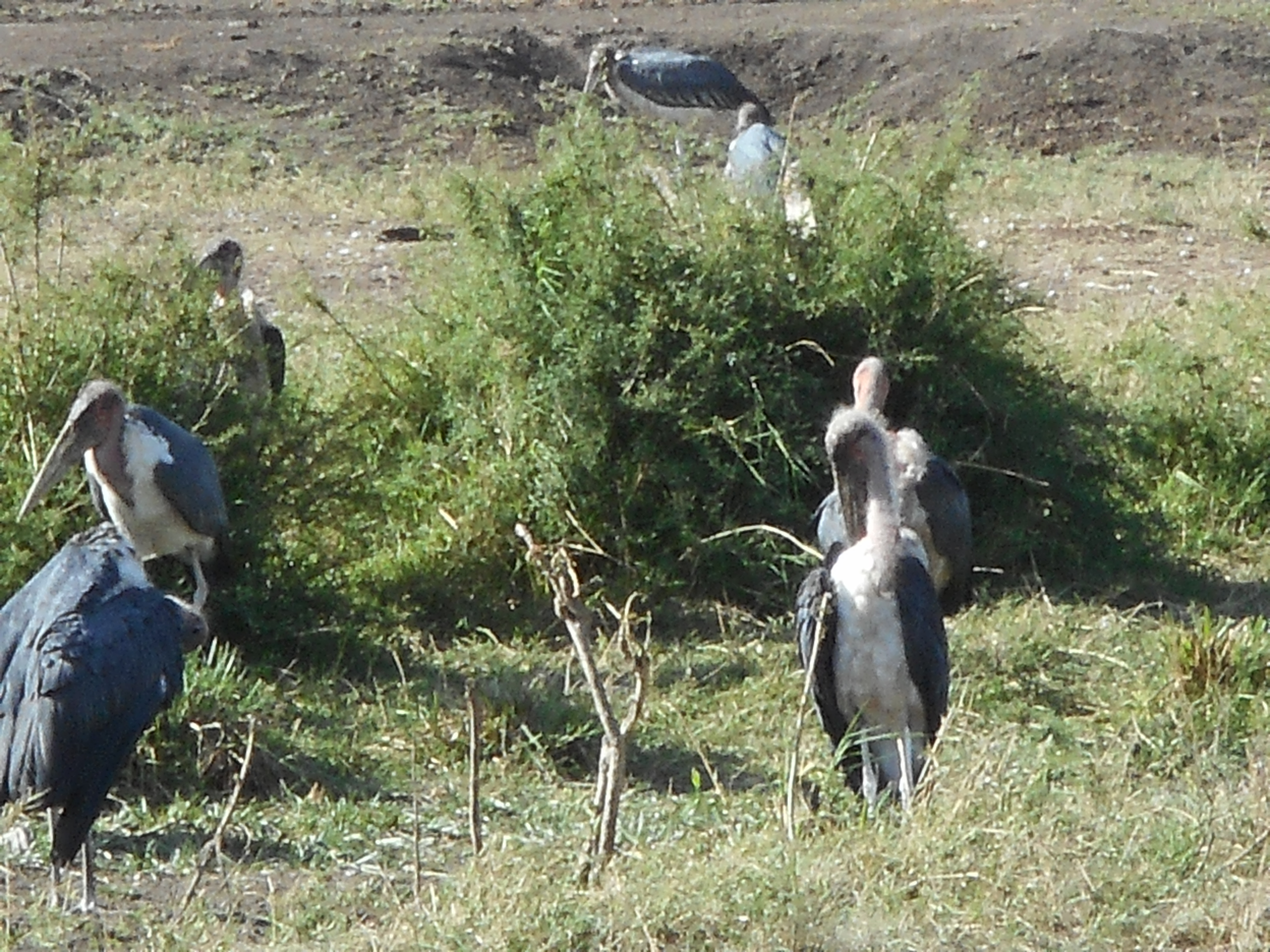
Marabou Storks waiting to deliver babies.
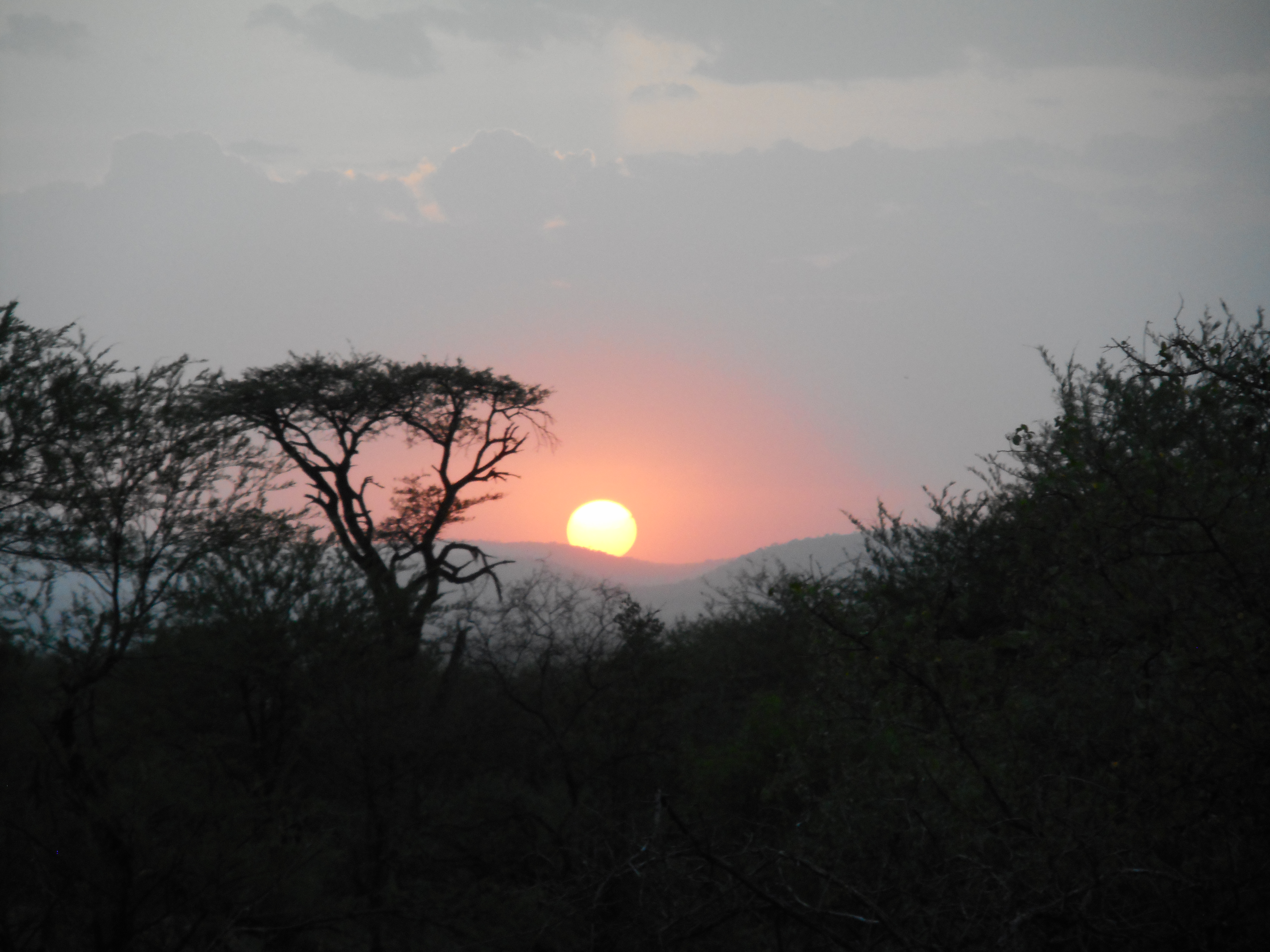
Sunset on the Serengeti.
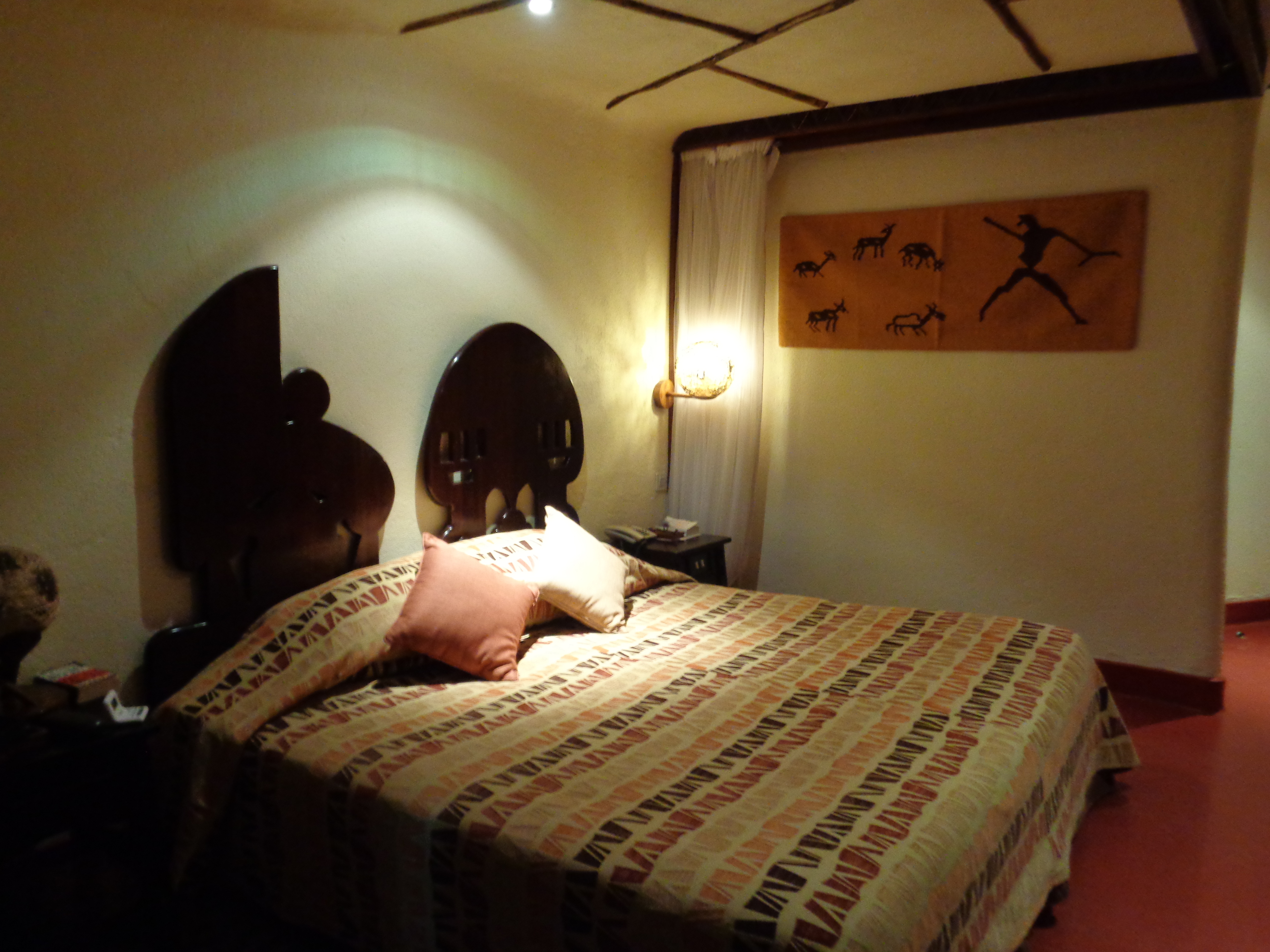
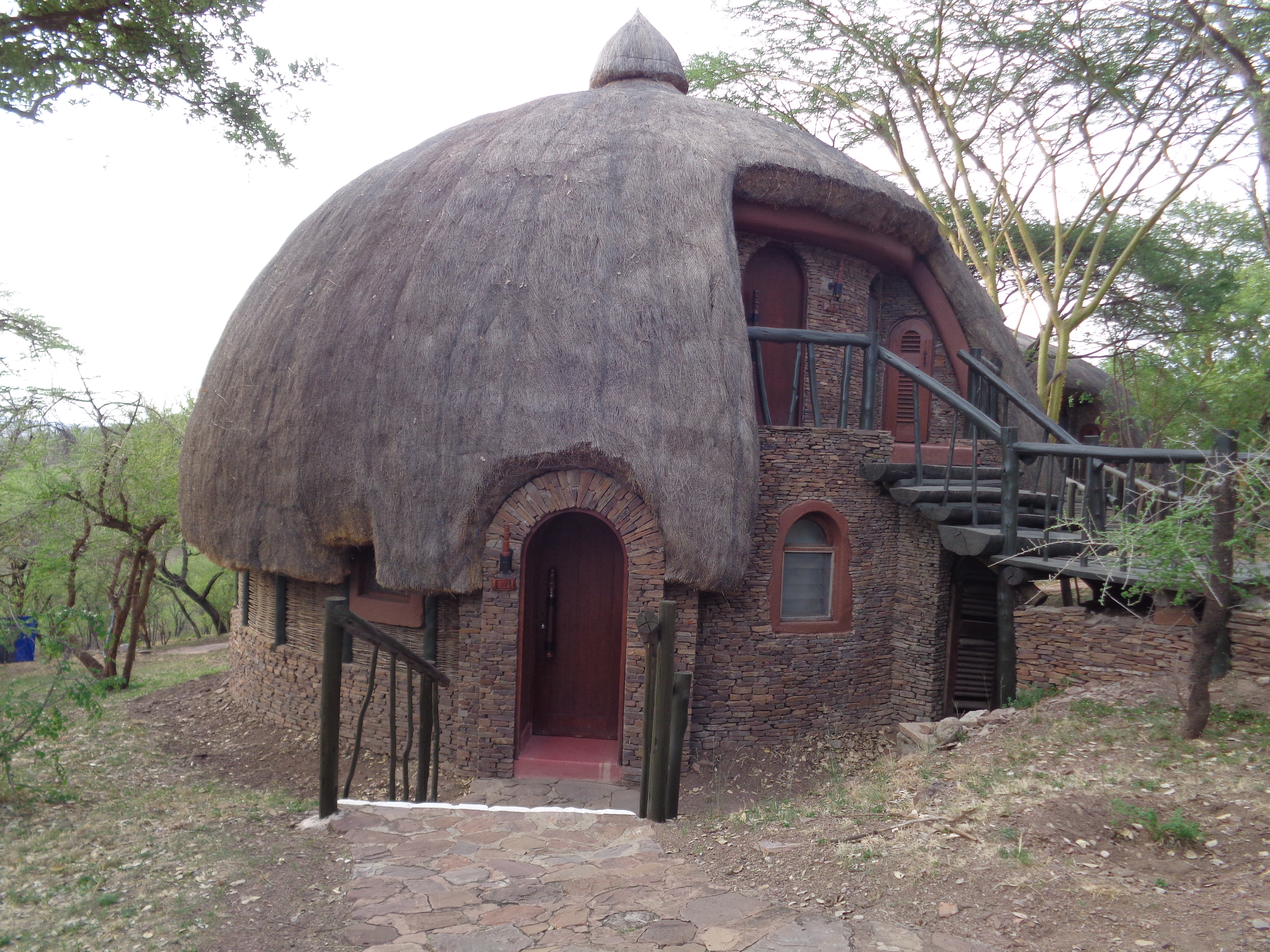
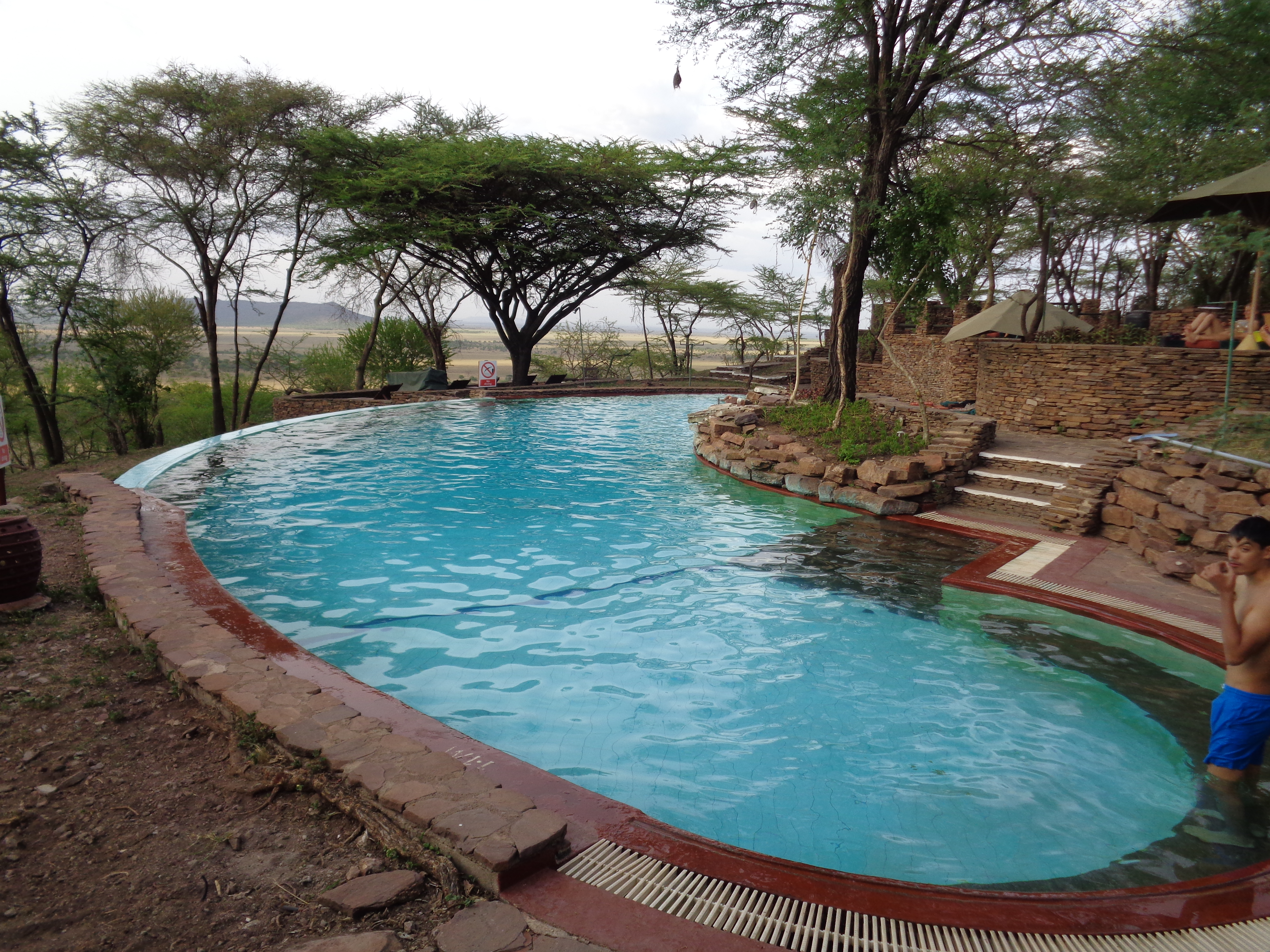
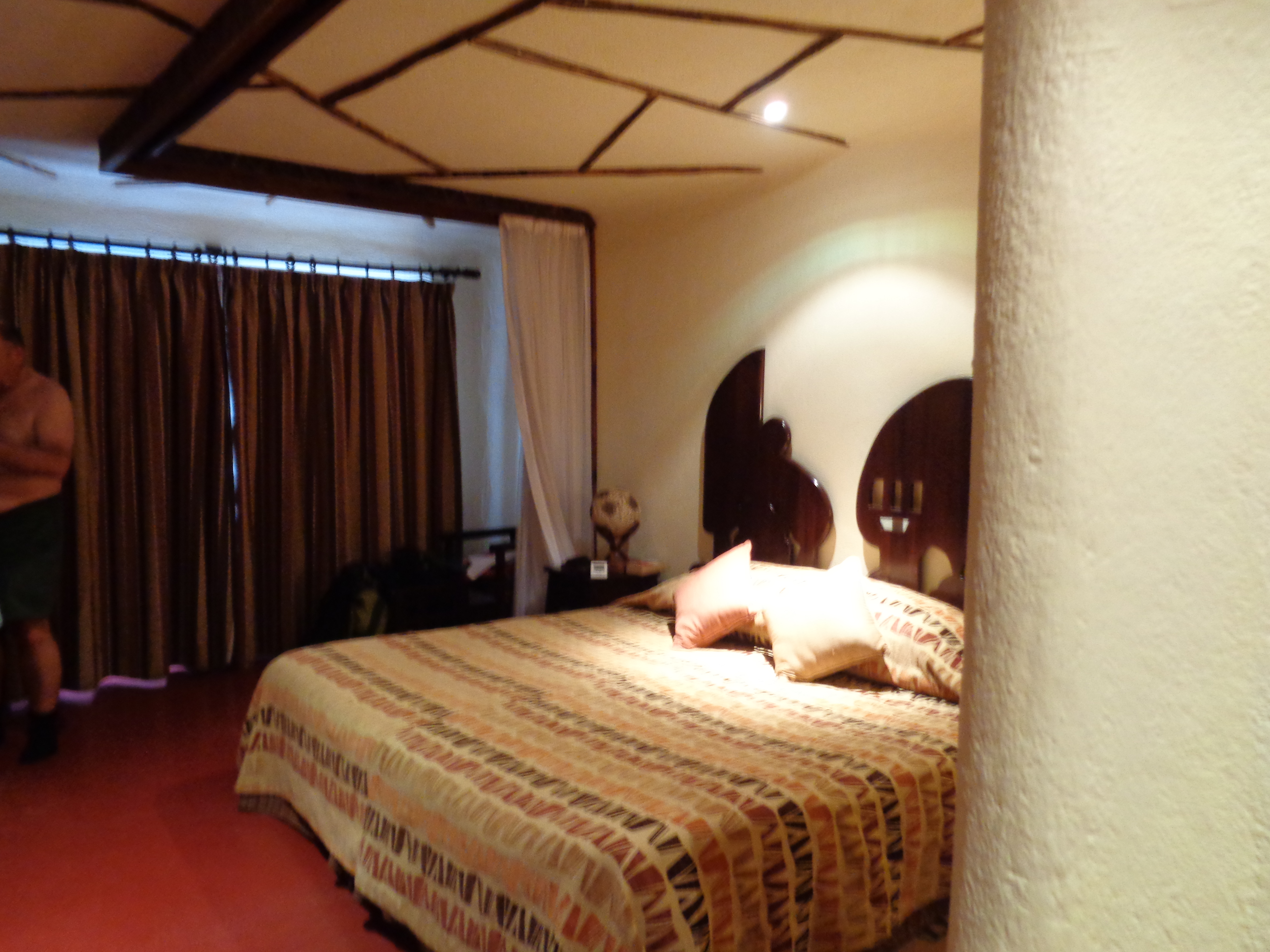
We stayed at the Serengeti Serena Safari Lodge.
The zebras came and drank from the swimming pool.
Cape Buffalo
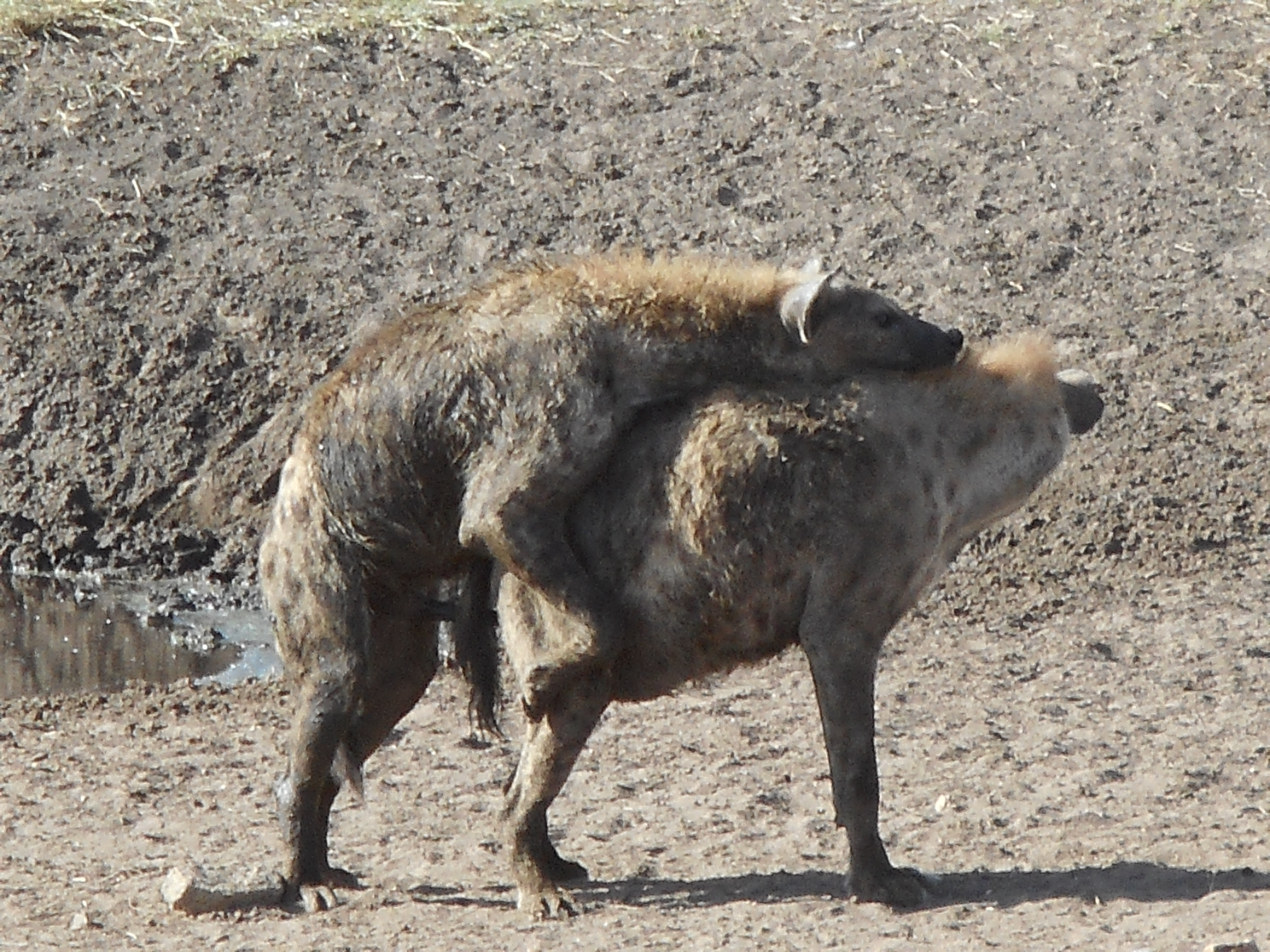
Holy Humping Hyenas.
Marabou Storks.
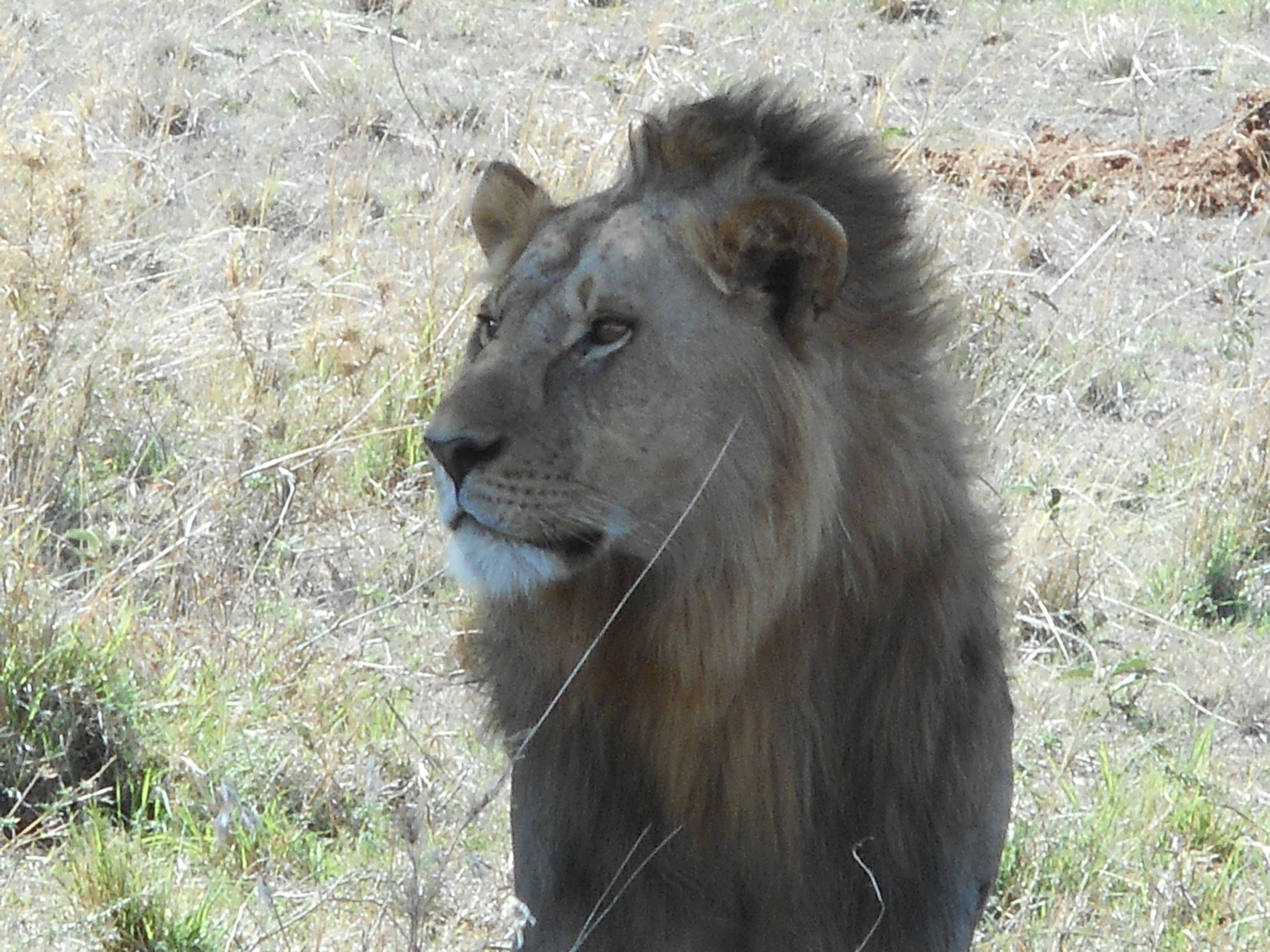
King of the Beasts.
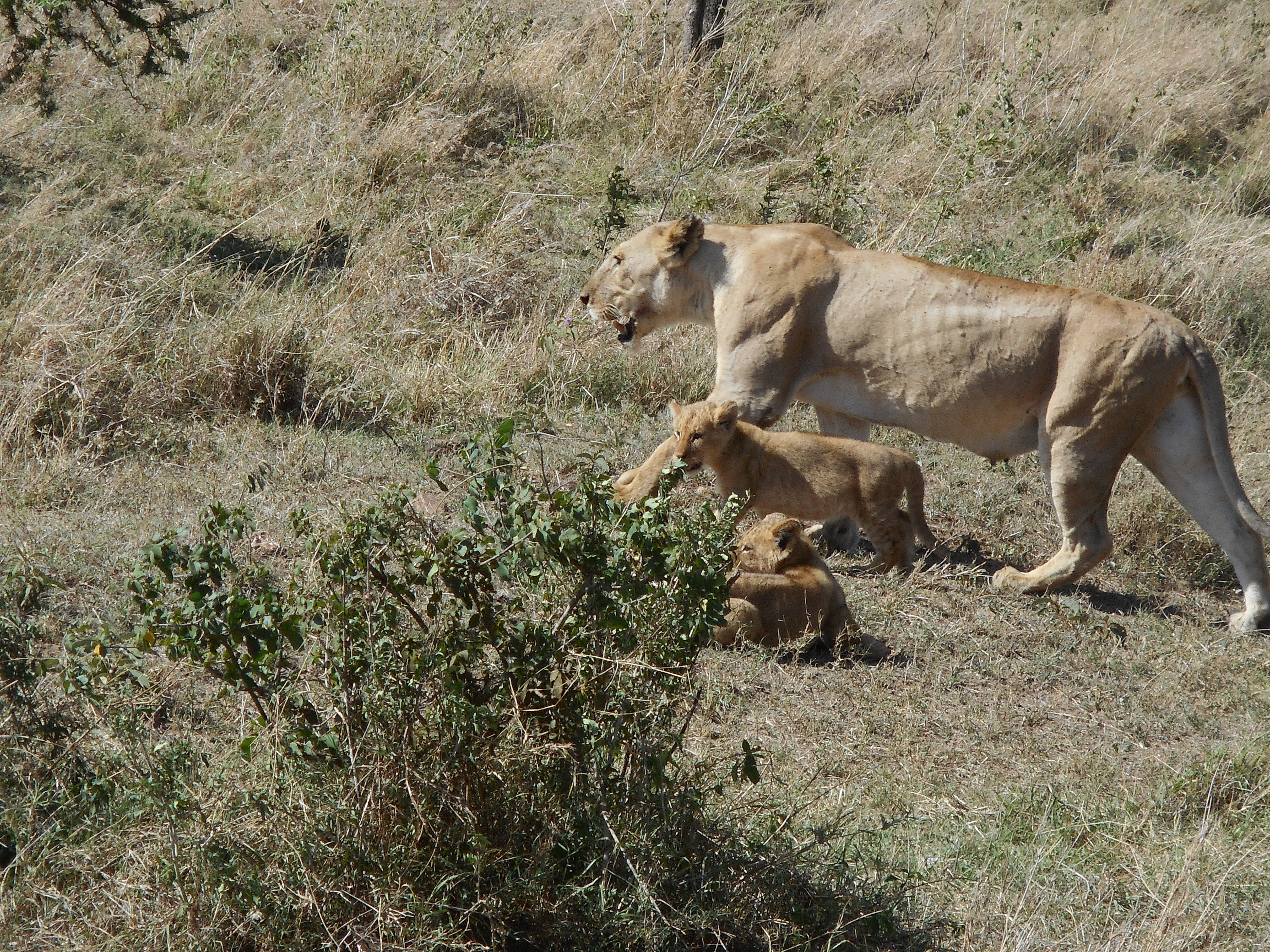
This lioness had just been part of a kill. She had left her cubs in a field far away from the kill, and was now gathering them up to go feed.
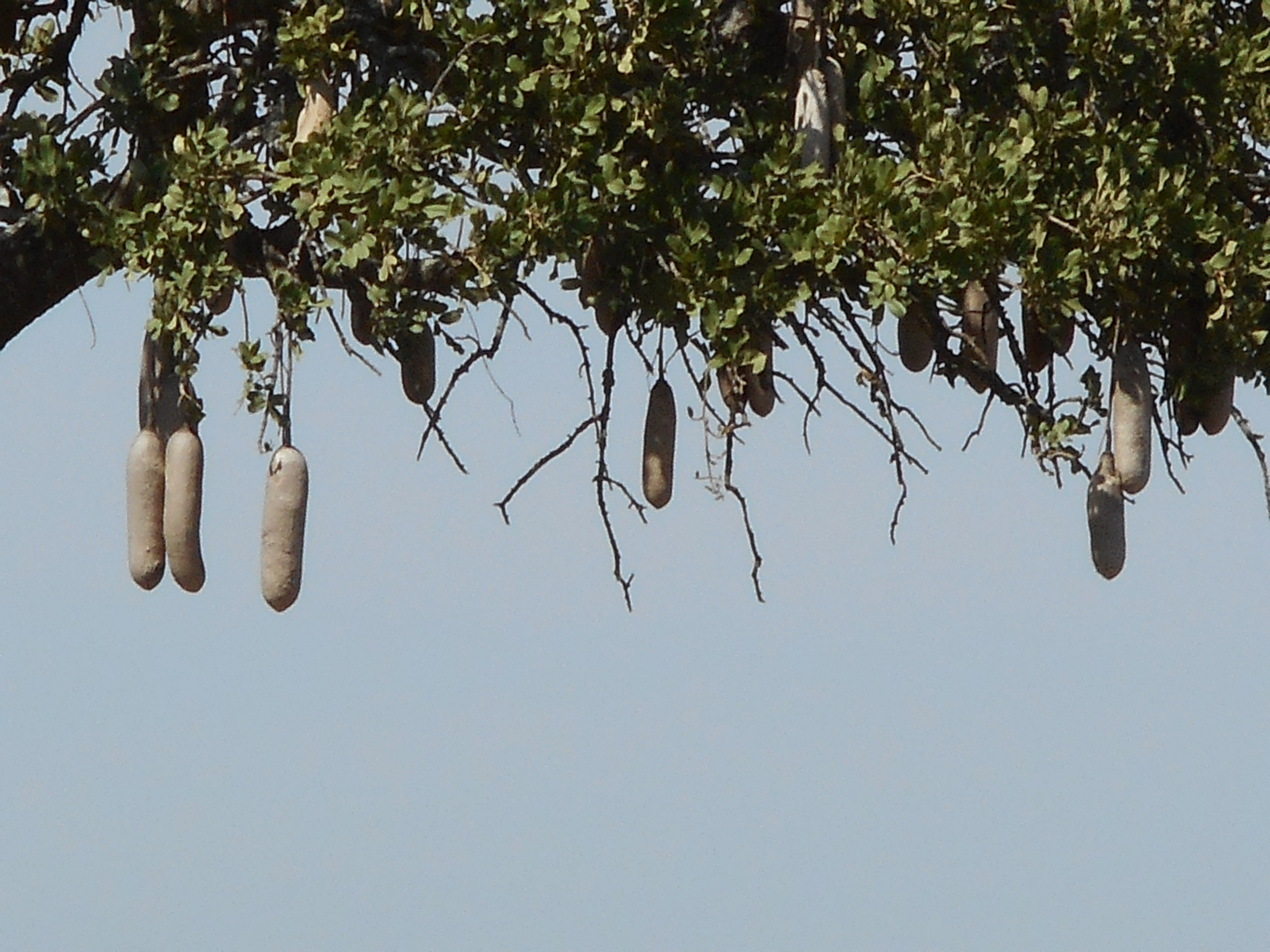
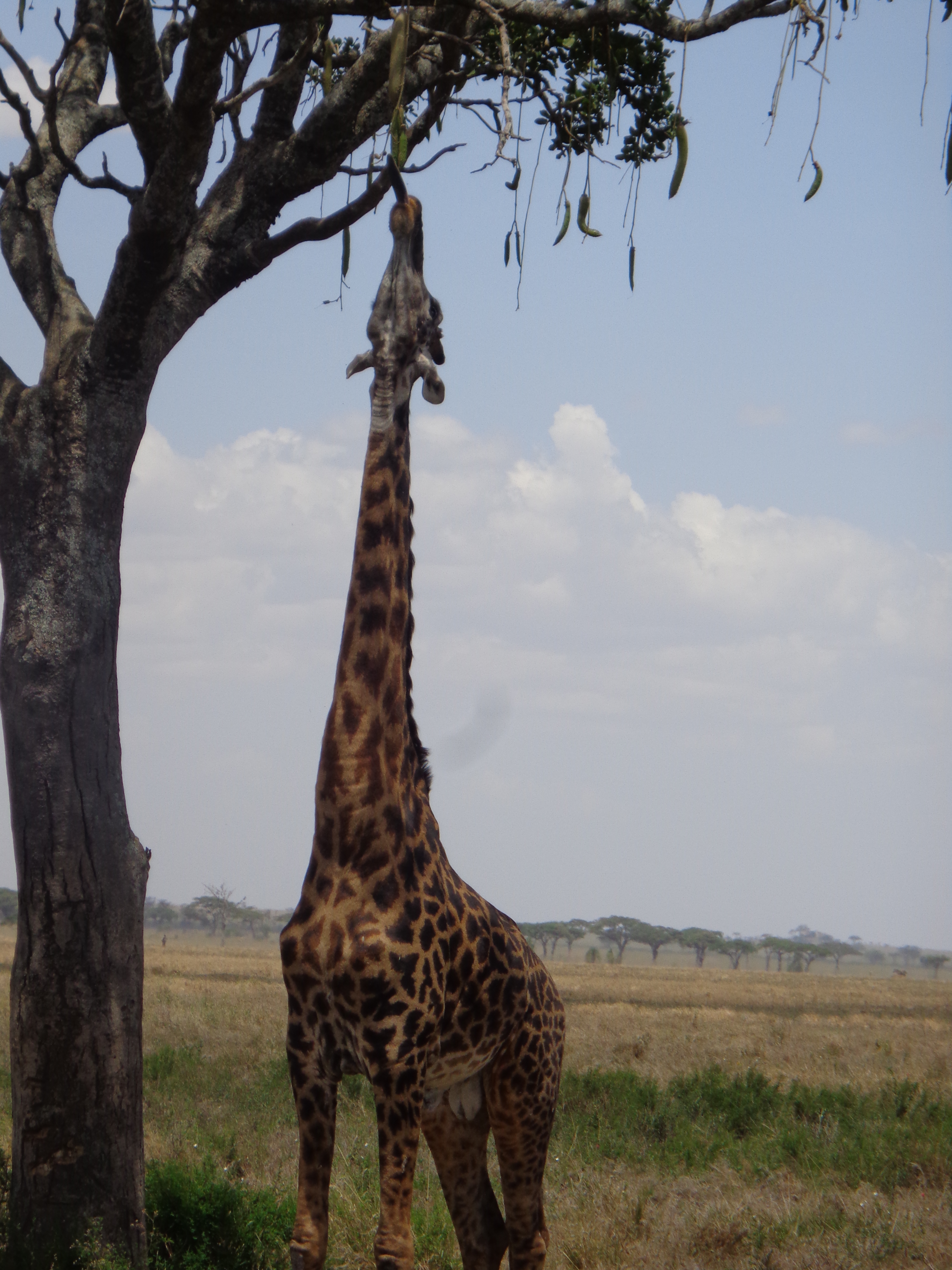
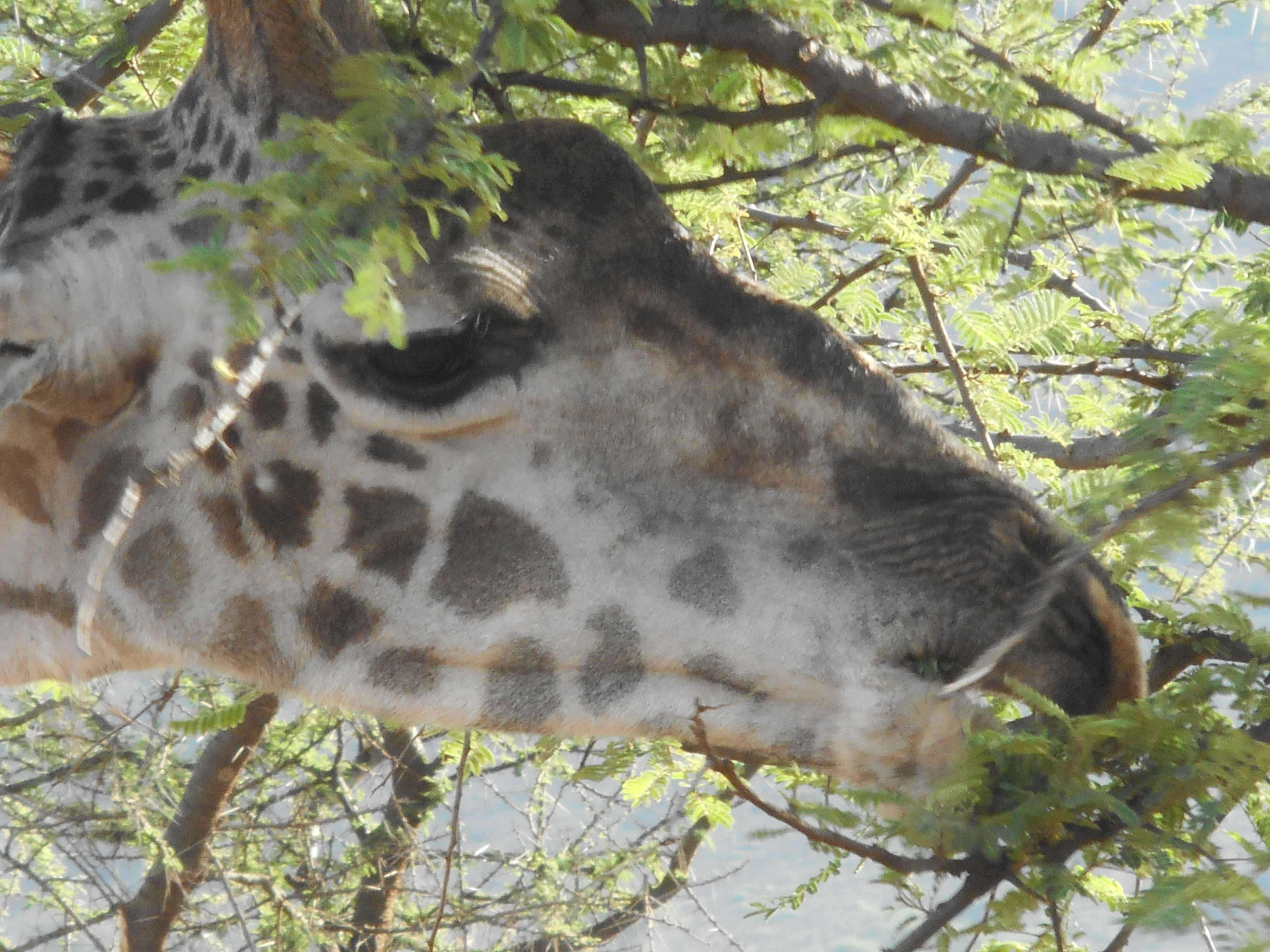
This is a sausage tree. The fruit is fuzzy like a kiwi. The giraffes love these.
This poor guy was trying so hard to get the sausage tree fruit. We sat and watched him for 15 mins. You could see us stretching in our seats, trying to help him. He eventually got a fruit and we applauded.
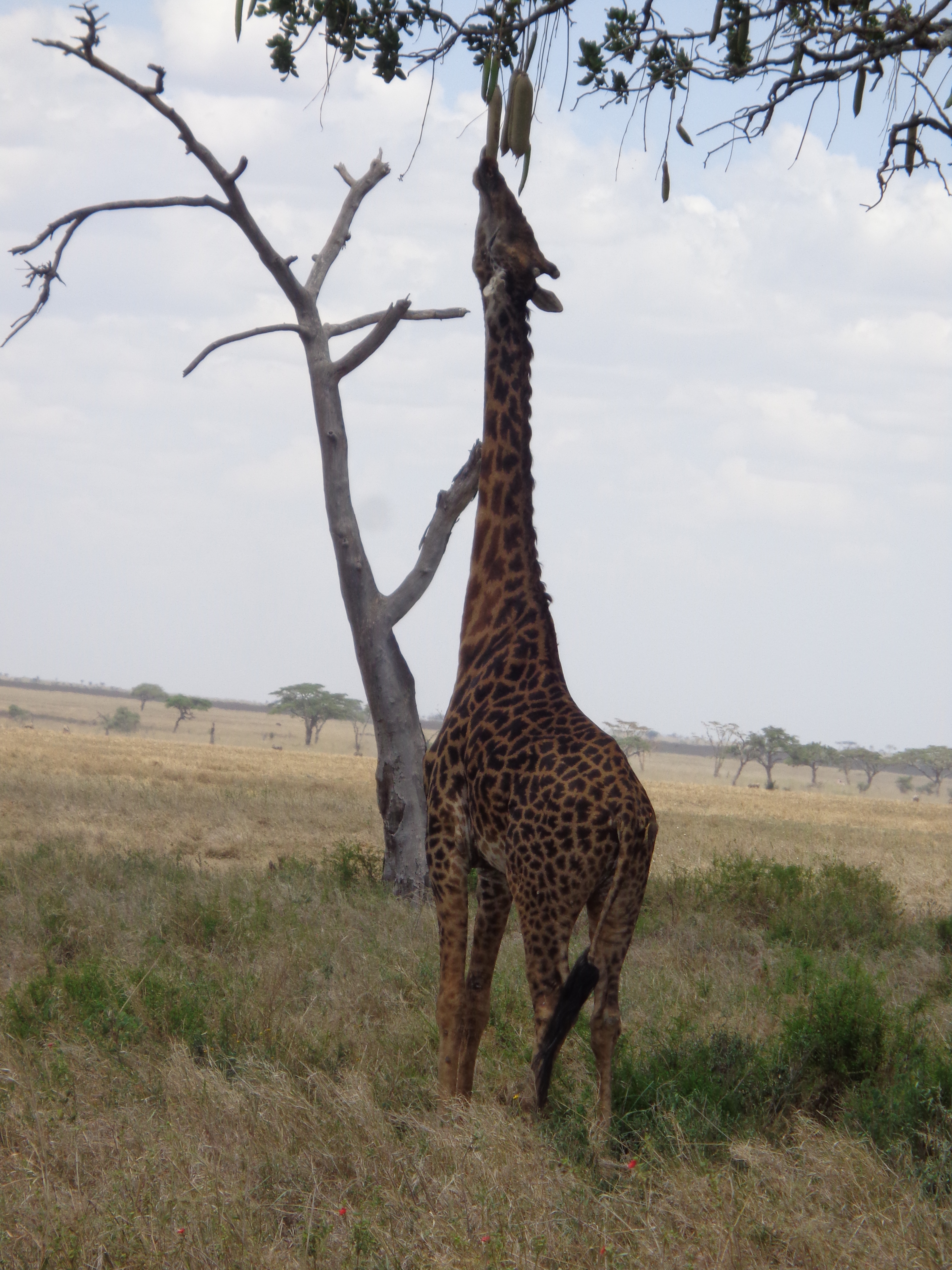
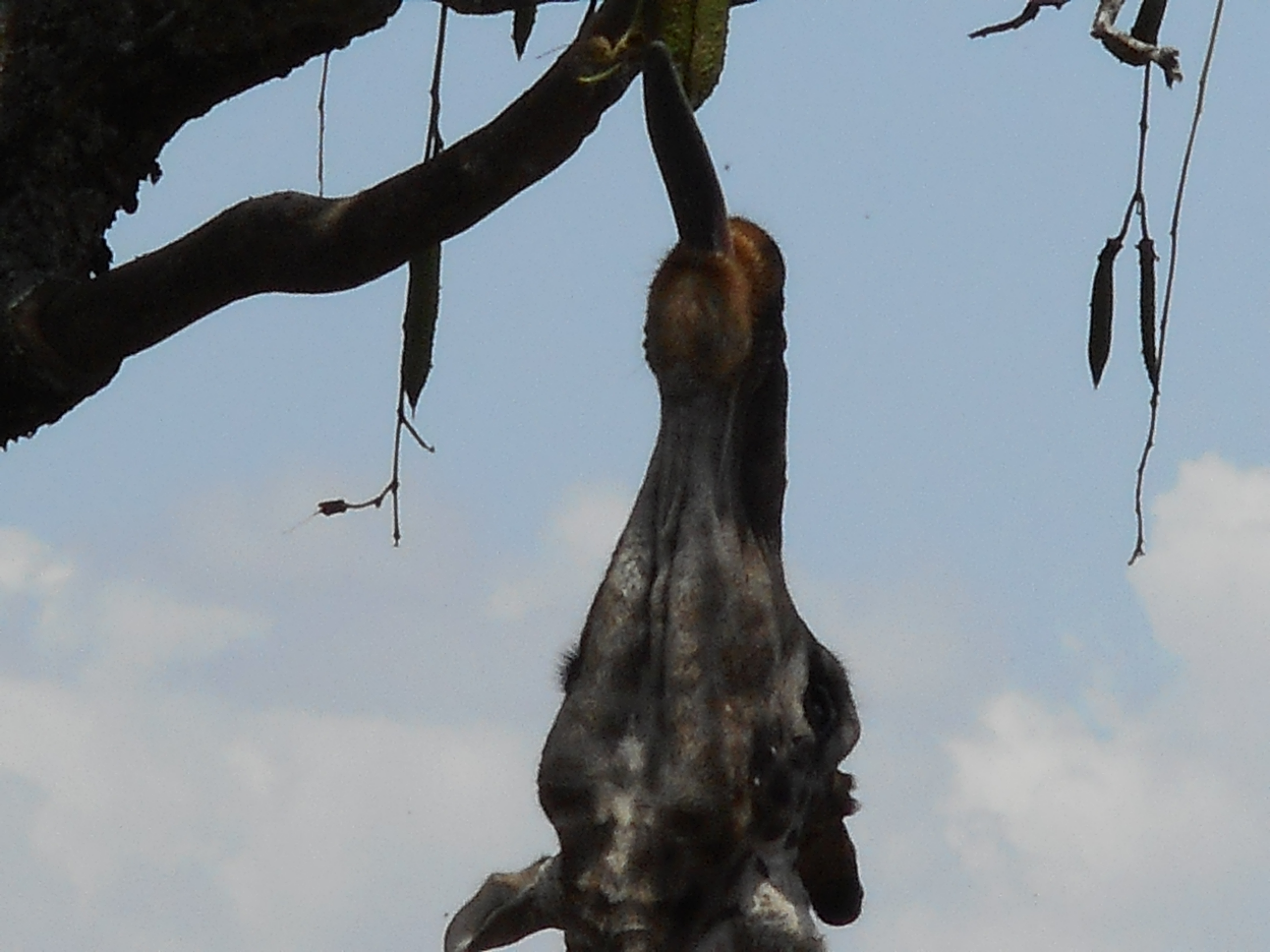
This is a giraffe trying so hard to get a leaf. Just out of my reach.
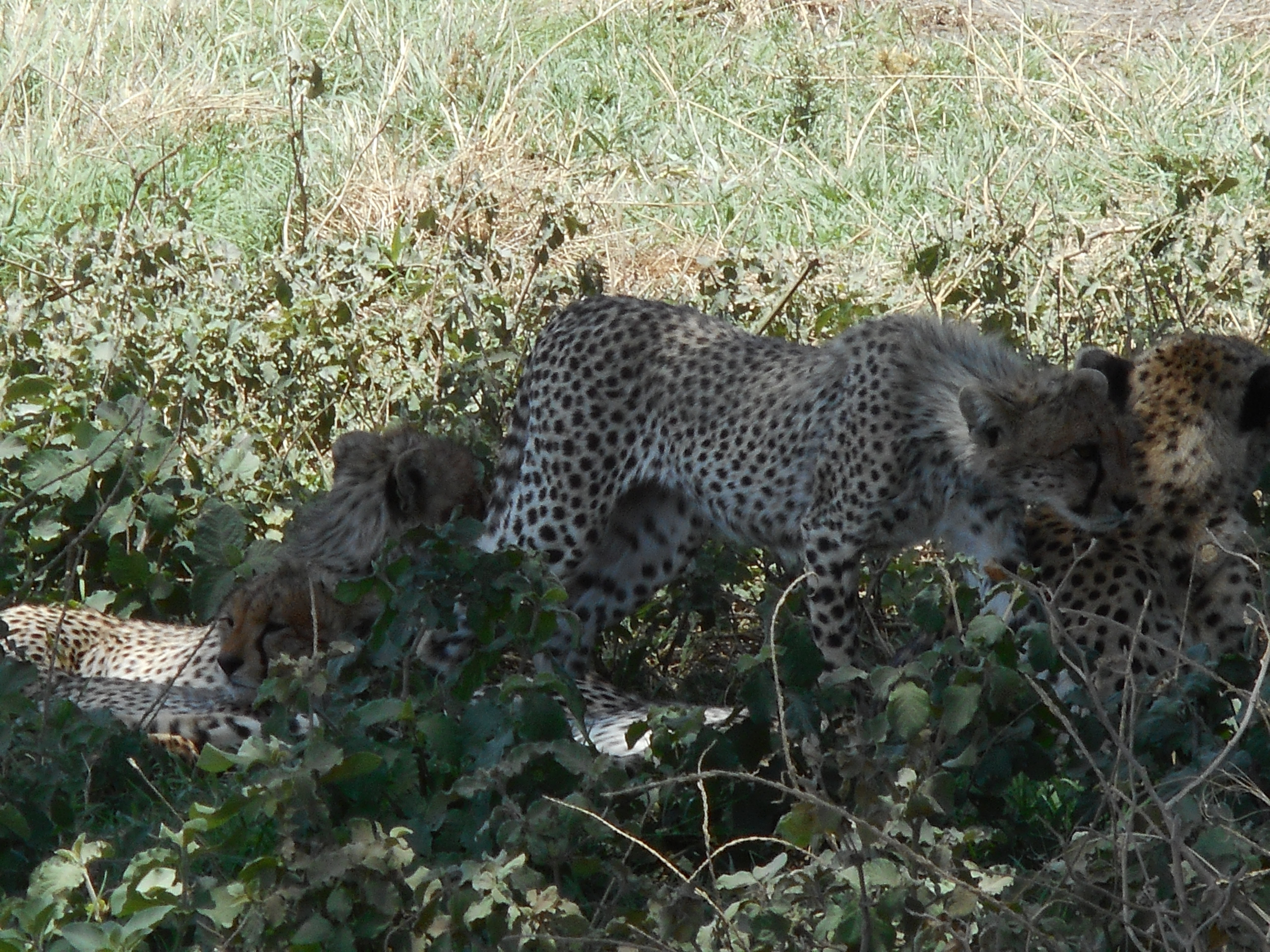
These next few pictures are a Cheetah mother with four cubs. They were lounging under the shade and protection of a tree. About 300 metres from them were two lone gazelles. Every so often the mother and the cubs would look up and check them out. Our guide said the family was hungry, but the gazelles were to far away for a rundown and there was no brush around to sneak up on them.
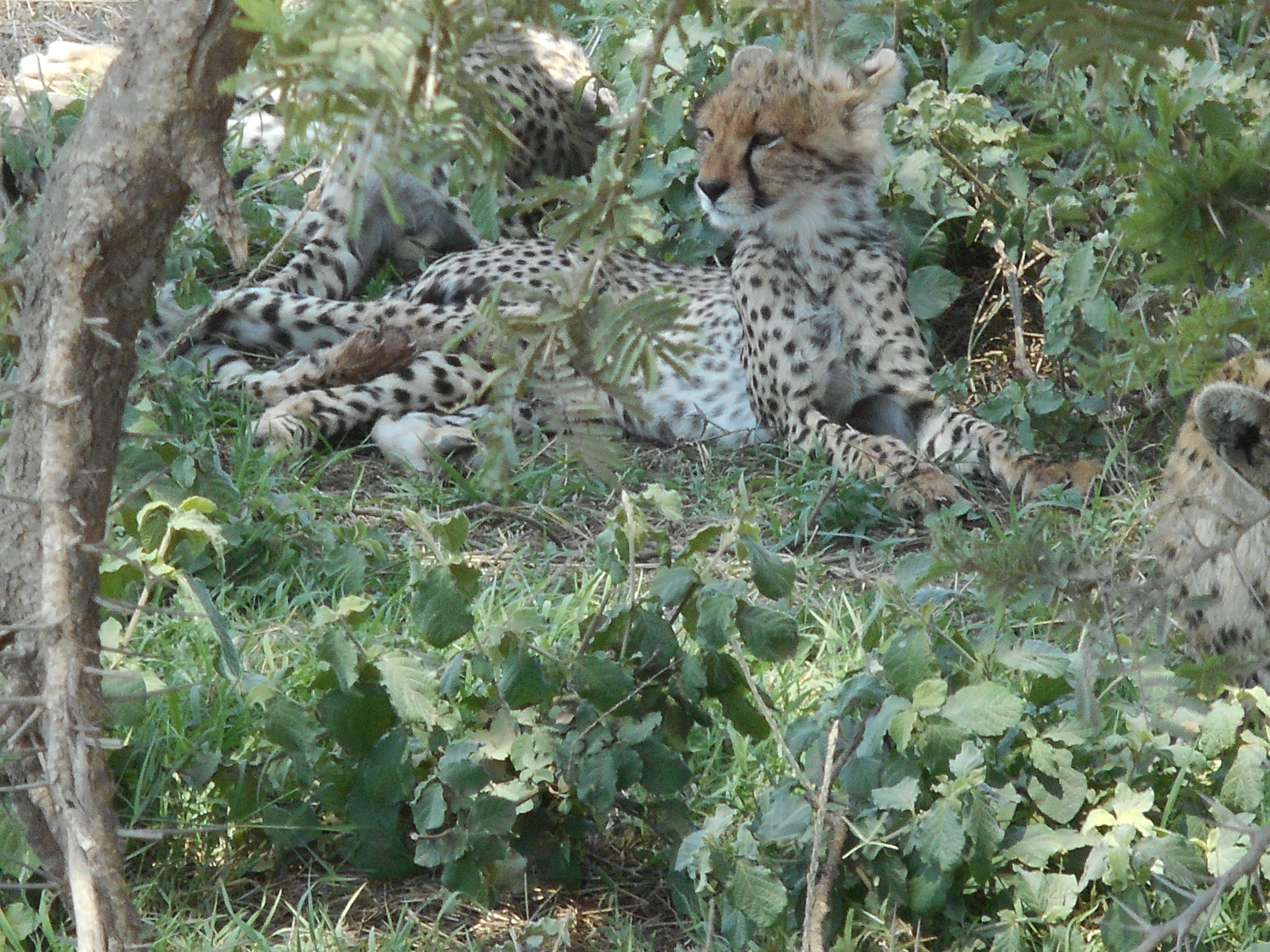
Momma.
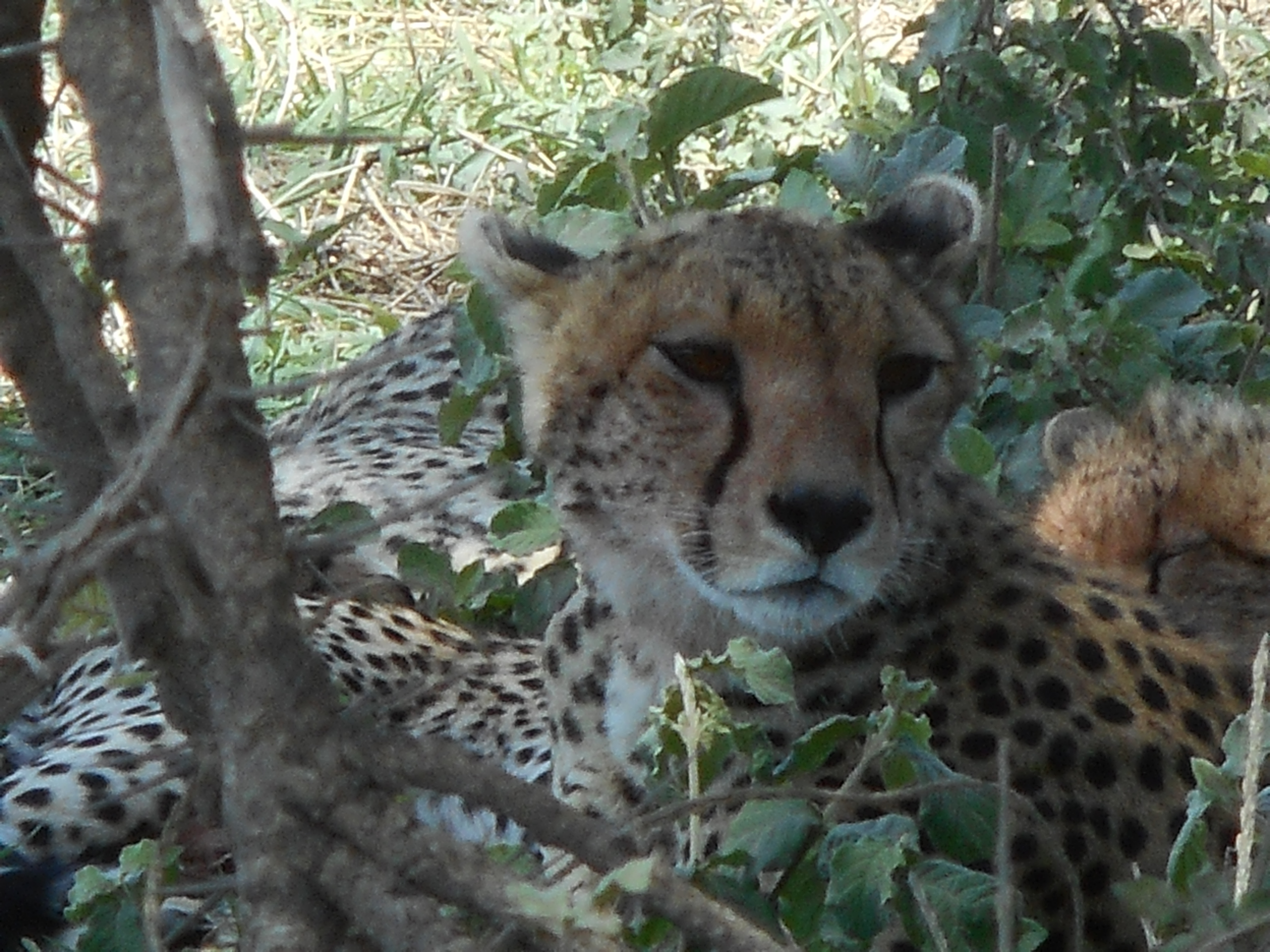
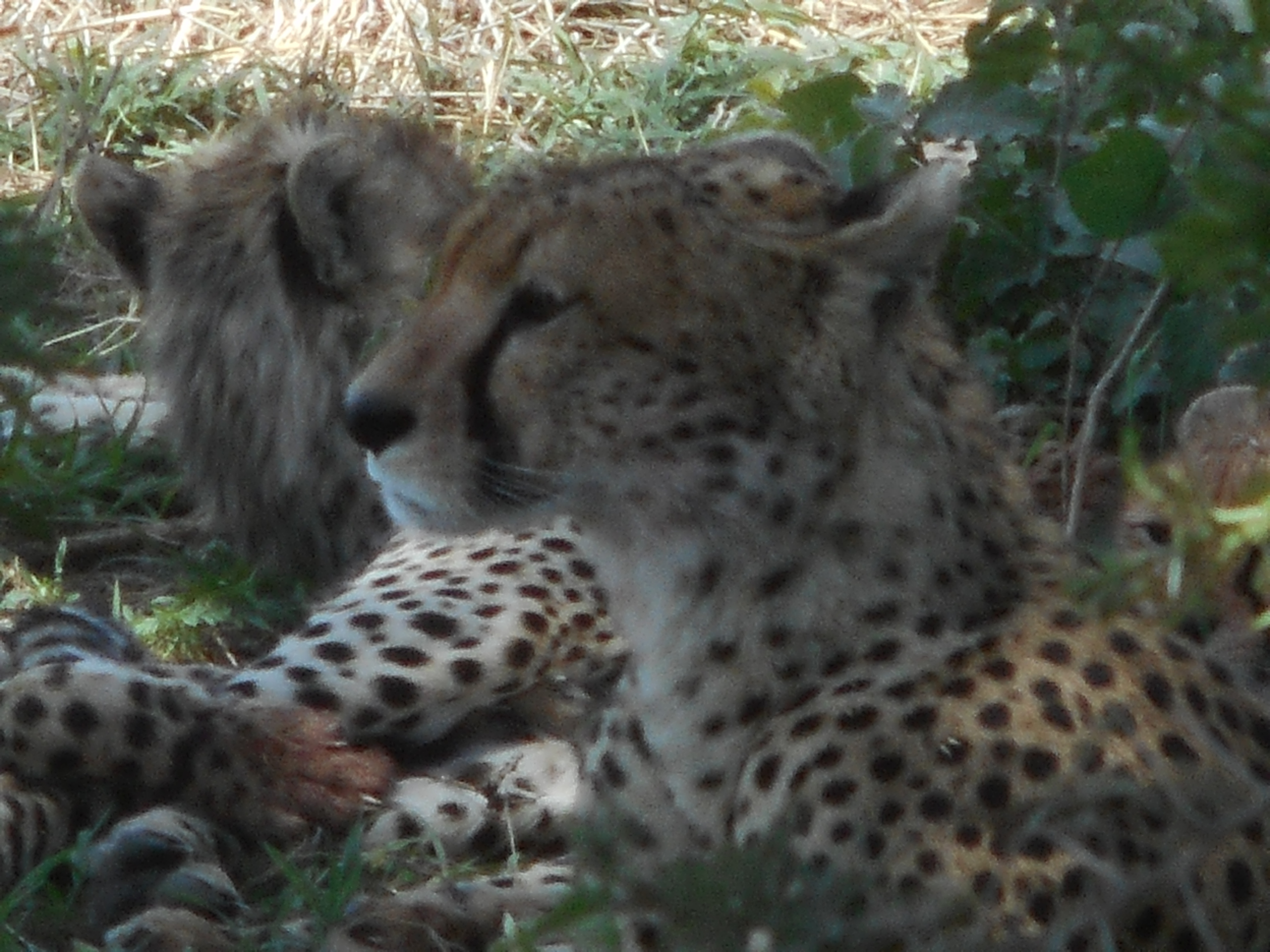
I’ll get ’em Mom, I’ll get ’em.
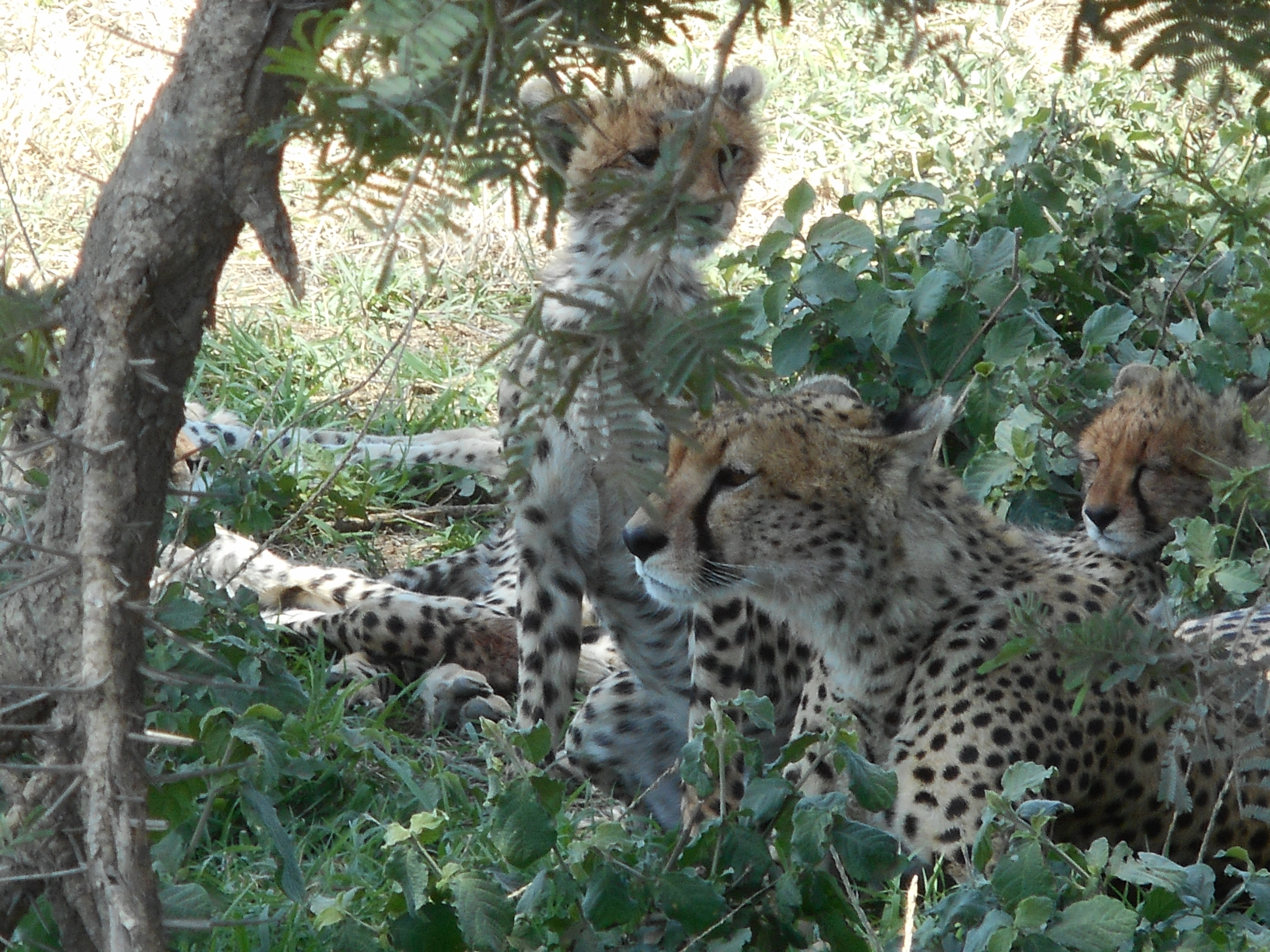
Ahhh, never mind.
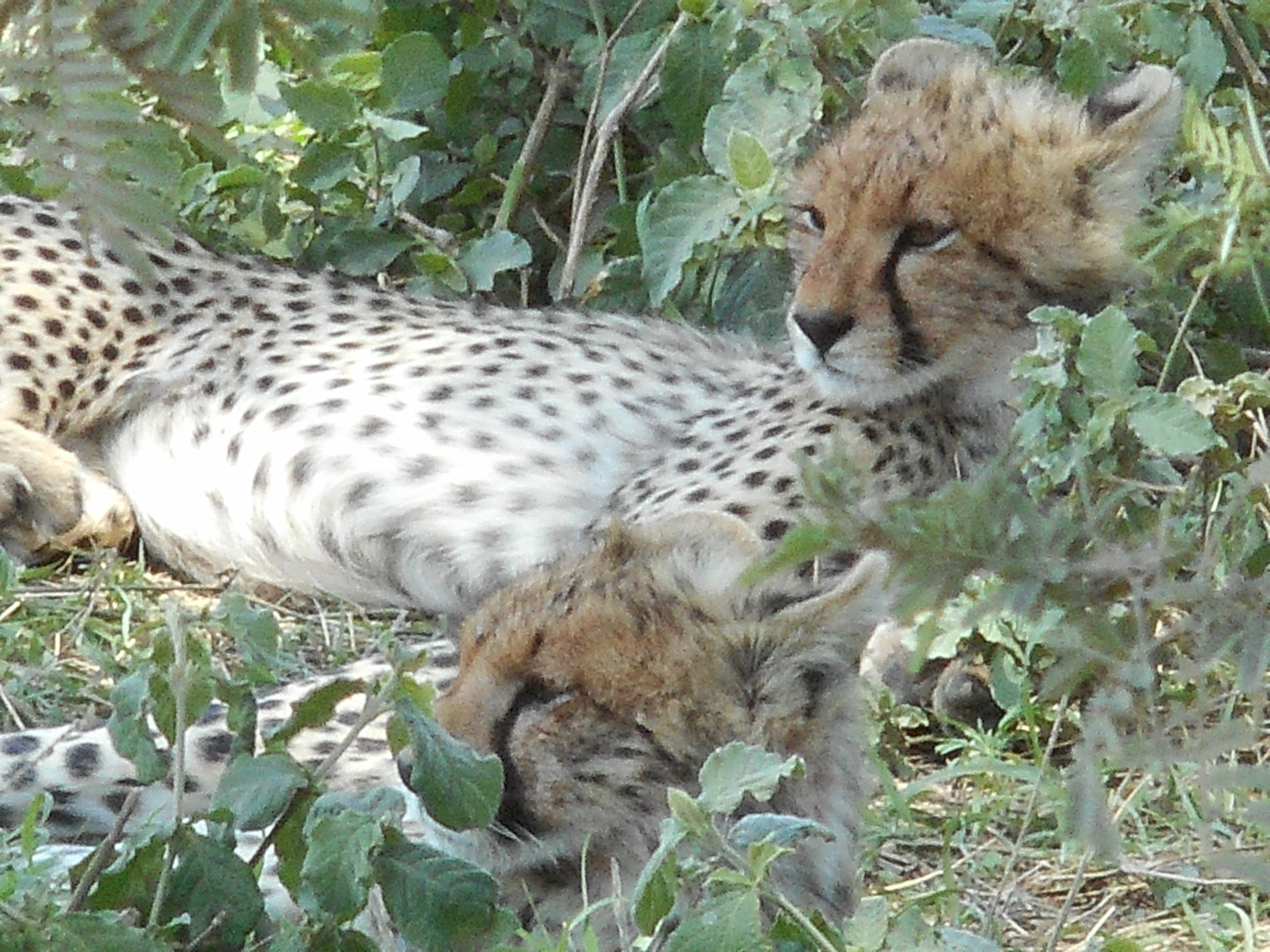
This is a leopard. You can see the difference between it and a cheetah. The cheetah has round spots, smaller head, and leaner body. Leopard has irregular spots, larger head and bigger.
Here is the same pride of lions as the mother collecting her two cubs. It was a significant pride with three age groups of cubs, the youngest from the pictures before, and the two age groups below with their moms.
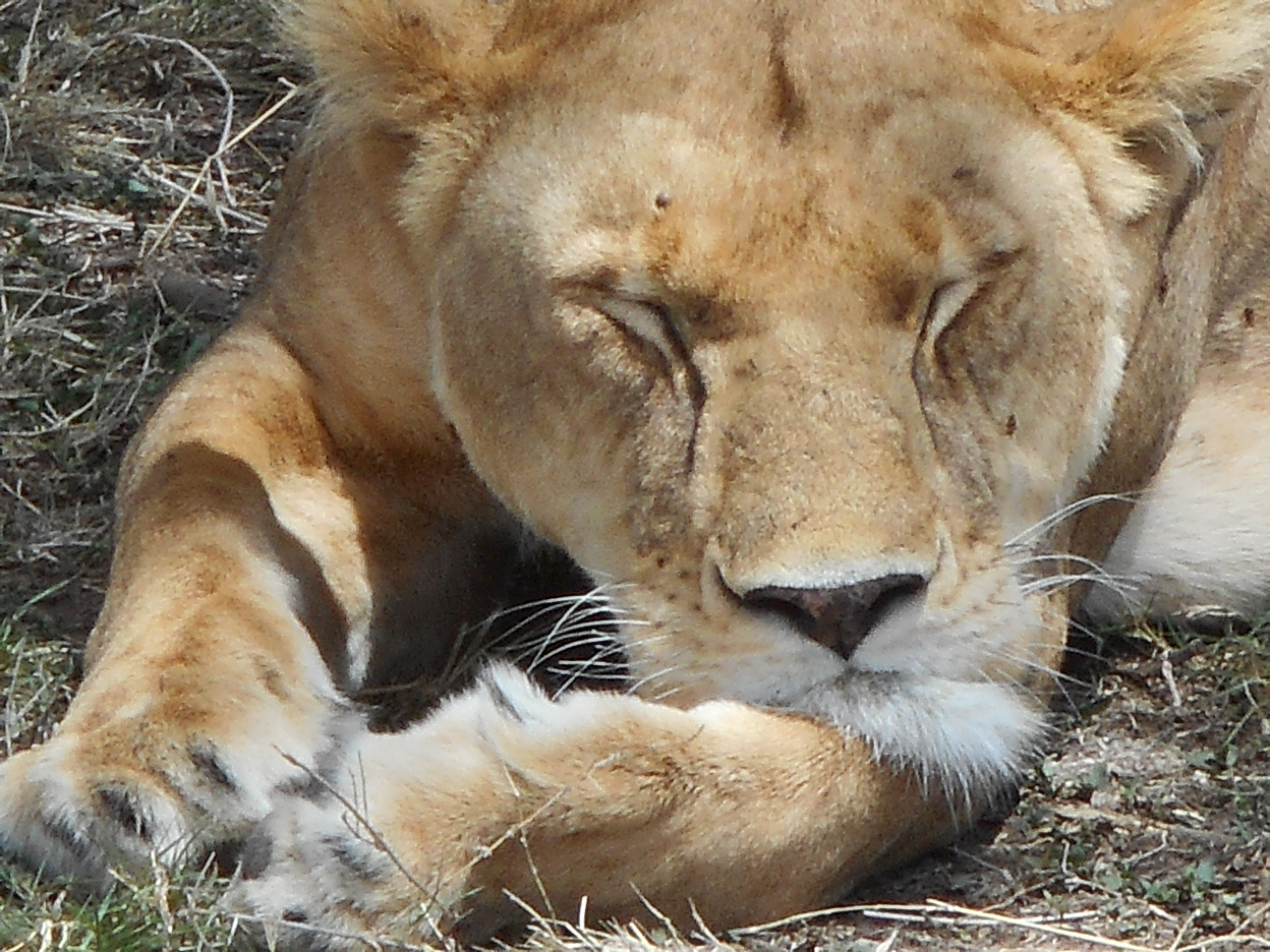
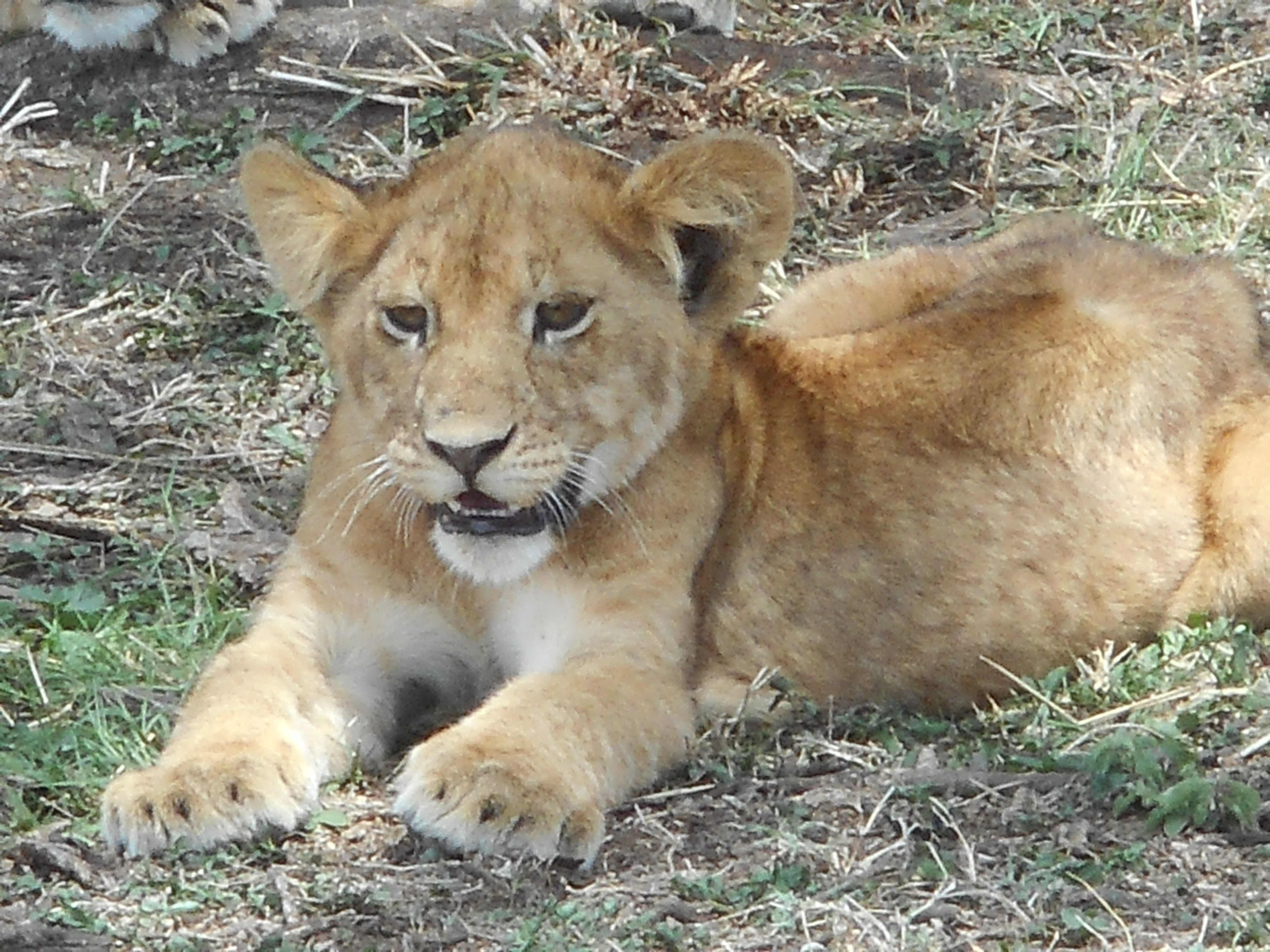
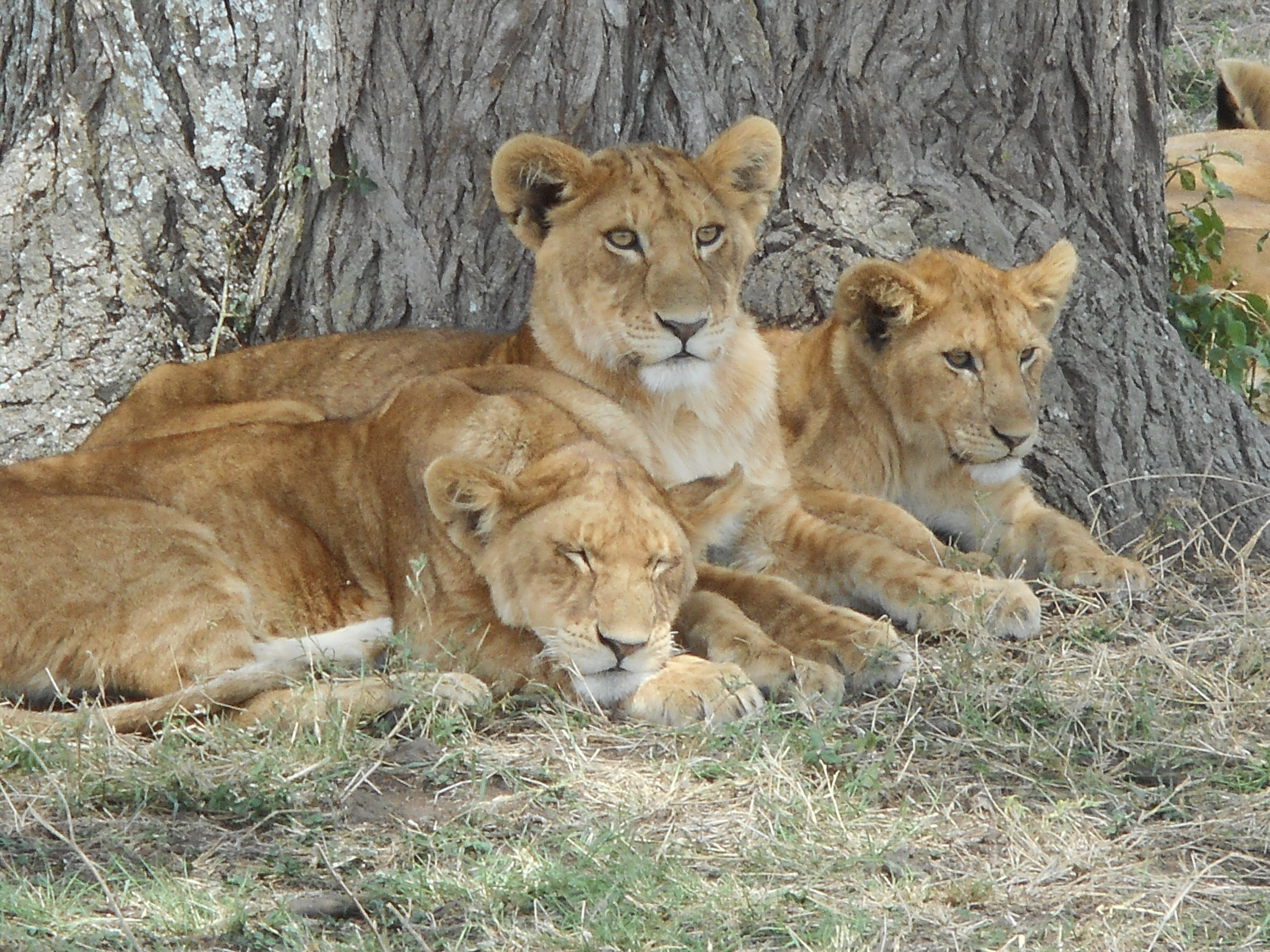
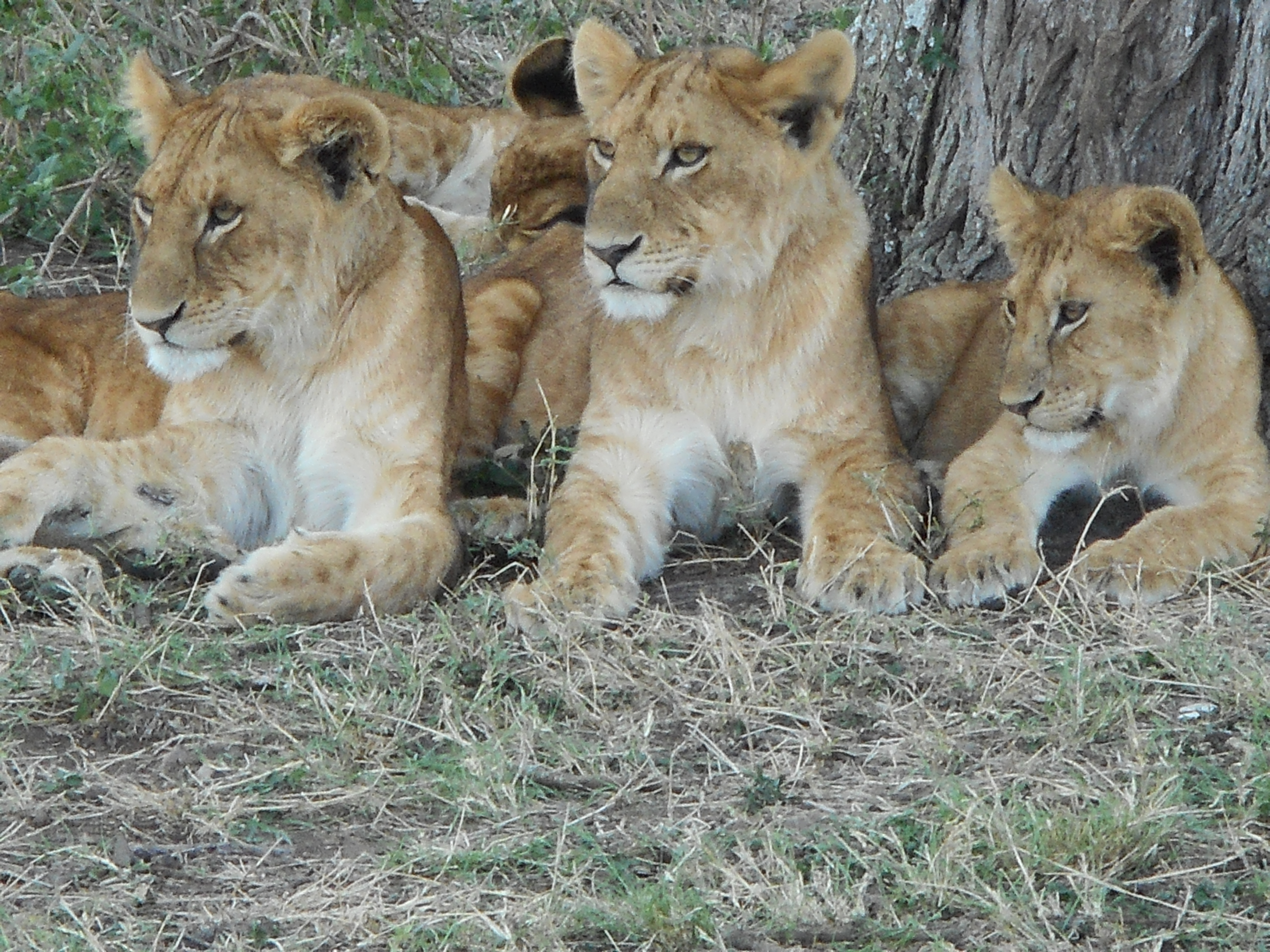
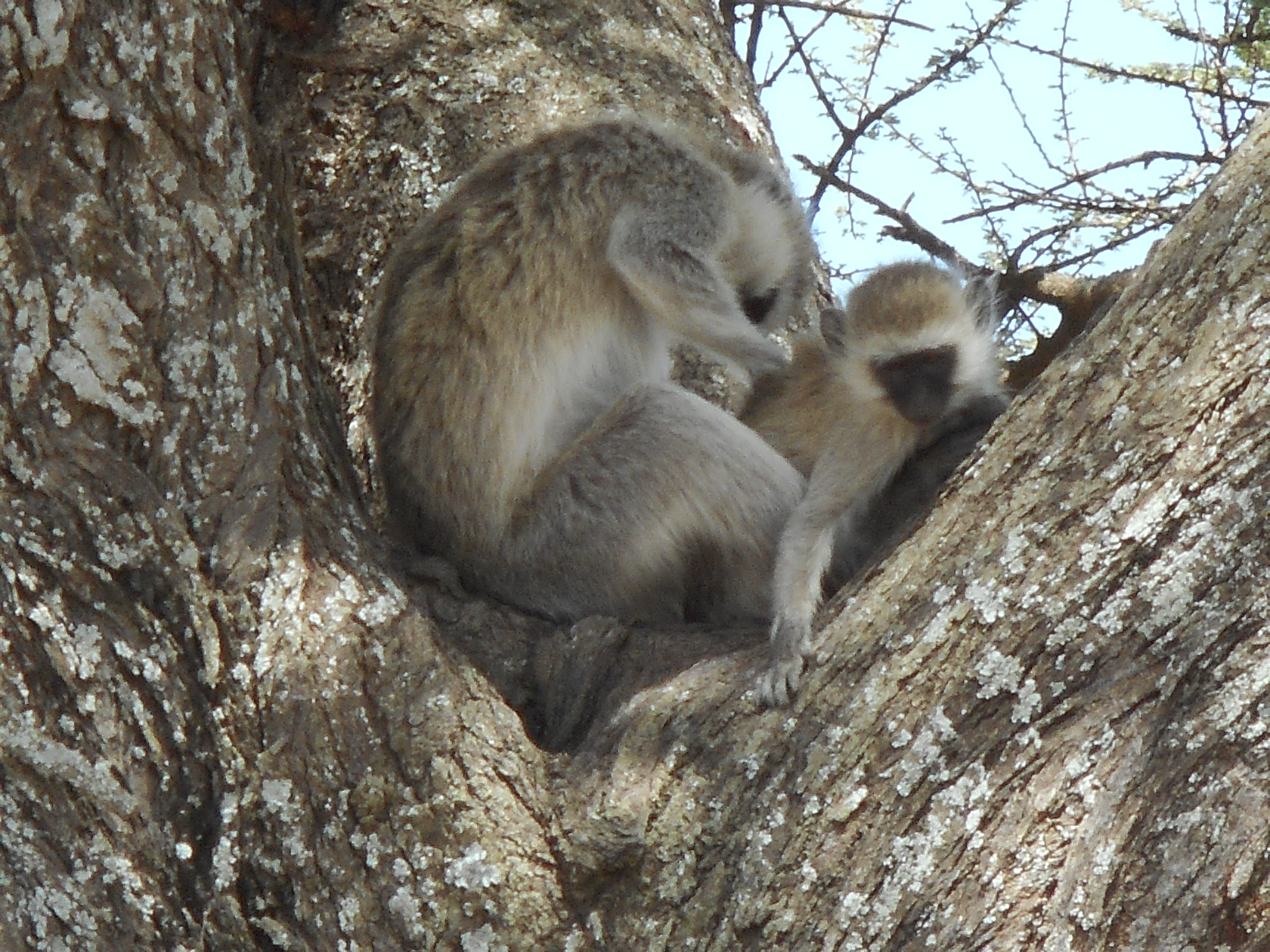
A Monkey grooming.
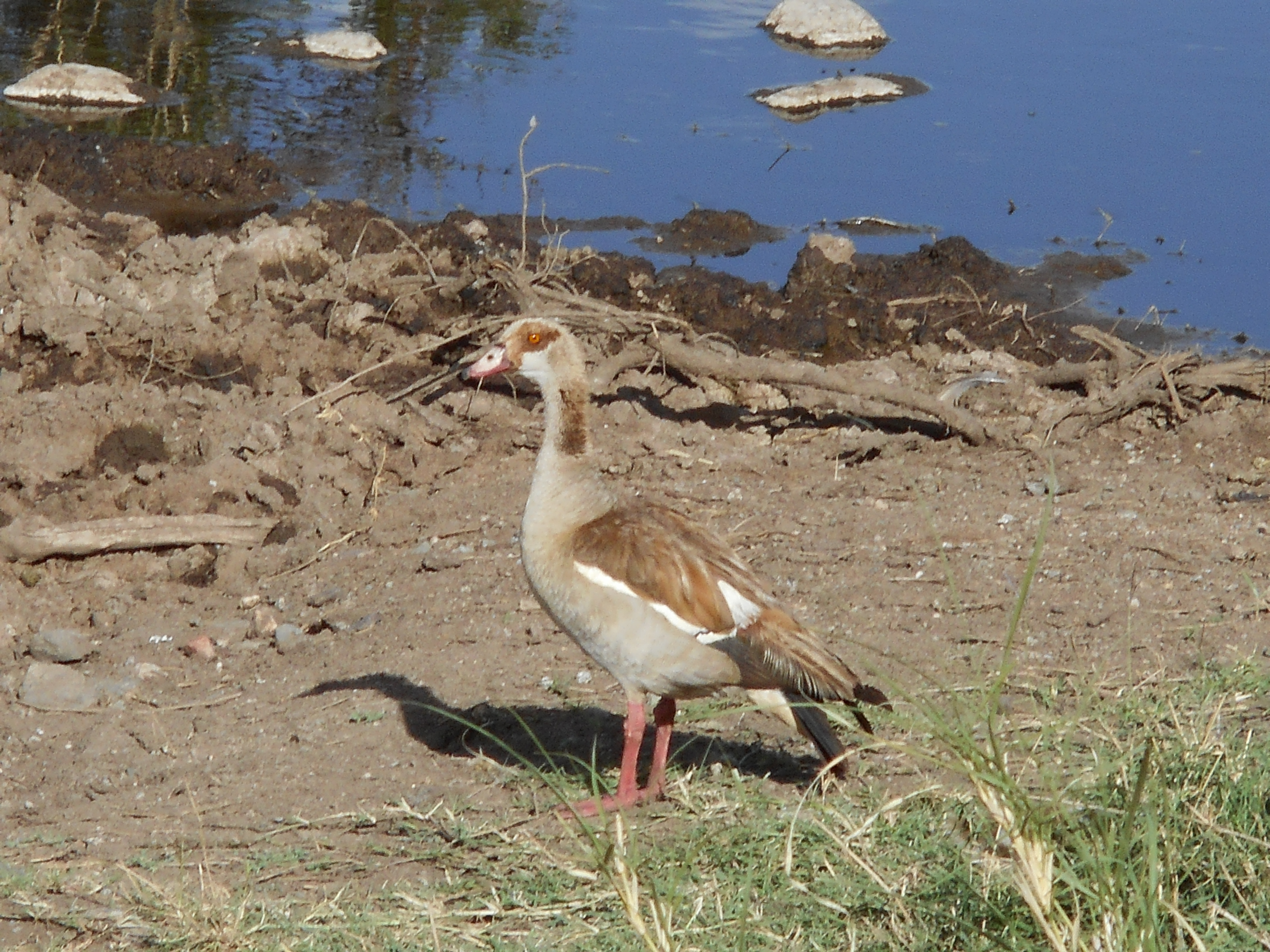
This is an Egyptian Goose. This was Martin’s favorite bird.
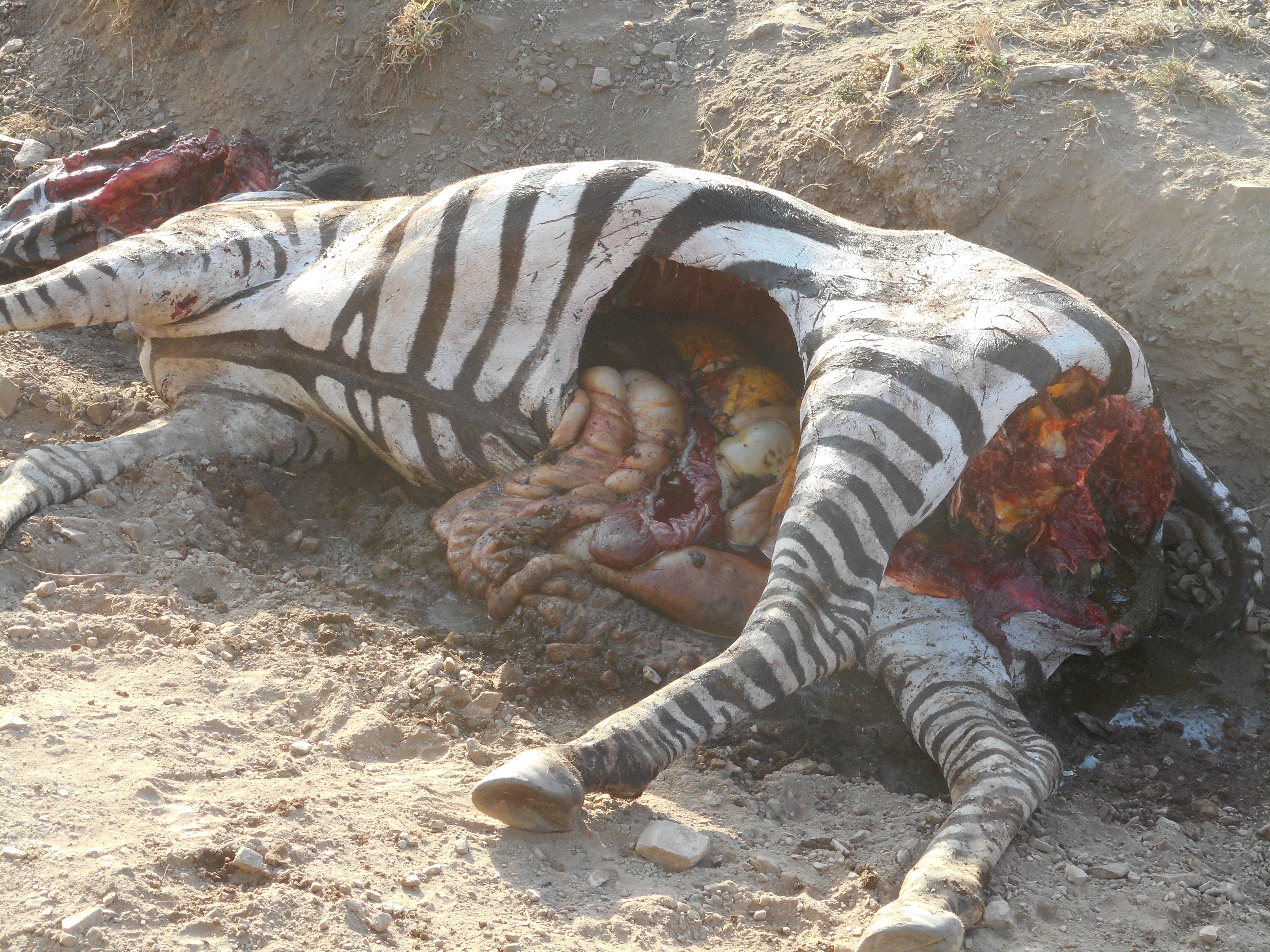
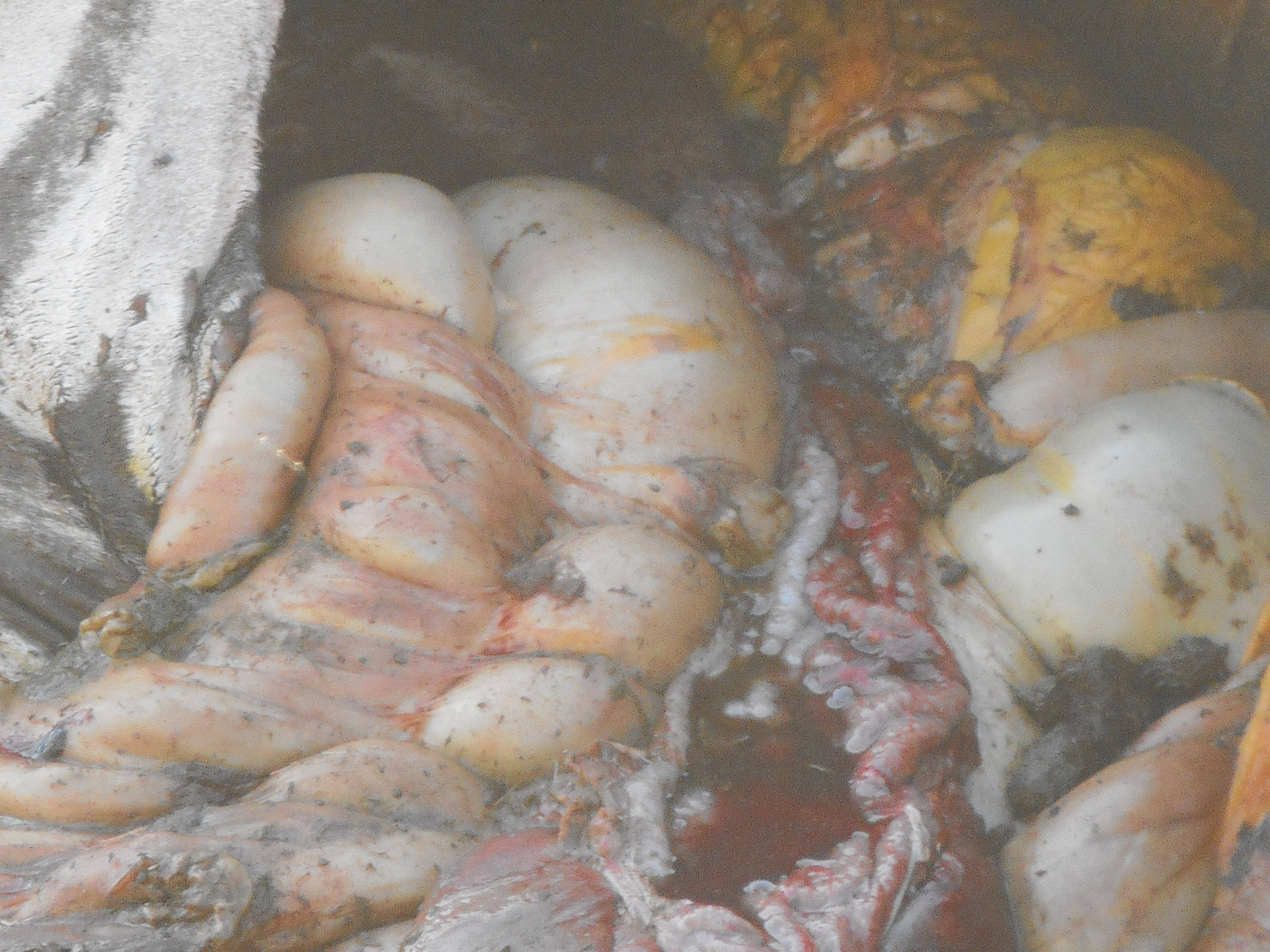
Start of day three on the Serengeti. At our lodge here, we had to get an escort from the restaurant area to the individual cabins where we slept. This was because the animals roamed freely around the accommodations, so at night it was a bit dicey to be wandering around without protection. Evidence of this became apparent this morning, as we had learned there had been a kill early in the morning. Below is the evidence.
**Warning! Next two pictures may not be suitable for all.**
Which way do we go?
Protecting the babies.
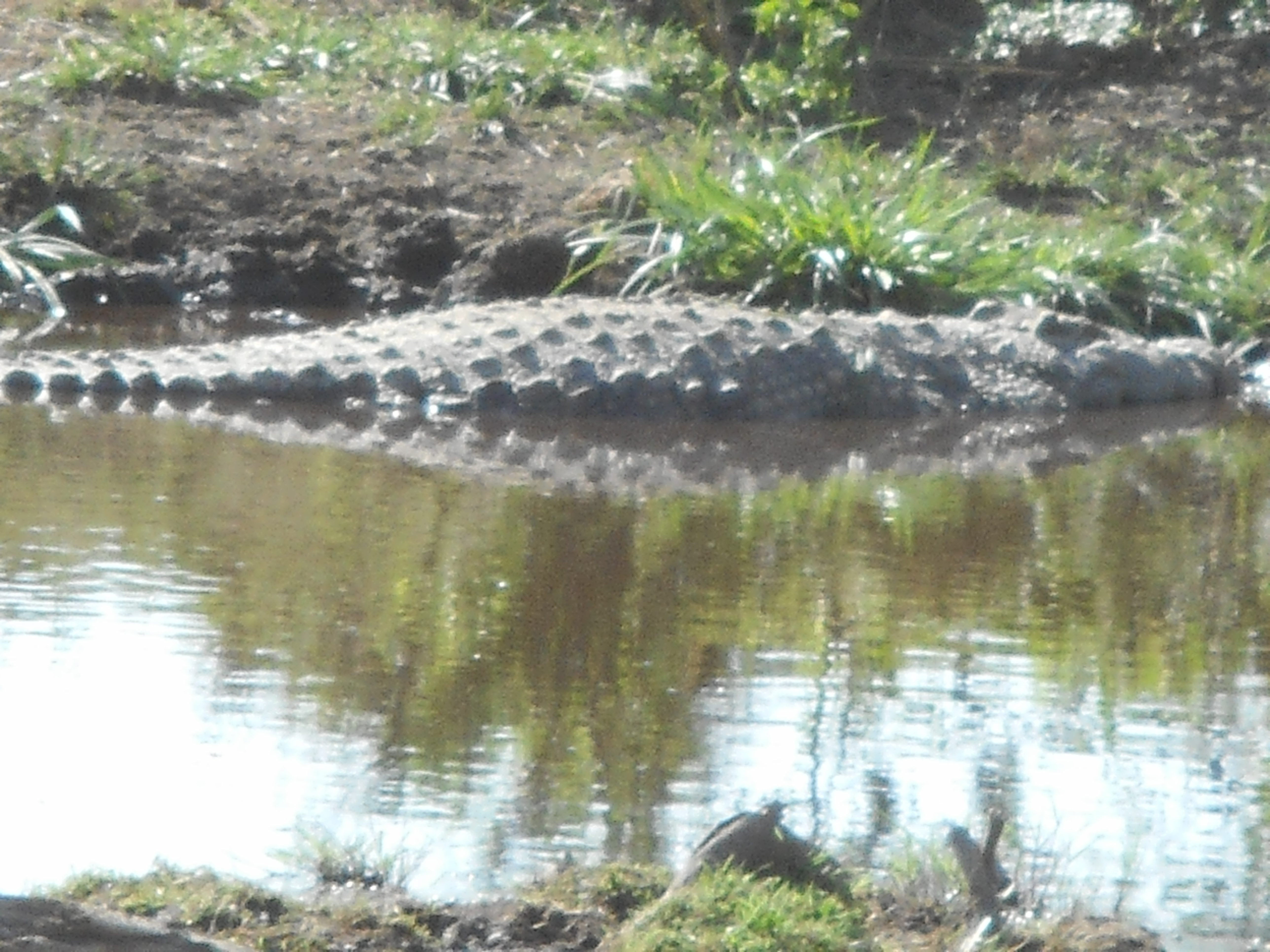
15 – 20 ft. croc.
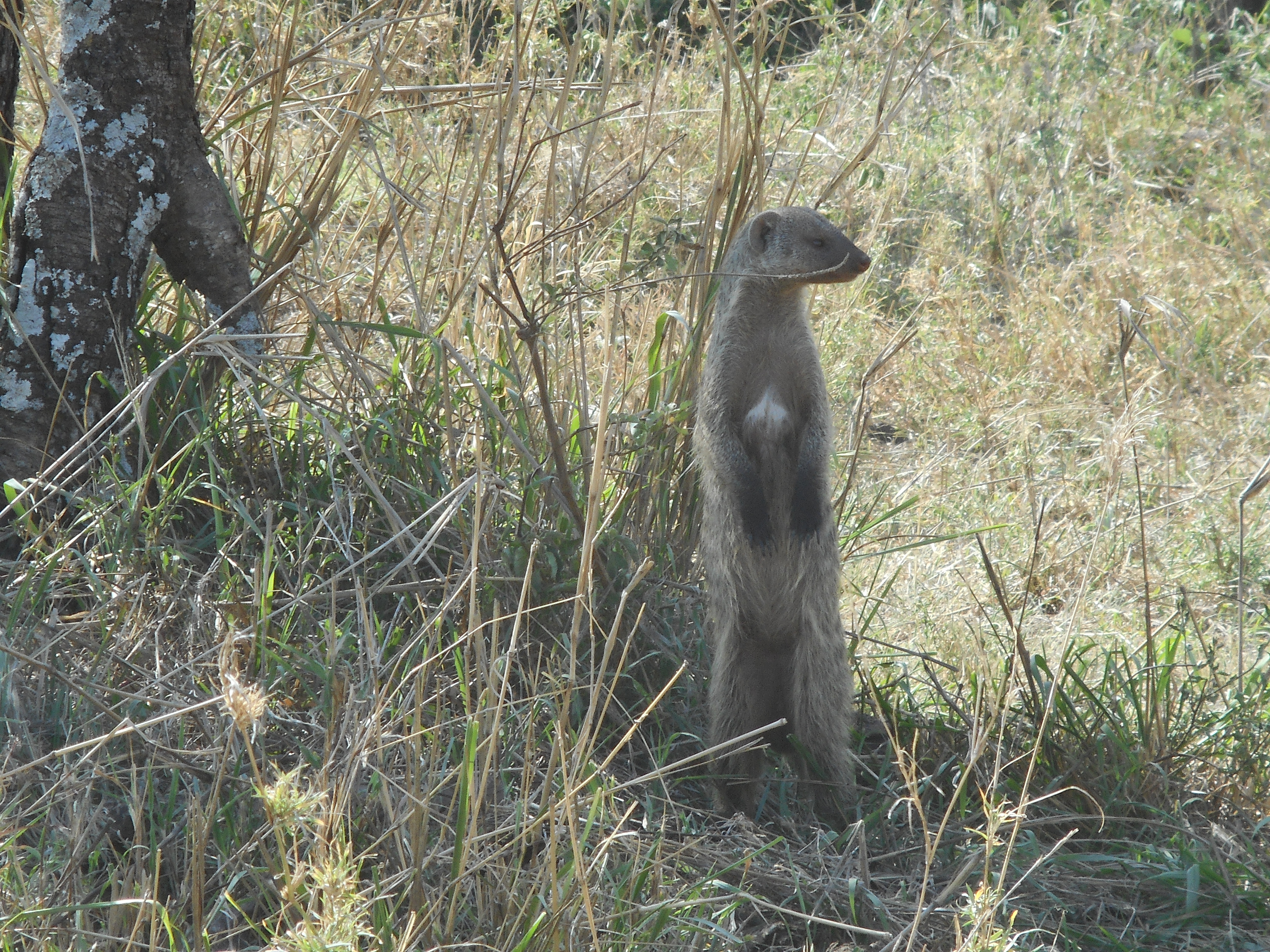
The cute mongoose.
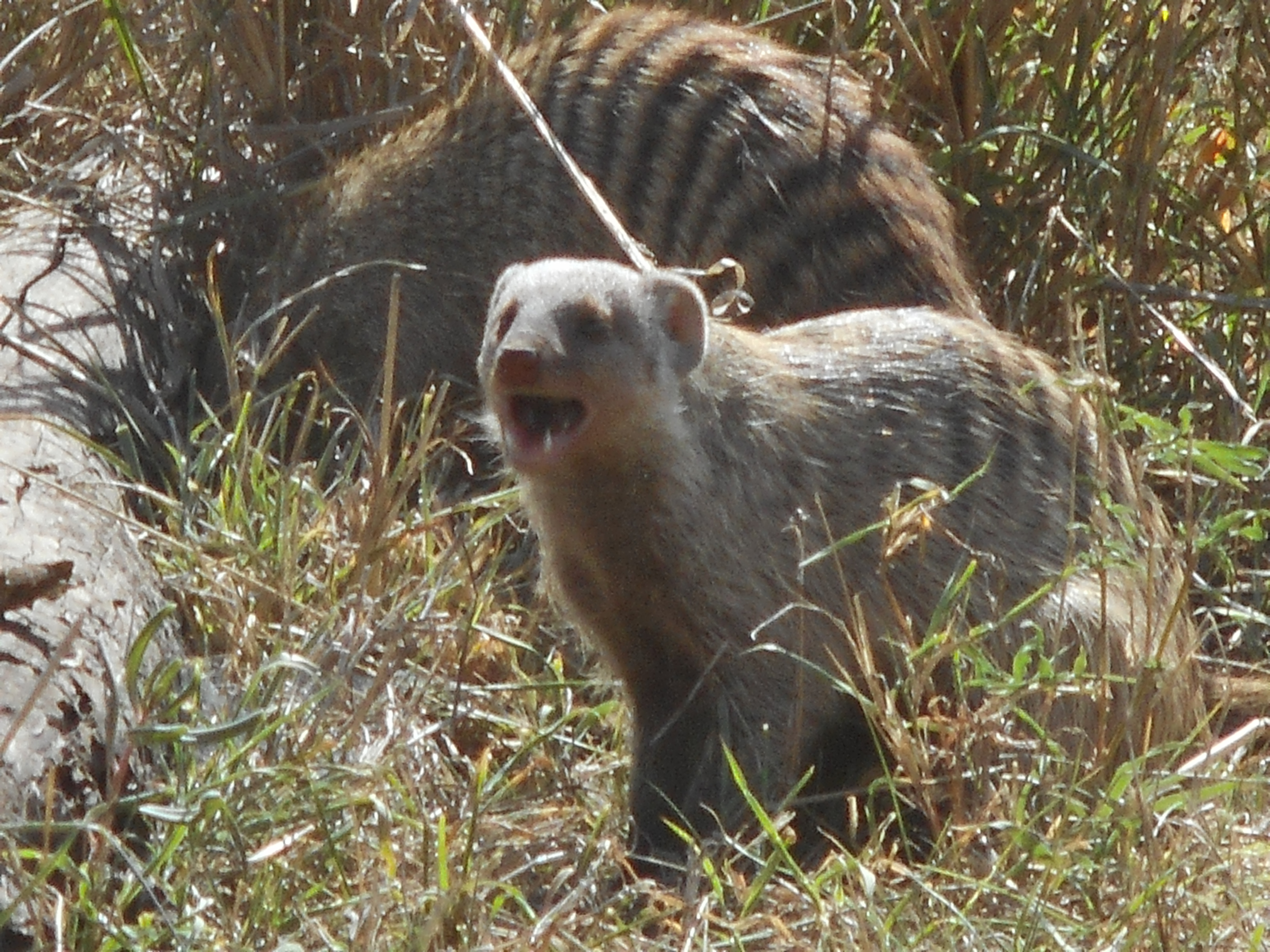
Maybe not.
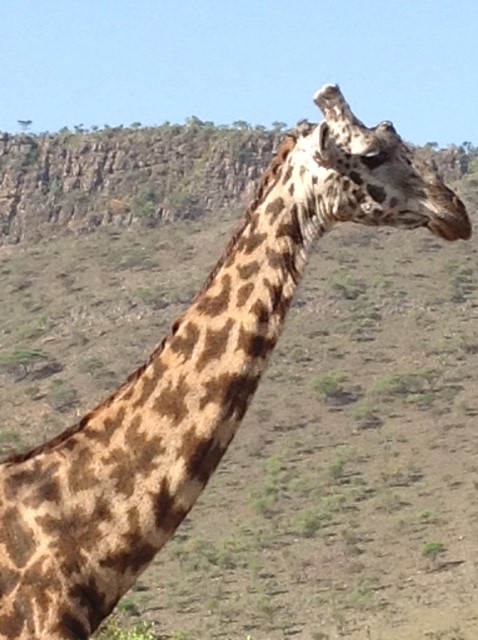
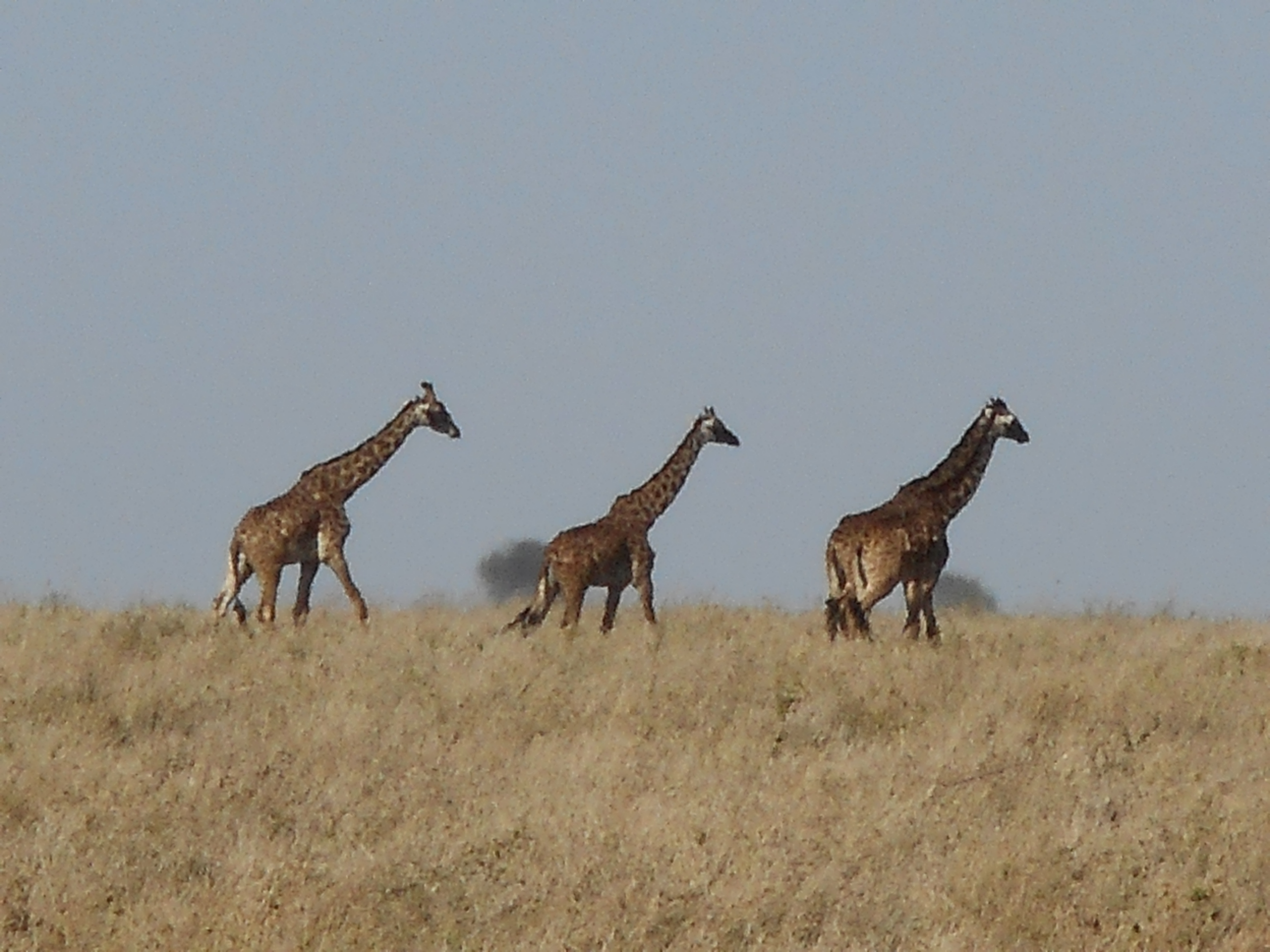
Three…. no four giraffes
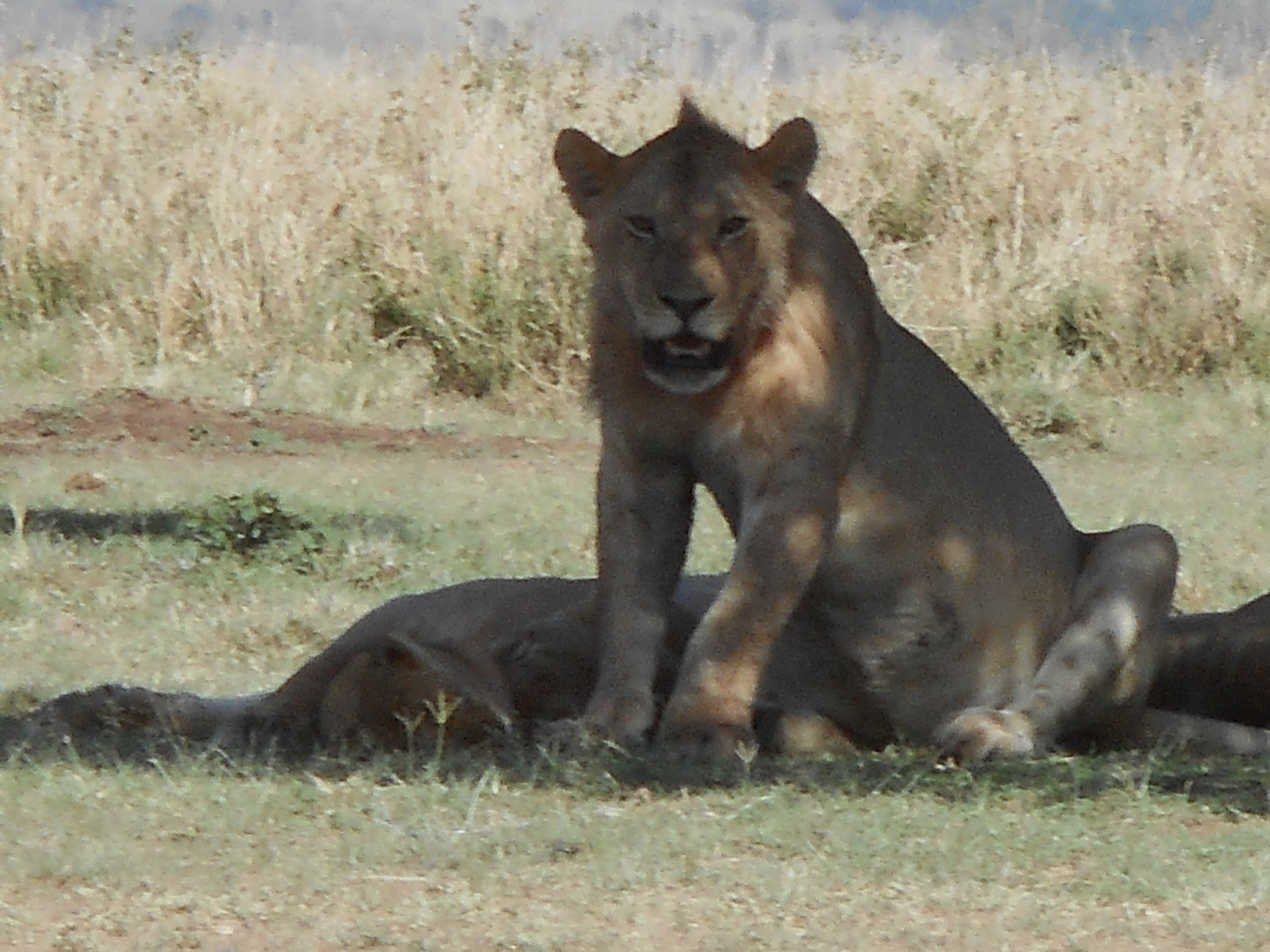
Come on over here, Mr. Tourist.
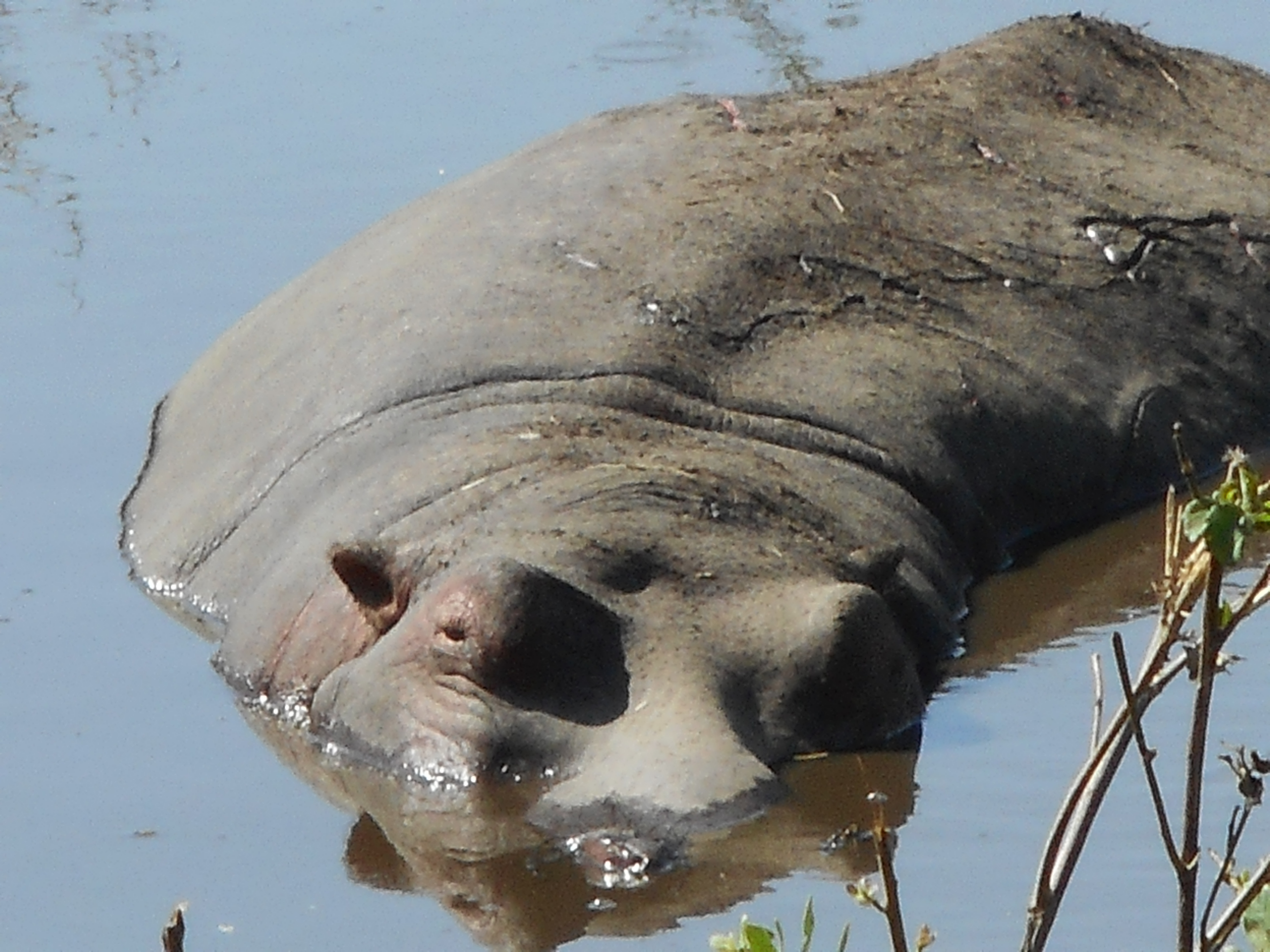
I’m a friendly hippo.
At the airport, we say goodbye to our safari companions.
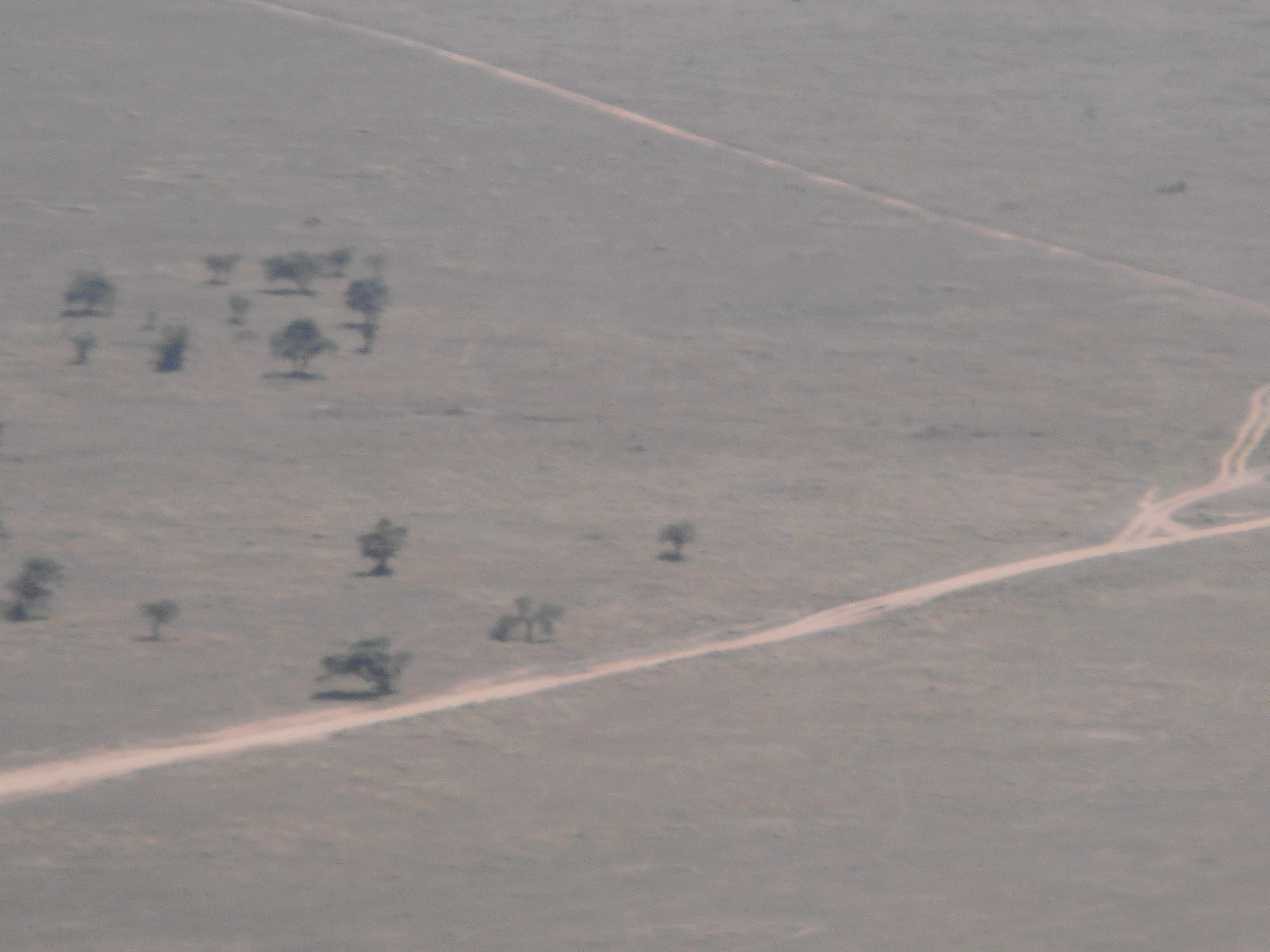
The Serengeti from above. Flying back to Kilimanjaro airport. Then off to Nairobi, Kenya.
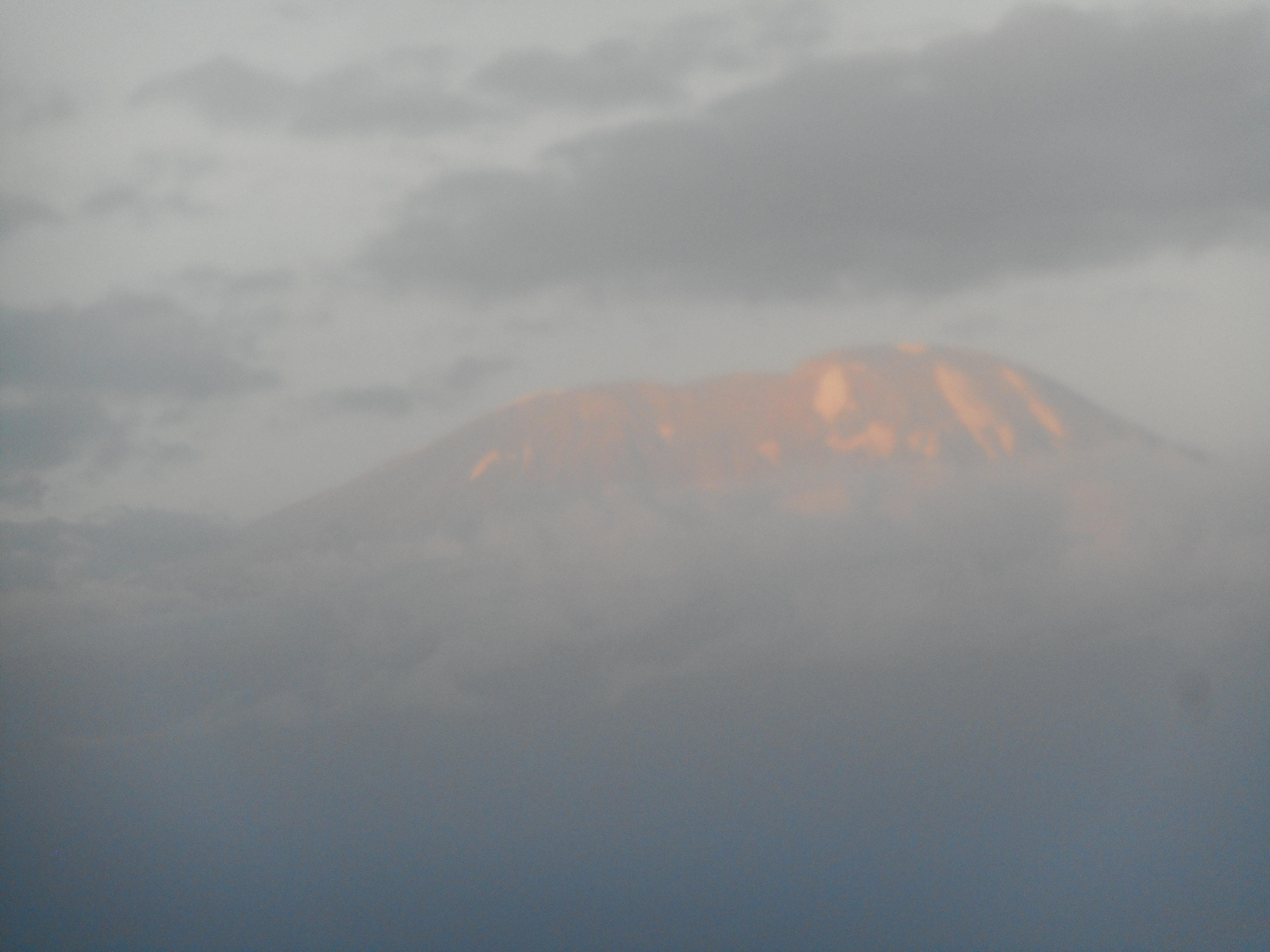
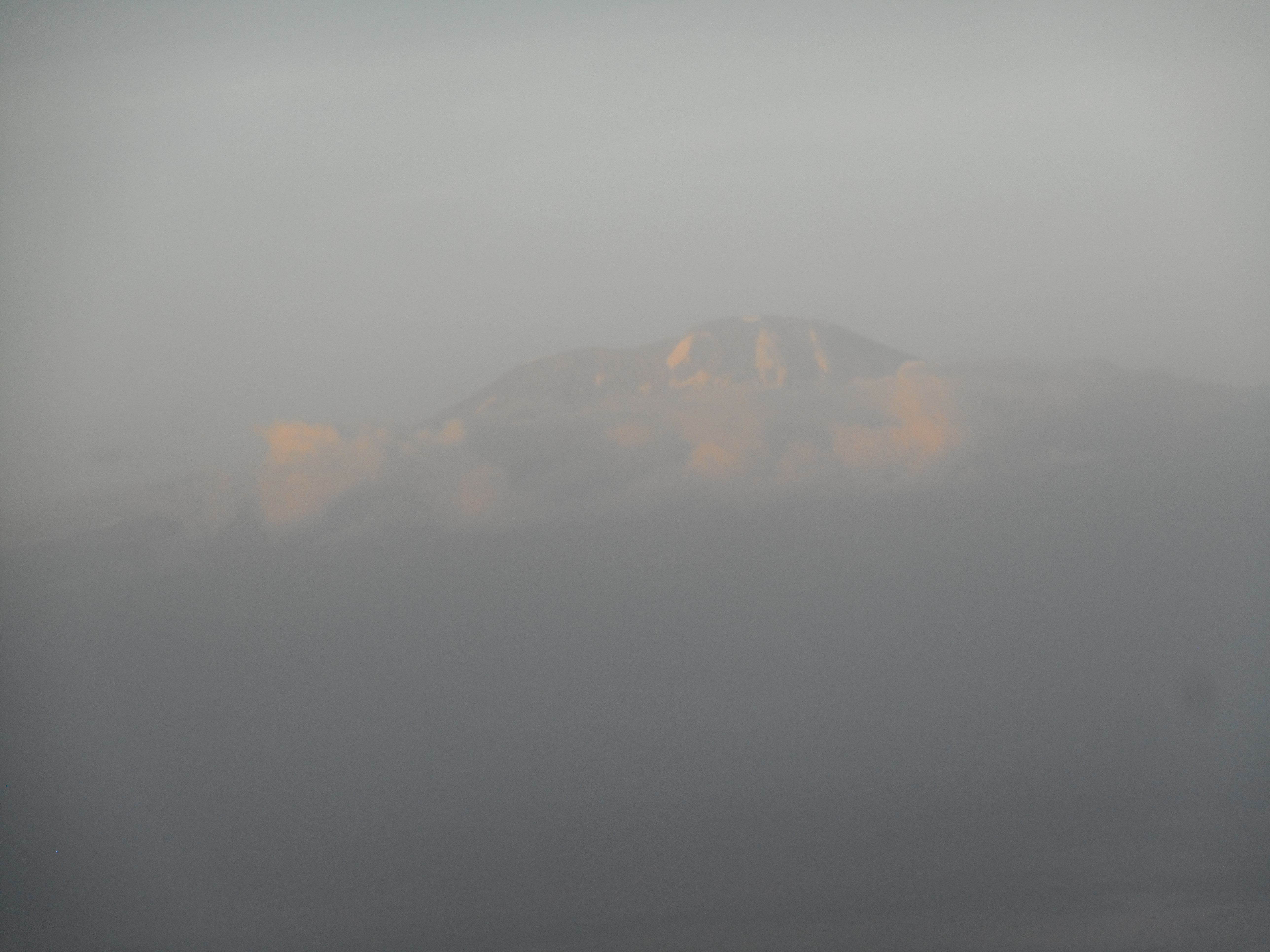
A couple of pictures of Kilimanjaro as we leave Tanzania and fly to Nairobi Kenya. Hey! I was on top of that.
What an amazing journey! Service
seems to have been very good as
well. You are giving me some ideas
of what to do for my next holiday 🙂
Greetings from your fellow
Galapagos traveler!
Hi, hope you’re doing well. What great
pictures you have. It was so nice meeting
you both this past weekend.